Roman Thermae of Maximinus in Braga: Ancient Public Baths of Bracara Augusta


Visitor Information
Google Rating: 4.2
Popularity: Medium
Google Maps: View on Google Maps
Country: Portugal
Civilization: Roman
Remains: Sanitation

History
The Roman Thermae of Maximinus are located in Braga, Portugal, on a prominent hilltop within the ancient city of Bracara Augusta. This city served as the capital of the Roman province of Gallaecia. The thermae complex was constructed during the second half of the 1st century BCE, as part of a broader urban renewal effort in Bracara Augusta.
The earliest phase of construction at the site dates back to the time of Julius Caesar and Emperor Claudius. During this period, initial structures were established before the baths themselves were built. The second major phase occurred under the Flavian and Antonine dynasties, roughly spanning the late 1st to the 2nd century CE. It was during this time that the public baths were constructed, incorporating earlier buildings. Around the 2nd century CE, a theatre was added to the complex, expanding its cultural and social functions.
A third significant phase took place at the end of the 3rd century CE, during the reign of Emperor Diocletian. This remodeling reduced the size of the baths and led to the theatre’s closure. By the 4th century, the theatre was dismantled, and its stones were reused in the construction of city walls. The baths and associated buildings were eventually abandoned by the 5th century, marking the end of their active use.
Archaeological interest in the site began in 1977 with the discovery of hypocaust remains, the Roman underfloor heating system. Excavations continued intermittently through the 1980s and 2000s, including work by the University of Minho focused on the theatre remains. The site was declared a National Monument in 1986, and local authorities have since worked to protect and study the area further.
Remains
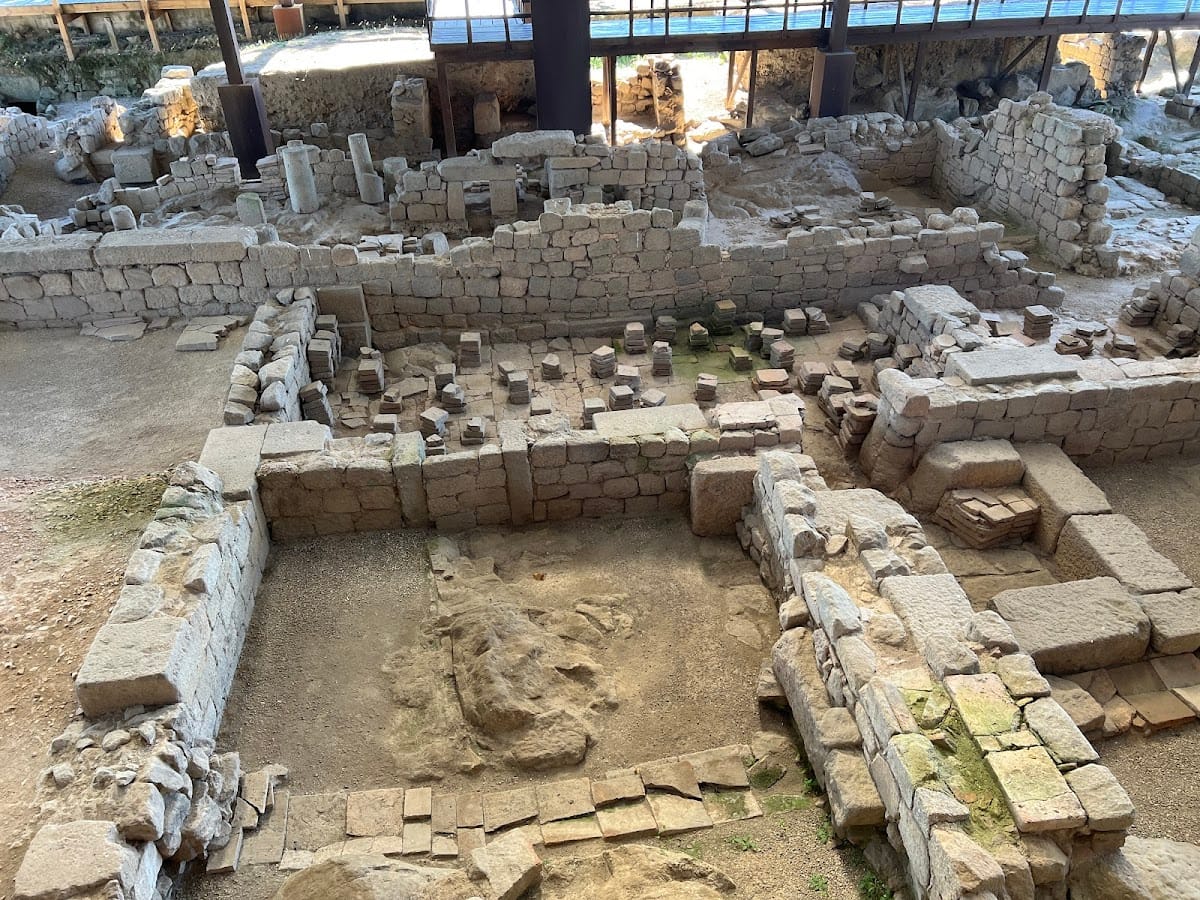
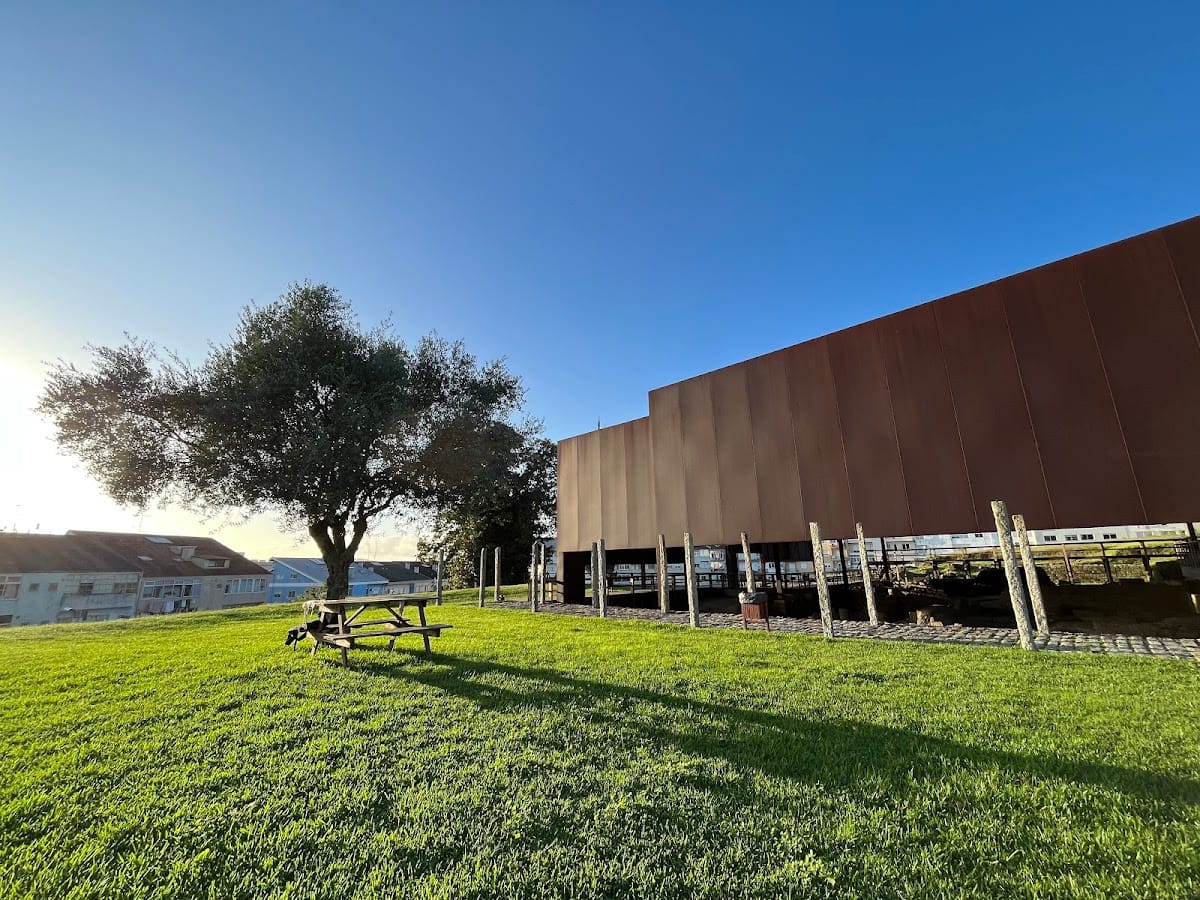
The Roman Thermae of Maximinus cover an area of approximately 800 to 850 square meters. The complex sits on a hilltop and features a layout typical of Roman public baths, although the full extent of the site remains only partially uncovered. The construction reflects Roman building techniques, including the use of stone and brick for walls and hypocaust pillars.
The bath complex originally included two hot rooms and likely two separate service areas. These were significantly reduced during the late 3rd to early 4th-century remodeling. The bathing sequence followed the standard Roman arrangement: visitors entered through the apodyterium, or changing rooms, then moved to the natatio, a cold pool. This was followed by the palaestra, an exercise area, or the frigidarium, a cold bath. Warm baths (tepidarium) and hot baths (caldarium) completed the circuit.
Heating was provided by a hypocaust system, which consisted of underground channels supported by small pillars or arches. Hot air from a furnace, called a praefurnium, circulated beneath the floors to warm the rooms above. Four hot rooms with well-preserved hypocaust remains date from the Flavian period in the late 1st century CE.
In the southern section of the complex, archaeologists found a hypocaust and pool separated from the main building by a narrow corridor. This suggests the baths originally extended over a larger area than currently visible. Some annexed compartments remain difficult to interpret, as their internal circulation and specific functions are not yet fully understood.
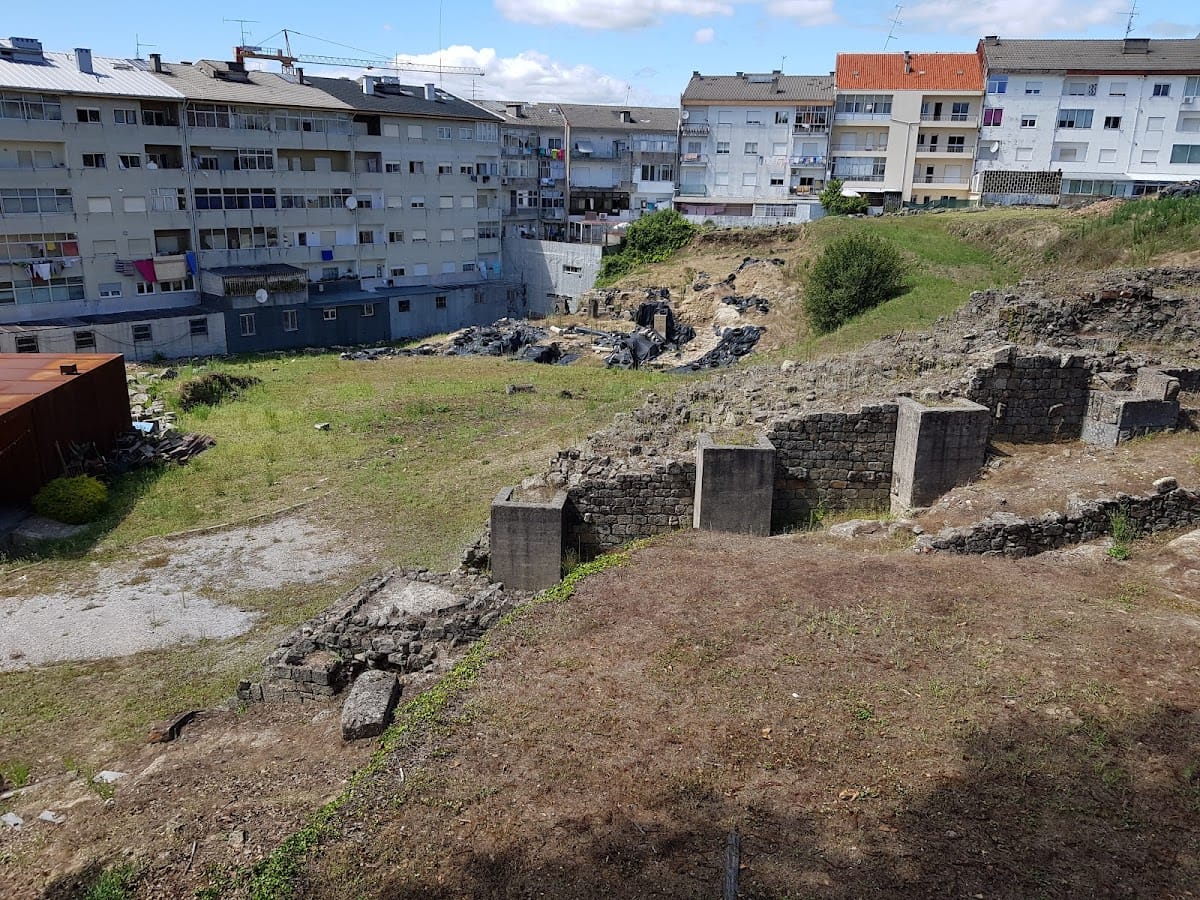
The theatre, discovered during later excavations, was once part of the complex but ceased operation after the 4th century. Its stones were repurposed for city fortifications. Preservation of the site varies; some hypocaust structures remain well conserved, while other parts are fragmentary.
Nearby sites