Ancient Greek Sites in Libya: Explore Doric Temples and Hellenistic Cities
Ancient Greek sites in Libya are concentrated in Cyrenaica, where Greek settlements developed into cities with sanctuaries, public buildings and planned streets. The collection also includes Ptolemaic foundations along the coast. Large temple remains and extensive urban layouts provide substantial examples, while later Roman rebuilding forms an additional layer at many of the same sites.
Primary Function: All
Type: All
Civilization: All
Popularity: All
Rating: All
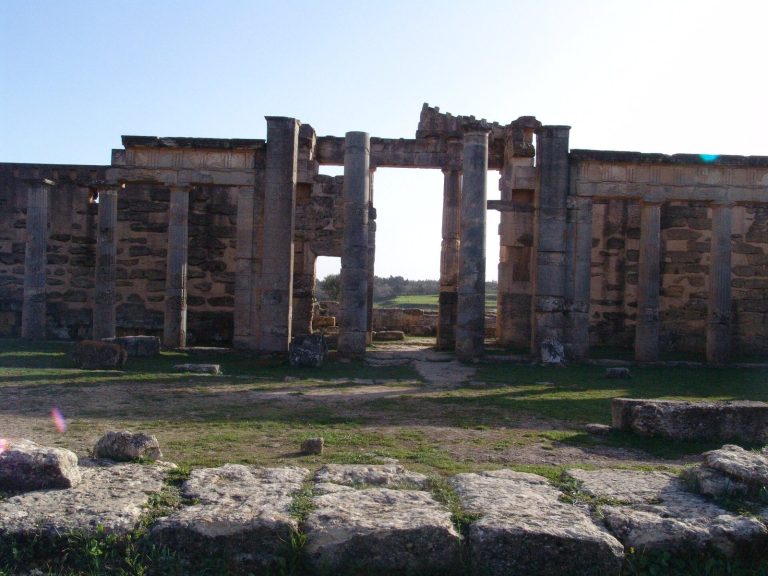
Cyrene was a Greek colony, Hellenistic kingdom, and Roman city in northeastern Libya. Its remains preserve temples, theatres, civic buildings,…
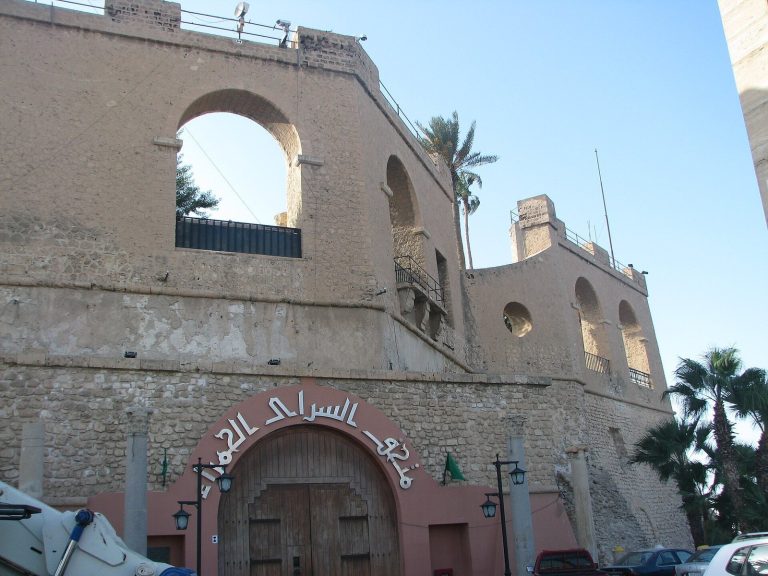
AlSaraya Alhamra Museum in Tripoli occupies the historic Red Castle and presents roughly 5,000 years of Libyan history, from prehistory to modern…
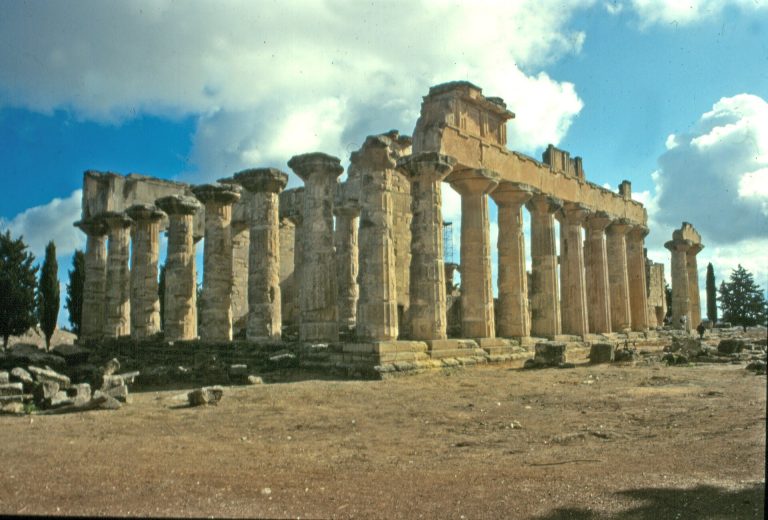
The Temple of Zeus at Cyrene was a vast Doric sanctuary built in the Archaic or early Classical period and repeatedly restored under Roman rule. Its…
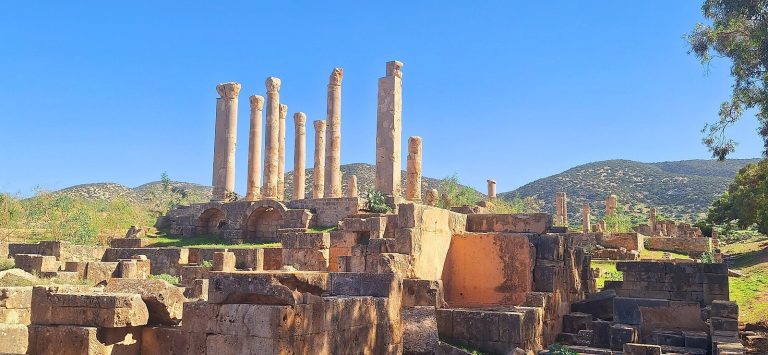
Ptolemais Archaeological Park preserves the remains of a major city of ancient Cyrenaica, from its Ptolemaic foundation and Roman development to its…
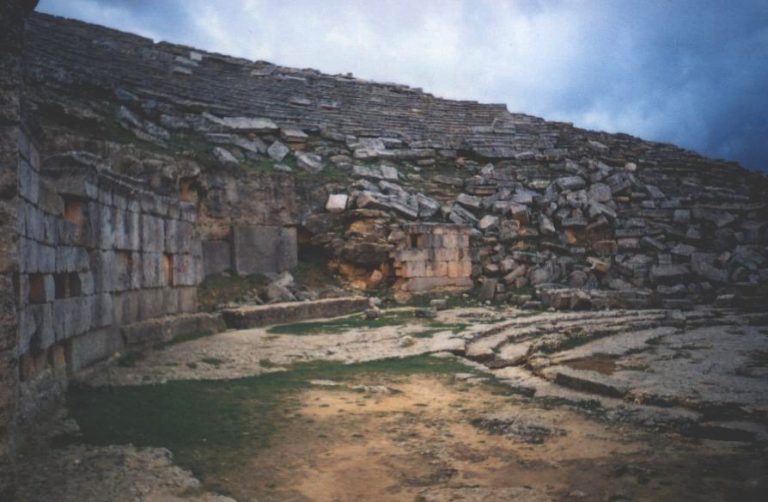
The Greek Theatre of Cyrene developed from a late sixth-century BC Greek performance space into a Roman amphitheatre for gladiatorial combat, passing…
For details on how to use the maps, which sites are included, how popularity and ratings are determined, and how sites are classified, see the help page.
Cyrene: the Doric Temple of Zeus
At Cyrene, the Temple of Zeus occupies a large platform outside the main sanctuary of Apollo. Its early fifth-century BC design used a surrounding Doric colonnade. The broad stepped base and surviving architectural members establish the exceptional size of the building, while re-erected columns help define the outer perimeter.
The temple was rebuilt under Rome after destruction in the second century AD and later suffered earthquake damage. Its present appearance therefore combines ancient material from successive phases with modern reassembly. The Greek plan remains central to understanding the structure, even though the visible stonework cannot all be assigned to its initial construction.
Elsewhere in Cyrene, sanctuaries, streets and public buildings record the growth of the Greek city and its later Roman development. The wider archaeological area was affected by flooding in 2023; descriptions of excavated buildings should not be taken as guarantees of their present accessibility.
Ptolemais: a street grid and a tower-like tomb
Ptolemais developed as a Hellenistic coastal city under the Ptolemies. Its streets divide the town into long rectangular blocks, with a defensive circuit enclosing a broad area. The exposed plan shows the scale of the planned settlement beyond any one palace, house or public building.
Within that framework, successive inhabitants added and altered courtyard houses and civic buildings. Much of their surviving decoration and masonry belongs to the Roman period. The Hellenistic plan provided the structure within which those later changes took place.
Outside the main urban area, the mausoleum known as Qasr Faraoun preserves a tall, tower-like stone form associated with the Hellenistic cemetery. Its name has encouraged royal interpretations, but the identity of its occupant is uncertain. The tomb adds funerary architecture to a site more often described through its streets and houses.
Cyrene’s temple and Ptolemais’s urban plan represent different parts of the regional collection: sacred buildings, residential quarters, city defences and burial monuments. Their individual articles describe the surviving features and distinguish Greek or Ptolemaic construction from later alterations.
Explore the collection
Explore sites on the map or in the grid. Map icons reflect each site’s primary function, helping you identify different kinds of places at a glance. Narrow the results by primary function, site type or era. Use the Civilization filter to select among the Greek and Hellenistic groups included here, with additional filters for popularity and rating. Select a map marker to view the site’s details and open its article, or open the article from its grid entry.