Roman Sites in Georgia: Explore Gonio Fortress, Baths and Mosaic Rooms
Roman sites in Georgia are represented in this collection by Gonio Fortress, ancient Apsaros, on the Black Sea coast south of Batumi. Its substantial enclosure surrounds excavated military buildings, baths and a commander’s residence with mosaic floors. These remains combine a Roman garrison’s internal spaces with walls repaired under later rulers.
Primary Function: All
Type: All
Popularity: All
Rating: All
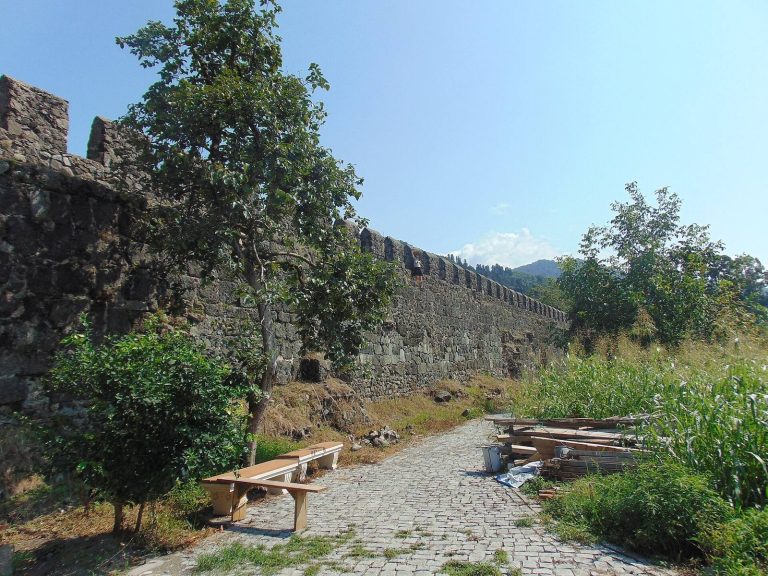
Gonio Fortress, ancient Apsaros, controlled routes between the Black Sea and the interior of southwestern Georgia. Its remains preserve Roman,…
For details on how to use the maps, which sites are included, how popularity and ratings are determined, and how sites are classified, see the help page.
On this page4 sections
Gonio’s walls, towers and western gate
Gonio Fortress has a rectangular enclosure reinforced by projecting towers, with larger towers at the corners. The principal western entrance is set deeply between two towers. Large dressed blocks form the lower parts of the walls, while different masonry above records subsequent repair and rebuilding.
The standing defences contain Roman, Byzantine and Ottoman work. Their height and continuous outline should therefore be understood as the result of several building periods. Stairways within the towers connected their internal levels, while the walls enclosed the garrison buildings and open areas inside.
The commander’s residence at Gonio
Excavations have identified a substantial Roman residence associated with the garrison commander. It contained a colonnaded courtyard, private bathing facilities and mosaic-decorated rooms. Its development under Hadrian replaced or incorporated earlier construction within the fort.
The mosaics survive in different states of preservation. Conservation has secured parts at their findspots and transferred vulnerable fragments to the local museum. Their geometric decoration and the surviving room plans supply evidence of formal residential space within a military installation.
Gonio’s baths, storage and water supply
Other excavated buildings include a granary, headquarters and successive bathing complexes. Water reservoirs, wells, conduits and drainage served the rooms and courtyards. Rebuilding changed the internal arrangement, including the replacement of the commander’s residence by barracks after earthquake damage.
The site museum holds selected finds from these buildings, including pottery, glass, coins, tiles and mosaic fragments. Roman objects appear alongside material from later garrisons, allowing the excavated occupation to be distinguished from the Byzantine and Ottoman phases of the standing enclosure.
Explore the collection
Explore sites on the map or in the grid. Map icons reflect each site’s primary function, helping you identify different kinds of places at a glance. Narrow the results by primary function, site type or era, with additional filters for popularity and rating. Select a map marker to view the site’s details and open its article, or open the article from its grid entry.