Roman Sites in Kosovo: Explore Ancient Towns, Mosaic Halls and Basilicas
Roman sites in Kosovo include the excavated streets and churches of Ulpiana, a large residence with richly patterned mosaic floors at Dresnik, and the civic buildings of Municipium Dardanorum. These places preserve different parts of settlement life: public squares and trading spaces, formal rooms within a wealthy household, and religious buildings added as towns changed during late antiquity.
The clearest examples are extensive building plans and decorated surfaces. At Ulpiana, the remains span Roman urban development and later Christian rebuilding; at Dresnik, the mosaic rooms retain the arrangement of an unusually elaborate residence.
Primary Function: All
Type: All
Popularity: All
Rating: All
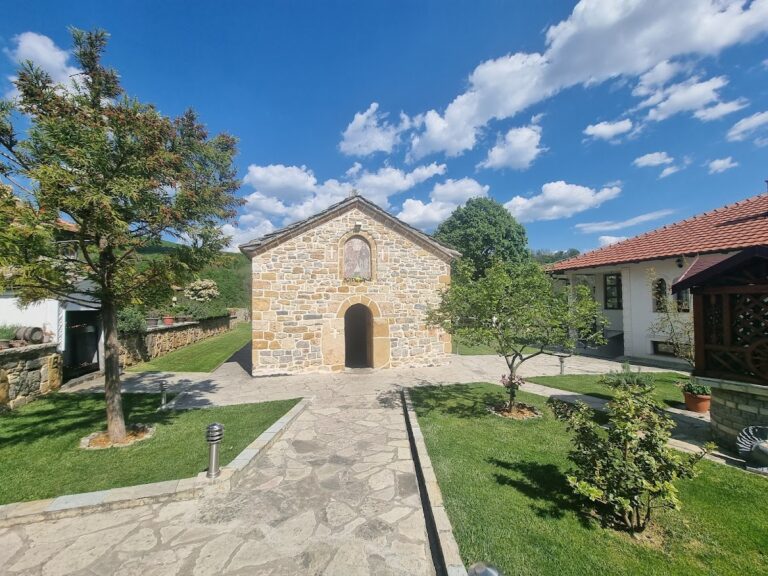
Zočište Monastery in Kosovo is a Serbian Orthodox foundation associated with Saints Cosmas and Damian. Its history extends from an ancient sanctuary…
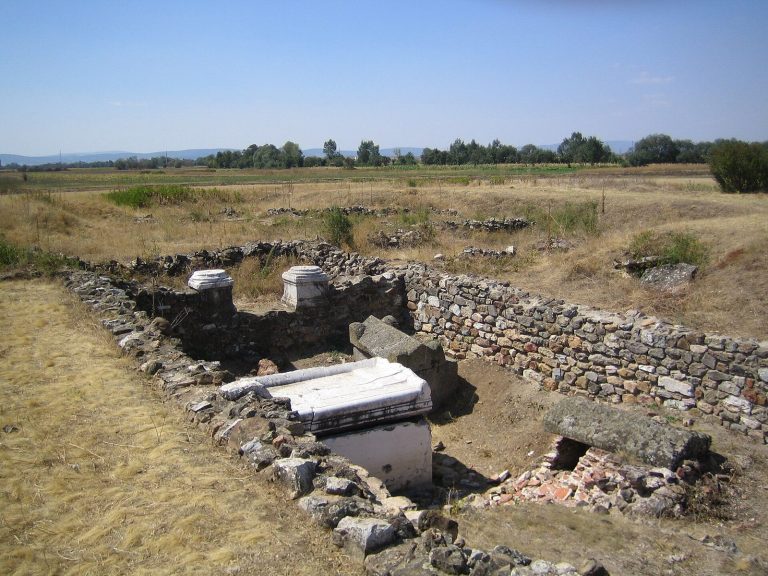
Ulpiana Archaeological Park preserves the remains of a Roman city in present-day Kosovo, later rebuilt as Justiniana Secunda. Its excavated churches,…
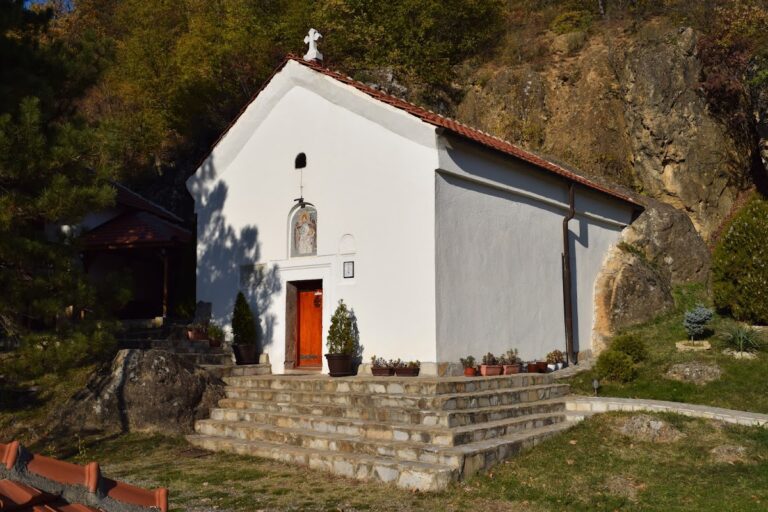
The Sočanica Basilica preserves evidence of an early medieval church, later medieval use, and a wider religious landscape connected with the Roman…
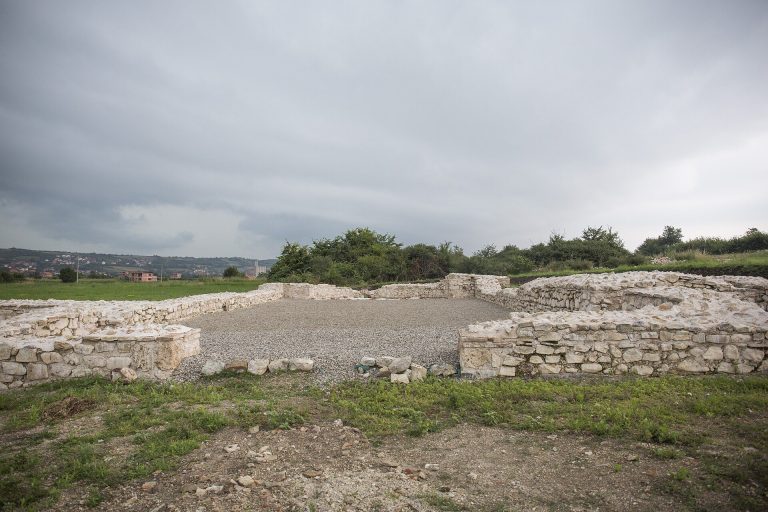
The Dresnik archaeological site preserves a Roman-period settlement in Kosovo, including an imperial summer palace with extensive mosaics, defensive…
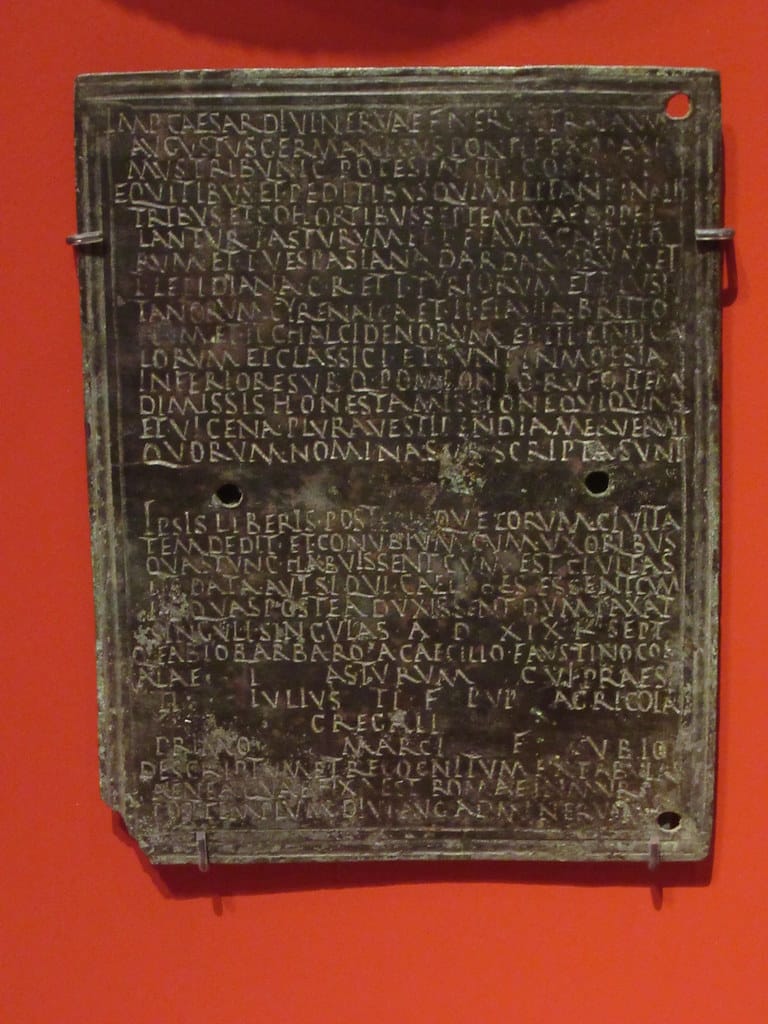
Municipium Dardanorum was a Roman urban and mining center in the Ibar Valley, shaped by nearby ore resources and preserved through extensive…
For details on how to use the maps, which sites are included, how popularity and ratings are determined, and how sites are classified, see the help page.
On this page4 sections
Ulpiana’s streets and Christian buildings
Ulpiana Archaeological Park lies near the Graçanka River and ancient mining areas. Excavation and geophysical survey have traced streets, residential quarters, utility buildings and successive fortified areas. A public bath and water-supply installations belonged to the services of the town, while later churches occupied substantial spaces within it.
The episcopal basilica had a central nave and two aisles divided by columns, with an apse at the eastern end. Doors through its western entrance hall provided several routes into the church, and geometric mosaics decorated the floor. A separate baptistery to the south followed an eight-petalled plan and was connected with a water conduit.
Earthquakes and rebuilding altered this religious district. After the destructive earthquake of AD 518, Justinian ordered the city rebuilt as Justiniana Secunda. The churches and renewed defences therefore belong to the later history of an established Roman town, rather than to one construction campaign.
Dresnik’s mosaic hall and adjoining rooms
At Dresnik, near Klina in the White Drin valley, a large residential complex developed from an earlier agricultural villa. Its later form is associated with elite occupation during the third or fourth century. It has been interpreted as a possible imperial residence, but the surviving rooms do not establish a particular emperor’s ownership.
The main hall measures about twenty-two by eleven metres and has an extensive multicoloured mosaic floor. Circles, stars, squares and interlaced patterns fill the pavement, framed by three decorative borders. A threshold made from reused marble funerary stones connects the hall with an apsidal room interpreted as a formal dining space.
The adjoining rooms have their own patterns, including hearts, braided designs, circular medallions and four-petalled flowers. Doorways and connecting spaces retain the relationship between these floors: the decoration belongs to a sequence of rooms rather than a group of detached mosaic panels. Excavations have also exposed a thick enclosing wall with circular towers around the complex.
The forum and trading buildings at Municipium Dardanorum
Municipium Dardanorum, near Sočanica, occupied terraces close to the Ibar and the mining areas of the surrounding mountains. Its rectangular forum had rows of pillars along two sides and a raised temple platform at the northern end. The temple is generally associated with the cult of Antinous under Hadrian.
South of the square, a large apsidal basilica served commercial and administrative activities. Storage buildings, baths and water-supply remains accompanied the civic centre. Metalworking tools and inscriptions recovered from the settlement connect these buildings with the extraction and trade of lead and precious metals in the district.
Explore the collection
Explore sites on the map or in the grid. Map icons reflect each site’s primary function, helping you identify different kinds of places at a glance. Narrow the results by primary function, site type or era, with additional filters for popularity and rating. Select a map marker to view the site’s details and open its article, or open the article from its grid entry.