Castle of Arnóia: A Medieval Fortress and Administrative Center in Portugal


Site at a Glance
- Rating
- 4.4
- Popularity
- Medium
- Country
- Portugal
- Primary era
- Medieval
- External website
- Open
- Eras represented
- Medieval
- Civilizations
- Portuguese
- Site type
- Military
- Remains
- Castle
On this page9 sections
History
Castle of Arnóia is a medieval fortress in Portugal, built during the period of the County of Portugal between the late tenth and early eleventh centuries. Rising above the former Vila de Basto, it became one of the principal defensive and administrative centers of the Terras de Basto, the historical territory around present-day Celorico de Basto. The castle is also known as the Castle of the Moors and the Castle of Moreira.
Foundation and medieval development
The fortress has traditionally been associated with a foundation in the second half of the tenth century, although its construction is generally placed between the end of that century and the beginning of the next. This period preceded the creation of the Kingdom of Portugal and saw the expansion of fortified sites across western Europe. No prehistoric, Iron Age, or Roman structure has been securely identified at the exact castle site.
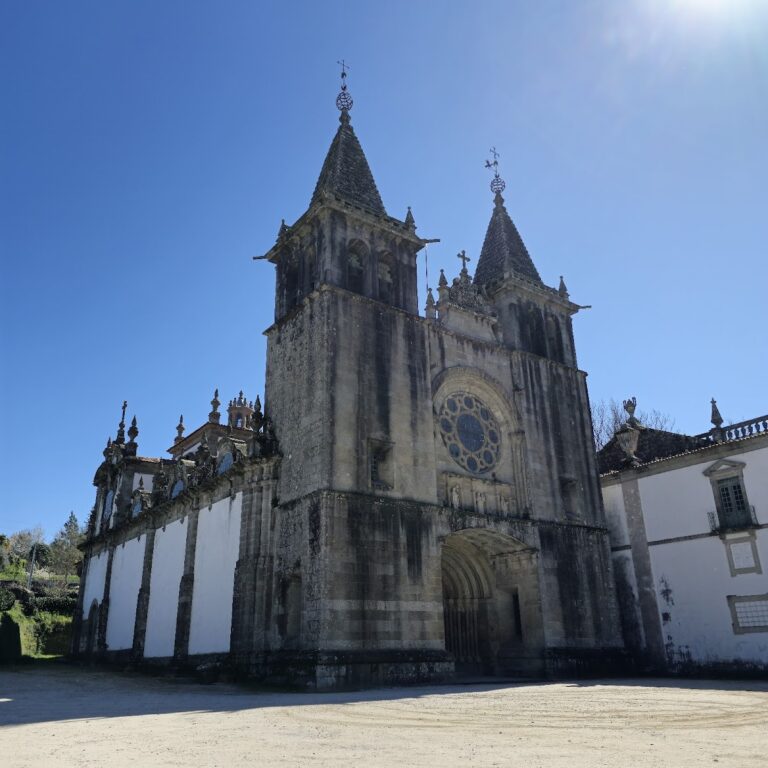
The castle was probably linked to the defense of the neighboring Monastery of Saint Benedict of Arnóia, which was founded during the same broad period. The monastery’s surviving Romanesque structure belongs to the twelfth and thirteenth centuries. Múnio Muniz is sometimes identified as the castle’s first commander, or alcaide, the governor of a castle. A tombstone dated 1034, found in the monastery, names him as the castle’s commander and has led to interpretations that he may also have helped found the monastery.
Royal administration and seigneurial power
Castle of Arnóia appears in the royal inquiries of 1258, an investigation into rights, obligations, revenues, and landholding throughout the Portuguese kingdom. Its inclusion shows that the fortress was integrated into the military, fiscal, and seigneurial organization of the Terras de Basto. The parishes of Arnóia, Caçarilhe, and Carvalho were required to supply food for the guard dogs and prepare lime for the upkeep of the defenses.
After Afonso III died in 1279, the commander Martim Vasques da Cunha became involved in a conflict with the new king, Dinis I, during tensions connected with the succession. A later tradition says that Martim had supported the infante Afonso. To leave his office without breaking his oath of honor, he supposedly evacuated the garrison and inhabitants, set fire to a room, and escaped from the fortress in a basket suspended from a rope. This story is legendary, but it was later used to explain the castle’s abandonment.
In 1282, Dinis I leased the domains of Celorico de Basto to Martim Joanes for 210 morabitinos, a medieval Iberian gold currency. The agreement required him to recruit a knight to command the castle. In 1284, the domains and the fortress were leased to the inhabitants of Celorico de Basto. In 1402, after João I came to the throne, he granted the lordship of the Terras de Basto to Gil Vasques da Cunha.
Municipal center and decline
On 29 March 1520, during the reign of Manuel I, a new royal charter for Celorico de Basto established the municipal seat at Arnóia, beside the castle. The former Vila de Basto consequently developed as a local administrative and judicial center. Its institutions included buildings for court hearings, a jail, a gallows, an old pharmacy, and a pillory. During the seventeenth-century Philippine Dynasty, members of the Castro family held the castle commandership. The family was related to the Cunha Coutinho lineage associated with the area.
The site’s decline began in the early eighteenth century. In 1717, the local administrative center moved from the former Vila de Basto to the parish of Britelo. A provision issued by João V in 1719 then transferred the municipal seat and local jurisdiction to Freixieiro, which thereafter became known as Vila Nova de Freixieiro. This change accelerated the decline of the former Vila de Basto, while administration progressively became centered on the present town of Celorico de Basto.
Legends and modern preservation
The names Castle of the Moors and Castle of Moreira helped sustain local traditions connecting the fortress with the Moors. One legend says that they settled there because the stronghold was easier to defend than the neighboring heights of Ladário and Viso. Another tradition claims that tunnels linked the fortress with the Tâmega, about ten kilometers away. That story is legendary rather than archaeological evidence, and a further connection sometimes mentioned with Amarante is not securely documented.
The best-known conquest legend tells of Christian troops who were too few to attack directly. They supposedly attached lights or torches to goats’ horns, making the defenders believe that a large army was approaching. The Moorish garrison then allegedly abandoned the castle. The story is also known as the legend of the “army that was not.”
Castle of Arnóia was classified as a National Monument of Portugal by a decree published on 15 March 1946. Twentieth-century consolidation and restoration concentrated particularly on the merlons and the external access to the tower during the 1970s. The gallows and pillory were also restored, especially during the 1960s. Archaeological investigations at the beginning of the twenty-first century identified a medieval occupation phase from the twelfth to the thirteenth centuries and a later phase from the fourteenth to the sixteenth centuries. During that later phase, residential, administrative, and symbolic functions were more important than a strictly military role. A further campaign in 2015 addressed the walls, access routes, paths, lighting, and technical networks.
Remains
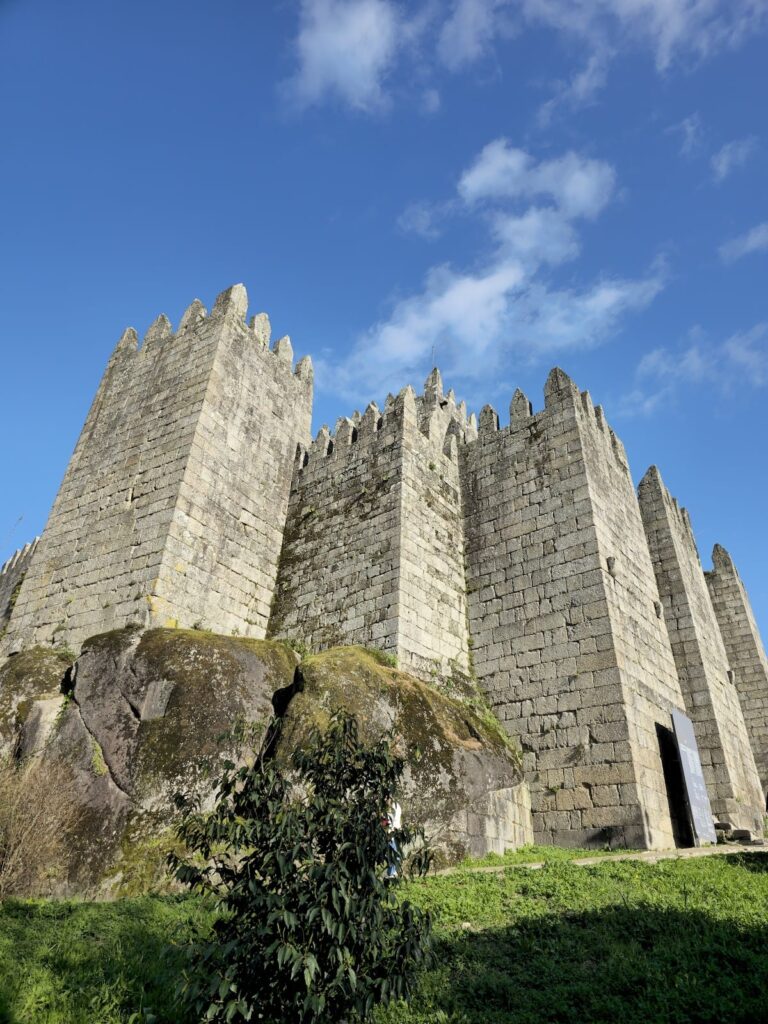
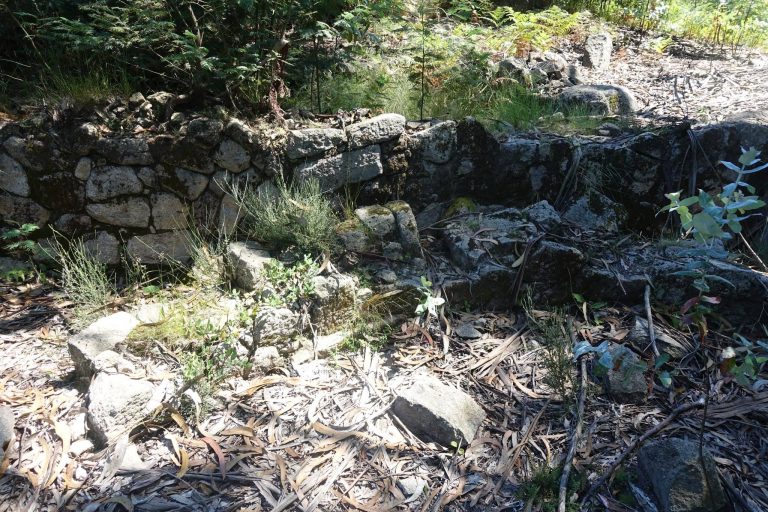
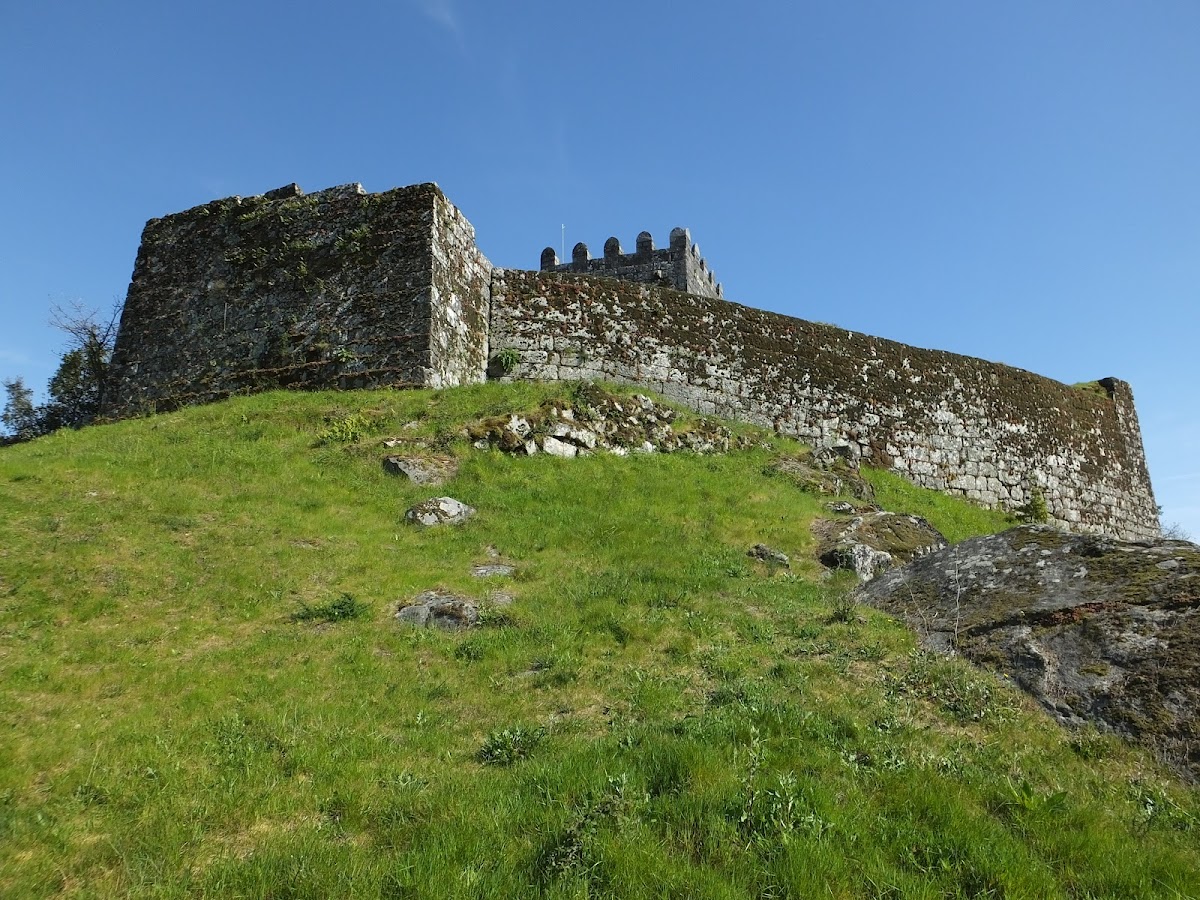
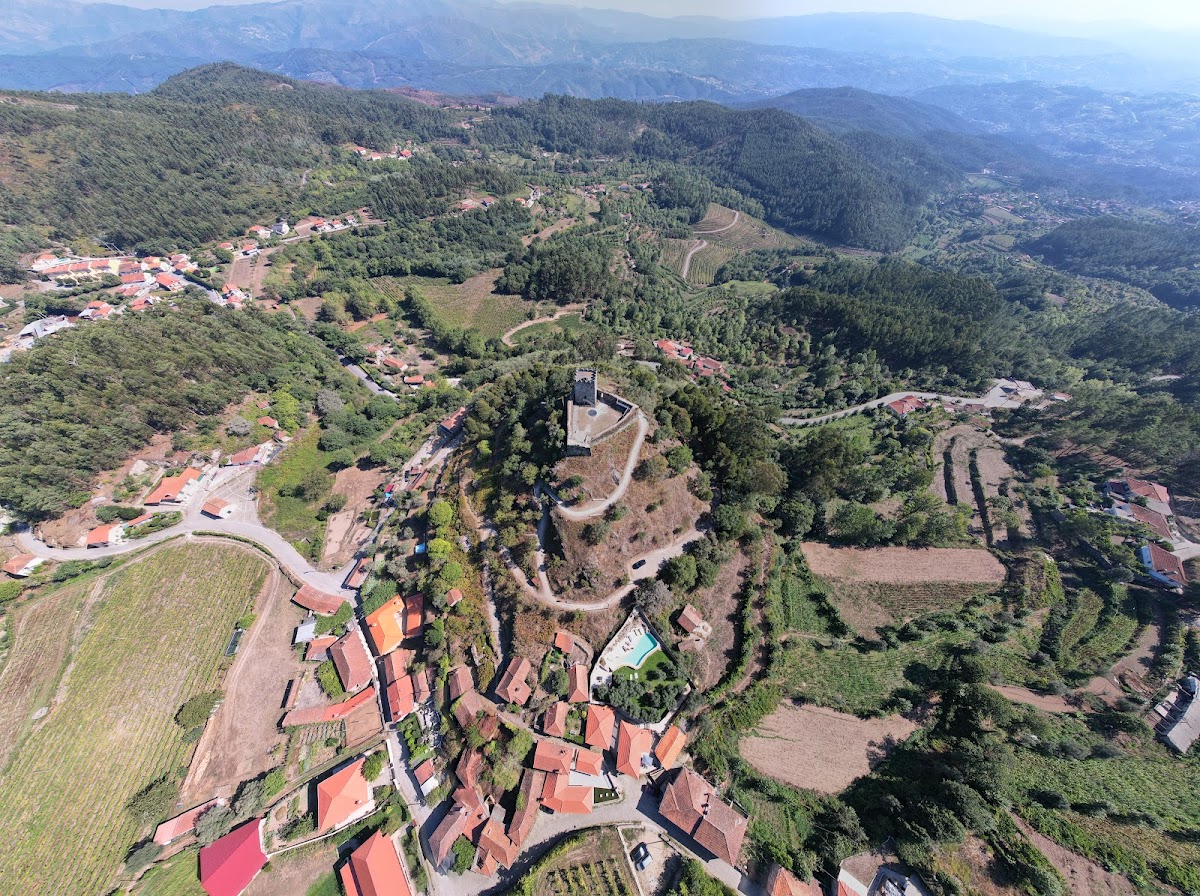
Castle of Arnóia occupies a rocky spur above the former Vila de Basto. Its irregular polygonal plan follows the contours and uneven levels of the ground. A granite enclosure surrounds a small bailey, while the surviving defenses include a wall-walk, the southern entrance, a square keep, and a central cistern. The castle is in satisfactory condition, with several elements consolidated or restored during the twentieth and twenty-first centuries.
Enclosure and defensive structures
The granite enclosure forms the principal defensive boundary and contains a wall-walk, a path along the top of a defensive wall. On the northern side, the walls are reinforced by a cubelo, a small flanking tower integrated into the enclosure. The only gate lies on the southern side, where a route or parapet leads toward the wall-walk. These features follow the irregular ground rather than forming a regular geometric plan.
Keep and water supply
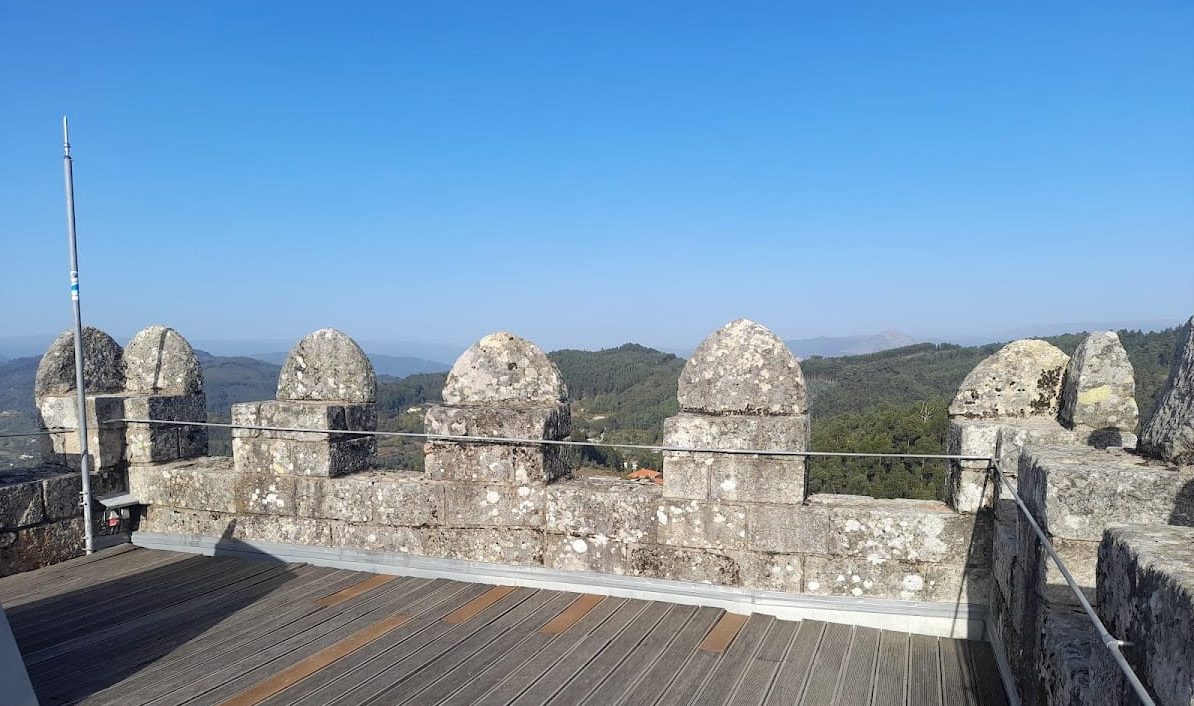
The square keep is attached to the southern part of the enclosure. Its doorway faces the bailey and stands approximately three metres above ground level. An external staircase, built during modern restoration, now provides access to it. The tower has three levels, including a lower storey used as a cellar. Its summit has a flat platform crowned with merlons, the raised sections of a battlement.
A cistern occupies the center of the bailey and supplied water during a siege. Its position within the enclosed area formed part of the castle’s practical infrastructure, alongside the defensive walls and tower.
Judicial remains outside the walls
On the northern slope outside the enclosure stand the former gallows and pillory associated with the judicial functions of Vila de Basto. Nearby are buildings connected with court hearings and the jail, together with an old pharmacy and a former boundary cross. The gallows and boundary cross were restored during the 1960s, while the gallows and pillory underwent broader twentieth-century restoration.