Roman Sites in Italy: Explore Amphitheatres, Villas and Water Systems
Roman sites in Italy include amphitheatres with extensive audience or service spaces, a domed temple still enclosed by its ancient walls, painted villas and towns with streets, baths and mosaic rooms. Waterworks range from high aqueduct arcades outside Rome to the vaulted reservoir at Bacoli.
The examples below extend from Verona to Campania, Sicily and Sardinia. Painted rooms at Oplontis and mosaic galleries at the Villa Romana del Casale preserve the decoration of private residences, while Nora combines houses with the public buildings of a coastal town.
Primary Function: All
Type: All
Popularity: All
Rating: All
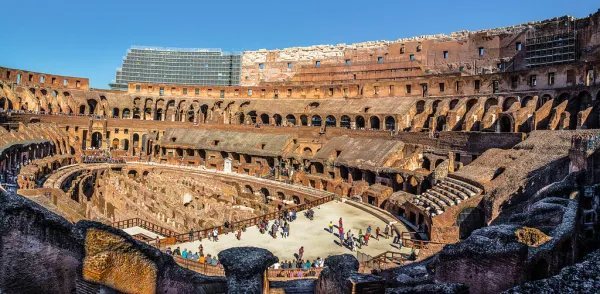
The Colosseum is Rome’s ancient Flavian amphitheatre, built under Vespasian and completed by Titus and Domitian. It hosted spectacles for almost five…
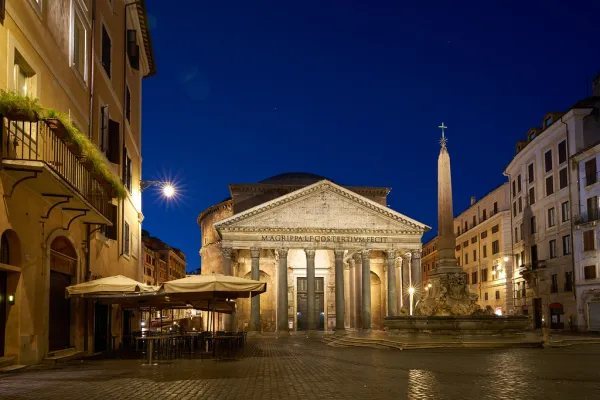
The Pantheon in Rome is an ancient Roman monument rebuilt under Hadrian and later converted into a Christian church. Its vast concrete dome,…
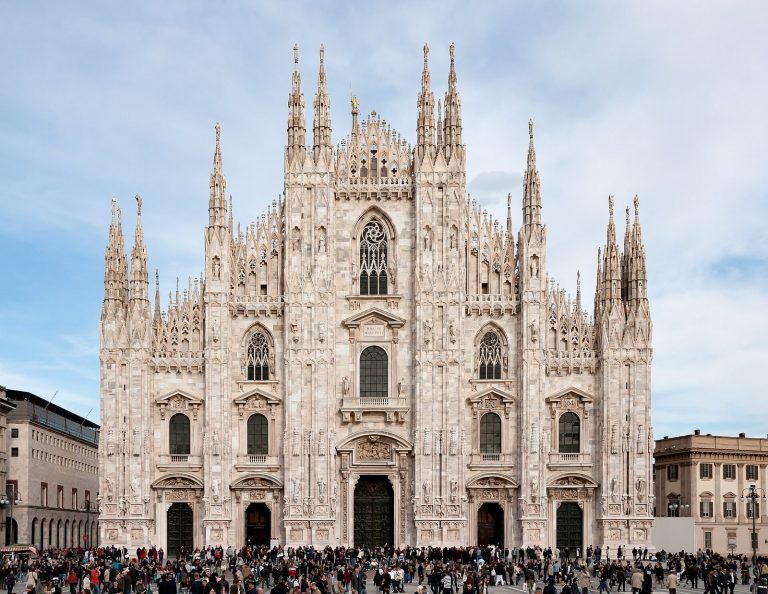
Milan Cathedral is Milan’s historic cathedral, begun in 1386 on the site of earlier Roman and Christian buildings. Its International Gothic structure…
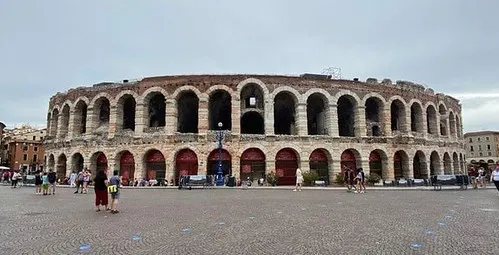
The Arena di Verona is a Roman amphitheatre built by the first century AD. Its surviving structure preserves evidence of Roman spectacles, medieval…
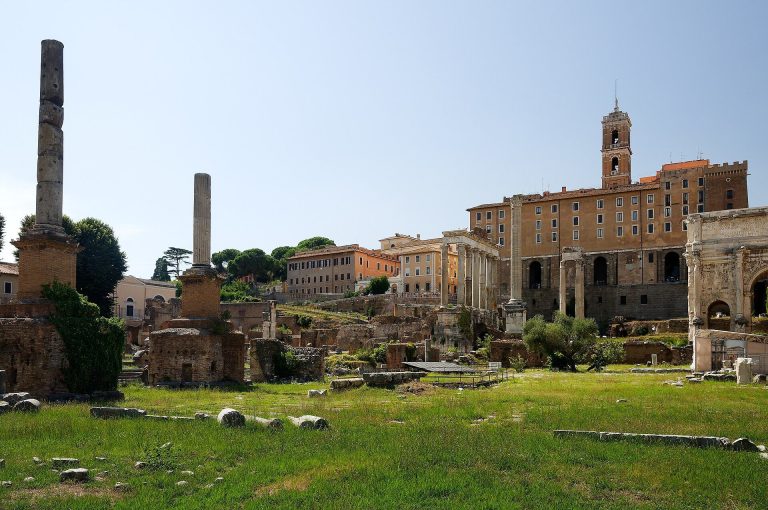
The Roman Forum developed from an archaic cemetery into Rome’s principal political, judicial, religious, and commercial center, retaining monuments…
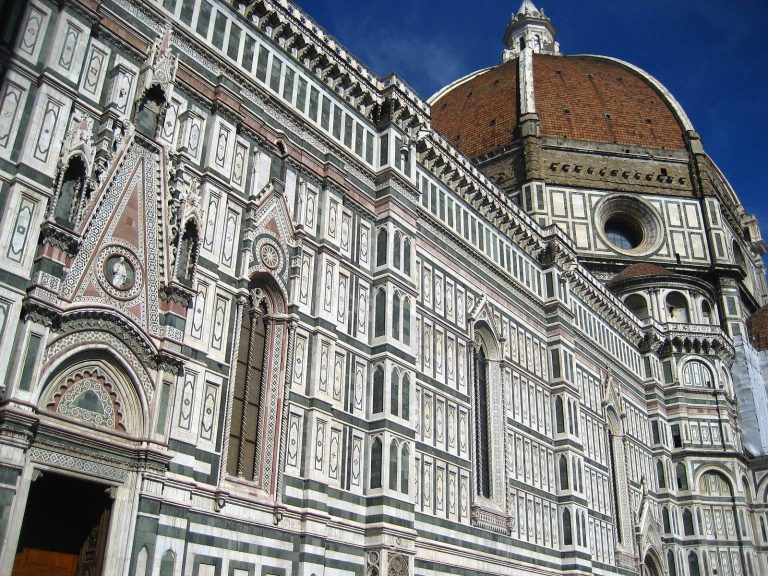
Florence Cathedral, dedicated to Saint Mary of the Flower, developed from the earlier church of Santa Reparata into a major medieval and Renaissance…
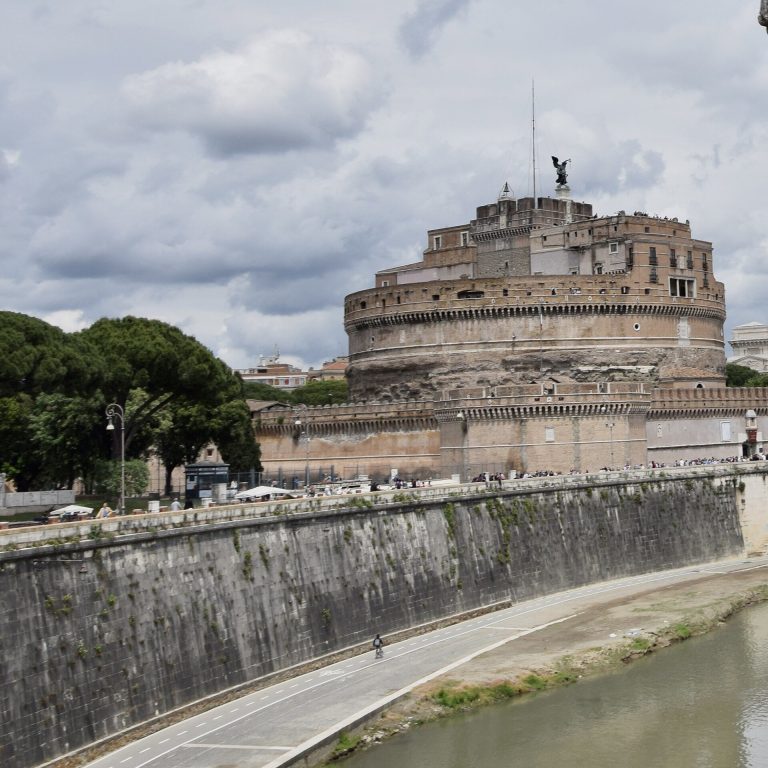
Castel Sant'Angelo in Rome began as Emperor Hadrian's mausoleum and later became a fortress, papal refuge, prison, and museum, preserving layers of…
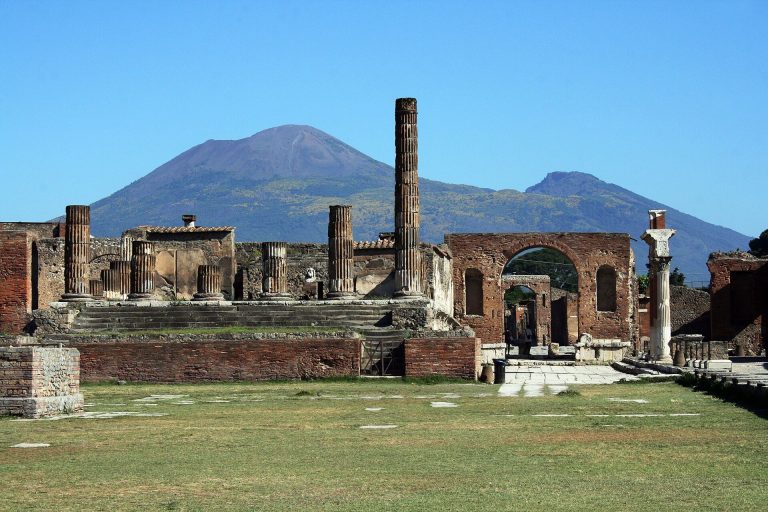
The Archaeological Park of Pompeii preserves an ancient city shaped by Oscan, Greek, Etruscan, Samnite, and Roman influences and buried by the…
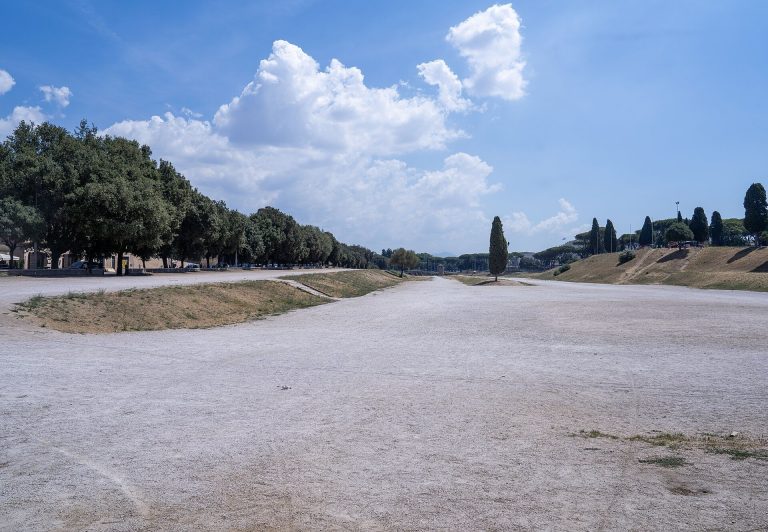
Circus Maximus was Rome’s principal venue for chariot races, religious games, processions, and mass spectacles. Developed from the Regal period and…
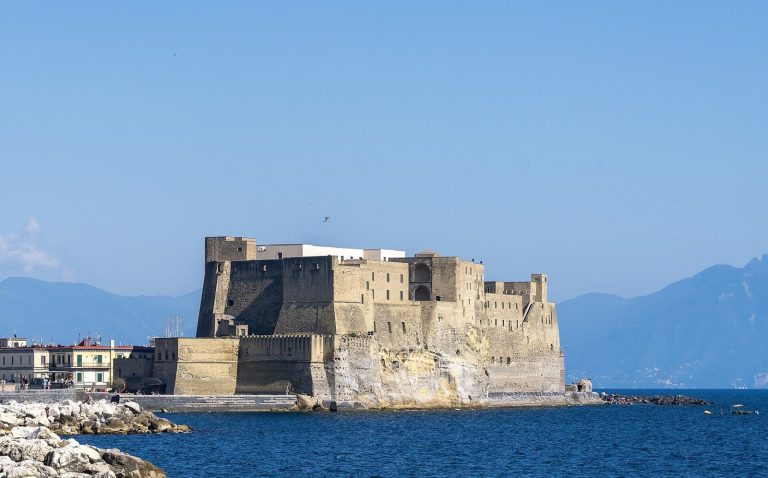
Castel dell'Ovo is Naples' oldest castle, built on the ancient island of Megaride and shaped by Greek, Roman, monastic, Norman, Angevin, Aragonese,…
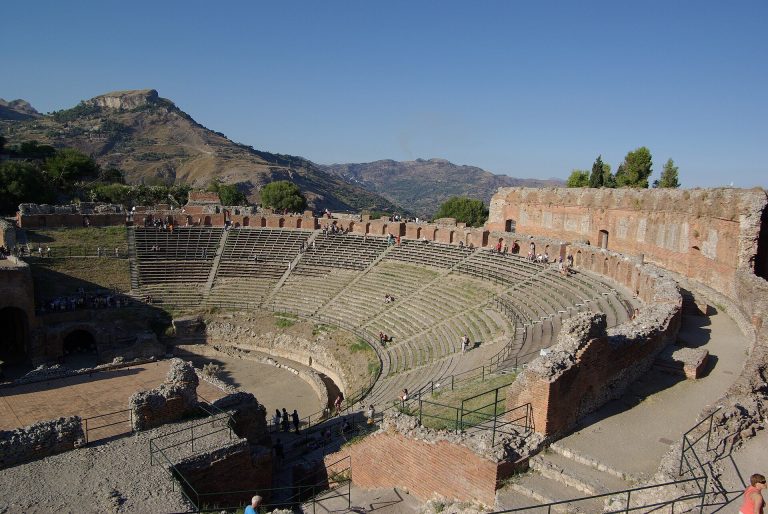
Teatro Antico di Taormina preserves the remains of a Hellenistic theatre enlarged under Roman rule and later adapted for arena spectacles. Its…
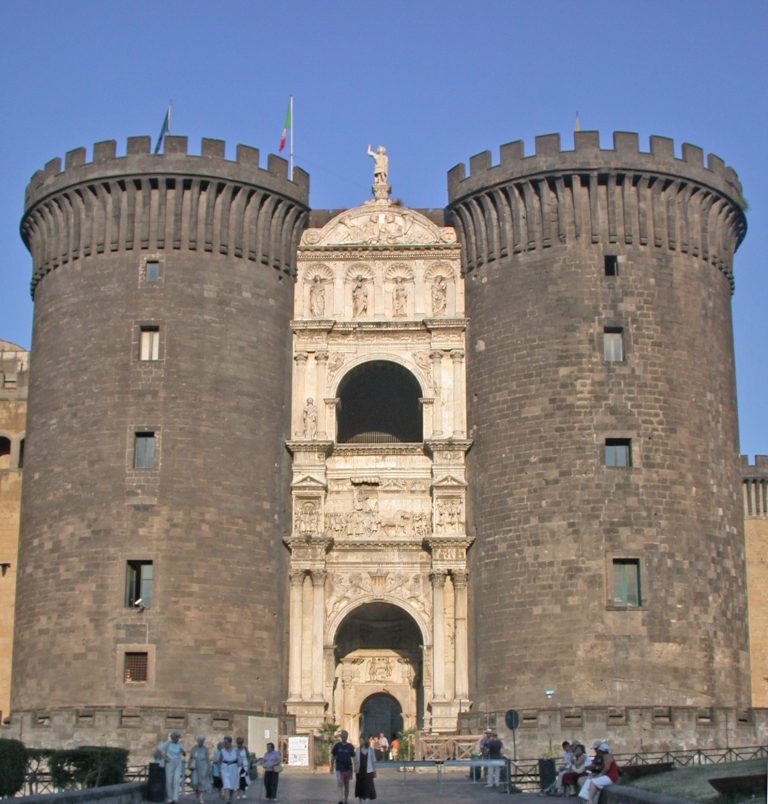
Castel Nuovo in Naples developed from an Angevin royal residence into an Aragonese palace-fortress, a Spanish military garrison, and a civic museum…
For details on how to use the maps, which sites are included, how popularity and ratings are determined, and how sites are classified, see the help page.
On this page7 sections
Arena structures at Verona and Pozzuoli
The Arena di Verona preserves the inner structure of a large amphitheatre, with galleries and stairs carrying spectators towards the seating. Most of its outer façade has disappeared. The surviving section known as the Ala retains a short group of arches and numbered entrances, showing how the lost outer ring once enclosed the building. Centuries of repair and restoration have renewed parts of the seating and circulation areas.
At the Flavian Amphitheatre in Pozzuoli, the underground level is especially extensive. Corridors and chambers beneath the arena held equipment and mechanisms used to raise cages and scenery. A long trench followed the arena’s main axis, intersected by a transverse passage. Openings above could be closed with wooden boards during performances. These spaces preserve the working arrangements beneath the spectacle, alongside the passages used by the audience.
The Pantheon’s dome and circular interior
The Pantheon in Rome joins a deep columned porch to a circular hall beneath a concrete dome. The interior height and diameter are approximately equal. Recessed coffers diminish towards the circular opening at the crown, while progressively lighter materials reduce the weight of the upper dome.
The opening admits both sunlight and rain. Drainage holes in the patterned stone floor carry the water away. Later church furnishings, repairs and altered wall decoration occupy the ancient interior, but the relationship between the circular room, high dome and open centre remains clear.
Painted rooms and mosaic galleries in villas
At Villa Poppaea in Oplontis, near Naples, painted columns, doorways and architectural vistas extend across the walls of a large residence. The atrium and adjoining rooms preserve different decorative schemes, including repairs made after earthquake damage. A later wing runs beside a long pool, with rooms alternating with small planted courts.
The Villa Romana del Casale in Sicily has extensive mosaic floors arranged through reception areas, private rooms and bathing spaces. Its long Corridor of the Great Hunt depicts the capture and transport of animals, including their movement onto ships. The gallery connected major sectors of the house, so this sequence of images occupied a route through the residence rather than an isolated display panel.
Nora’s theatre, baths and coastal houses
Nora occupies a peninsula on Sardinia’s southern coast, where Roman construction developed over an earlier Phoenician and Punic settlement. The theatre stands near the forum, and several bathing complexes occupy different parts of the town. Public squares and houses fit into the peninsula’s restricted ground between former harbour areas.
The House of the Tetrastyle Atrium preserves a four-columned court and mosaic-decorated rooms, including a marine scene with a Nereid riding a sea creature.
Aqueducts across the outskirts of Rome
The Parco degli Acquedotti preserves sections of several water routes, including the high arcades carrying the Aqua Claudia and Anio Novus channels. Other conduits passed below ground or were incorporated into subsequent construction. Together, they record overlapping routes supplying the city at different dates.
The Acqua Felice adds a much later line across the park. It was built for Pope Sixtus V in the sixteenth century and reused or displaced parts of the earlier system. Its arches should therefore be distinguished from the Roman aqueducts beside them.
Water storage in the Piscina Mirabilis
At Bacoli, the Piscina Mirabilis contains a vast roofed reservoir divided by rows of cruciform pillars. These supports carry barrel vaults above the storage space. Waterproof mortar coats the masonry, with rounded junctions at the bases helping seal the interior.
A lowered basin in the floor allowed sediment to settle and assisted cleaning and emptying. Stairways and openings in the vaults provided access and connections with the water-handling arrangements above. The surviving chamber includes modern repairs to pillars and vaults, while retaining the ancient reservoir’s internal structure.
Explore the collection
Explore sites on the map or in the grid. Map icons reflect each site’s primary function, helping you identify different kinds of places at a glance. Narrow the results by primary function, site type or era, with additional filters for popularity and rating. Select a map marker to view the site’s details and open its article, or open the article from its grid entry.