Visigothic Sites: Explore Royal Cities, Stone Churches and Early Christian Basilicas
Visigothic sites include newly founded royal towns, stone churches and Christian complexes built within older Roman settlements. The examples in Spain and Portugal range from standing horseshoe arches and carved friezes to extensive excavated palace, basilica and burial plans. Together they show the buildings used for royal government, worship and community burial in the centuries after Roman imperial rule.
Some churches began earlier, while others were altered long after the Visigothic kingdom ended. The collection includes those longer histories, with the relevant building phases distinguished in the site articles.
Primary Function: All
Type: All
Country: All
Popularity: All
Rating: All

The Citadel of Carcassonne developed from a protohistoric settlement into a Roman, Visigothic, feudal, and royal stronghold, preserving major…
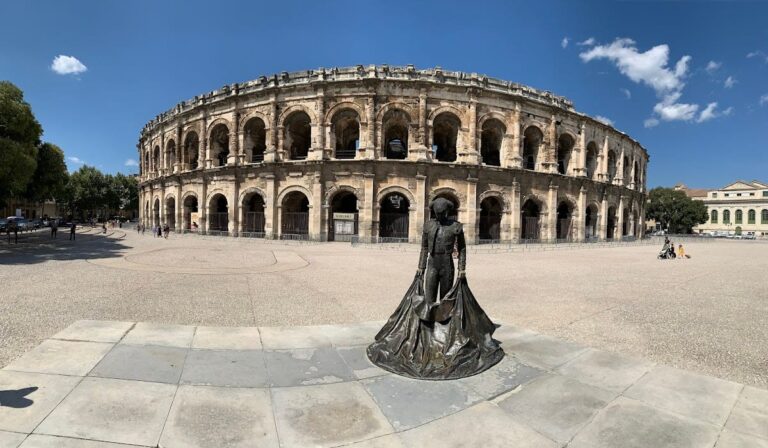
Built at Roman Nemausus around the end of the first century AD, the Amphitheatre of Nîmes later became a fortified settlement before its…
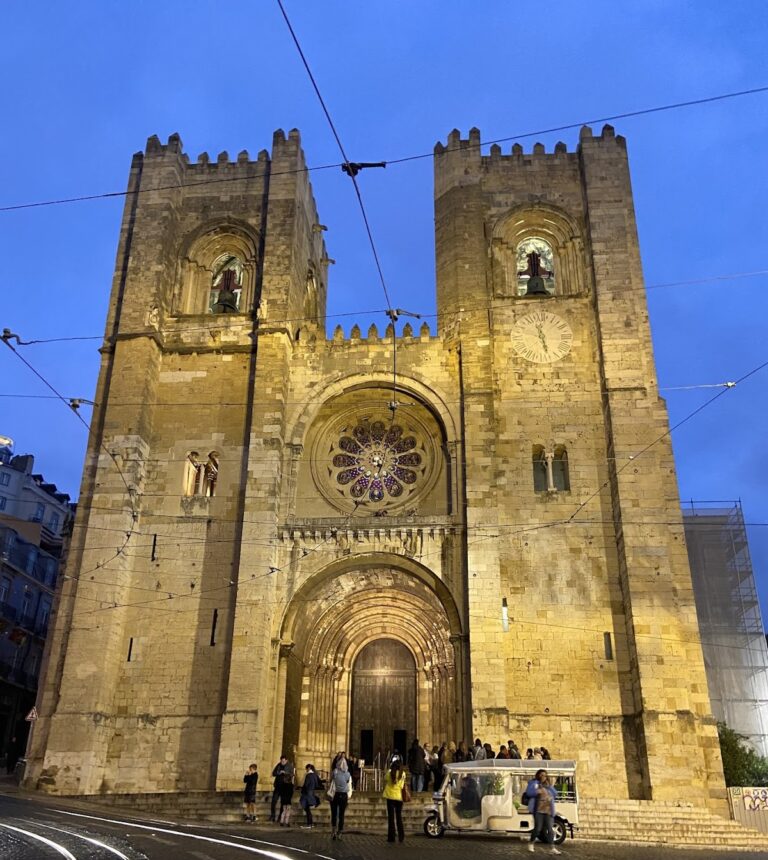
Lisbon Cathedral traces its origins to the Christian conquest of Lisbon in 1147 and preserves Romanesque, Gothic, Baroque, and later restored…
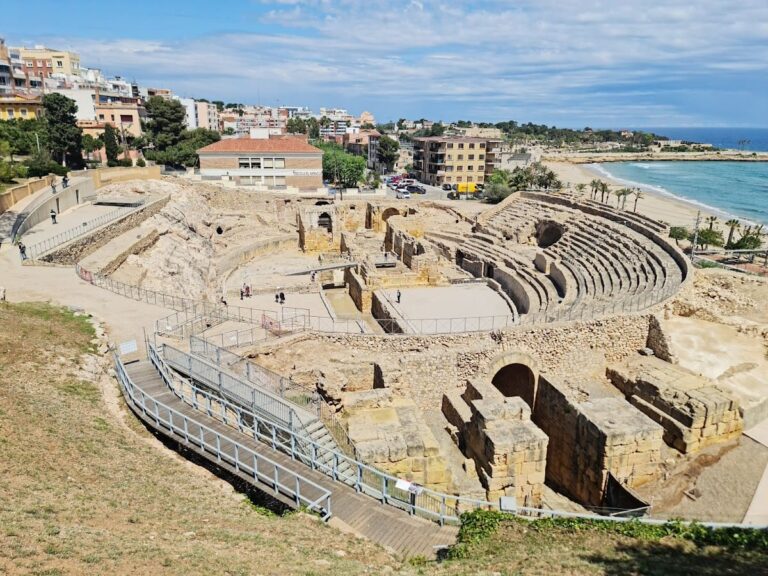
Tarragona Amphitheatre was a Roman entertainment building outside ancient Tarraco, later transformed by a Christian basilica, cemetery, and medieval…

Castle of Silves preserves the layered history of an important Algarve stronghold, from Islamic rule and taifa capital to Christian conquest, later…
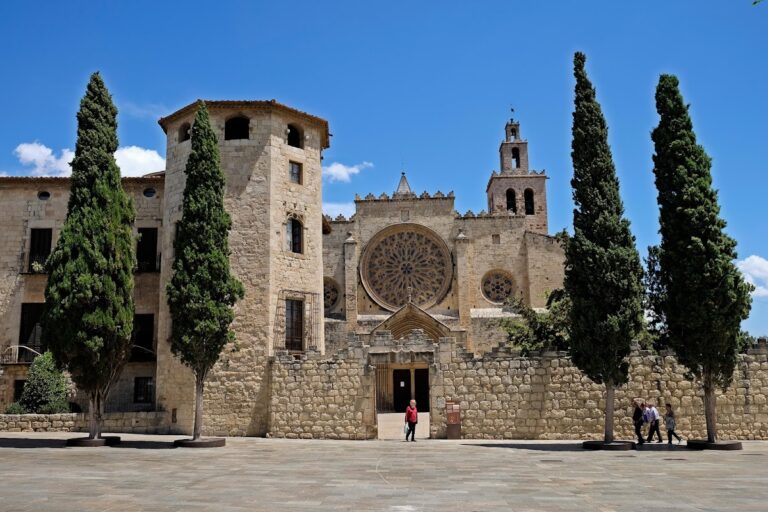
The Monastery of Sant Cugat was a major Benedictine abbey in the County of Barcelona, developing from Roman and early Christian foundations into a…

The Castle of Burgos developed from a ninth-century hilltop fortification into a royal residence, prison, artillery stronghold, and telegraph station…

Segóbriga Archaeological Park preserves the remains of a Celtiberian and Roman city near Saelices in Cuenca. Its history includes Roman municipal…
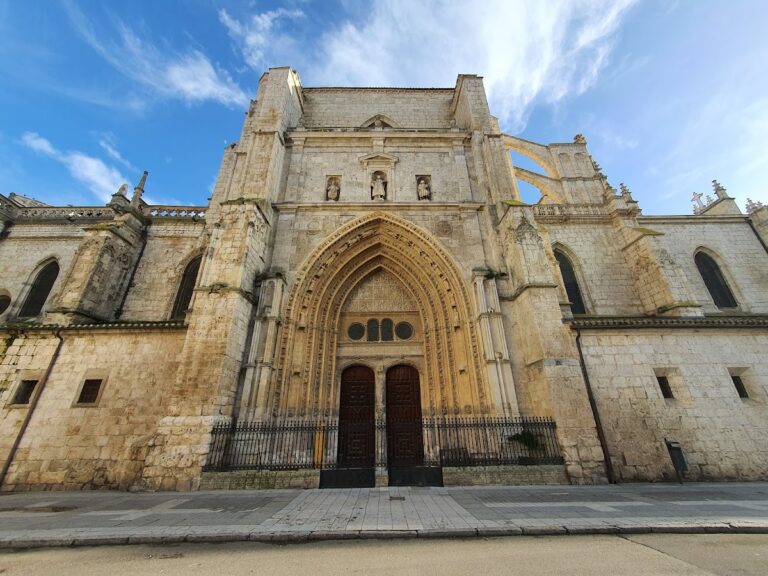
Palencia Cathedral, the Cathedral-Basilica of San Antolín, developed from a Visigothic sanctuary into a major Gothic church with Renaissance and…
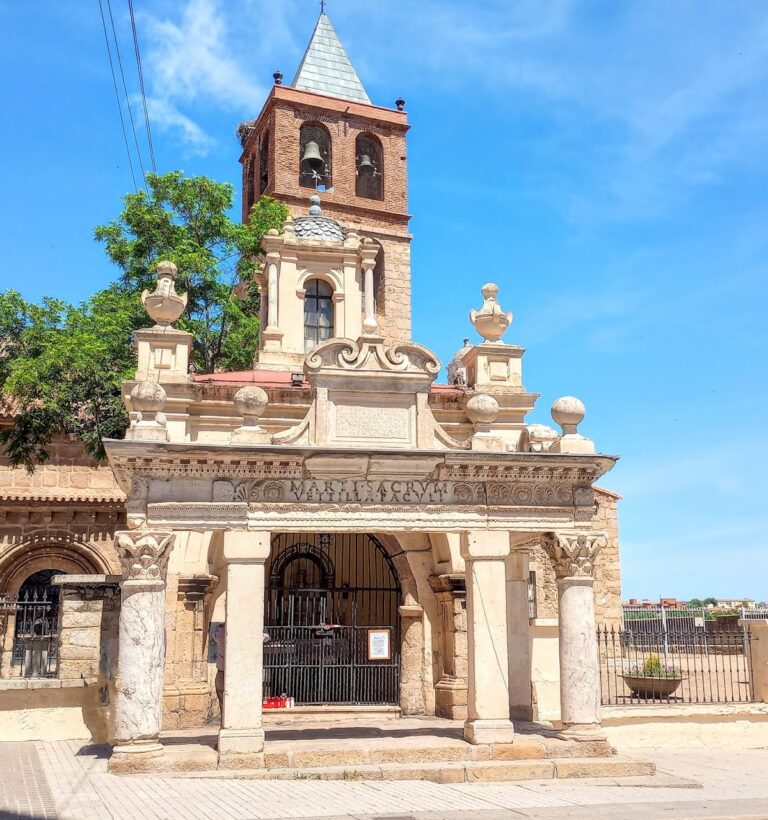
The Basilica of Saint Eulalia of Mérida developed from a fourth-century martyrial church and preserves Roman, Visigothic, Romanesque, and Baroque…

La Almoina Archaeological Museum preserves archaeological remains from the Roman foundation of Valentia in 138 BC through the fourteenth century,…
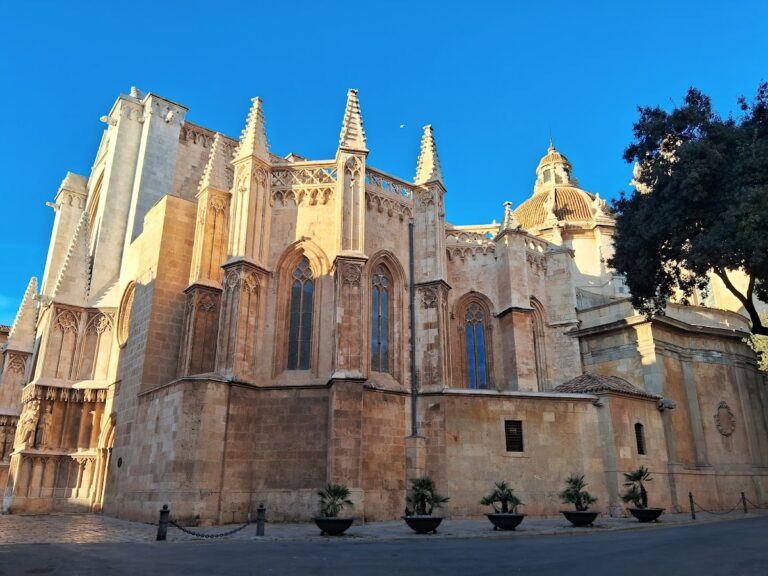
Tarragona’s cathedral occupies a site used by a Roman temple, a Visigothic cathedral, and a mosque. Its Romanesque-Gothic building preserves medieval…
For details on how to use the maps, which sites are included, how popularity and ratings are determined, and how sites are classified, see the help page.
On this page5 sections
Royal towns, palaces and commercial streets
Recópolis, founded by King Leovigild in 578, preserves the excavated plan of a town above the Tagus in central Spain. A main street rises through a commercial district towards the palace and royal church on the highest ground. Rooms lining the street formed premises for shops and production, while the upper complex brought administration and worship together around an open space.
The exposed walls allow the route from the town to the royal precinct to be followed through its surviving layout. Water infrastructure included cisterns and an aqueduct supplying the upper area.
Episcopal complexes and baptisteries
At El Tolmo de Minateda, a hilltop settlement in southeastern Spain, the upper excavations contain a basilica and an adjoining complex interpreted as an episcopal residence. The church had three aisles, an apse and a baptistery at its western end. Rooms around it show how the religious buildings occupied a substantial part of the settlement.
The approach through El Reguerón preserves a different aspect of the same town. A defended entrance, strengthened during the sixth century, controlled the route climbing onto the plateau. Surviving gate structures and the worn roadway connect the hilltop buildings with the movement of people and supplies below.
At La Almoina in Valencia, the Christian complex developed within the earlier Roman city. The excavated sixth-century baptistery used large reused stone blocks in its walls. A drainage channel carried water towards the street, adding a practical detail to the building’s liturgical role. The museum setting preserves these remains alongside earlier roads and structures, making the transformation of an urban centre visible in the excavated sequence.
Stone churches, arcades and carved sanctuaries
San Juan de Baños, at Baños de Cerrato near Palencia, preserves a compact stone church associated with King Recceswinth. Its dedication tablet, conventionally dated to 661, identifies the king as the patron. Inside, horseshoe arches divide the nave from the side aisles, resting on reused columns with differently carved capitals.
The surviving central sanctuary and the arcade provide a clear view of the church’s early arrangement. Later changes altered its eastern rooms and added features including the bell gable. The royal inscription remains above the arch leading towards the sanctuary, connecting a named patron with the building itself.
At Santa María de Lara, near Quintanilla de las Viñas, the surviving eastern part of a larger church retains bands of carved ornament. Birds, animals and curling vegetation fill the stone friezes, while the arch into the sanctuary rests on carved blocks with figures associated with the Sun and Moon.
The church is traditionally dated to the Visigothic period, although its chronology has been debated. The nave has disappeared, leaving the chancel and transept as the standing focus. The concentration of sculpture around the sanctuary gives this small surviving building a different emphasis from the complete arcades at San Juan de Baños.
Cemetery basilicas and burial grounds
The Early Christian Basilica of Mértola, at Rossio do Carmo in Portugal, preserves the plan of a three-aisled church associated with an extensive cemetery. Graves were cut inside and around the building, and some retain their stone covers in place. Inscribed funerary slabs record members of the Christian community.
The complex spans the later Roman and Visigothic centuries, with some burials continuing into the Islamic period. Its church foundations and closely arranged graves show how worship and burial shared the same space outside the historic town centre.
Explore the collection
Explore sites on the map or in the grid. Map icons reflect each site’s primary function, helping you identify different kinds of places at a glance. Narrow the results by country, primary function, site type or era, with additional filters for popularity and rating. Select a map marker to view the site’s details and open its article, or open the article from its grid entry.