Nenagh Castle: A Historic Anglo-Norman Tower in Ireland


Visitor Information
Google Rating: 4.5
Popularity: Low
Google Maps: View on Google Maps
Official Website: www.nenagh.ie
Country: Ireland
Civilization: Unclassified
Remains: Military

History
Nenagh Castle is located in the town of Nenagh, Ireland. It was established by Anglo-Norman settlers in the early 13th century during the period of Norman expansion into Irish territory.
Construction of the castle began in 1216 under Theobald Walter, the first feudal chief Butler and chief butler of Ireland. His son, Theobald Butler, 2nd Baron Butler, completed the work around 1220. The castle served as the principal residence for the Butler family, a powerful Anglo-Norman dynasty that later held the title Earls of Ormond. This family initially occupied Nenagh Castle but moved their main seat first to Gowran Castle in the 14th century, and then to Kilkenny Castle, which remained their home for five centuries.
Before the Anglo-Norman arrival, the land where Nenagh Castle stands was held by the Irish O’Kennedy clan. The development of the area into a settlement followed the castle’s construction, with a market receiving special privileges by King Henry VIII, reflecting the growth of Nenagh as a significant local center.
In 1252, during King Henry III’s reign, a Franciscan monastery was founded near the castle. This religious house became one of Ireland’s wealthiest abbeys and remained active for nearly six centuries, until the death of its last inhabitant in 1817.
The castle experienced significant upheaval in the 16th century. It underwent rebuilding but was attacked and set on fire by the Irish O’Carroll clan in 1550. Later, during the turbulent period of the Irish Confederate Wars in the 1640s, Nenagh Castle exchanged control multiple times. Commanders such as Owen O’Neill and Felim O’Neill held it at different points, as did English forces under Sir George Hamilton and later officers aligned with Oliver Cromwell. The castle withstood several sieges and capitulations between 1641 and 1651.
Following the Restoration of the monarchy in 1660, ownership passed to Sir William Flower. In 1688, the castle was again burned during the Williamite wars by forces led by Patrick Sarsfield. Despite this, the Butler family retained possession of the castle thereafter.
In the 19th century, there were ambitious plans to convert Nenagh Castle into a cathedral. The design included using the tower as a bell tower. Bishop Michael Flannery oversaw alterations in 1861 to prepare for this transformation. However, these plans were never completed.
The Butler family line associated with the castle ended with the death of the last Butler marquess in 1997. Extensive restoration of the castle took place from 2009 to 2013, securing its preservation.
Remains
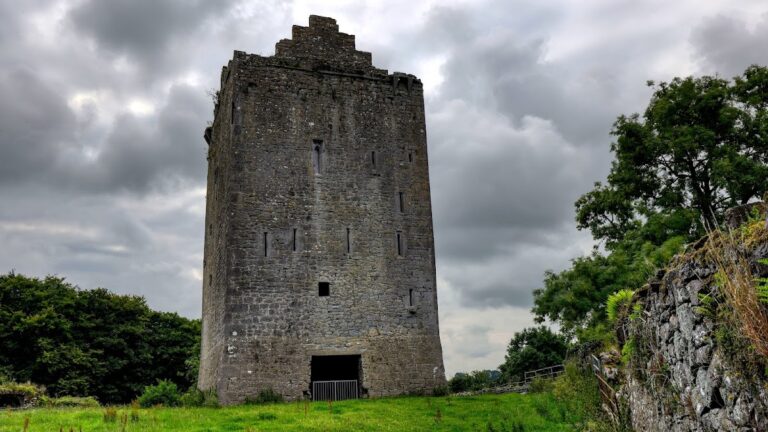
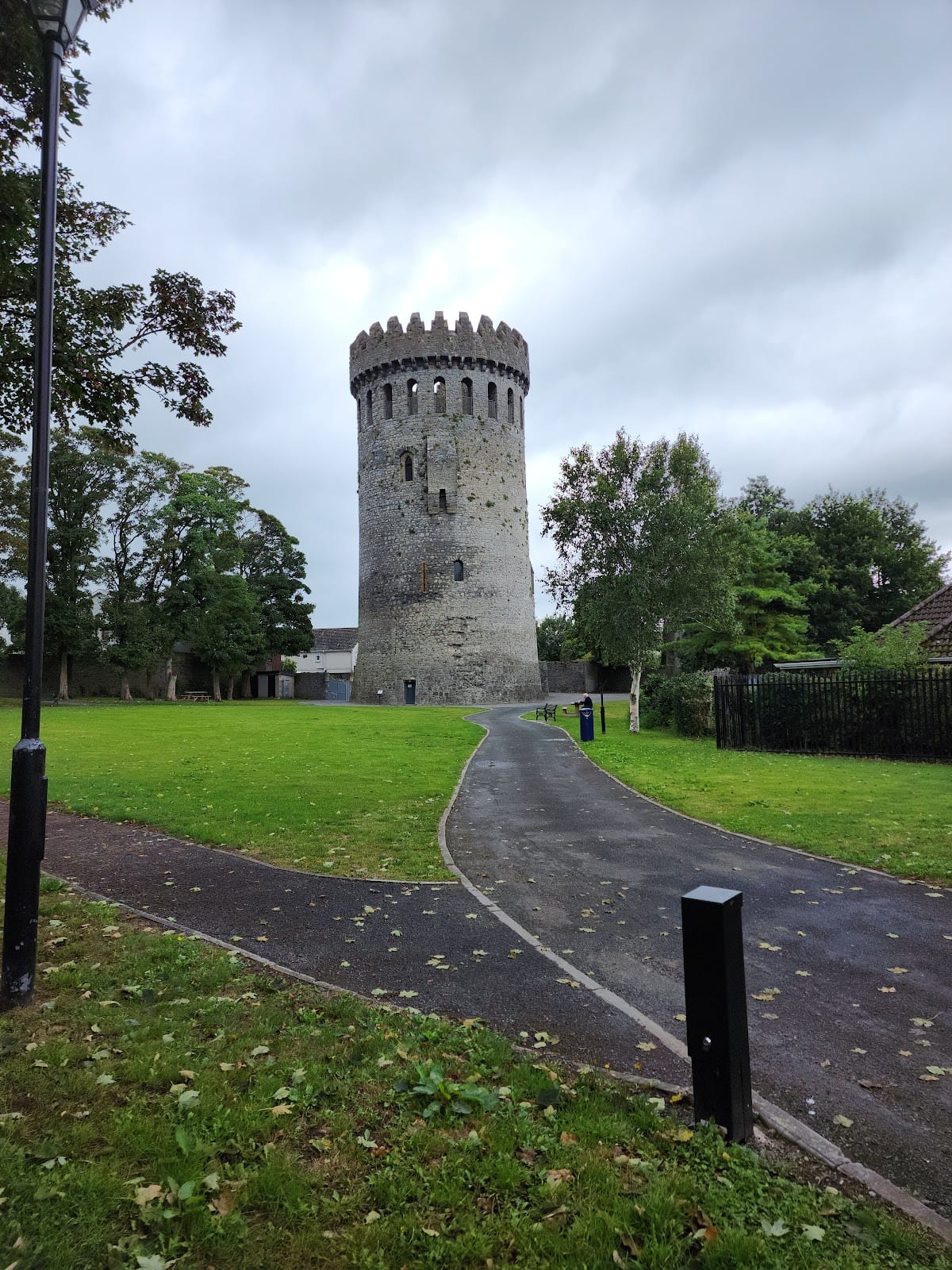
Nenagh Castle is primarily characterized by a tall, round tower house rising over 30 meters, with a base diameter measuring approximately 16 meters. This form of tower is recognized as one of the finest surviving examples of round towers in Ireland, combining residential and defensive uses typical of the medieval period.
The entrance to the tower is at ground level. Inside, the first floor is only illuminated by two small windows, offering a chamber that likely served a functional role. Above this first floor, a main hall occupies the second level, while the third floor, probably the primary living space, is lit by five large windows, emphasizing both comfort and status.
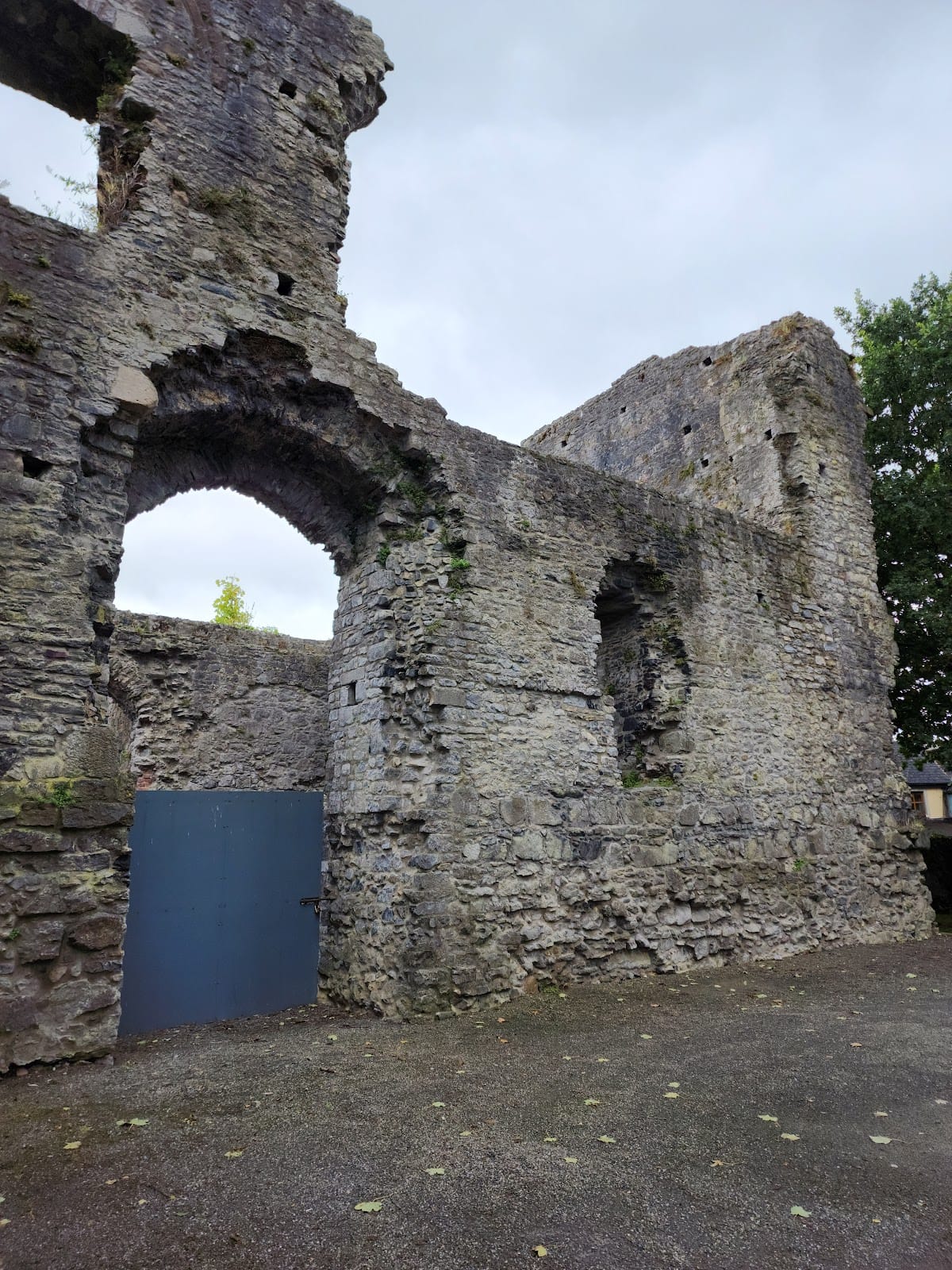
Originally, the tower was encircled by a five-sided bawn, which is an outer defensive wall. This enclosure included a gatehouse and several smaller round towers guarding the approach. Today, only one of these smaller round towers remains standing.
In the mid-19th century, additions altered the tower’s uppermost part. Battlements, or crenellations, were added along the top in 1861 by Bishop Michael Flannery as part of the incomplete cathedral conversion. These battlements are accompanied by clerical-style round-arched windows situated just below them, which were not part of the medieval structure but reflect the later ecclesiastical design intended for the tower.
Inside the tower, the construction employs sturdy masonry to fulfill both defense and residential needs. The presence of a vaulted chamber demonstrates advanced medieval building techniques, while the garderobe—a medieval latrine accessible through one of the windows—illustrates practical arrangements for sanitation during the castle’s occupation.
Today, the castle stands well preserved, mainly due to recent restoration efforts, and its structure remains accessible, showcasing its varied history through the fabric of the building itself.
Nearby sites