Birr Castle: An Anglo-Norman Fortress and Centre of Astronomy in Ireland

Site at a Glance
- Rating
- 4.6
- Popularity
- Medium
- Country
- Ireland
- Primary era
- Early Modern
- External website
- Open
- Eras represented
- Early Modern, Modern
- Civilizations
- British, Irish
- Site type
- Domestic
- Remains
- Castle
On this page14 sections
History
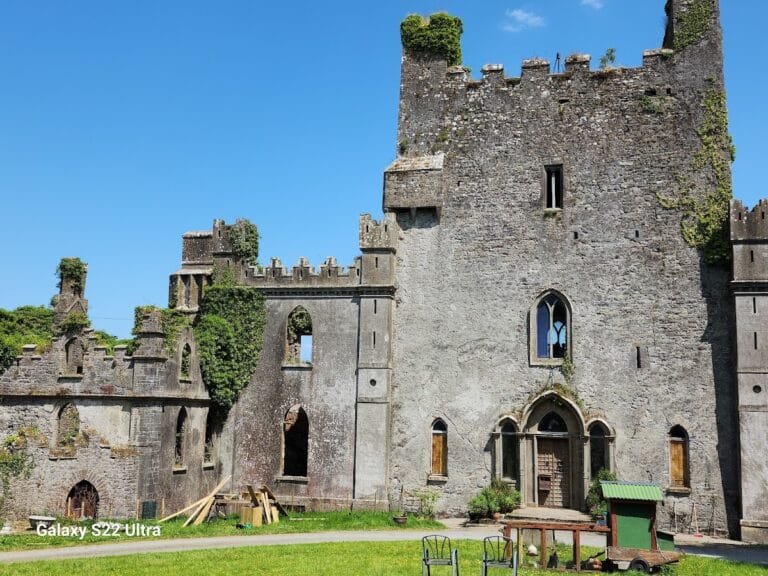
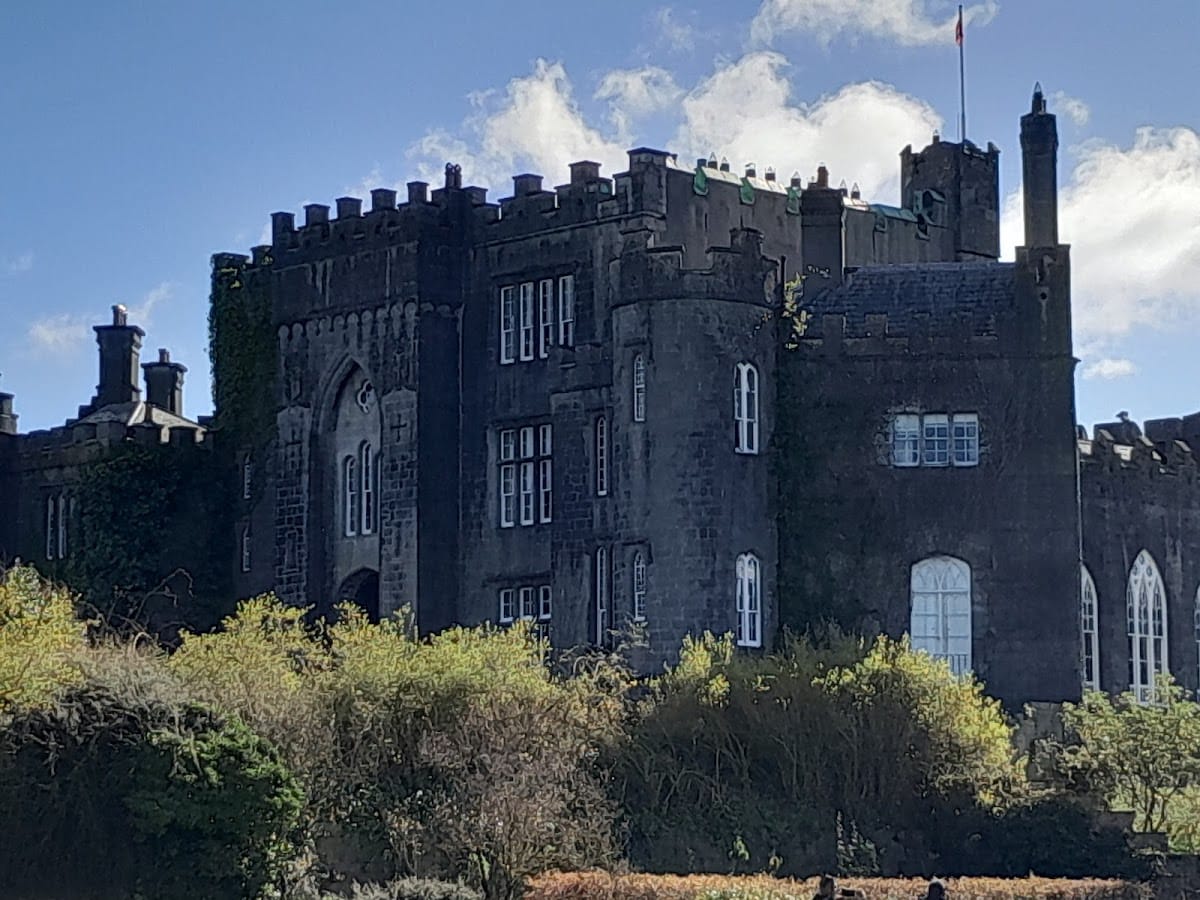
Birr Castle in Ireland occupies the site of an Anglo-Norman fortress established in 1170, and its later rebuilding gave it a Gothic appearance. From the fourteenth to the seventeenth century, the Gaelic O’Carroll family ruled the surrounding territory of Ely O’Carroll from Birr.
From O’Carroll stronghold to Parsons residence
After Sir Charles O’Carroll died, Sir Laurence Parsons received Birr Castle and 1,277 acres of land in 1620. Rather than rebuild on the site of the O’Carrolls’ vanished Black Tower, he commissioned English masons to construct a new castle at the former gatehouse. Diagonal flankers were added to both sides of the gatehouse, establishing the basic plan that survives.
Following the deaths of Sir Laurence Parsons and his elder son Richard, the property passed to Laurence’s younger son, William. During the Irish Rebellion of 1641, Catholic forces besieged William at Birr, then known as Parsonstown, for fifteen months. After the Civil War, William’s son Laurence, who became a baronet in 1677, repaired and refurnished the castle.
Nineteenth-century rebuilding
Laurence Parsons, 2nd Earl of Rosse, undertook further rebuilding in the early nineteenth century. The work raised the castle and gave it the Gothic appearance associated with the building today. An earl is a hereditary British and Irish title broadly equivalent to a European count, and the Earls of Rosse were members of the Parsons family connected with Birr Castle.
The Great Telescope and scientific work
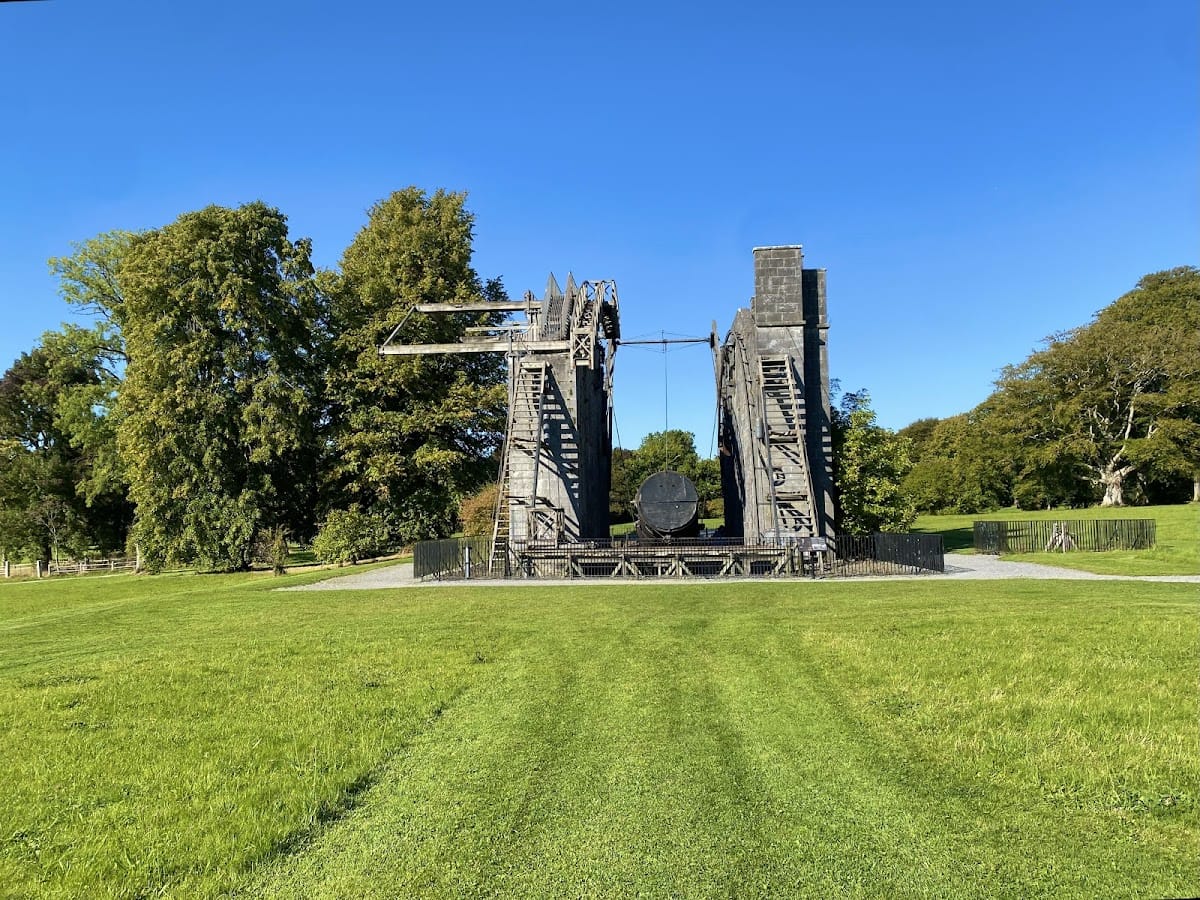
William Parsons, 3rd Earl of Rosse, completed the Great Telescope at Birr in 1845. Also called the Leviathan of Parsonstown or the Rosse Telescope, it made the estate an international centre of astronomical observation. Visitors included Charles Babbage and Napoléon Eugène, Prince Imperial.
After the 3rd Earl died, his sons continued the family’s scientific work. Laurence Parsons, 4th Earl of Rosse, was known for measuring the Moon’s heat. The telescope made its final observations in the early twentieth century. After his death in 1908, it fell into disrepair, was dismantled in 1914, and had its mirror removed. Its metal supporting structure was melted down around 1914 for use during the First World War, while related wooden structures were demolished in 1925 for safety reasons.
Restoration and modern astronomy
Several restoration attempts preceded a more complete restoration and reconstruction of the Great Telescope in the late 1990s. The work returned a major part of Birr’s scientific heritage to the demesne, the managed estate surrounding a principal castle or country house, including its parkland, gardens, and service areas.
Modern astronomical research returned to Birr after an interruption of approximately a century. Trinity College Dublin established the Rosse Solar-Terrestrial Observatory on leased land in the demesne and later developed I-LOFAR, the Irish station of the Low-Frequency Array, a distributed radio-telescope network combining observations from stations across Europe. I-LOFAR was largely built in 2016 and held its first-light opening ceremony in 2017. In 2018, it observed the red-dwarf flare star CN Leo for the first time, at approximately 75 trillion kilometres from Earth.
Birr Castle remains the private residence of Brendan Parsons, 7th Earl of Rosse, and his family. The residential areas are not generally open to the public, while the demesne grounds and gardens are accessible. In 2025, Birr Castle joined Dunsink Observatory and Armagh Observatory on Ireland’s World Heritage Tentative List, the country’s inventory of sites that may be nominated for future UNESCO World Heritage consideration.
Remains
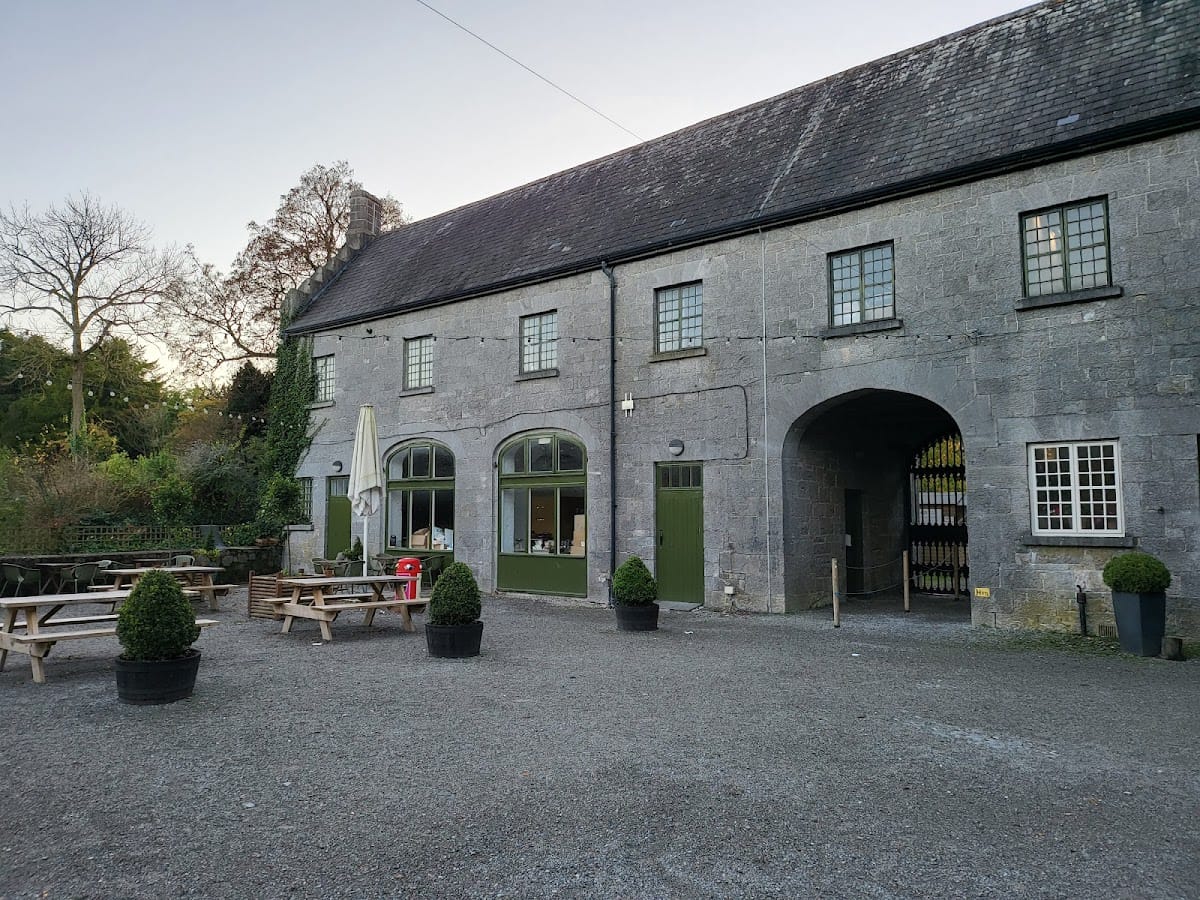
The surviving site combines a seventeenth-century castle plan with a managed demesne of parkland, gardens, waterways, historic engineering works, and astronomical installations. The castle faces into the estate, while an internal gate on a bridge over a dry moat separates its immediate surroundings from the wider parkland. A courtyard provides the main public entrance.
Castle and estate landscape
Castle plan and entrance
The castle was built at the former gatehouse of the O’Carroll stronghold. Diagonal flankers on either side of the gatehouse created the plan retained by the building. The internal gate and bridge cross a dry moat, placing the castle’s inner surroundings between the principal building and the wider demesne. The approach through a courtyard reflects the relationship between the fortified core and the estate around it.
Waterways and iron bridge
The River Camcor enters the demesne near the castle and passes through a pond before joining the Little Brosna River. The Little Brosna forms the boundary between Counties Offaly and Tipperary before eventually flowing into the Shannon. Near the castle and bridge, an early hydroelectric station formed part of the estate’s engineering history. The wrought-iron bridge dates from 1820 and is described as the oldest of its kind in Ireland.
Gardens and notable trees
The walled gardens contain box hedges more than 300 years old. The Guinness Book of Records identifies these as the tallest hedge in the world. The park also contains a plantation of California redwoods known as Giants’ Grove, together with a rare collection of trees imported from central China during the 1930s.
A Henry’s lime planted in 1946 measured 15 metres high and 44 centimetres in diameter at breast height in 2010. It was listed as the champion tree of England for that species. The Birr Castle Grey Poplar, identified as Populus x canescens, represented Ireland in the 2014 European Tree of the Year contest before being blown down in a storm on 12 February 2014 while voting remained open.
Scientific buildings and instruments
Great Telescope
The Great Telescope is a reflector telescope, using a mirror rather than a lens to collect and focus light. Its reflector measures 183 centimetres across. Completed in 1845, the instrument remained the world’s largest telescope until the 100-inch Hooker Telescope at Mount Wilson Observatory was completed in 1917. Its supporting structure was restored and the telescope reconstructed in the 1990s, while the original mirror is held at the Science Museum in London.
Science museum and darkroom
Ireland’s Historic Science Centre occupies part of the grounds as a museum devoted to Irish scientists and their contributions to astronomy and botany. Its displays also cover engineering, photography, and botany. The darkroom of Mary Parsons, Countess of Rosse, is exhibited there and is regarded as the oldest surviving example in the world. Mary Parsons was a photographer and the mother of Laurence Parsons, 4th Earl of Rosse.
Rosse Observatory and I-LOFAR
Trinity College Dublin’s Rosse Observatory occupies leased land near the Little Brosna River and the County Tipperary border. It includes I-LOFAR and smaller radio telescopes. An old sheep-yard building was converted into a control room for the Rosse Solar-Terrestrial Observatory, where a magnetometer operated jointly by Trinity College Dublin and the Dublin Institute for Advanced Studies. The system had documented solar bursts by 2012.
I-LOFAR was built in fields in the Mount Palmer area between the Camcor and Little Brosna rivers. It contains 192 antennas of each antenna type. Each group includes 96 antennas with two polarizations, producing 384 antennas in total. The station is the westernmost installation in the LOFAR network. A viewing point in the demesne overlooks the telescope structure.