Torre de Ucanha: A Historic Tower in Tarouca, Portugal
Visitor Information
Google Rating: 4.6
Popularity: Low
Google Maps: View on Google Maps
Official Website: www.valedovarosa.gov.pt
Country: Portugal
Civilization: Medieval European
Remains: Military

History
The Torre de Ucanha stands within the municipality of Tarouca in Portugal and traces its origins back to the Roman period. It occupies a strategic position beside the Varosa River, associated with a Roman road that once connected the surrounding territories.
Documentation from the 12th century confirms the area’s significance during the early Portuguese kingdom. In 1163, King Afonso Henriques granted the couto (a landholding with special privileges) of Algeriz, which included Ucanha, to Teresa Afonso, the widow of the nobleman Egas Moniz. Teresa Afonso went on to found the Monastery of Santa Maria de Salzedas, and subsequently donated the entire couto to this Cistercian monastery. The tower and the adjacent bridge played key roles in controlling access to the monastic lands, underlining the site’s importance for defense and administration.
By the early 14th century, the Torre de Ucanha also served a fiscal purpose. In 1324, King Dinis wished to ease toll payments for the people of Castro Rei by granting them certain passage privileges. However, after intervention by the monks of the Salzedas monastery, the king confirmed the toll rights associated with Ucanha, highlighting the monastery’s influence over local economic affairs.
An important phase of construction or renovation of the tower took place in 1465. An inscription at the base of the tower records that this work was commissioned by D. Fernando, abbot of Salzedas, indicating a significant investment in maintaining or enhancing the tower’s role during the late Middle Ages. Throughout its history, the Torre de Ucanha fulfilled various functions including defense at the monastery’s boundary, toll collection, and as a visible sign of monastic lordship.
Remains
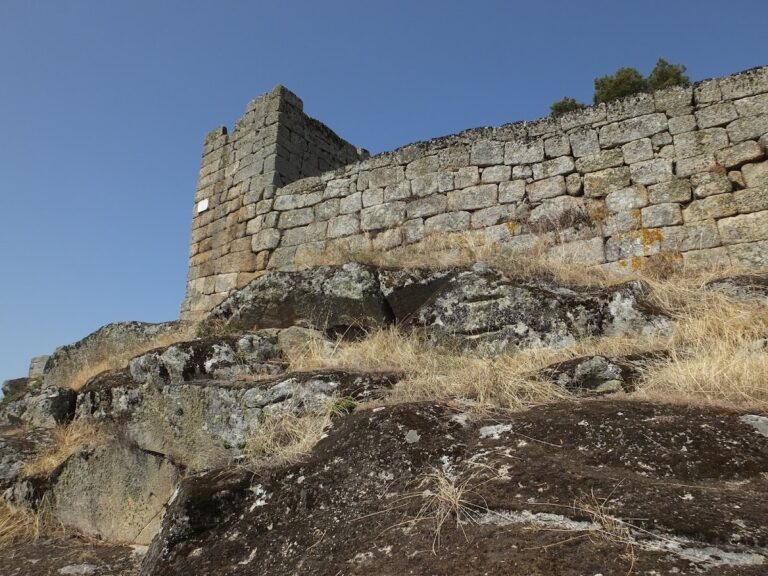
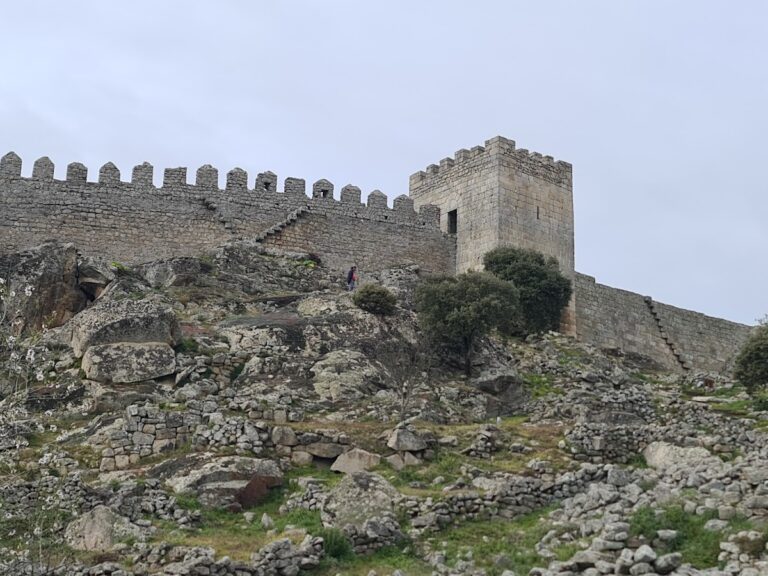
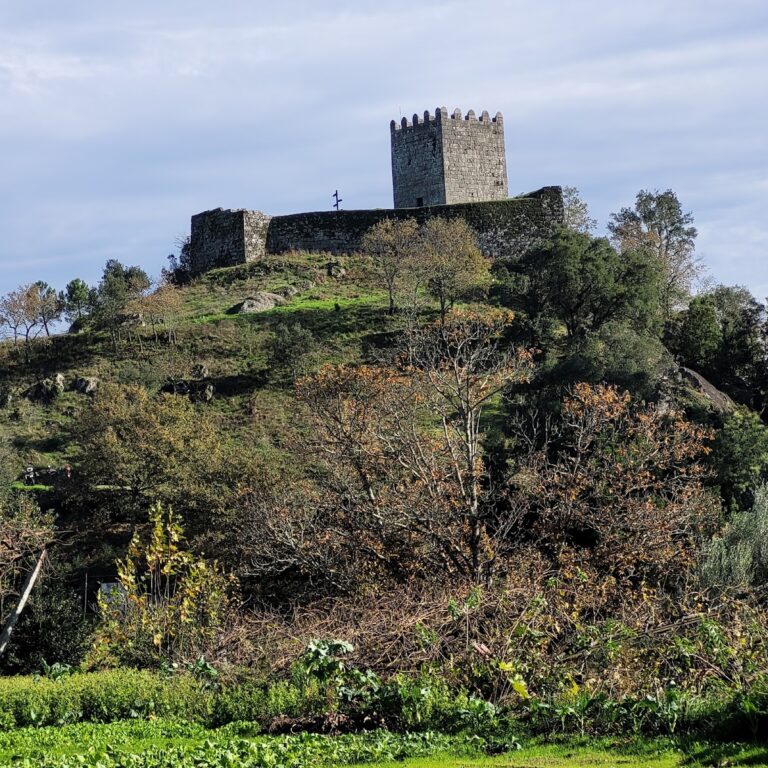
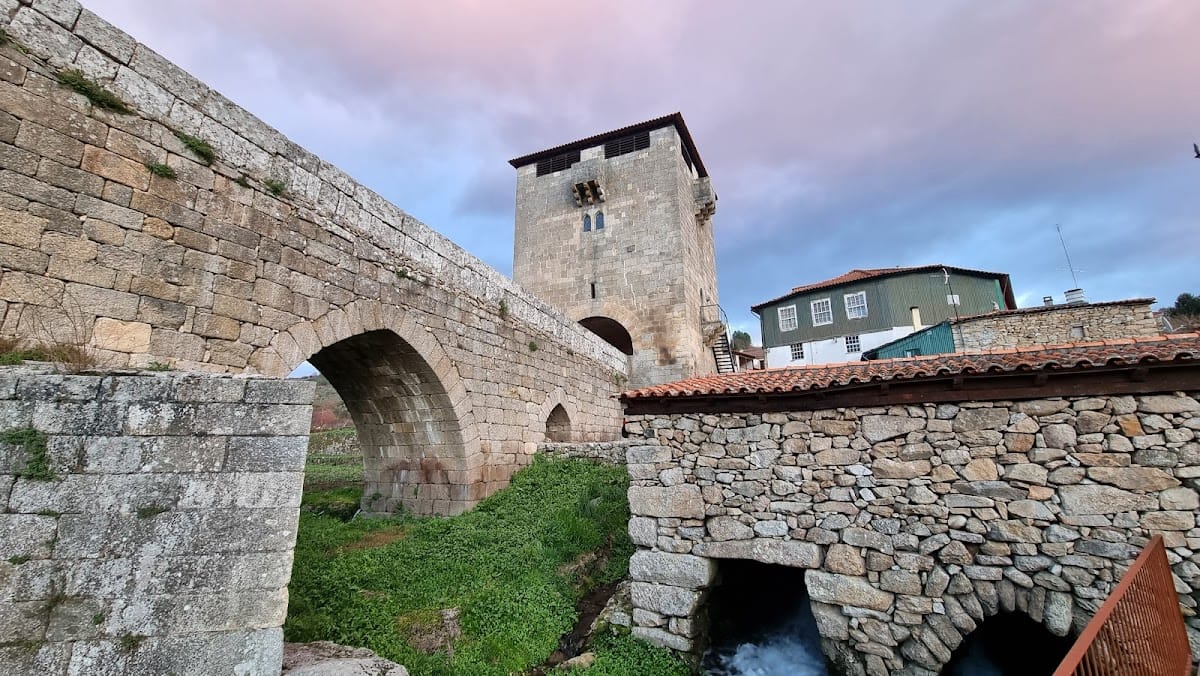
The Torre de Ucanha is a robust stone structure with a square base measuring ten meters on each side and rising to a height of approximately twenty meters. Its solid construction reflects military architectural principles, particularly its defensive purpose. The entrance to the tower is positioned well above ground level, a typical design feature intended to slow or prevent forced access.
Inside, the tower is divided vertically into three levels. The lowest floor contains only a narrow slit, likely intended for surveillance or limited defense. The middle level is distinguished by two sets of twin windows on two faces, providing natural light and vantage points. The uppermost floor features four machicolations—openings between supporting corbels that allowed defenders to drop objects or pour substances on attackers below—demonstrating a clear concern for active defense.
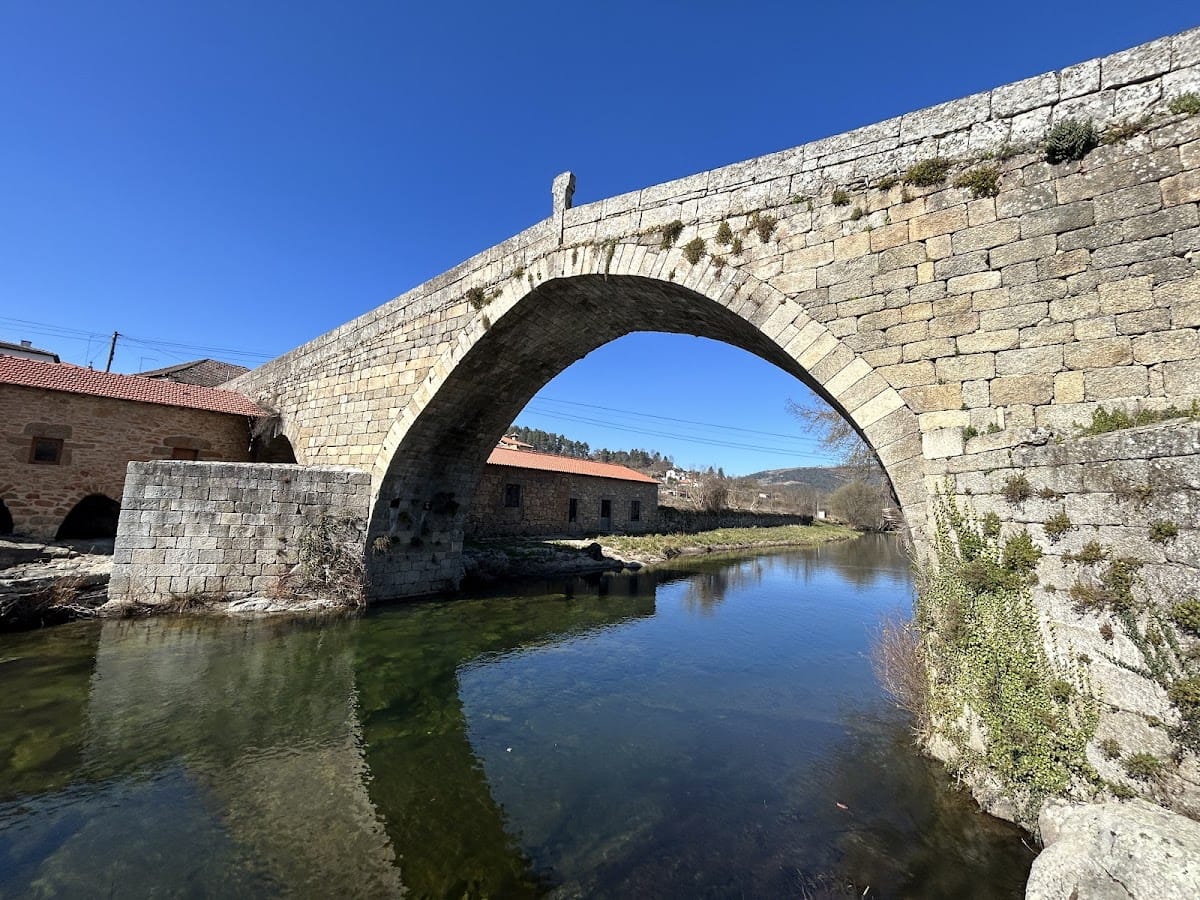
An inscription engraved at the base of the tower bears the words “Esta obra mandou fazer D. Fernando, abade de Salzedas, em 1465,” linking the physical fabric of the building to the abbot responsible for its major refurbishment in the 15th century. The tower stands at one end of an old bridge crossing the Varosa River, which historically connected the territories and served as a toll point. This bridge and tower combination formed a controlled entrance into the monastic lands.
Together, these remains reflect a site that evolved from Roman engineering origins into a medieval stronghold with multiple roles, combining defense, administration, and economic control. Despite the passage of centuries, key elements of the tower and its associated bridge survive in situ, preserving a tangible connection to its layered history.
Nearby sites