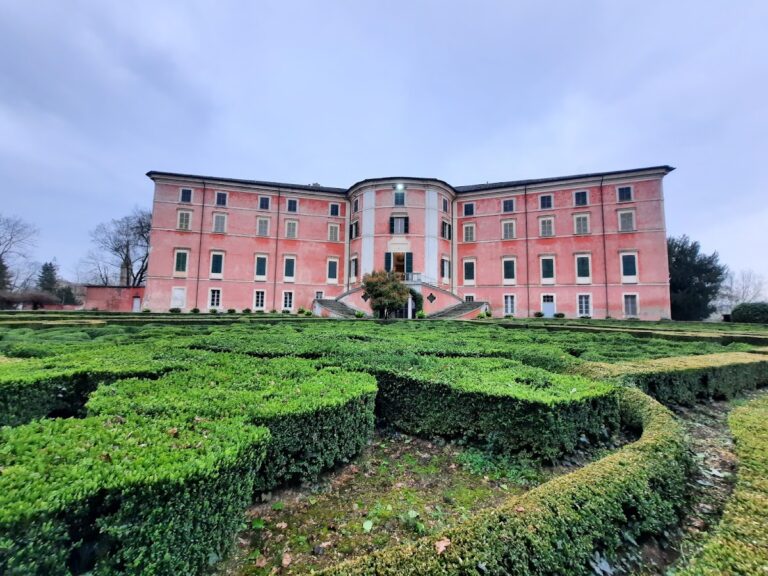
Rocca dei Terzi: A Medieval Castle and Noble Residence in Sissa, Italy


Visitor Information
Google Rating: 4.2
Popularity: Low
Google Maps: View on Google Maps
Country: Italy
Civilization: Medieval European
Remains: Military

History
The Rocca dei Terzi is a medieval castle situated in the municipality of Sissa in northern Italy. Its origins trace back to the 11th century, constructed by the local community to defend the territory of Sissa. The fortress first appears in written records in 1182, at a time when the surrounding land had been granted to the Parma Cathedral Chapter by Emperor Henry VI in 1195, highlighting its early role within ecclesiastical and imperial domains.
In the mid-14th century, the castle underwent a major transformation when Bernabò Visconti, a powerful Milanese ruler, granted his military captain Gherardino Terzi the nearby fief of Torricella with permission to fortify it. This led to a complete rebuilding and strengthening of the castle, resulting in a fortified complex considered nearly impenetrable for over five decades. The Terzi family’s prominence grew when Giberto I was given control of the fiefs of Sissa and Trecasali in 1386 by Gian Galeazzo Visconti, cementing the family’s leadership in the region.
The early 15th century was marked by conflicts involving the castle. It withstood several assaults led by the Rossi family but was eventually overtaken in 1422 by Venetian forces allied with the Terzi during skirmishes against the Duchy of Milan. The castle sustained heavy damage, and most of it was demolished, sparing only the central defensive tower, or bergfried. Guido Terzi later reclaimed this remaining structure, and from 1440, restoration work began to convert the fortress into a noble residence under the direction of Giberto, Nicolò, and Guido Terzi, following the reaffirmation of their rights by Filippo Maria Visconti.
The castle’s strategic importance again came under threat in 1551 during the War of Parma, when troops led by Troilo II de’ Rossi plundered the site. The Terzi family quickly regained control the next year. By the 18th century, the castle’s military function had been fully supplanted, and it was completely adapted into an elegant noble home, although the medieval keep was carefully preserved as a key architectural feature.
The lineage of the Terzi family ended in 1758 with Count Francesco Maria. His daughter Corona’s marriage to Marquis Bonifacio II Rangoni brought the Terzi name into the Rangoni family, thereby establishing the combined Rangoni Terzi line. The feudal rights associated with the castle were officially abolished in 1805 under Napoleonic reforms. Ownership remained with the Rangoni Terzi descendants until the late 19th century when the property was sold to the Raimondi family; it was then transferred to the municipality of Sissa in 1900.
Following municipal acquisition, the castle began to serve public functions, with offices installed inside. The original medieval drawbridge was replaced by a monumental staircase at the base of the keep, symbolizing the castle’s transition to a civic role. Around 1950, architect Mario Vacca led reconstruction of the secondary entrance staircase on the eastern side. Later renovations in 1986 introduced a modern concrete and wood stairway with two opposing ramps, replacing the earlier large staircase.
A significant earthquake struck the region on January 27, 2012, causing severe damage to the castle and rendering it unsuitable for occupancy. Municipal offices were relocated as a result. Restoration efforts culminated in the structural consolidation and refurbishment of the medieval keep by October 2017, securing the castle’s stability.
Since 2015, the Rocca dei Terzi has been part of the Castles Circuit affiliated with the Associazione dei Castelli del Ducato di Parma, Piacenza e Pontremoli. This inclusion highlights its historical and cultural importance and allows access to the 15th-century keep during select occasions.
Remains
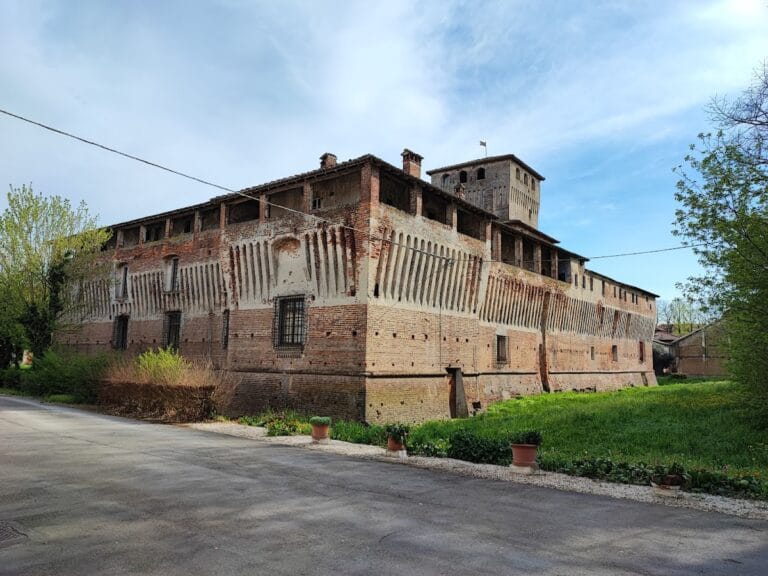
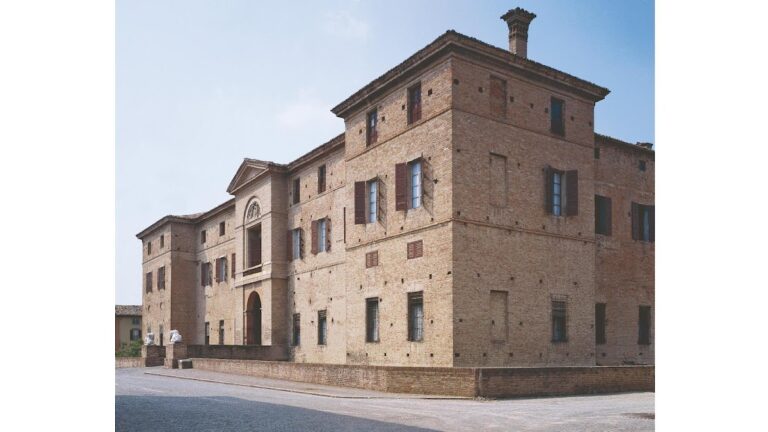
The Rocca dei Terzi occupies a medium-sized footprint centered around a compact courtyard situated directly behind the main defensive tower known as the keep or bergfried. The building’s exterior walls are uniformly constructed of brick, presenting a clear contrast between the original medieval fortress and the later 18th-century noble residence additions.
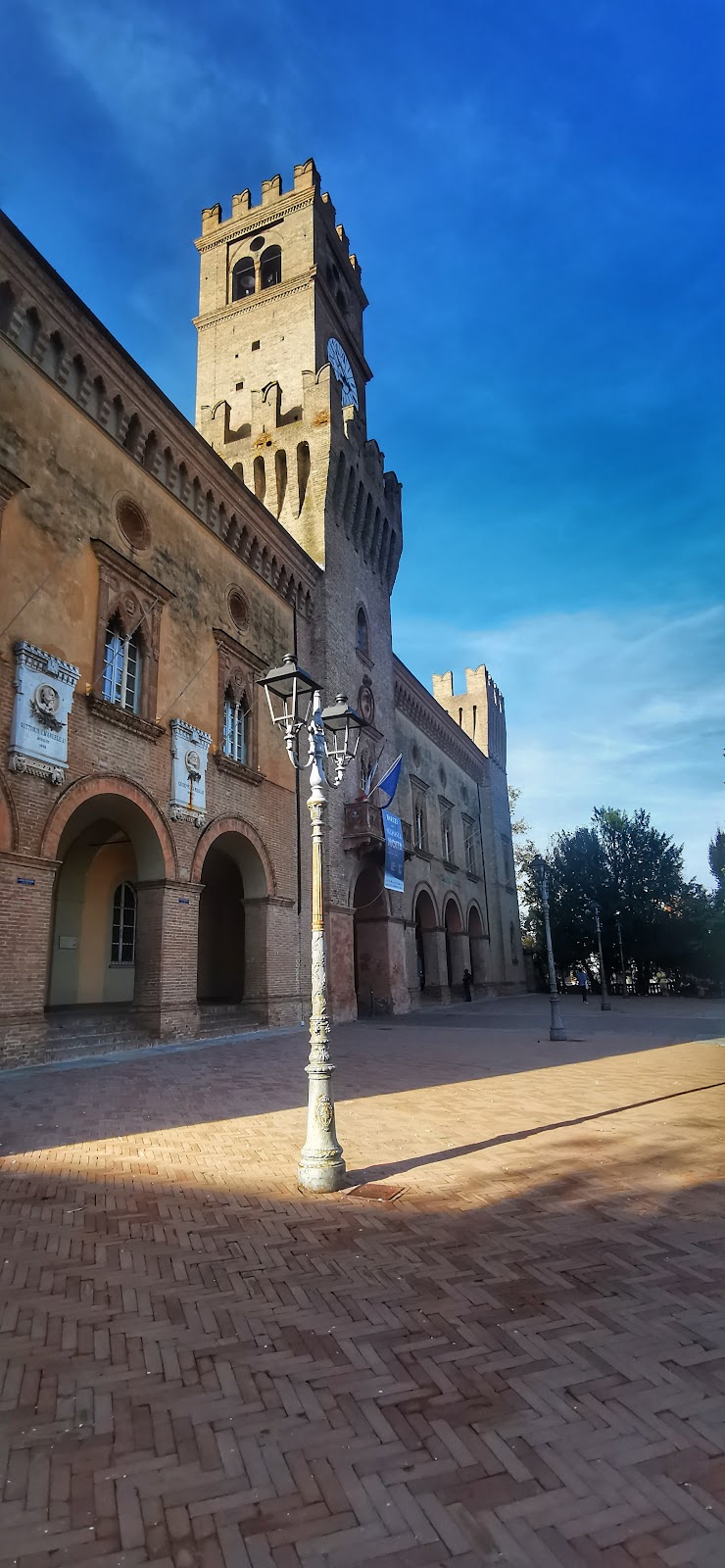
Dominating the main facade stands the 27-meter-high keep, a hallmark of medieval military architecture. It retains characteristic features such as projecting stone corbels that once supported machicolations—openings through which defenders could drop objects on attackers below. The keep also includes splayed windows, which widen inward to allow defenders greater range of vision and firing angles, as well as a narrow vertical slit formerly used to secure the drawbridge’s bolt during the 15th century. Originally, access to the keep was guarded by a drawbridge, replaced in later centuries by a masonry bridge. This was dismantled in the early 1900s to make way for the monumental staircase, itself replaced in 1986 by the current modern stairway featuring two opposing ramps constructed from concrete and wood.
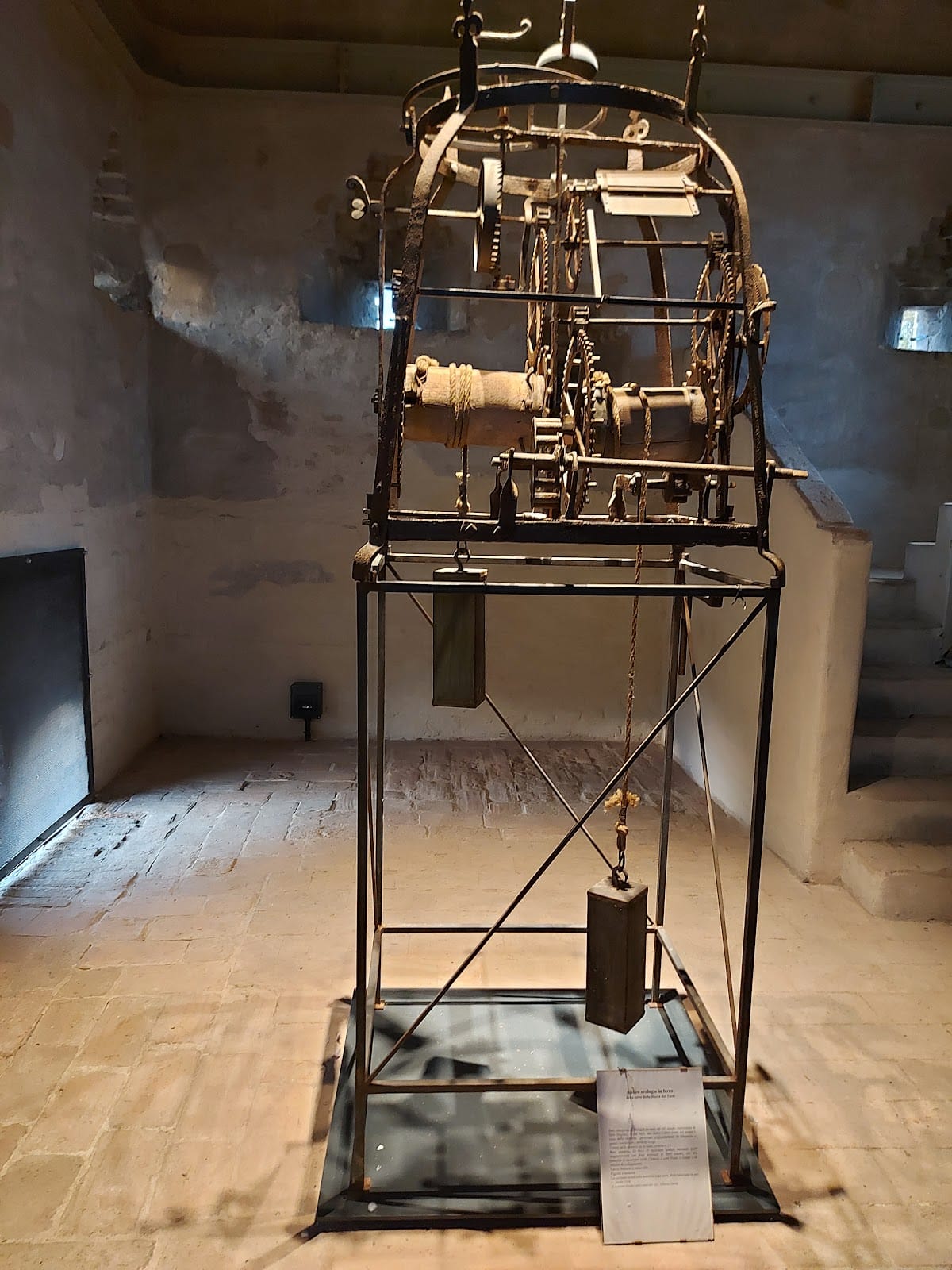
At the pinnacle of the keep, a large tower clock now commands attention. This replaces a manually wound iron clock from the 16th century, which has been preserved and is exhibited inside the castle, underscoring the site’s historical layers.
Extending on either side of the medieval keep are symmetrical wings added in the 18th century as part of the castle’s conversion into a noble residence. These palace sections display hallmark Baroque architectural details including string courses that visually separate floors, ornate window frames, decorative corner rustication mimicked in stucco, and elegant cornices adorned with supportive consoles crowning the facades.
The eastern facade offers a secondary entrance accessed via a robust two-ramp staircase made of concrete and brick, constructed in the mid-20th century under architect Mario Vacca’s supervision. This addition reflects mid-century adaptation while respecting the building’s historic context.
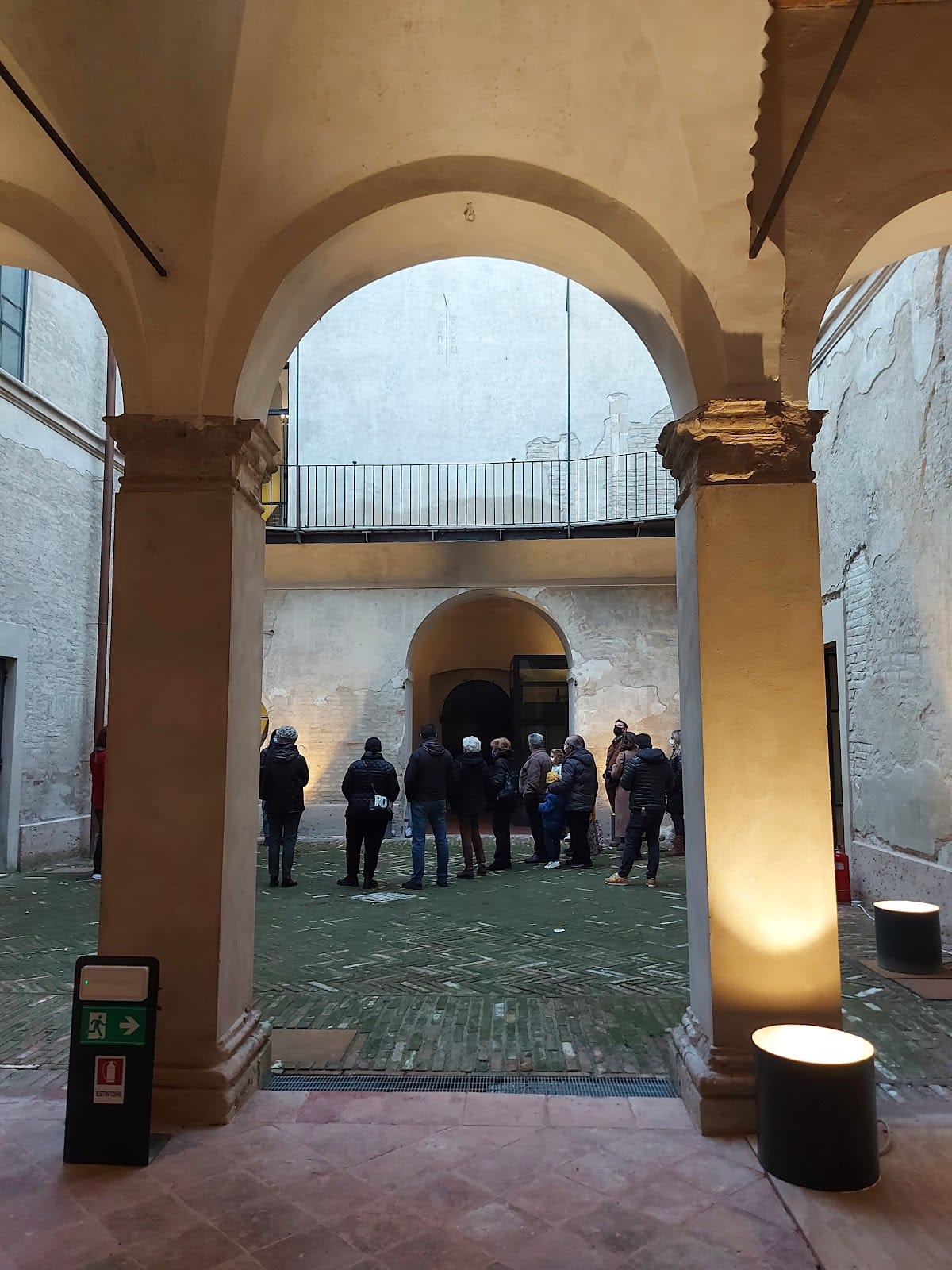
Within the small central courtyard, remnants indicate the former presence of a portico topped by a loggia, which was walled up during earlier renovation efforts. This space provides insight into the castle’s layered use and changing architectural forms.
Rooms adjacent to the main entrance contain rich interior decorations likely crafted in the early 18th century by Giovanni Bolla. These include stuccoes and frescoes illustrating floral designs, playful cherubs (putti), the figure of Victory riding a chariot, and various allegorical and mythological deities, indicating the castle’s transformation into a refined noble residence with cultural sophistication.
The stairway leading to the upper floor is similarly adorned with stucco frames that contain painted ovals depicting mythological figures, and the ceiling features a fresco portraying the myth of Ganymede being carried away by an eagle, a classical tale symbolizing divine favor.
On the first floor, ceilings incorporate barrel and cross vaults, common architectural elements that provide both support and aesthetic appeal. One small chamber is entirely decorated with 19th-century frescoes featuring exotic landscapes and figures representing the continents as they were then known, while neighboring rooms present incisive landscape views interspersed with grotesque imagery, a fanciful blending of natural and mythical.
Among the castle’s most significant interior spaces is the Council Hall, initially designed as a small theater. It is adorned with a large 18th-century fresco by Sebastiano Galeotti, which narrates the myth of Daphne fleeing from Apollo. In this vivid portrayal, Apollo rides a Python serpent and drives away the night before Daphne’s transformation into a laurel tree. The walls of this room also feature four paintings by unknown artists: three from the 18th century illustrating biblical and decorative scenes such as “The Judgment of Solomon,” “The Flight into Egypt,” and figures in costumes set within a forest, and one probable 17th-century work titled “Hilly Passage.”
Together, these architectural and artistic elements bear witness to the Rocca dei Terzi’s evolution from a medieval fortress into an elegant noble residence, preserving evidence of its military origins alongside richly decorated interiors that reflect centuries of cultural change.
Nearby sites