Hermitage Castle: A Medieval Border Stronghold in Scotland

Site at a Glance
- Rating
- 4.5
- Popularity
- Low
- Country
- United Kingdom
- Primary era
- Medieval
- External website
- Open
- Eras represented
- Medieval
- Civilizations
- Kingdom of Scotland
- Site type
- Military
- Remains
- Castle
On this page13 sections
History
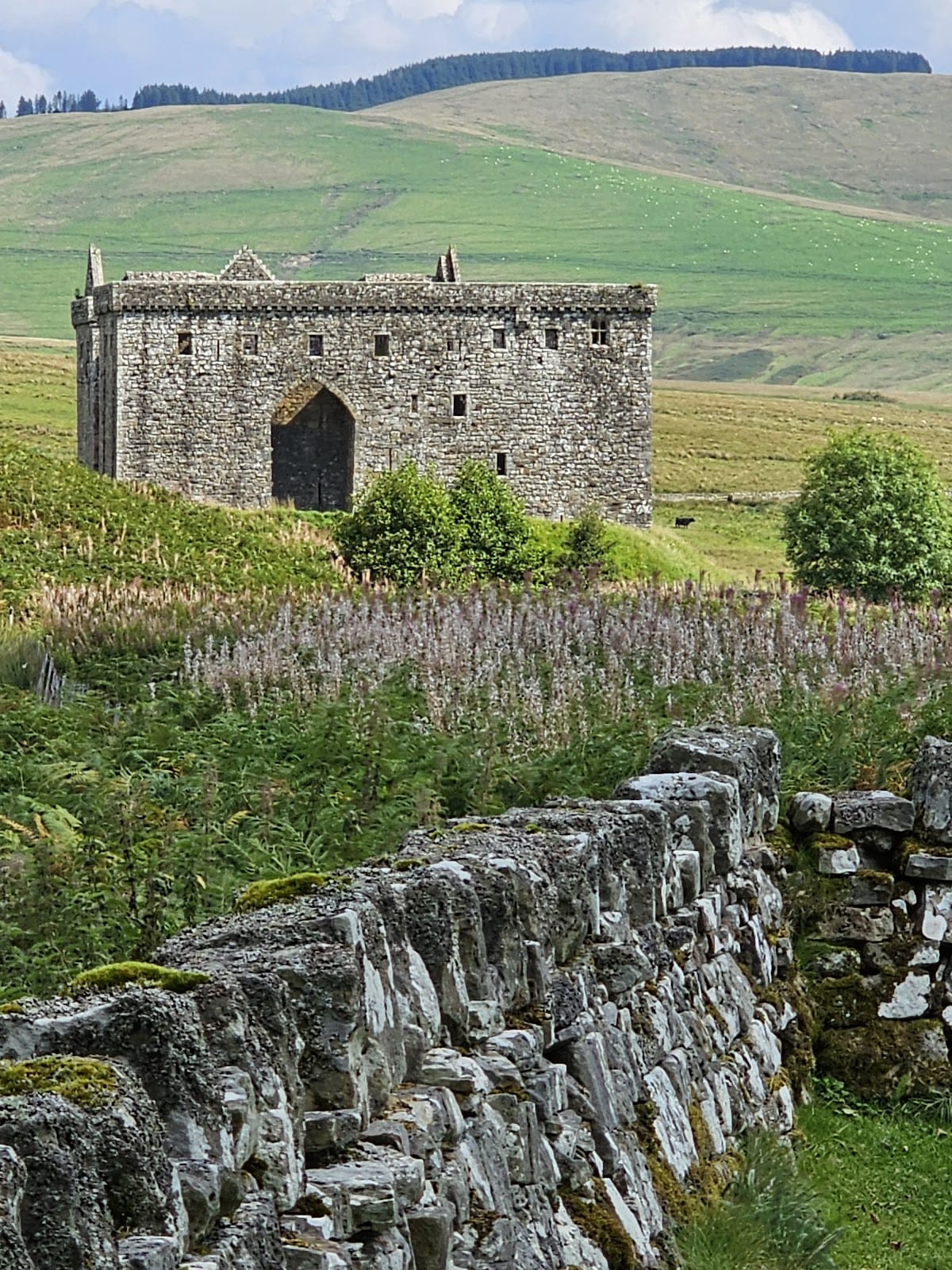
Hermitage Castle is a semi-ruined medieval border castle in the United Kingdom, near Newcastleton in Scotland’s Liddesdale. It developed from a fortification founded around 1240 and became a powerful stronghold in the remote valley of Hermitage Water, where control of the border carried military and political importance.
Foundation and the de Soulis family
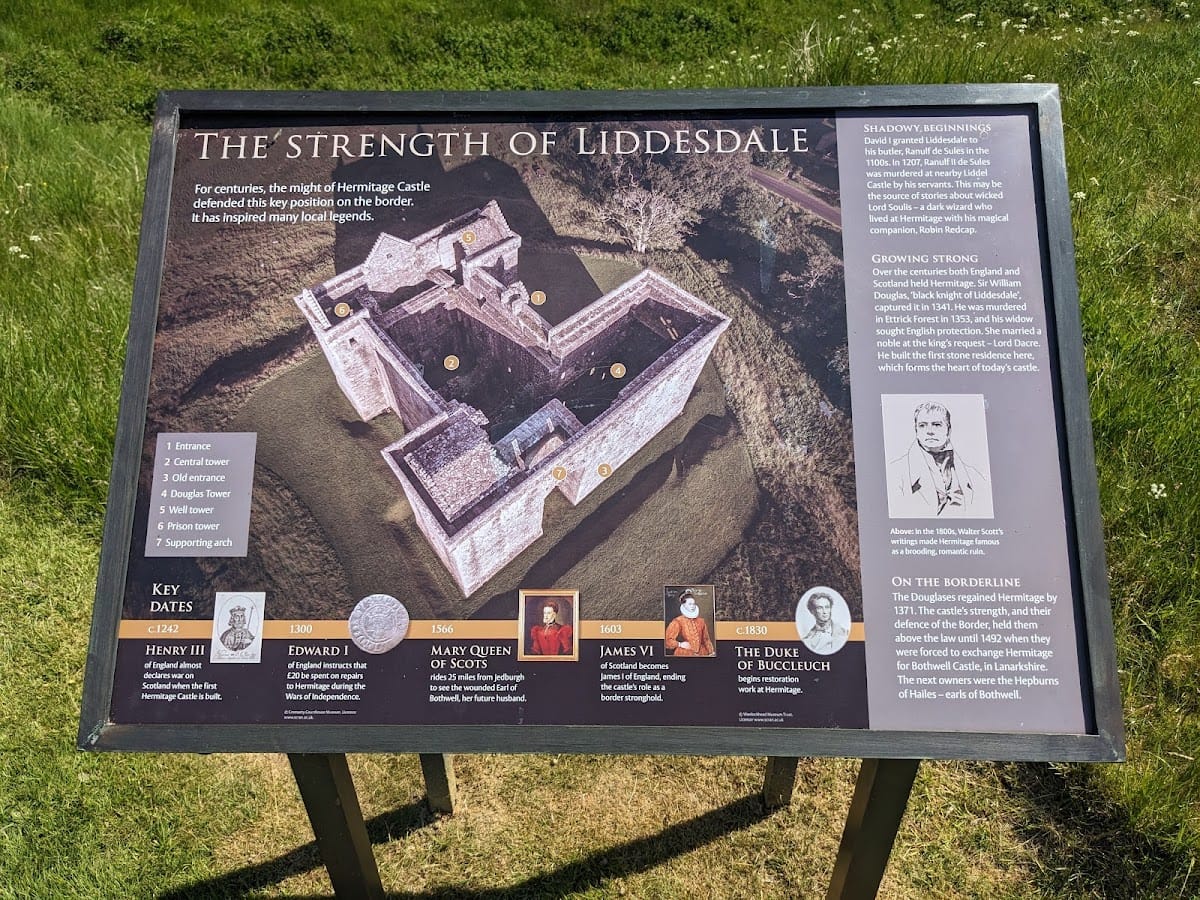
The first castle was supposedly established around 1240 by Nicholas de Soulis. It began as a timber motte-and-bailey fortification, with a defensive stronghold on a raised mound beside an enclosed courtyard. The name Hermitage is thought to come from the Old French l’armitage, meaning “guardhouse.” Its border position later gave it the reputation of the “guardhouse of the bloodiest valley in Britain” and the “Strength of Liddesdale.”
Hermitage remained with the de Soulis family until about 1320, when William de Soulis forfeited the castle amid suspicions of witchcraft and an alleged plot to assassinate Robert I of Scotland. A later legend says that his tenants seized him and boiled him in lead at the nearby Ninestane Rig megalithic circle. His actual fate was less dramatic: he died as a prisoner at Dumbarton Castle.
Douglas control and the fourteenth-century rebuilding
In 1338, Sir William Douglas, known as the Knight of Liddesdale, besieged the English holder Sir Ralph de Neville at Hermitage. Douglas later used the castle against another rival, Sir Alexander Ramsay of Dalhousie, whom he imprisoned there and starved to death while competing for royal favour.
After the Battle of Neville’s Cross and the English capture of Liddesdale, Hermitage was temporarily held by the English and placed in the care of William Dacre, 2nd Baron Dacre. Following the death of the Knight of Liddesdale, the castle passed to William Douglas, 1st Earl of Douglas. Under his authority, much of the surviving stone castle was built, possibly with assistance from John Lewin, the master mason of Durham Cathedral.
The castle stayed with the Black Douglas line until 1455. That year, James Douglas, 9th Earl of Douglas, was forfeited by the Crown. Hermitage and the lands attached to it then passed to the Red Douglas branch, one of the two principal divisions of the Scottish Douglas family whose changing relations with the Crown influenced ownership of the castle.
Royal authority and the Hepburns
King James IV later ordered Archibald Douglas, Earl of Angus, to surrender Hermitage because of suspected dealings with Henry VII of England. On 6 March 1492, Patrick Hepburn, 1st Earl of Bothwell, received a charter for the lands and lordship of Liddesdale, including the castle, in an exchange involving Archibald Douglas. The Hepburns of Bothwell thereafter held Hermitage as its lords and keepers.
In December 1562, Mary, Queen of Scots, sent Adam MacCulloch, Marchmont Herald, to demand the castle’s surrender to John Stewart of Traquair. Traquair received money and grain from the Thirds of Benefices, revenues taken from church benefices by the Scottish Crown for royal and governmental purposes, to provision Hermitage.
Mary, Queen of Scots, and the Bothwell connection
James Hepburn, 4th Earl of Bothwell, later held Hermitage. After he was wounded by John Elliot of Park while Elliot attempted to escape from the castle, Mary, Queen of Scots, rode from Jedburgh to visit him. The journey took place only a few weeks after the birth of her son.
Mary and Bothwell married soon after the murder of her second husband, Henry Stuart, Lord Darnley. Bothwell was implicated among the conspirators in Darnley’s murder. After Mary was forced to abdicate following the confrontation at Carberry Hill, Bothwell fled to Norway, while Parliament forfeited his titles and estates. He was eventually imprisoned at Dragsholm Castle in Denmark, where he died insane in harsh conditions. His mummified body was once displayed at nearby Fårevejle Church.
Later keepers and decline
Thomas Kerr of Ferniehirst became keeper of Liddesdale and Hermitage Castle in 1584. Bothwell’s nephew, Francis Stewart, 1st Earl of Bothwell, later received a new creation as Earl of Bothwell and became keeper of the castle. His alleged involvement in the North Berwick witch trials led to his arrest, trial, imprisonment, and forfeiture in 1591. Although he was pardoned in 1593, he was attainted again by Act of Parliament on 21 July that year, and Hermitage reverted to the Crown.
In 1594, James VI granted the castle to Sir Walter Scott of Buccleuch, Warden of the Western Marches and Keeper of Liddesdale. A warden was responsible for administering and defending a border march. Scott was also a prominent Border reiver, a marcher-region raider whose activities combined feuding, raiding, and military service, and he led the attack on Carlisle Castle intended to rescue Willie Armstrong of Kinmont.
The Union of the Crowns in 1603 placed the Scottish and English crowns under James VI of Scotland, who also became James I of England. This reduced Hermitage’s strategic value as a frontier fortress, and the castle fell into disrepair. By the eighteenth century it stood as a ruin.
Repair and national care
Hermitage gave its name to the Viscountcy of Hermitage, granted in 1706 to Henry, the third son of the first Duke of Buccleuch, as a subsidiary title of the Earldom of Deloraine. The title became extinct in 1807. The fifth Duke of Buccleuch carried out repairs at the castle in 1820.
The Scotts retained ownership until 1930, when Hermitage was transferred to national care. The family’s matrilineal descent from the Douglases of Drumlanrig, a cadet branch, and its occasional use of the surname Montagu-Douglas-Scott were regarded as preserving a connection with the earlier Douglas association. Hermitage Castle is now cared for by Historic Environment Scotland and, with its associated ancillary features, is protected as a scheduled monument, a legally protected archaeological or historic site considered nationally important.
Local ghost traditions connect the castle with Redcap Sly, described as the de Soulis family’s familiar spirit, and with Mary, Queen of Scots. These traditions form part of the later cultural memory attached to a castle long associated with dynastic conflict, imprisonment, and violence.
Remains
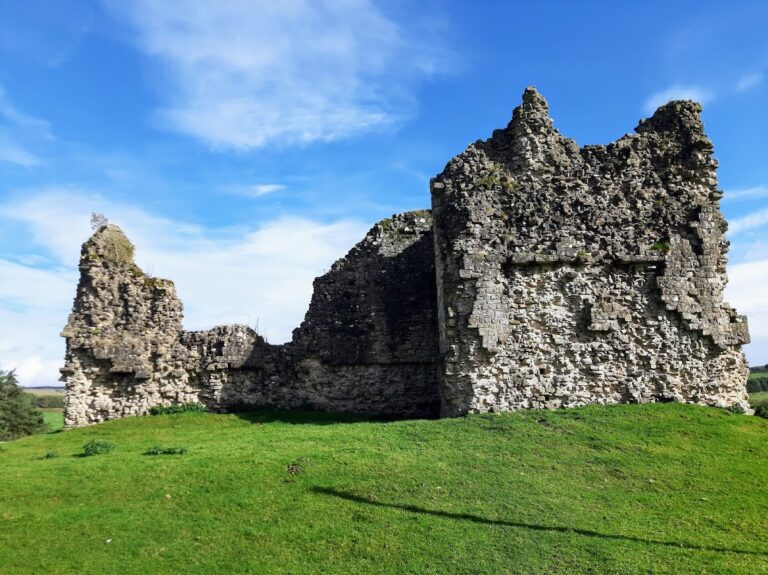
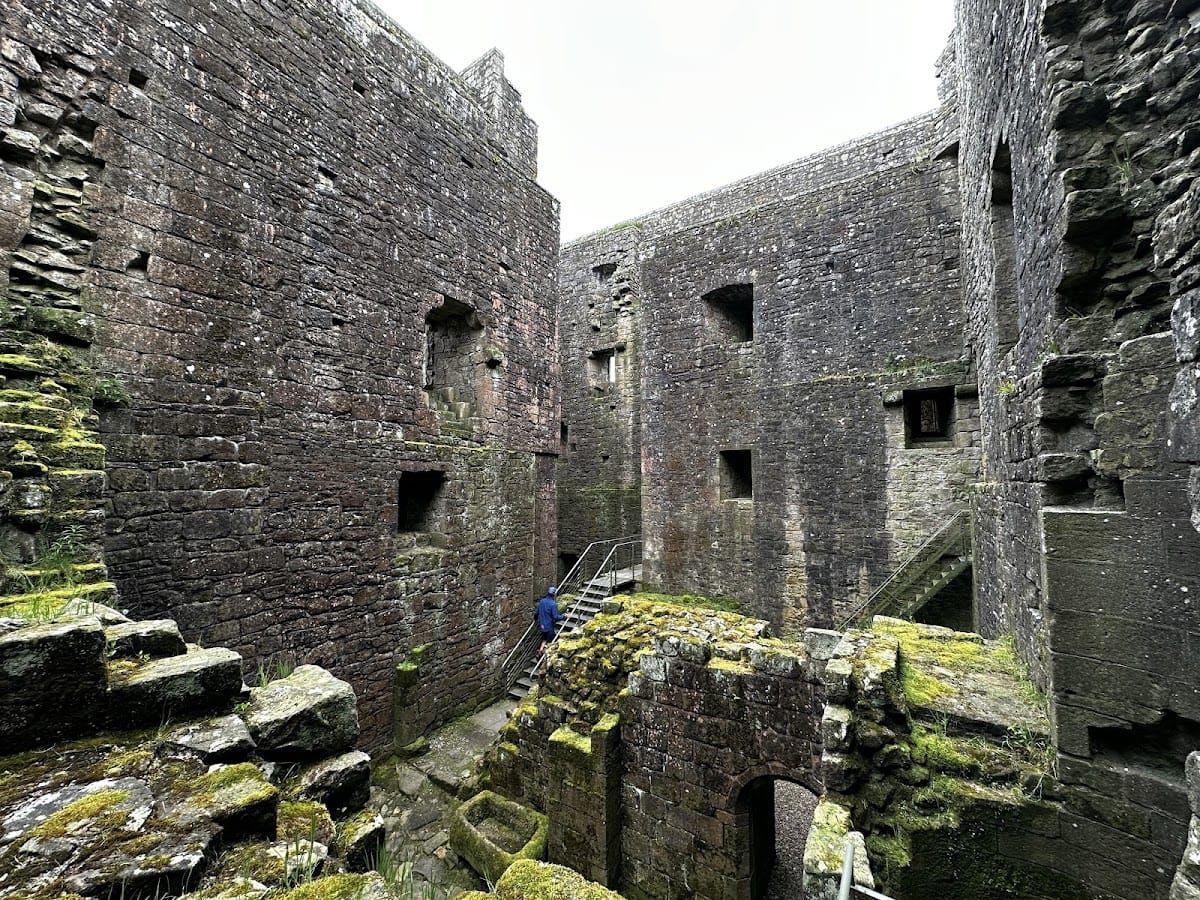
Hermitage Castle occupies the valley of Hermitage Water and survives as a partly ruined stone tower house or keep with a fortified outer enclosure, known as a barmkin. The present complex grew from two principal building phases. Around 1240, a timber motte-and-bailey castle used an artificial mound and an adjoining enclosed courtyard. In the mid-fourteenth century, this earlier arrangement was superseded by a substantial stone stronghold. The site also includes a chapel, enclosures, a deer trap, a park boundary, and a farmstead.
The principal castle
The principal surviving structure is the stone tower house or keep built during the second phase in the mid-fourteenth century. William Douglas, 1st Earl of Douglas, enabled much of the building that remains, possibly with the assistance of John Lewin, master mason of Durham Cathedral. The keep forms the central architectural element of the complex and is accompanied by the barmkin, a fortified outer enclosure associated with a tower house. Both the castle and its surrounding remains are now partially ruined.
Earlier earthwork and associated features
Motte-and-bailey earthwork
The first phase consisted of a timber defensive structure set on an artificial mound, with a bailey forming the adjoining enclosed area. This motte-and-bailey arrangement represents the castle’s earliest physical form and preceded the mid-fourteenth-century stone keep.
Chapel and enclosures
A chapel and additional enclosures form part of the surviving archaeological complex. They belong to the wider arrangement of buildings and bounded spaces associated with the principal castle, although the available remains do not assign separate construction dates to these features.
Deer trap, park boundary, and farmstead
The site also retains a deer trap, a park boundary, and a farmstead. These ancillary features extend the remains beyond the main defensive building and show that the castle’s historic complex included managed land and supporting activity as well as fortified structures.