Rabenstein Castle: A Medieval Fortress in Austria


Visitor Information
Google Rating: 4.6
Popularity: Low
Google Maps: View on Google Maps
Country: Austria
Civilization: Medieval European
Remains: Military

History
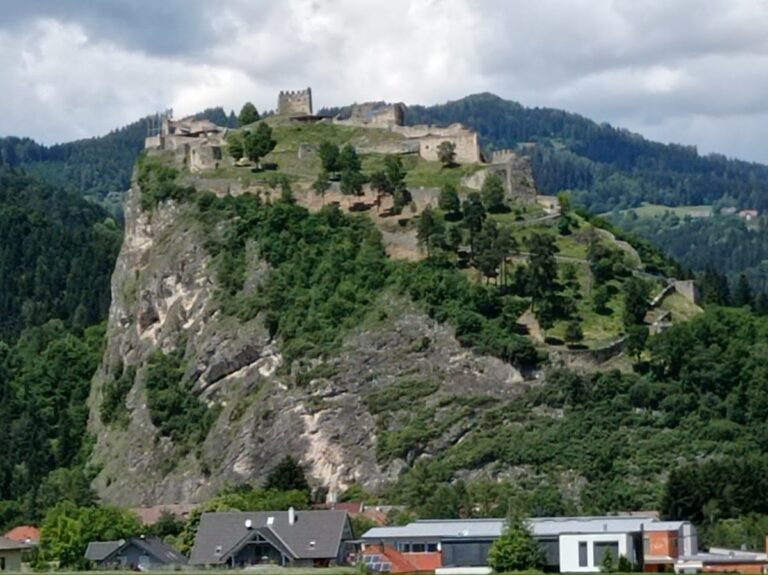
Rabenstein Castle stands on a rocky hill above the municipality of Sankt Paul im Lavanttal in Austria. It was originally built by medieval settlers shortly after the year 1100 as a watchtower, later expanded into a fortress to protect the nearby St. Paul Abbey, founded in 1091 by Engelbert I, Count of Spanheim.
The castle first belonged to Engelbert I and passed to his son Siegfried II, Count of Lebenau. The noble family inhabiting it, known as von Ramenstain (later called Rabenstein), became extinct around 1200. Ownership then transferred through marriage to the Counts of Pfannberg, before coming under the control of the Archbishopric of Salzburg circa 1300. The archbishops appointed caretakers for the castle who often clashed with the monks of St. Paul concerning land and income rights.
In 1307, political tensions led Duke Albert I to order the castle’s siege and destruction, aiming to prevent its handover to Duke Henry VI of Carinthia. Following this, Salzburg’s Bishop Konrad IV of Fohnsdorf rebuilt and enlarged the fortress, granting it as a fief to Burkhard II of Vanstorf. Later, Emperor Frederick III acquired Rabenstein in 1461, and the castle withstood the 1476 Ottoman assault on the nearby market town.
Maximilian I inherited the castle but sold it in 1514 to Franz von Dietrichstein. Franz’s son Seyfried transformed the fortress into a Renaissance-style palace in 1567, reflecting changing tastes and residential needs. Throughout the 16th and early 17th centuries, the castle’s ownership shifted multiple times, including periods under ducal control and the hands of noblemen such as Hans Ulrich von Eggenberg. Ultimately, it reverted to St. Paul Abbey in 1629.
Under Abbot Hieronymus Marchstaller, the castle chapel underwent a baroque restoration and was consecrated in 1633. However, in 1636 a large fire severely damaged the castle. The blaze was suspected to be deliberate, with some linking it to the abbot himself. After this catastrophe, the castle was left in ruins and never rebuilt.
Following secularization reforms by Emperor Joseph II in 1787, which dissolved St. Paul Abbey, the castle ruins came under the control of the state religious fund. In the 19th century, ownership passed to private hands. Archaeological evidence indicates that the castle site had been continuously occupied since the Neolithic era through the Bronze and Iron Ages into the early modern period. From 1997 to 2002, the ruins were carefully stabilized and conserved with support from local and national Austrian authorities.
Remains
Perched atop a steep hill with cliffs on three sides, Rabenstein Castle was designed as a rock fortress. Its core feature is a square tower known as a bergfried, constructed in 1307 at the highest point of the site. This keep served as the last defensive stronghold and symbol of lordly authority. Today, three walls of the bergfried remain standing, giving a sense of its original mass.
Adjacent to the bergfried on the southern side stood the palas, which was the main residential building. Fragments of this structure, along with parts of ancillary buildings from the 13th and 14th centuries, survive amid the rocky outcrop overlooking the village below. These remains reflect the castle’s medieval phase before later renovations.
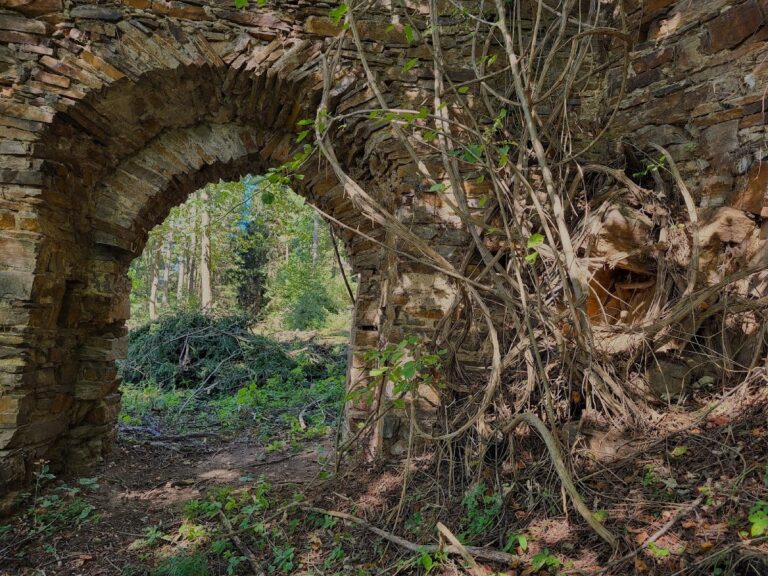
On the northern side, a semicircular barbican—a fortified outer gate area designed to protect the entrance—once guarded the castle approach. The thick enclosing walls, originally built in two layers during the 12th and 13th centuries, formed a formidable defense. Much of the outer masonry has weathered away or was dismantled to provide materials for local construction in subsequent centuries.
The castle rose to heights of up to three stories in some sections, illustrating its transition from a simple watchtower to a more complex residence and fortress. Surviving masonry displays architectural elements from both its medieval origins and Renaissance updates made in the 16th century.
In the early 17th century, the castle chapel received a baroque makeover before its consecration in 1633, though only traces of this sacred space can be found today. The site remained a ruin after the catastrophic fire of 1636 and has not been rebuilt since.
Late 20th-century conservation efforts succeeded in arresting further decay, carefully stabilizing the remaining structures. While restoration did not involve reconstruction, these measures help preserve the visible ruins as a testament to the castle’s layered history atop the hill.
Nearby sites