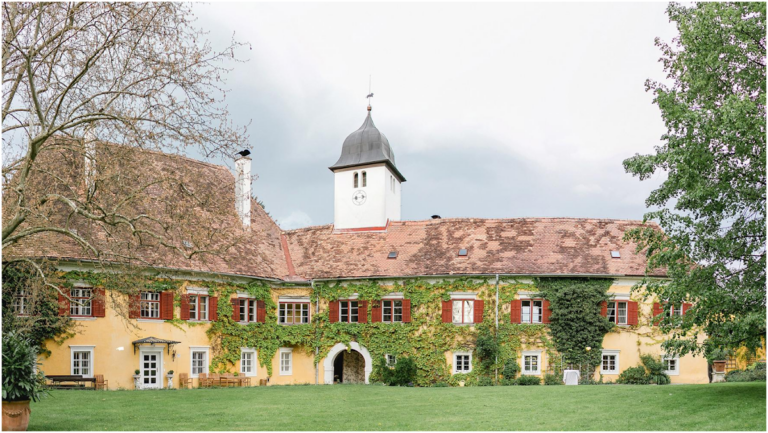
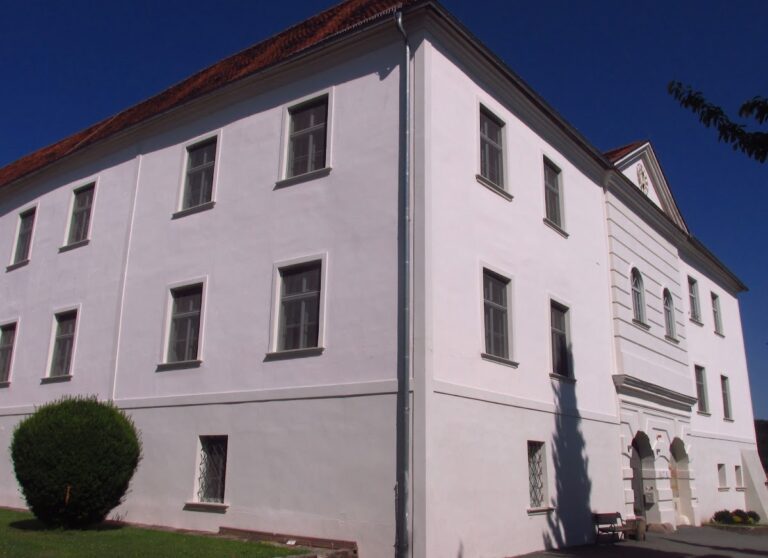
Frauenthal Castle: A Baroque Aristocratic Residence in Austria


Site at a Glance
- Rating
- 4.6
- Popularity
- Low
- Country
- Austria
- Primary era
- Early Modern
- External website
- Open
- Eras represented
- Early Modern
- Civilizations
- Habsburg, Holy Roman Empire
- Site type
- Domestic
- Remains
- Castle
On this page7 sections
History
Frauenthal Castle is a Baroque aristocratic residence in Austria, in Deutschlandsberg, whose present form dates chiefly from 1675. It is believed to stand on the site of the Nidrinhof, a low-lying estate first documented on 2 March 970, when Emperor Otto I, a tenth-century German king and Holy Roman Emperor, donated it to Archbishop Friedrich of Salzburg.
The Nidrinhof and medieval estate
The estate was also known by the Slavic name Udulenidvor. The two names are understood to refer to the same farm, and their association has been interpreted as evidence of close contact between Slavic and Bavarian communities. A tradition places the origins of the Nidrinhof around AD 700, when it may have been founded from Aquileia during the Christian mission to the Kingdom of Noricum, the Roman-era name for a region broadly corresponding to parts of present-day Austria and neighboring areas. This early foundation remains a tradition rather than a securely established date.
The Nidrinhof has been interpreted as a bilingual administrative center. After Deutschlandsberg Castle expanded, the estate apparently lost that administrative role and may later have served as a farm. The name Vraundorf, or Frauendorf, appears in 1267. During the Middle Ages, the site or its surroundings included an estate known as the Court of St Ulrich, near the subsidiary church of St Ulrich. The castle and estate continued to be associated with Saint Ulrich of Augsburg, a tenth-century bishop and Christian saint, until the seventeenth century.
Development as a noble residence
Gall von Racknitz developed the present castle as an aristocratic residence in 1542. Its current form was created in 1675 under Ferdinand Count Zehentner, who probably commissioned the rebuilding from Jakob Schmerlaib. The property passed to the Kuenburger, Mailegger, and Batthyány families by 1700.
Economic decline followed extravagant administration and disputes within the family. In 1741, the administrator of the brassworks was appointed curator of the estate. Frauenthal reached an economic peak under Moritz Count von Fries between 1812 and 1820. In 1820, Prince Johann I Josef purchased it together with Hollenegg Castle and the Deutschlandsberg-Hollenegg estate for his son Franz de Paula. Ownership later passed to the House of Liechtenstein, the European princely dynasty that rules Liechtenstein, and remained with the family as of 2012.
Restoration and institutional use
Franz Josef II, who later became sovereign prince of Liechtenstein and ruled from 1938 to 1989, was born at Frauenthal Castle on 16 August 1906. The castle underwent restoration in 1969 and 1970. From 1978, it housed a vocational school for agriculture and nutrition, which initially had as many as 120 female pupils. The school closed in 2021 after enrollment declined; only eight pupils intended to enter the second year, and no first-year class could be formed.
Remains
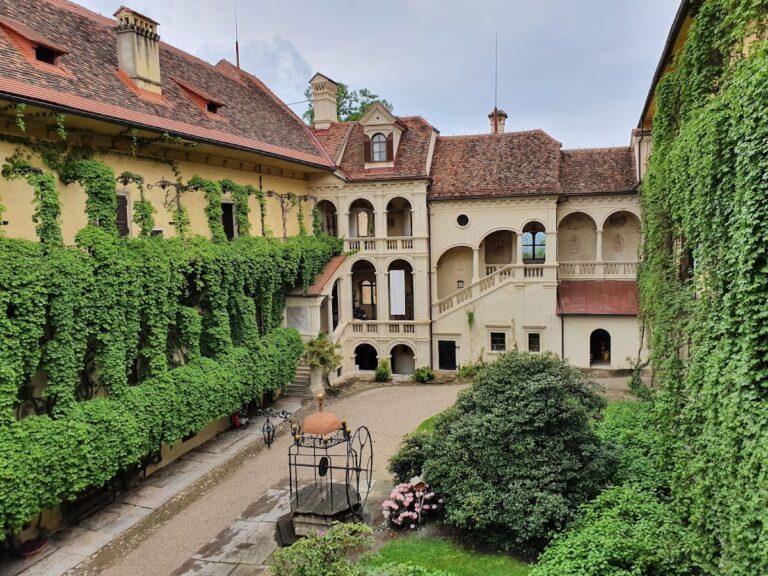
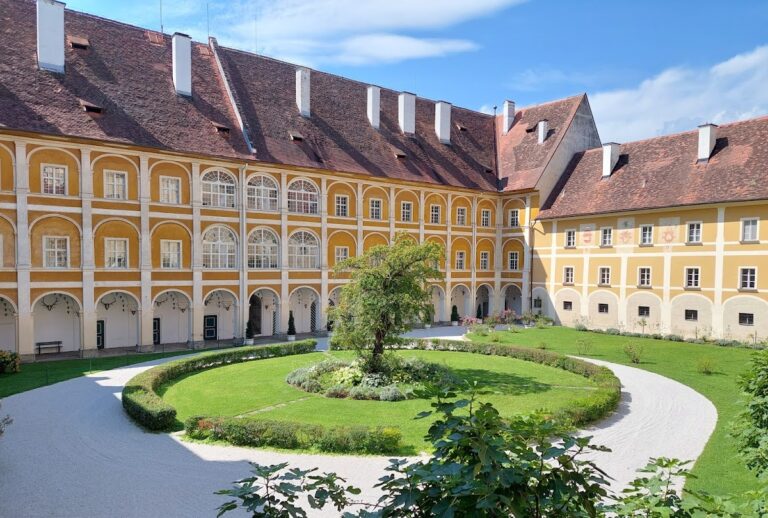
Frauenthal Castle stands at Ulrichsberg in Hörbing, a cadastral municipality belonging to Deutschlandsberg. The surviving building is a regular four-wing complex of three storeys, arranged around an interior courtyard in the Baroque style. The courtyard is lined by arcades on three levels, with rows of arches supported by solid masonry piers.
Castle structure
A rusticated portal, whose masonry is emphasized by rough or heavily jointed surfaces, leads into the courtyard. Above the entrance is an inscribed coat of arms belonging to Ferdinand Count Zehentner, the patron associated with the rebuilding that established the castle’s current form in 1675.
Castle chapel
The two-storey castle chapel is dedicated to Saint Joseph, traditionally regarded as the husband of Mary and an important figure in Christian devotion. Its stucco decoration was produced around 1685 by the workshop of Alexander Serenio. Picture windows made in the same year depict scenes from the life of Mary, the mother of Jesus.