Burg Griffen: A Medieval Castle in Carinthia, Austria
Site at a Glance
- Rating
- 4.6
- Popularity
- Low
- Country
- Austria
- Primary era
- Medieval
- External website
- Open
- Eras represented
- Medieval
- Civilizations
- Holy Roman Empire
- Site type
- Military
- Remains
- Castle
On this page8 sections
History
Burg Griffen is a medieval castle in Austria, built between 1124 and 1146 by order of Otto of Bamberg, the bishop and imperial churchman whose seat was at Bamberg. A deed of 1160 names the castle as Grivena and identifies it as Bamberg property. The document also records its connection with Friedrich I Barbarossa, the twelfth-century German king and Holy Roman Emperor.
Bamberg Foundation and Medieval Conflict
The castle became involved in a Carinthian uprising in 1292, when Count Ulrich von Heunberg occupied it in opposition to Albert of Habsburg and Meinhard II, Duke of Carinthia and Count of Tyrol. Ulrich had the support of Konrad IV, the Archbishop of Salzburg, but his allies later abandoned him. He was forced to leave Burg Griffen in 1293.
Burg Griffen retained the right of high justice until 1425. This authority included the death penalty and placed the castle among the institutions that exercised serious judicial power in its surrounding territory.
Rebuilding and Change of Ownership
Around 1520, much of the castle was reconstructed because of the threat posed by Ottoman forces. The Ottomans never besieged Burg Griffen, but the danger influenced the rebuilding of the complex.
In 1759, Bishop Adam Friedrich sold Bamberg’s Carinthian estates to Maria Theresa, the Habsburg ruler of the Austrian lands from 1740 to 1780. Burg Griffen then entered the administration of the Duchy of Carinthia and later passed to Carinthian civil rulers, including the Counts von Egger.
Religious Use, Ruin, and Conservation
The castle remained in use until 1768, when the final religious service took place in its chapel. Around 1840, the old roofs were lost, and the complex deteriorated into ruins. Conservation and condition-assessment work began in 2000 to preserve the surviving walls and maintain the existing appearance of the castle.
Remains
Castle Site and Mountain Features
Castle Ruins
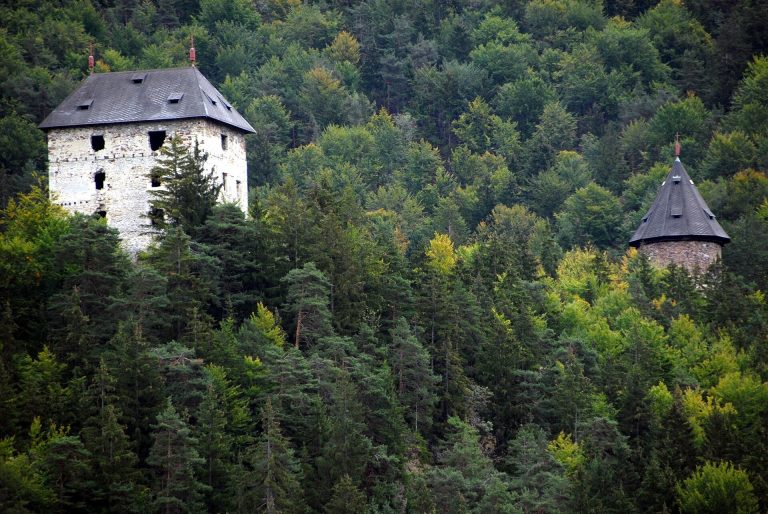
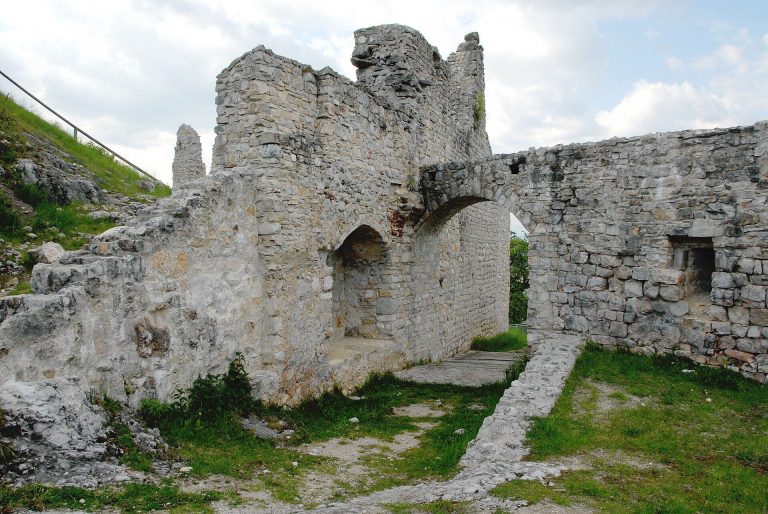
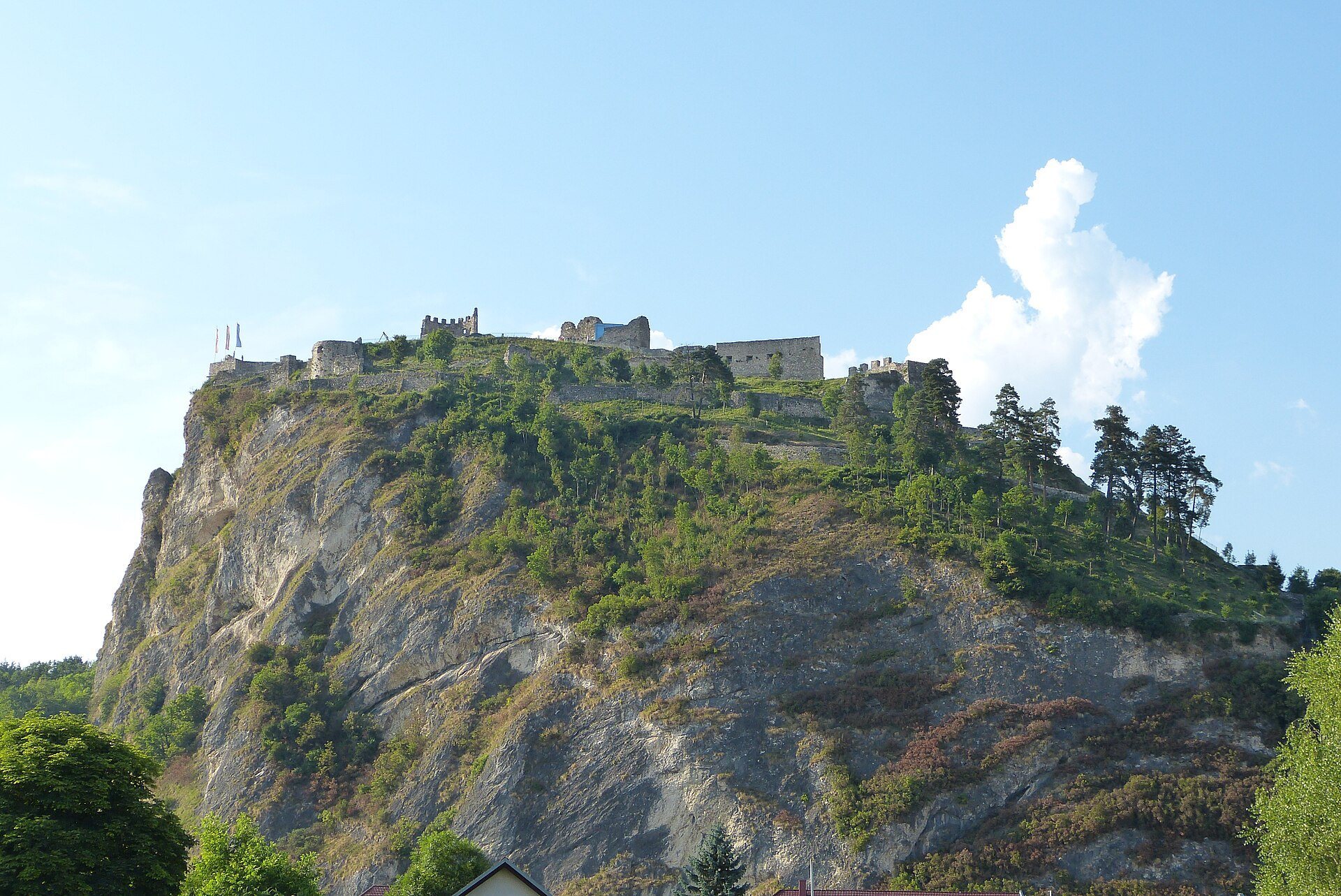
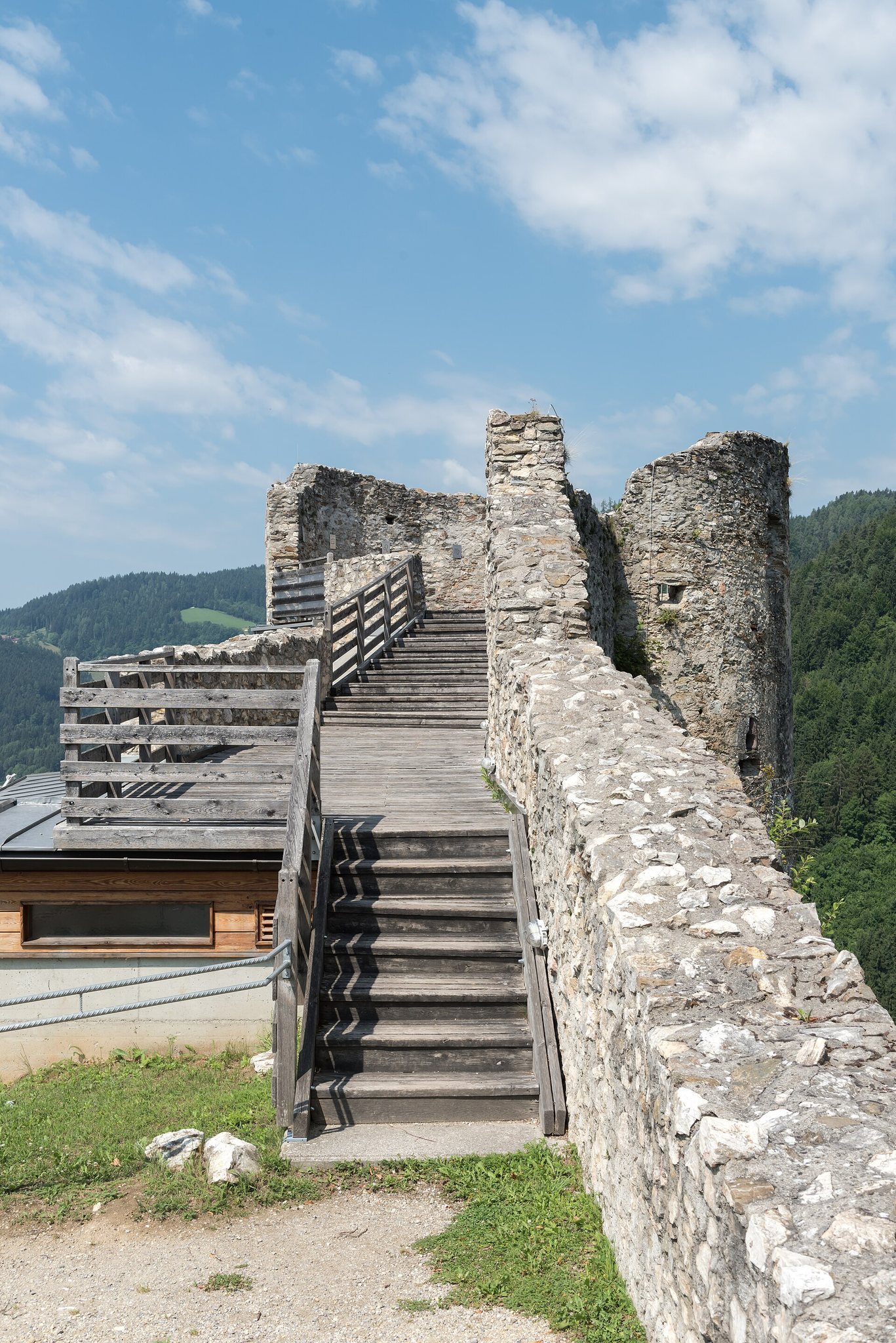
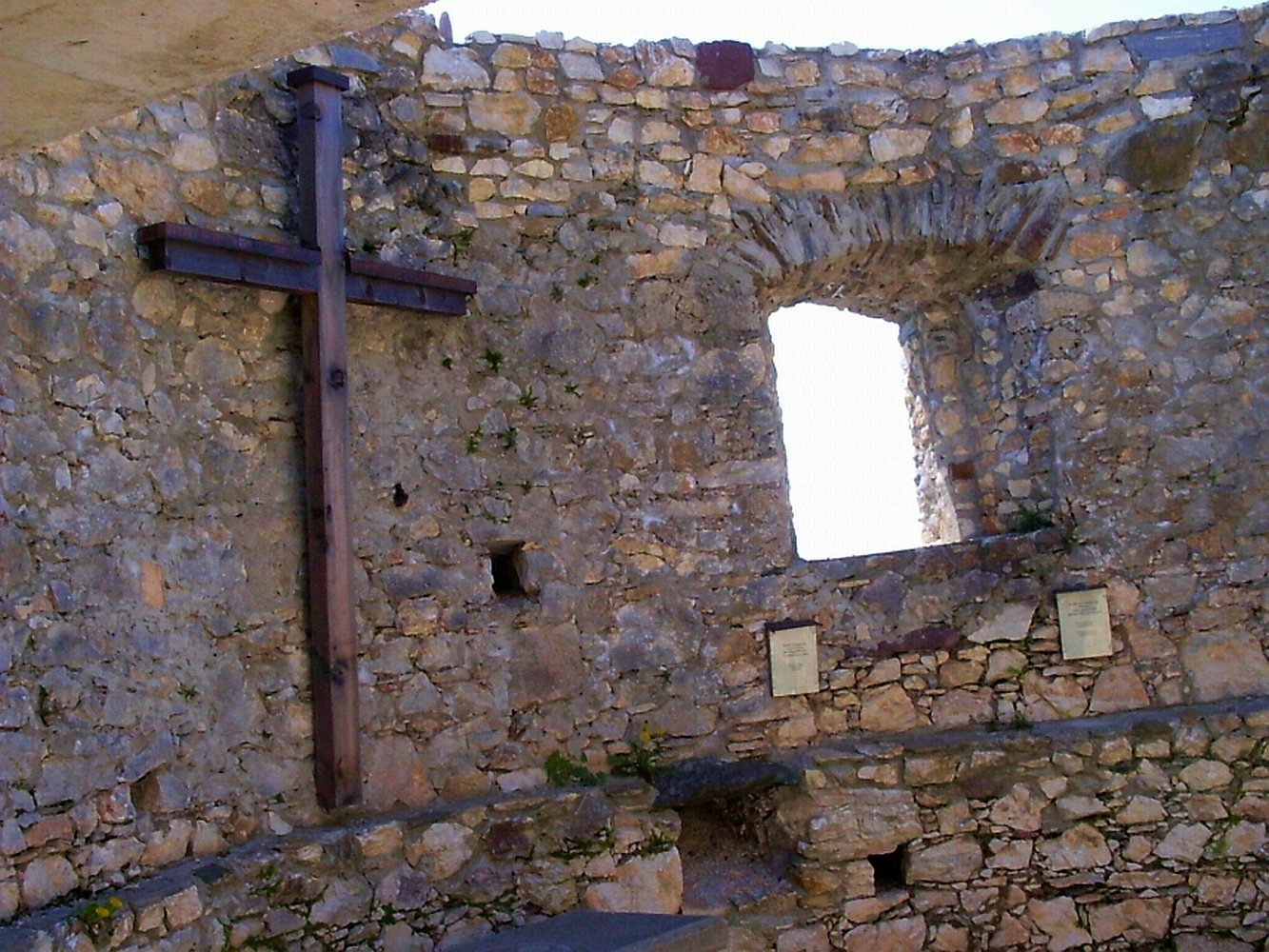
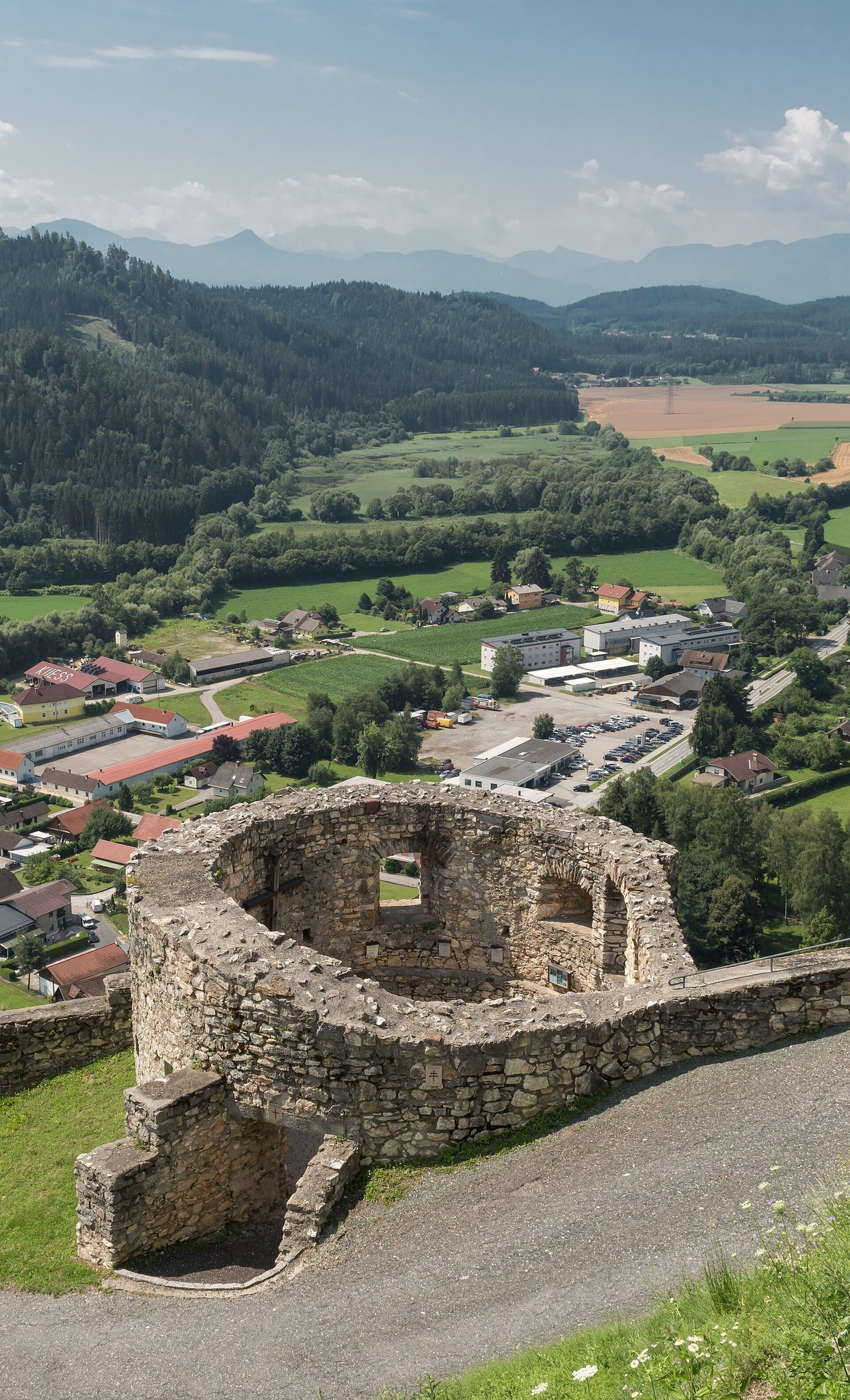
The ruins stand on a limestone mountain rising about 130 metres above the town of Griffen in Carinthia. After its reconstruction, the castle occupied a base of approximately 4,000 square metres. The complex is now preserved as a ruin, with surviving walls and the castle chapel forming part of its physical remains. The chapel continued in religious use until 1768, when the last service was held there.
Griffener Tropfsteinhöhle
Within the limestone mountain lies the Griffener Tropfsteinhöhle, a 485-metre-long dripstone cave. Such a cave contains mineral formations including stalactites and stalagmites. The cave was discovered during the final days of the Second World War and has been open to the public as a natural attraction since 1957.