Pravda Castle: A Late Medieval Fortress in the Czech Republic
Visitor Information
Google Rating: 4.6
Popularity: Low
Google Maps: View on Google Maps
Country: Czechia
Civilization: Medieval European
Remains: Military

History
Pravda Castle is situated near the village of Pnětluky in the Czech Republic. It was built during the period of the late Middle Ages by local nobility, reflecting the military and political conditions of the time.
The exact date when the castle was founded remains uncertain, though it is generally attributed to the 15th century, with some discussion of a possible 14th-century origin. The more widely accepted view places its initial construction in the 1430s, likely during a period of frequent conflict associated with the Hussite wars. Beneš of Kolowrat, who controlled nearby fortifications, is believed to have initiated its building as a refuge rather than a permanent residence. His son Jan of Kolowrat probably saw the completion of the castle around the 1460s.
Pravda’s name, which means “truth,” is thought to have first come into use during the early Hussite period. Unlike many castles, no pre-Hussite noble family incorporated the name into their titles, suggesting the fortress arose as part of the shifting political and military landscape at that time.
The castle first enters written records in 1523, when Jan Mašťovský of Kolowrat sold it to Děpolt of Lobkowicz. At this point, Pravda functioned as the administrative hub for a domain encompassing several villages and the nearby market town of Ročov. During the 16th century, the Lobkowicz family is believed to have used the castle primarily as a hunting lodge. However, due to its remote setting and absence of modern amenities, it gradually fell out of favor and was eventually deserted before the end of the century, around 1593.
In 1681, ownership passed to the Divice estate and later came under the Schwarzenberg family in 1802. The castle ruins gained new cultural importance in the 19th century during the Czech National Revival. It became a gathering place for nationalist ceremonies and served as a symbolic site for patriotic meetings, including a notable assembly in 1868 that attracted several thousand participants.
Throughout the 20th century, Pravda Castle remained in a state of decline. Various efforts by dedicated groups aimed to preserve and stabilize the remaining structures, reflecting ongoing interest in its historical and cultural legacy.
Remains
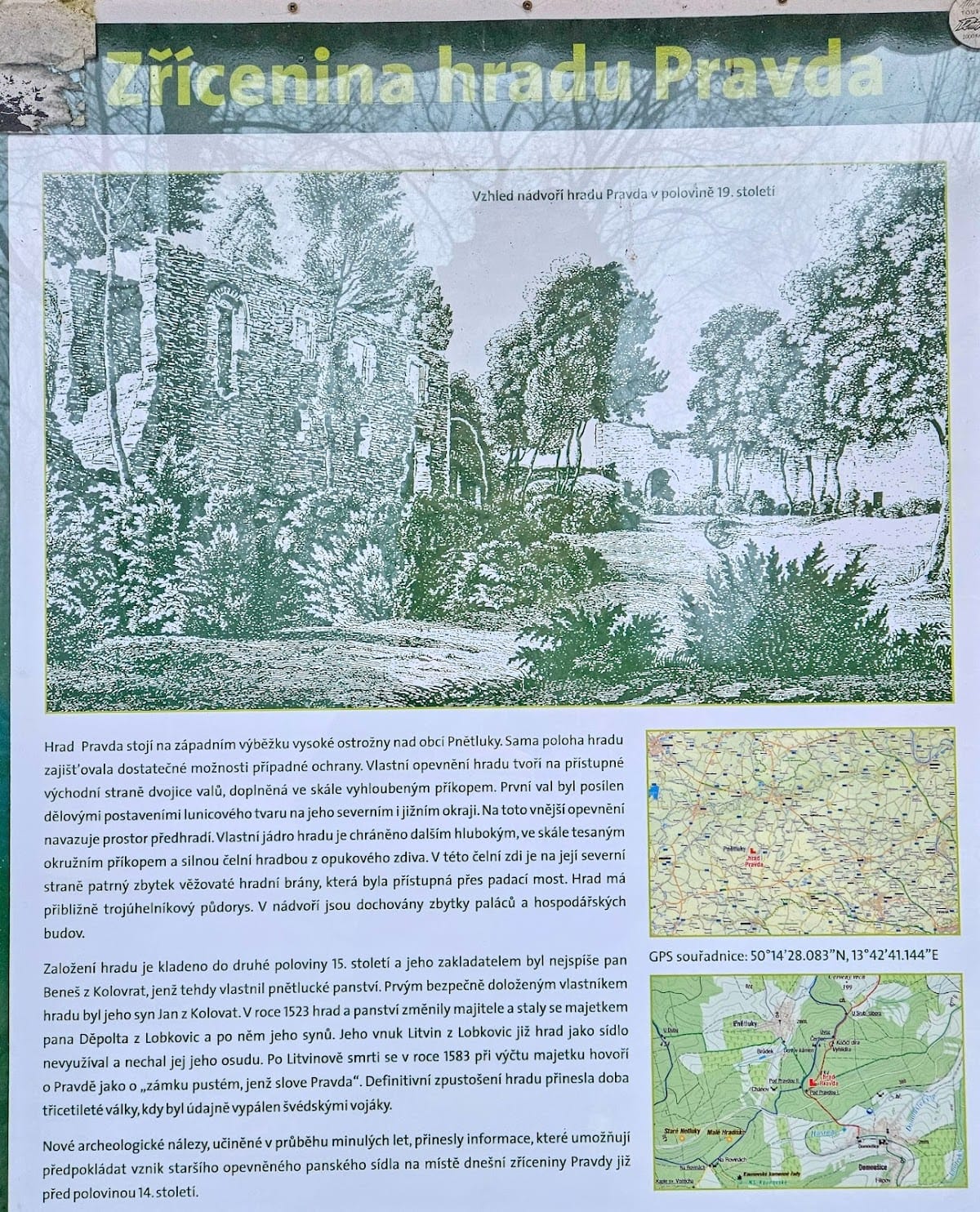
Pravda Castle was constructed with the artillery warfare of the mid-15th century in mind, marking a shift from medieval stone keeps to fortifications emphasizing earthworks. The castle occupies a triangular hilltop position and was encircled by a deep ditch and an inner rampart made of earth. These earthen defenses were complemented by an outer ringwork known as a zwinger, an additional ward accessible through a gate at the northern side.
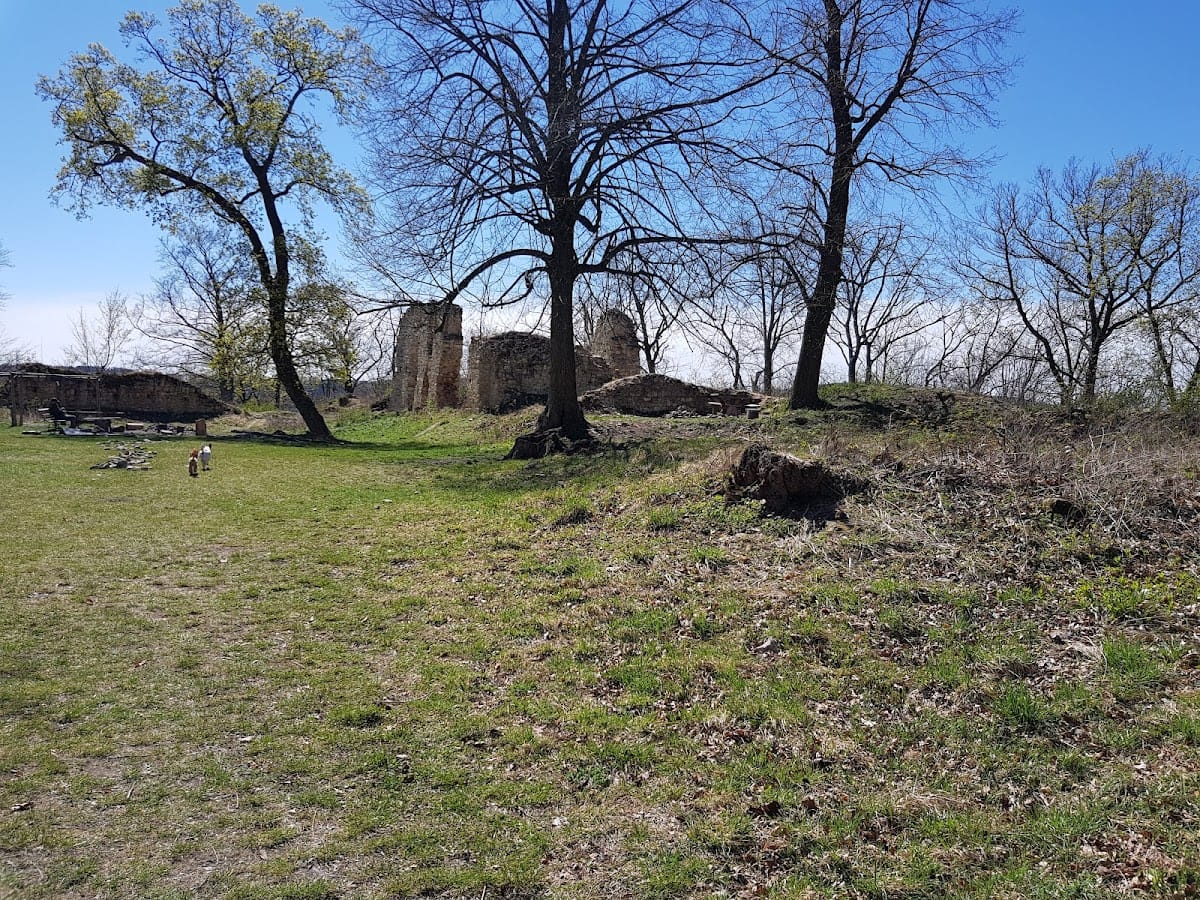
The northern part of the site contained a substantial earthwork fortification designed to mount artillery, with two large quarter-circular bastions at its corners intended for active defense. Remnants of these earthworks, including artillery positions, remain visible today, providing evidence of the castle’s adaptation to gunpowder weaponry.
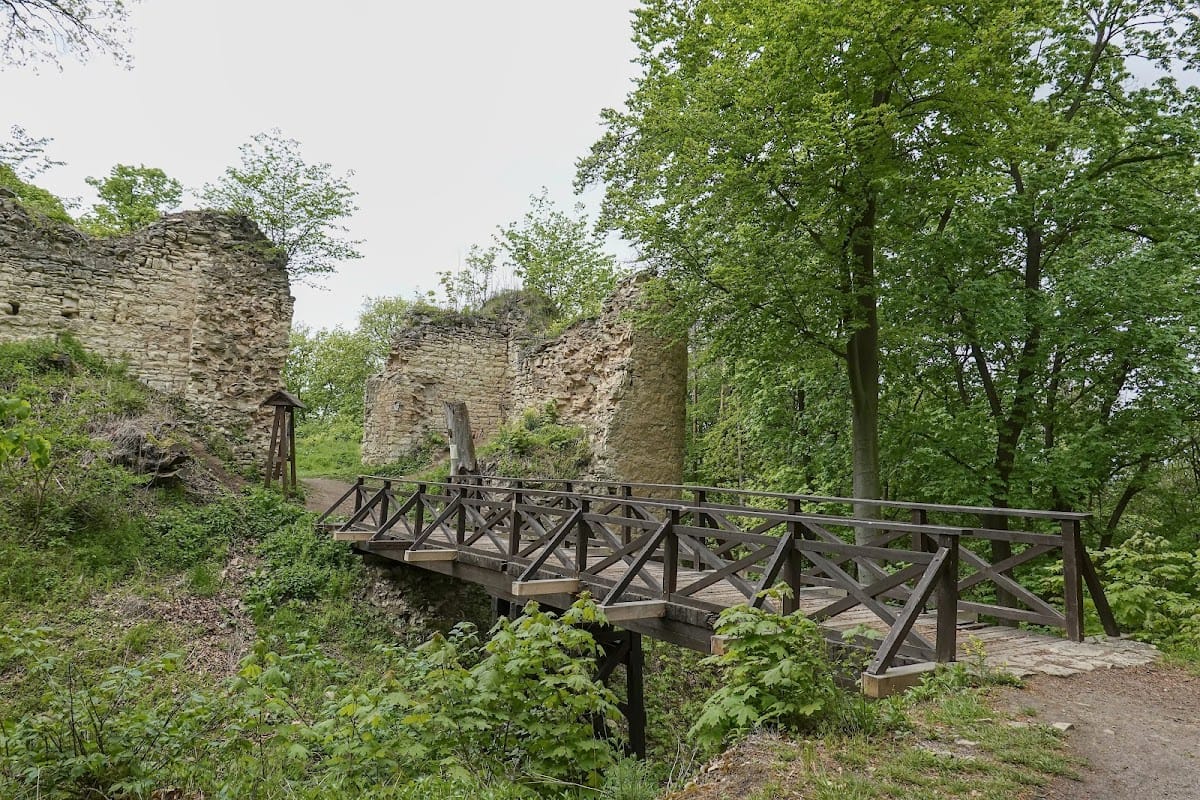
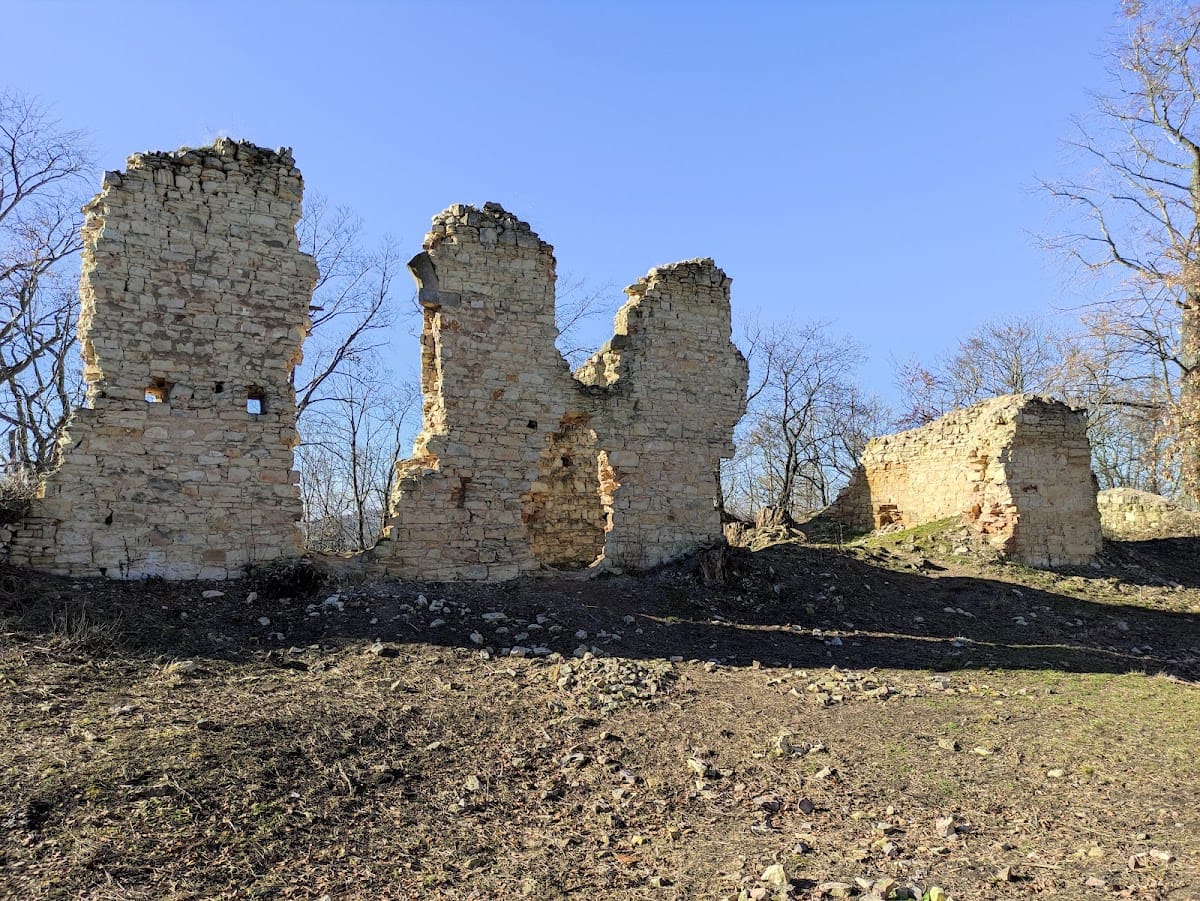
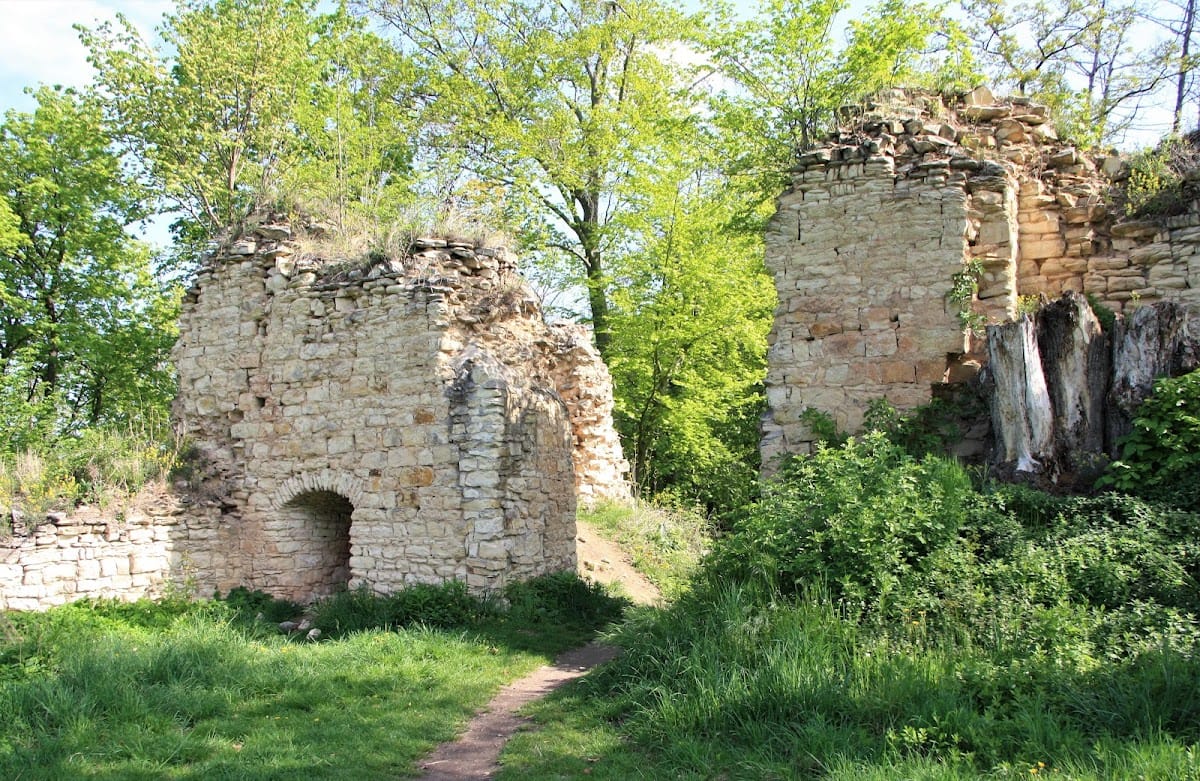
Unlike many castles of its era, Pravda did not include a traditional tall tower or keep. Instead, it featured a broad and low gatehouse that served as the principal entrance. Residential and utilitarian buildings were arranged along the curtain walls. Among surviving structural ruins are the remains of a three-room palace with flat ceilings on the western side, while the southeastern curtain wall holds remnants of a vaulted building equipped with cellars, notable for a preserved doorway and window opening.
To the northeast of the main castle lay a fortified farmstead or manor surrounded by defensive earthworks, which appears to have fallen into ruin alongside the castle itself. Additional features at the site include fragments of the gate tower and underground passages discovered east of the castle. Defensive ramparts also protected the courtyard within the castle.
The principal building material was the local opuka stone, a soft limestone typical of the region, used alongside earth for the ramparts. While decorative details are not recorded, the mixture of masonry and earthen fortifications exemplifies the castle’s adaptation to contemporary military technology.
Today, Pravda Castle exists as a ruin with significant earthworks and partial masonry structures still evident. Ongoing conservation efforts aim to keep these remains stable, preserving the physical traces of its distinctive design and historical function.
Nearby sites