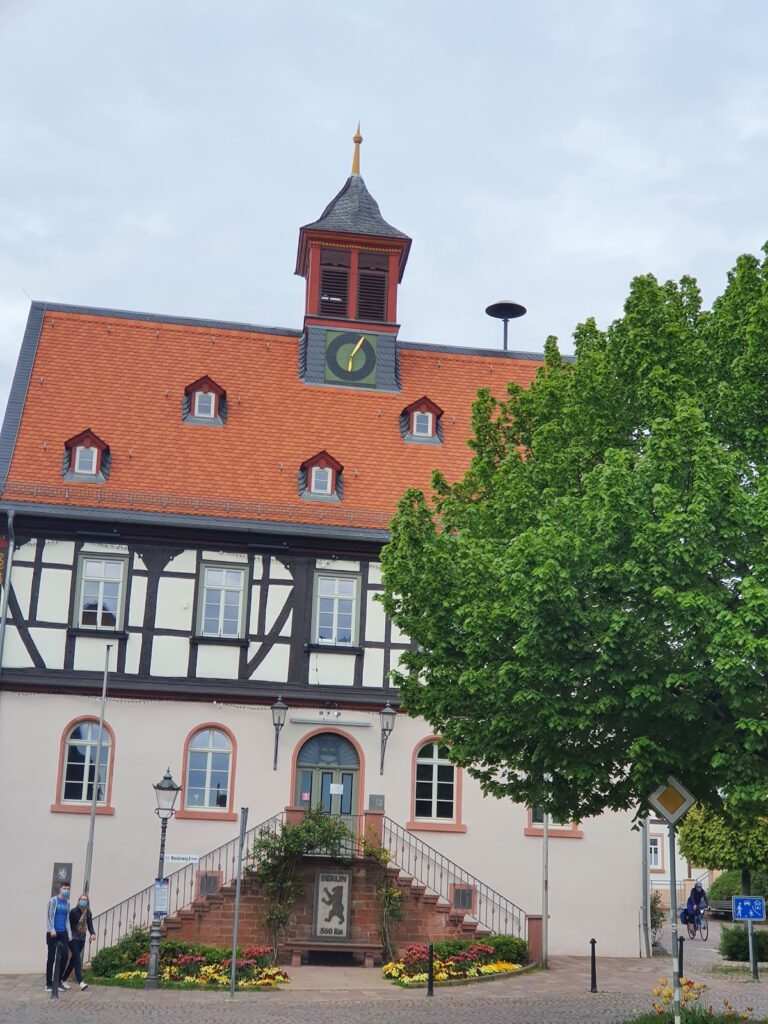
Kronberg Castle: A Medieval Fortress in Germany


Visitor Information
Google Rating: 4.5
Popularity: Medium
Official Website: www.burgkronberg.de
Country: Germany
Civilization: Medieval European
Site type: Military
Remains: Castle

History
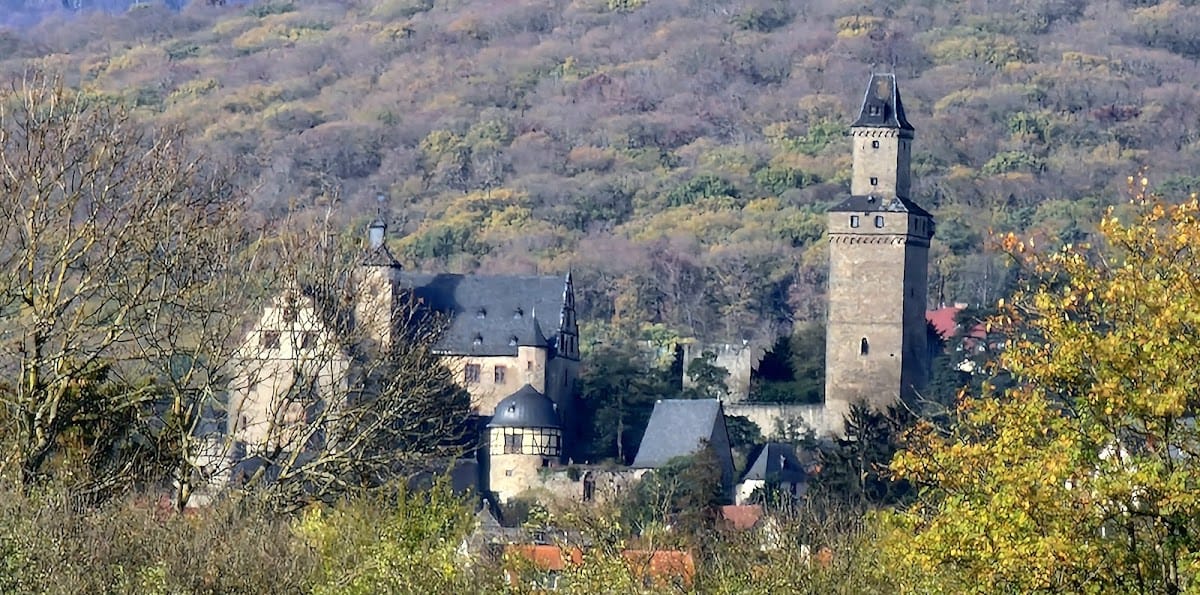
Kronberg Castle stands on a hill overlooking the town of Kronberg im Taunus in Germany. It was built during the Middle Ages by the German nobility, with construction likely beginning around 1170 in the period of Emperor Frederick I Barbarossa’s rule.
The earliest known occupants were ministeriales, or unfree knights, from nearby Eschborn who are recorded from 1189. These ministeriales are believed to have erected the castle’s initial towers and stone walls between 1170 and 1230. The name “Cronenberg” first appears in historical records in 1230, linked to Otto von Cronenberg, nearly six decades after the castle’s initial construction. From the mid-13th century onward, Kronberg Castle became the seat of the noble von Kronberg family. This family owned the castle jointly as a Ganerbenburg, meaning it was shared among different family branches. The castle’s various parts were occupied separately, with the Flügelstamm and Ohrenstamm lines living near the gate and chapel in the lower castle, while the main Kronenstamm line held the middle castle. The von Kronberg family maintained control of the fortress until the male line ended in 1704.
After the extinction of the von Kronberg male lineage, the castle passed into the possession of the Electorate of Mainz. Under its new administration, the fortress was adapted to serve various civic functions including an administrative center, a school, and a prison. The castle endured damage during the Napoleonic Wars, after which parts of it were abandoned or repurposed.
In the late 19th century, Empress Victoria, widow of Emperor Frederick III, sponsored extensive restoration efforts. These aimed to preserve the building and convert it into a museum and site for cultural events. Restoration work carried on into the 20th and 21st centuries, with significant projects occurring between 2001 and 2017 to improve the castle’s structural stability and interior spaces. Today, Kronberg Castle remains a preserved historical site managed by a foundation and local organizations, offering exhibitions and hosting cultural activities.
Remains
Kronberg Castle is composed of three main sections reflecting its long building history: an upper castle dating from the high Middle Ages, a late medieval chapel, and a middle castle showcasing Renaissance and Baroque features. This layout preserves the development from an early medieval fortress to a residence adapted over centuries.
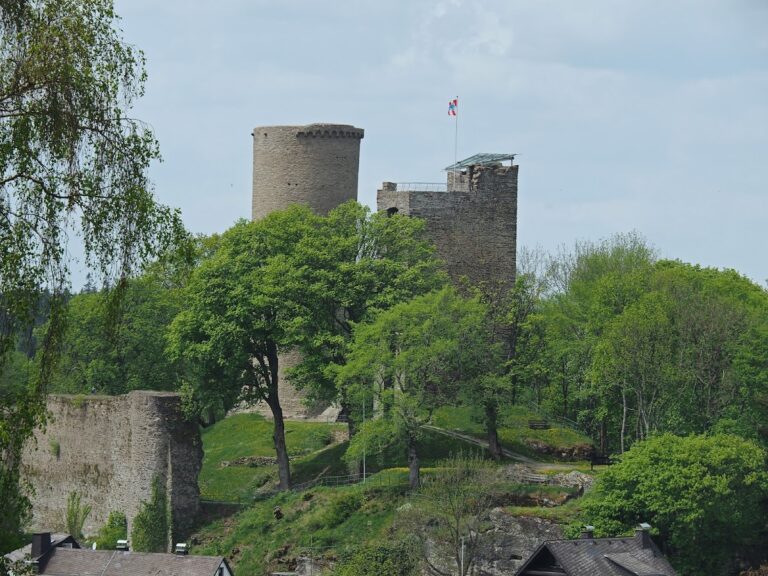
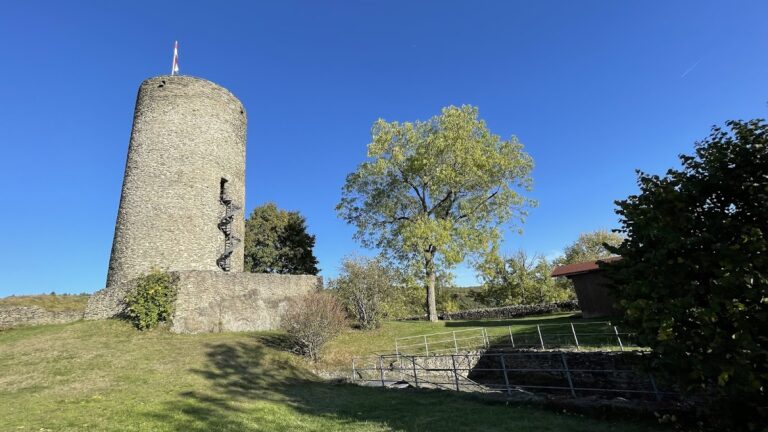
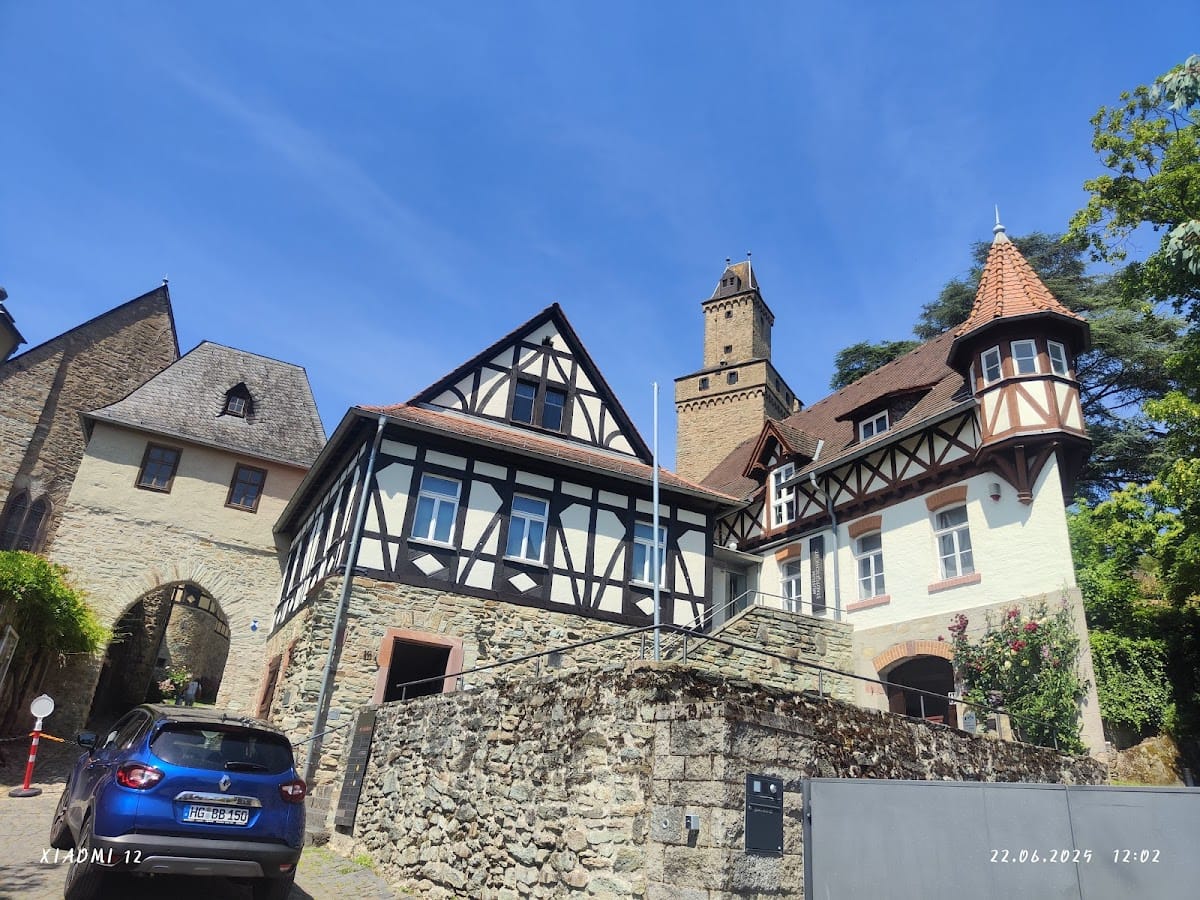
The upper castle stands on the highest point of the hill, featuring a prominent freestanding tower known as the Freiturm. Originating in the Staufer era, this tower has a square footprint roughly 8.4 meters on each side and rises more than 43 meters tall after alterations around 1500 added a distinctive upper portion shaped like a butter churn. Access to the tower originally required climbing to a high entrance about seven meters above ground, which today can be reached via a stone staircase constructed in the 19th century.
Nearby is the Pentagonal Tower, originally built around 1200 as a residence but transformed around 1500 into a heavily fortified structure with walls up to 2.5 meters thick. It features unusual narrow embrasures designed for defensive purposes. The current entrance to the tower uses a boundary stone as a lintel, a modification dating to about 1900. The courtyard of the upper castle covers approximately 750 square meters. It lacks a large main palace, likely because the hilltop’s space was limited. Foundations of a small round shell tower survive on the viewing platform, indicating further historic defense installations.
The middle castle mainly dates from the 14th to early 16th centuries and includes a west wing with Gothic architectural elements alongside a north wing completed around 1505 in Renaissance style. These form an L-shaped enclosure with an internal courtyard. Among the surviving features is a large flag tower, or Fahnenturm, marked by later oriel windows added in the 15th century or afterward. The fortress retains a large vaulted kitchen room holding a fire hearth and one of its original draw-wells, first mentioned in records from 1367. An octagonal tower with a narrow spiral staircase likely served as servant quarters.
The castle gate dates to approximately 1478. It consists of a rounded Romanesque arch crafted from white limestone and contrasting black basalt lava stone. The original wooden oak gate wings were replaced around 1900 by modern replicas. Adjacent to the gate stands the late medieval chapel, consecrated about 1342, which served as a burial place for the von Kronberg family and later members of the House of Hesse. The chapel suffered heavy damage from bombing in 1943 during World War II, leaving it roofless and exposing graves, though some epitaphs remain inside the choir area, which is closed to the public.
Restoration in the late 19th and early 20th centuries introduced some additions inspired by other German castles, such as a decorative battlement walkway known as the Wehrgang and a tower called the Prinzenturm. Interior decoration from that period includes historic and historicist furnishings with stenciled paintings and inscriptions dating to around 1900.
The castle grounds encompass roughly 1.8 hectares, including a historic princely garden and a yew grove planted in a style reflecting traditional historic landscaping. The yew grove, consisting of trees of different ages, is maintained both as a habitat for wildlife and to preserve the historical garden character. Modern interventions within the castle include discreetly installed stairs and an elevator to improve access to upper floors, carefully incorporated to minimize altering the historic fabric.
Nearby sites