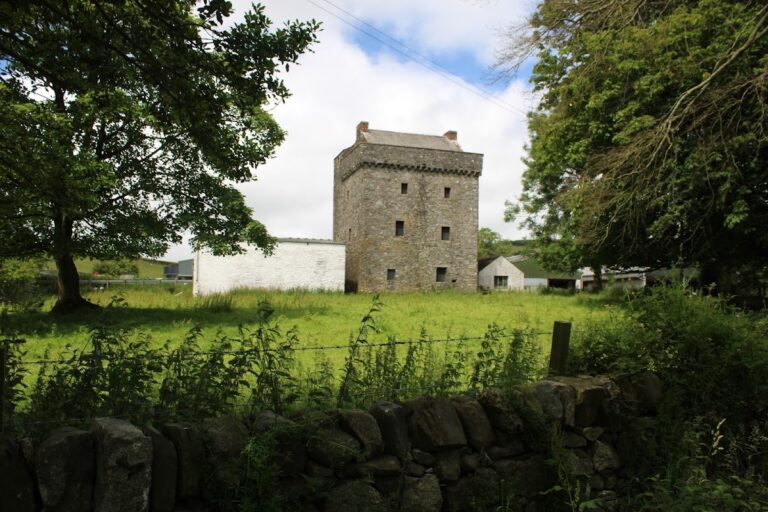
Kirkconnel House: A Historic Scottish Estate in New Abbey

Visitor Information
Google Rating: 4.8
Popularity: Very Low
Google Maps: View on Google Maps
Country: United Kingdom
Civilization: Unclassified
Remains: Military

History
Kirkconnel House is located in New Abbey, Scotland, United Kingdom. The site originally entered the possession of the de Kirkconnel family before the year 1320. This early medieval ownership suggests the estate was part of the local feudal landscape established by Scottish nobility during the Middle Ages.
In the early 15th century, control of the lands shifted to Clan Maxwell, marking a significant change in stewardship that would influence the site’s development in the centuries that followed. During the 16th century, the Maxwells constructed a tower house on the property, forming the core of what would become Kirkconnel House. This fortified residence was typical of the period, serving both defensive and domestic purposes for the clan.
Through the 17th century, the original tower house was expanded, creating the distinct L-shaped layout characteristic of the building at that time. The design adjustments reflected changes in architectural style and the reduced need for purely defensive structures.
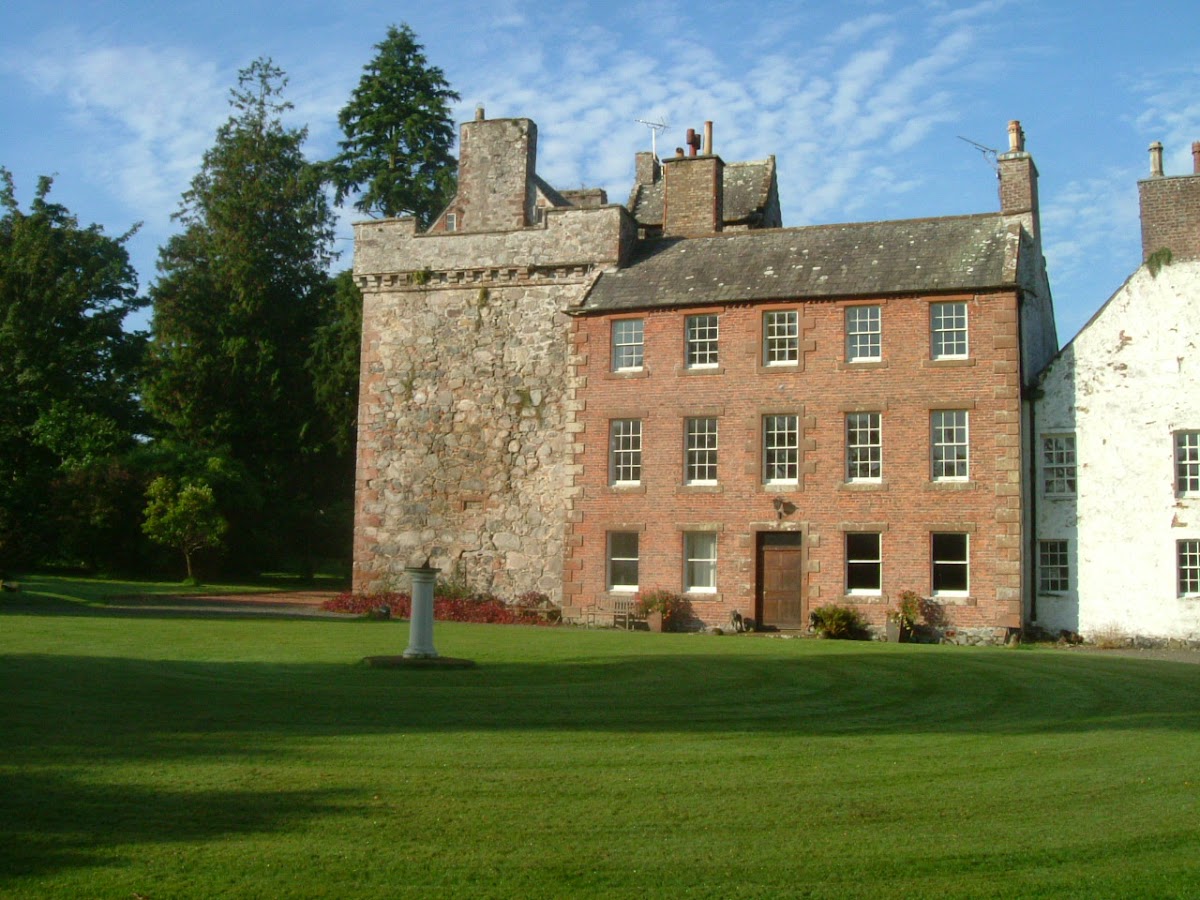
Around 1750, after returning to Scotland, James Maxwell undertook further substantial renovations, transforming the property into a mansion form. This phase marked a shift towards more comfortable and modern living accommodations. James Maxwell’s involvement culminated just before his death in 1762.
The building’s evolution continued through several phases, with documented additions and alterations extending up to 1823. During the late 18th or early 19th century, new elements such as gate piers and stables were erected on the estate, reflecting the expanding requirements of the property’s functions and status.
Recognition of Kirkconnel House’s historical and architectural significance came in 1971 when the main building was designated as a Category A listed building, a status reserved for structures of national importance. The gates and stables received separate designation as Category C listed structures, acknowledging their contribution to the overall historic character of the site.
Remains
The Kirkconnel House complex centers around a 16th-century tower house made of rubble masonry, notable for its thick walls measuring about 1.8 meters. Originally constructed with a three-story height, this tower features a ground floor with vaulted ceilings that are lit by distinctive cross-shaped openings designed as gun loops, which allowed defenders to fire weapons while remaining protected. The tower’s ground plan took on an L-shape after a 17th-century extension was added, featuring stepped gables that provide a strong visual character. However, a defensive walkway projecting from the original tower was not extended onto this addition, indicating a gradual move away from military functions.
Attached to the north flank of the tower is a two-story mansion building finished with a roughcast exterior, known as harling, which was common in Scottish architecture for weatherproofing. Subsequent expansions resulted in a U-shaped overall layout, merging the medieval and later residential sections into a coherent whole.
A chapel once connected to the main structure by a flat corridor forms part of the estate. This chapel has since been secularized, no longer serving its original religious purpose but remaining within the complex’s footprint.
All roofs on the buildings are covered with slate, a durable and typical roofing material for the region, helping to protect the estate against Scotland’s often harsh weather.
Approximately 70 meters to the north, the entrance to the grounds is marked by a gatehouse featuring four octagonal piers constructed in the early 19th century. The inner two piers, which flank the main driveway, are larger than the outer ones that border the pedestrian paths. These piers are topped with decorative cornices and support wrought iron gates, serving both functional and ornamental roles as part of the estate’s entrance.
To the west of the house, about 60 meters away, stand the former stables. These consist of two long buildings made with rubble masonry coated in limewash, which helps protect and brighten the exterior walls. The stables display twelve-pane sash windows and multiple entrance doors on their east sides. One stable building is distinguished by a small roof turret capped with a pyramidal roof, historically used as a dovecote for housing pigeons or doves.
Together, these features illustrate the gradual transformation of Kirkconnel House from a fortified tower into a country mansion, accompanied by functional outbuildings that supported the lifestyle of its owners through the 18th and early 19th centuries. All key structural elements remain well-preserved, allowing a comprehensive understanding of the site’s architectural and historical development.
Nearby sites