Castell de Rocafort de Vallbona: A Medieval Castle in Catalonia

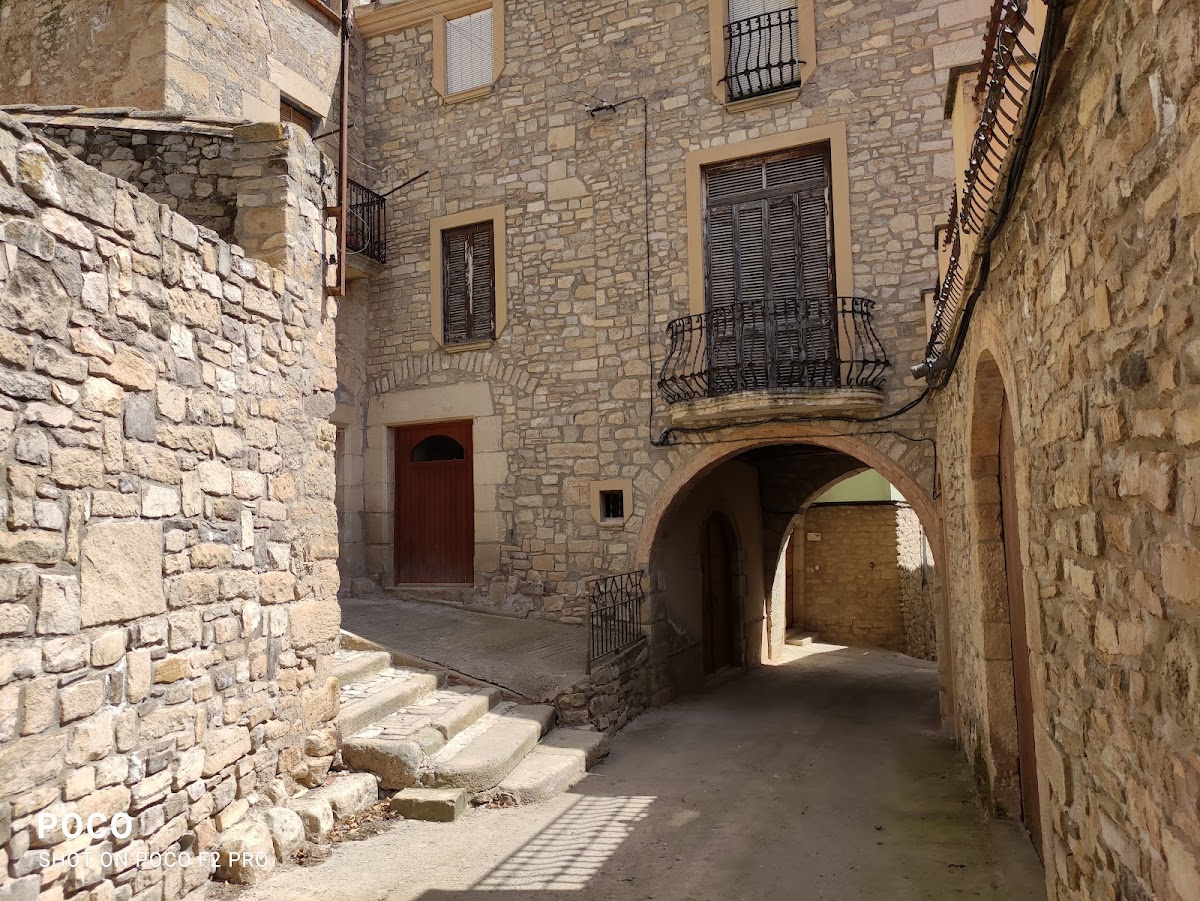
Site at a Glance
- Rating
- 4.4
- Popularity
- Very Low
- Country
- Spain
- Primary era
- Medieval
- External website
- Open
- Eras represented
- Medieval, Early Modern
- Civilizations
- Crown of Aragon
- Site type
- Military
- Remains
- Castle
On this page6 sections
History
Castell de Rocafort de Vallbona is a medieval castle in Spain, associated with the organization of Rocafort from the eleventh century and with a Gothic building whose visible form belongs largely to the fifteenth or sixteenth century. The site occupied a fortified position above the settlement, and its history became closely connected with the monastery of Santa Maria de Vallbona de les Monges.
Formation of the territory
Rocafort was organized during the eleventh century, and its parish appears in a list of parishes belonging to the Diocese of Vic from the second half of that century. The territory is first mentioned in 1164, when Berenguer Arnau d’Anglesola transferred the castle and town of Verdú to his daughter Berenguera and her husband, Guillem de Cervera. The boundaries of Verdú at that time included Rocafort.
In 1173, Bernat Taravat, possibly from Tarabau, and his wife, Saurina, transferred the emerging fortress and half of its territory to their daughter Sança and her husband, Guillem del Mor. The transfer formed part of their marriage settlement. Documents from 1227 refer explicitly to the territory and castle of Rocafort.
Lordship of Vallbona
In 1209, Dalmau de Timor sold all his seigneurial rights over the castle and town to the abbess of Santa Maria de Vallbona de les Monges for 2,200 Barcelona sous. Seigneurial jurisdiction was an authority to govern a territory and exercise related rights. During the thirteenth century, the abbess progressively acquired full lordship over Rocafort.
On 5 March 1285, the abbess bought the site and castle from Bernat de Rocafort, together with their fiefs, property, and appurtenances. The 1365–1370 hearth census recorded Rocafort as belonging to the abbess of Vallbona. Her ownership of the barony was challenged in a lawsuit in 1633, but the General Bailiff of Catalonia ruled in favour of the monastery. Vallbona retained ownership until the abolition of seigneurial jurisdictions in the nineteenth century.
Castell de Rocafort de Vallbona is included in the Inventory of the Architectural Heritage of Catalonia and is registered as a Cultural Asset of Local Interest under reference IPA-29864.
Remains
Rocky summit and later residence
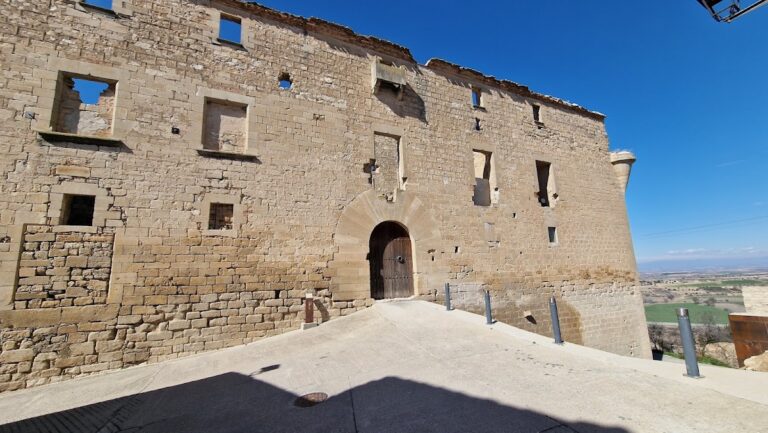
The surviving castle occupies the summit of a rocky hill in Rocafort de Vallbona, approximately 450 metres above sea level. The building was constructed directly on the natural rock, whose large masses frame the facade on both sides. This rocky outcrop gave its name first to a defensive tower and later to the castle.
The visible remains resemble a fifteenth- or sixteenth-century noble residence, although the building is classified architecturally as Gothic. Several construction phases can be distinguished in the masonry. A large rock to the right of the entrance supports a substantial chamber. The entrance itself has a semicircular arch made from wedge-shaped stones arranged around the curve. Inside the rock, a cistern was excavated to store water.
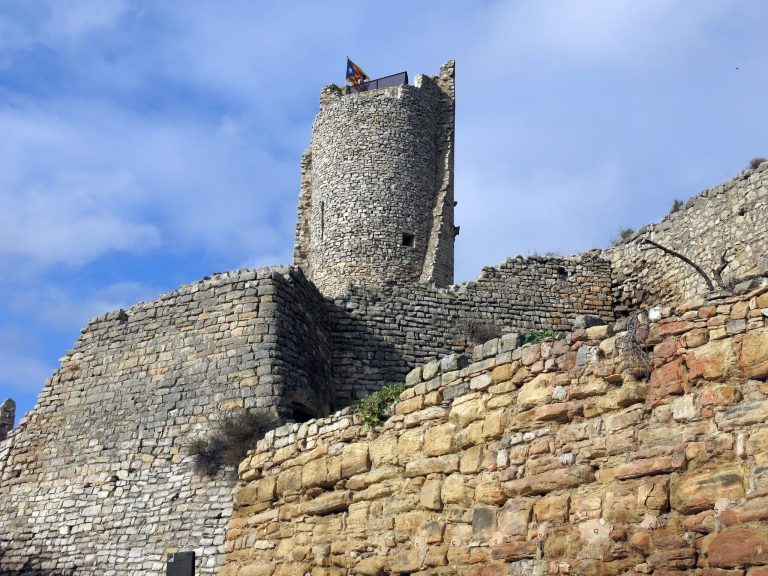
Romanesque fabric
The Romanesque phase survives in rows of masonry visible on the northern side of the building. These remains indicate an elongated plan, possibly adapted to the shape of the rocky outcrop. The earlier fabric forms part of the castle’s layered construction history, alongside the later residence that gives the surviving structure its principal appearance.