Džbán Castle: A Medieval Fortress in the Czech Republic

Visitor Information
Google Rating: 4.1
Popularity: Low
Google Maps: View on Google Maps
Country: Czechia
Civilization: Medieval European
Remains: Military

History
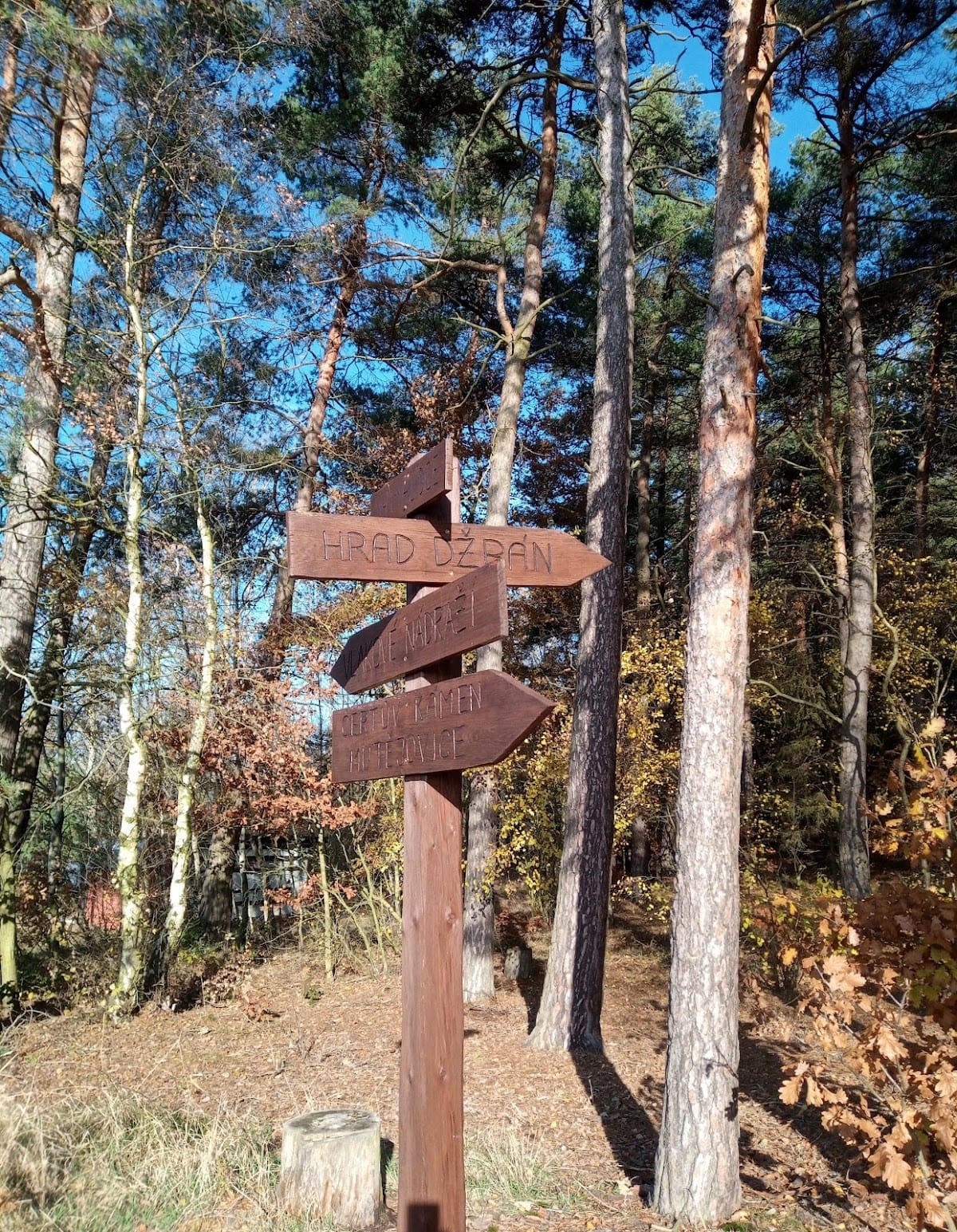
Džbán Castle stands near the village of Mutějovice in the modern Czech Republic. The location has a long history, with a prehistoric hillfort built during the Hallstatt period marking the earliest known fortification on the site. Over time, archaeological finds reveal that Neolithic and early medieval peoples also utilized this strategically important spur above the Ve Vratech gorge.
The castle itself was constructed in the early 13th century, probably during the reign of King Wenceslaus I or his father, Přemysl Otakar I, of the Přemyslid dynasty. Its size and elaborateness suggest royal patronage rather than construction by local nobility. It likely served both defensive and administrative roles, functioning as the northernmost fortress within the Přemyslid royal hunting grounds and possibly overseeing a critical passage through the gorge.
Though no surviving written records directly mention the castle or its founders, archaeological evidence such as a keystone inscribed with the date 1273 provides a rare chronological marker. The site appears to have been abandoned by the end of the 13th century. Several explanations exist for this early desertion, including destruction by fire, as indicated by an ash layer found during excavation, or destabilization of the hill caused by deep defensive moats undermining the ground. Some researchers have proposed damage during conflicts in the early 14th century, but this remains unconfirmed.
The ruined fortress was first documented in written sources in 1516. Over time, it became confused with another nearby site known historically as Držemberk, though this name refers elsewhere. Despite its abandonment centuries earlier, Džbán Castle remained an important archaeological landmark, reflecting both prehistoric and medieval military history in the region.
Remains
Džbán Castle occupies a roughly triangular plateau measuring about 200 by 300 meters, positioned on a promontory with steep slopes to the north, west, and south. The entire site was fortified by a deep ring-shaped moat accompanied by earthen ramparts, forming a strong defensive perimeter. The strength and scale of these earthworks underline the site’s importance during its medieval period of use.
At the heart of the complex stood a large rectangular keep—often called a donjon—built in the style typical of French castles in the 13th century. This main tower, approximately 60 by 45 meters in size, was protected on its eastern front by three round towers. The largest of these was a southern bergfried, a type of tall defensive tower. Flanking it were two smaller round towers, with the northern one being the smallest and offering limited side defense. A probable fourth tower, square in shape, was situated on the western wing.
The western section of the castle included a palace complex that contained several rooms and a chapel. Constructed mostly from local pläner limestone, known locally as opuka, the castle’s walls and towers were built to be massive and durable. The main access to the castle connected via the southeast approach along a trail historically called the “Count’s Road” (Hraběcí cesta).
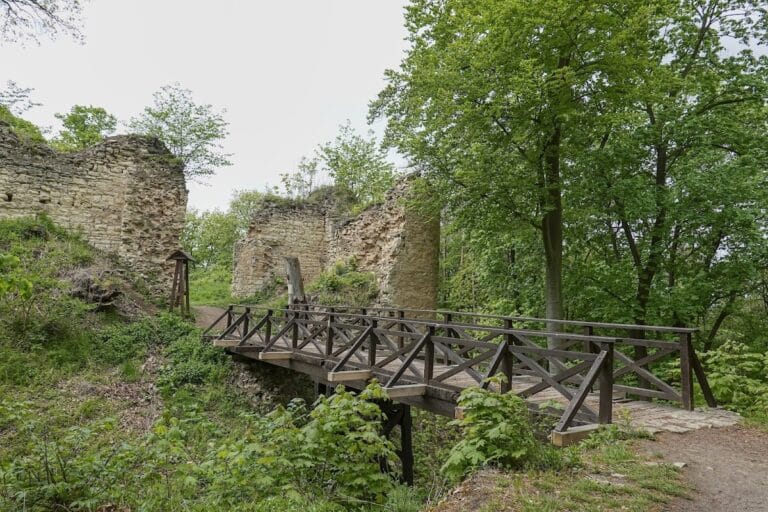
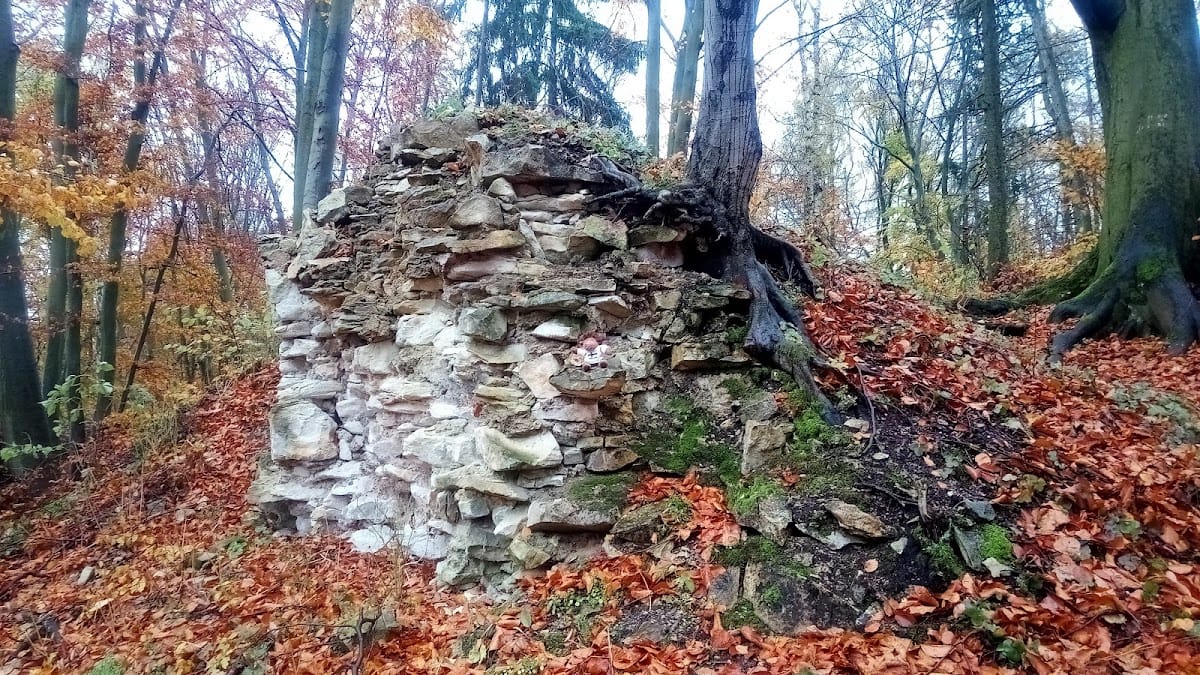
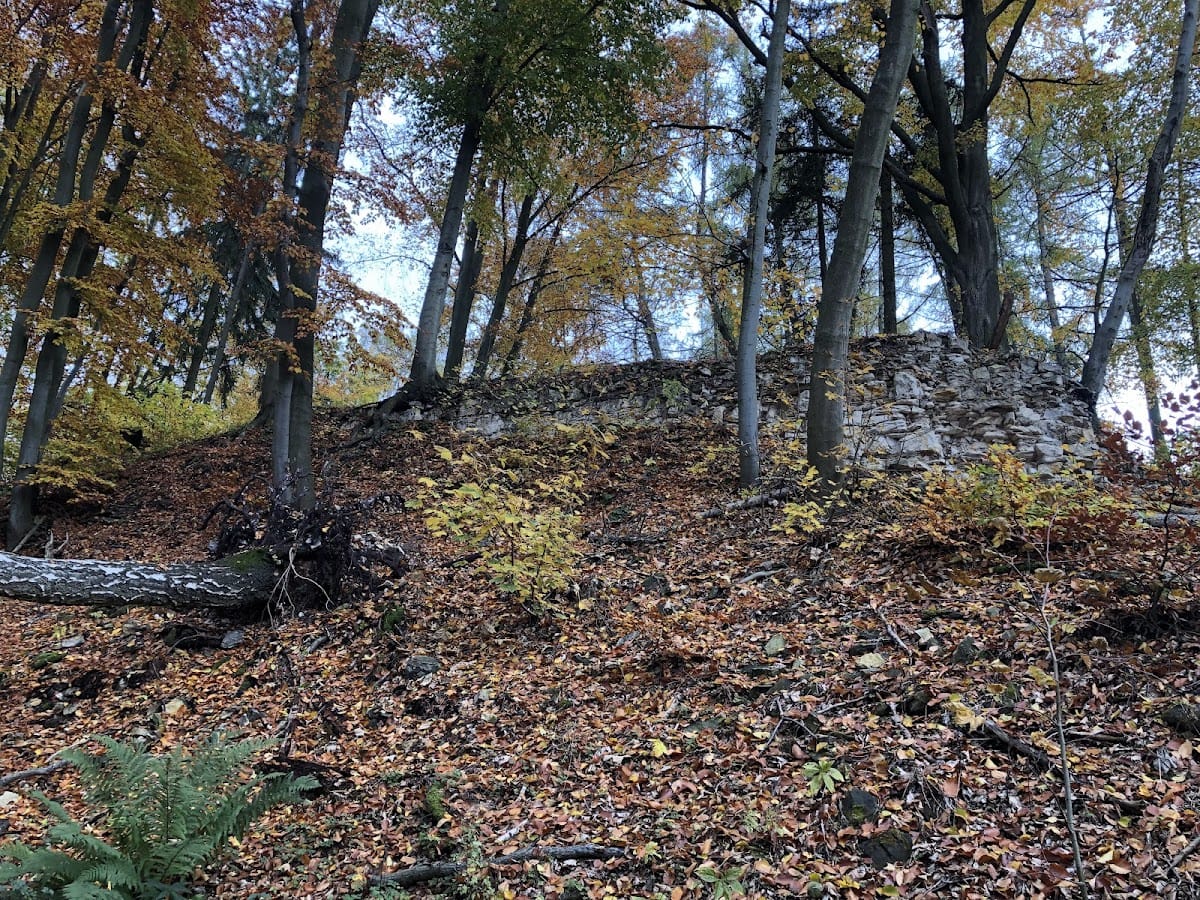
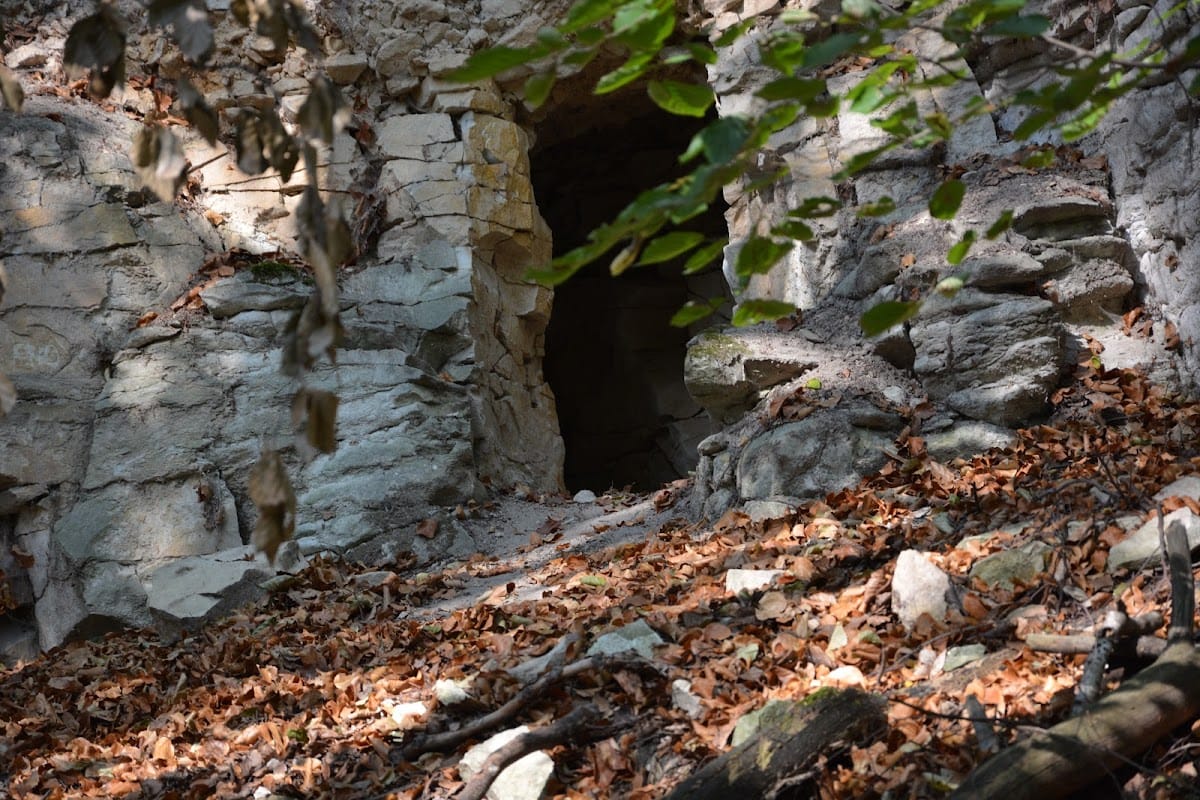
By the 19th century, all three round towers remained visible above ground. However, quarrying of pläner stone around the turn of the 19th and 20th centuries caused significant damage. Two of the three towers were destroyed during this period, leaving only parts of the northern tower’s structure standing today. Presently, visitors to the site can still see remnants of the moat and ramparts, portions of the palace walls, and the torso of the northern tower, although these remains are heavily overgrown with forest planted deliberately after the castle’s ruin.
Additional features in the surrounding landscape include a nearby railway line and a disused siding that once served a coal mine. Not far from Džbán Castle, other archaeological sites such as the Kounov stone rows enrich the historical context of the area. The surviving elements at Džbán provide valuable insight into medieval castle construction and the long-term strategic significance of this elevated location.
Nearby sites