Castello Brown: Portofino’s Historic Fortress and House Museum

Site at a Glance
- Rating
- 4.5
- Popularity
- Medium
- Country
- Italy
- Primary era
- Early Modern
- External website
- Open
- Eras represented
- Classical, Medieval, Early Modern, Modern
- Civilizations
- Genoese, Roman
- Site type
- Military
- Remains
- Castle
On this page8 sections
History
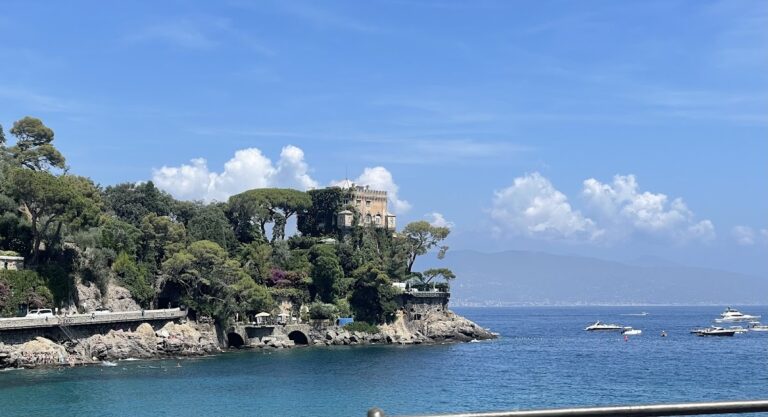
Castello Brown is a historic fortress and house museum above the harbour of Portofino, Italy, whose present structure is first recorded in 1425 and combines medieval military construction with a nineteenth-century Romantic villa. Its position protected the harbour and the waters of the Gulf of Tigullio, continuing a defensive role that appears to have begun in Roman times.
Roman and medieval defences
Archaeological remains beneath the castle include a Roman watchtower dated to the second or third century and fourth-century fortifications identified with a castrum, a Roman fortified settlement or military enclosure, and a turris, or fortified tower. These earlier works placed the site within a long sequence of harbour defences.
The earliest official records for the present fortress date to 1425, when Tomaso Fregoso occupied Portofino and its stronghold in opposition to Filippo Maria Visconti, Duke of Milan. Genoese control returned in 1430 through Francesco Spinola di Ottobono. The fortress then became a possession of the Republic of Genoa, a maritime state whose fortified ports and coastal strongholds protected shipping and controlled Ligurian commerce.
Because of its position, the castle was repeatedly contested. It resisted an attack by the Genoese Ghibelline admiral Aitone D’Oria in 1330, a Venetian fleet in 1431, and an assault associated with Giovanni Andrea Doria in 1575. The Ghibellines were a medieval faction generally linked to support for the Holy Roman Emperor in conflicts with the pro-papal Guelphs. Portofino’s harbour made the fortress one of Genoa’s two principal coastal strongholds, together with Ventimiglia. A patrician castellano, the commander or governor of a fortress, led its garrison, which protected both the town and the surrounding waters.
The castle functioned mainly as a military installation until about 1600, after which it gradually took on a more residential character. Tradition also holds that Richard the Lionheart, King of England, stayed there for several days while travelling to the Third Crusade.
Early modern strengthening
Cannon batteries were installed in the early sixteenth century. Between 1554 and 1557, the military engineer Giovanni Maria Olgiati prepared plans to enlarge the fortress with a new harbour-facing platform, more weapons and ammunition, and additional accommodation for the garrison. The changes were intended to improve its response to sudden attacks, including pirate raids.
Further strengthening followed between 1622 and 1624, and the fortress retained this general form for roughly 150 years. Armament and interior works continued in 1728. In 1608, the stronghold became part of the territories of the Captaincy of Rapallo, a Genoese administrative district. Its inventories reveal the continuing military role: in 1442 it held two bombards, large-calibre guns used to fire stone or heavy metal projectiles, while by 1697 it possessed two half-cannon, fourteen other guns, and fifty muskets, arquebuses, halberds, and spears.
French control and the end of the fortress
The Republic of Genoa fell in 1797, after which the fortress came under French control during Napoleon Bonaparte’s rule in Liguria. Napoleon garrisoned it and increased its armament to protect coastal traffic from the British fleet. An English attack in 1798 destroyed a small tower, but another British assault in March 1814 failed.
After the Congress of Vienna, the 1814–1815 settlement that reorganized Europe after the Napoleonic Wars, the castle was abandoned. Its military function finally ended with disarmament in 1867. The change closed the period in which the site had served as a defended Genoese, French, and coastal military position.
Private villa and public museum
In the nineteenth century, Sir Montague Yeats-Brown, the British consul in Genoa, acquired the former fortress for 7,000 lire and converted it into a private villa. He commissioned the architect Alfredo D’Andrade to remodel the building. The Yeats-Brown family retained the property until 1949, and during the German occupation of Italy the castle was used as a prison for members of the Resistance.
Colonel John Baber and Jocelyn Baber purchased Castello Brown in 1949 and restored several sections that had fallen into ruin. Jocelyn Baber also researched the chapel and its complete 1607 inventory. The Babers sold the property to the Municipality of Portofino in 1961. Since then, the municipality has preserved it as a public museum and cultural venue for exhibitions and cultural events.
Castello Brown also entered modern cultural history through literature and film. Elizabeth von Arnim set her 1922 novel The Enchanted April at the castle. The 1991 British film adaptation, directed by Mike Newell and starring Miranda Richardson and Joan Plowright, was filmed at Castello Brown and in the surrounding area.
Remains
Fortress fabric and defensive layout
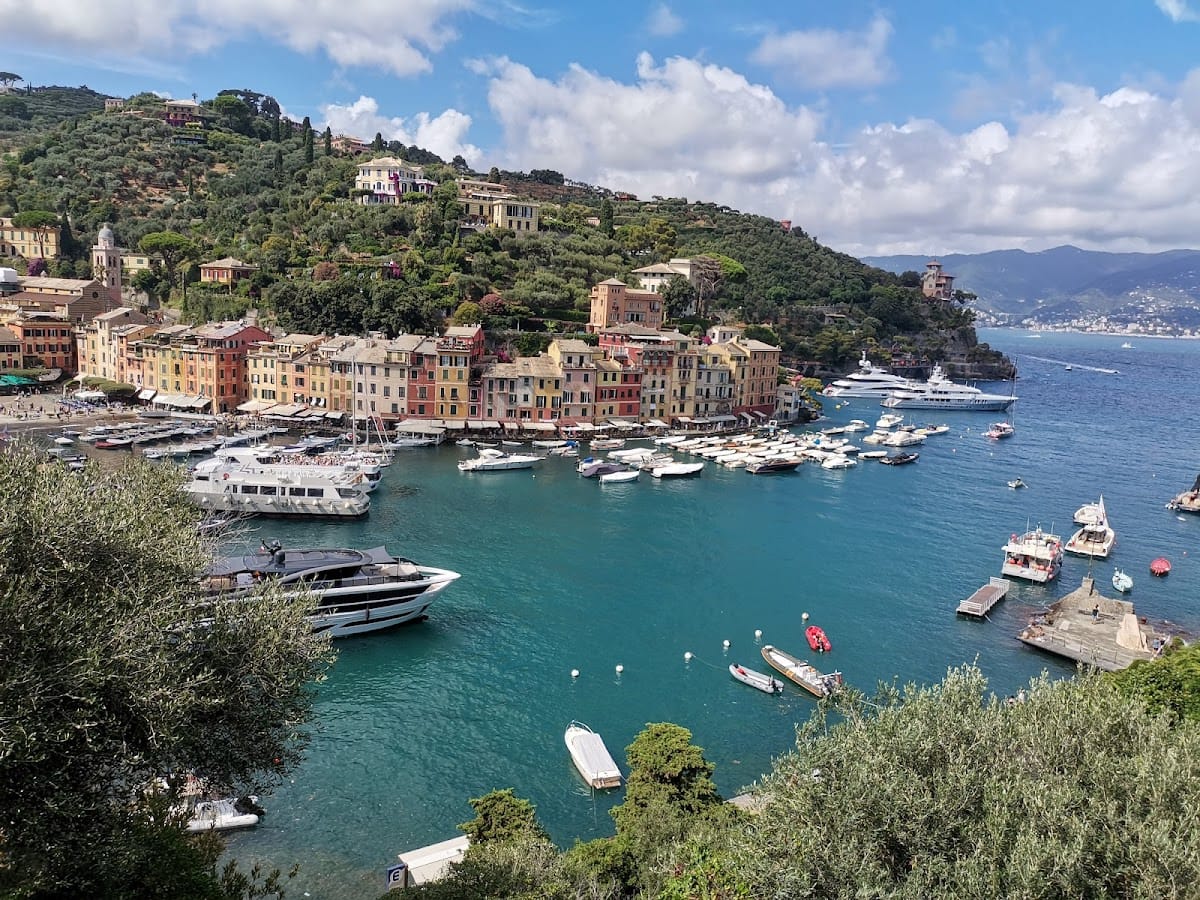
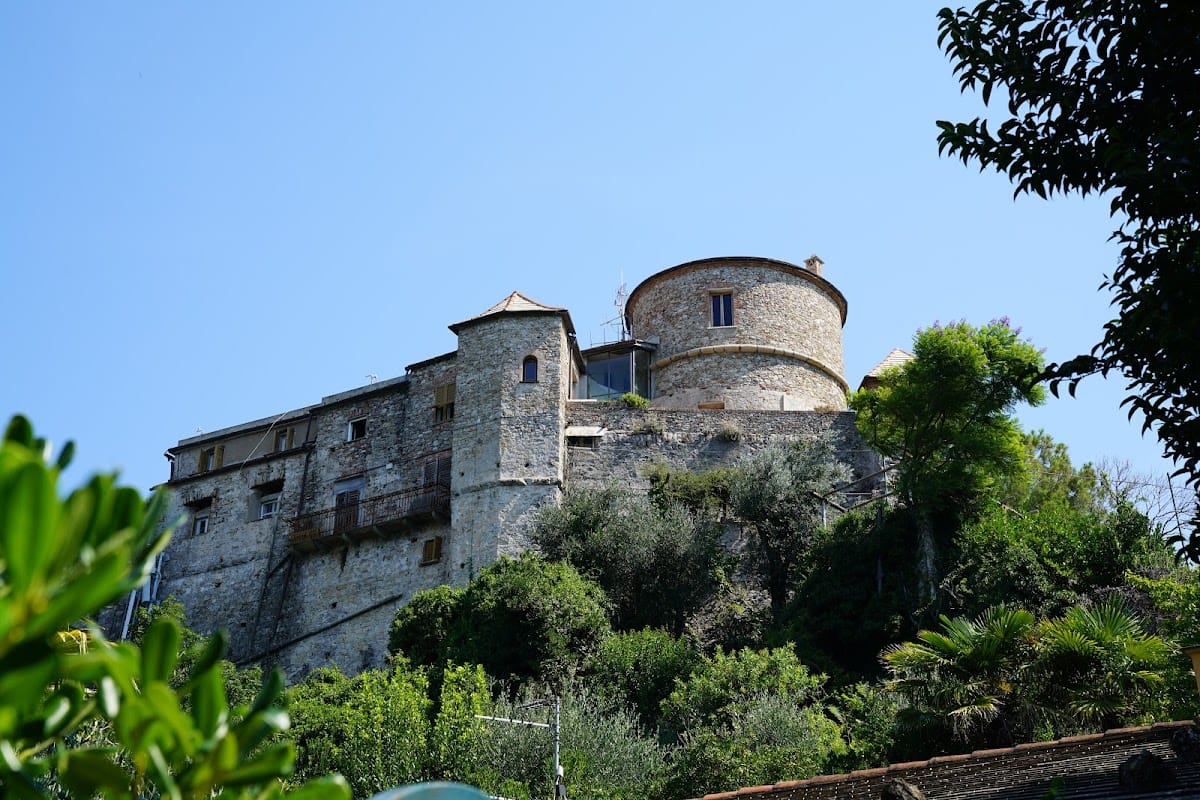
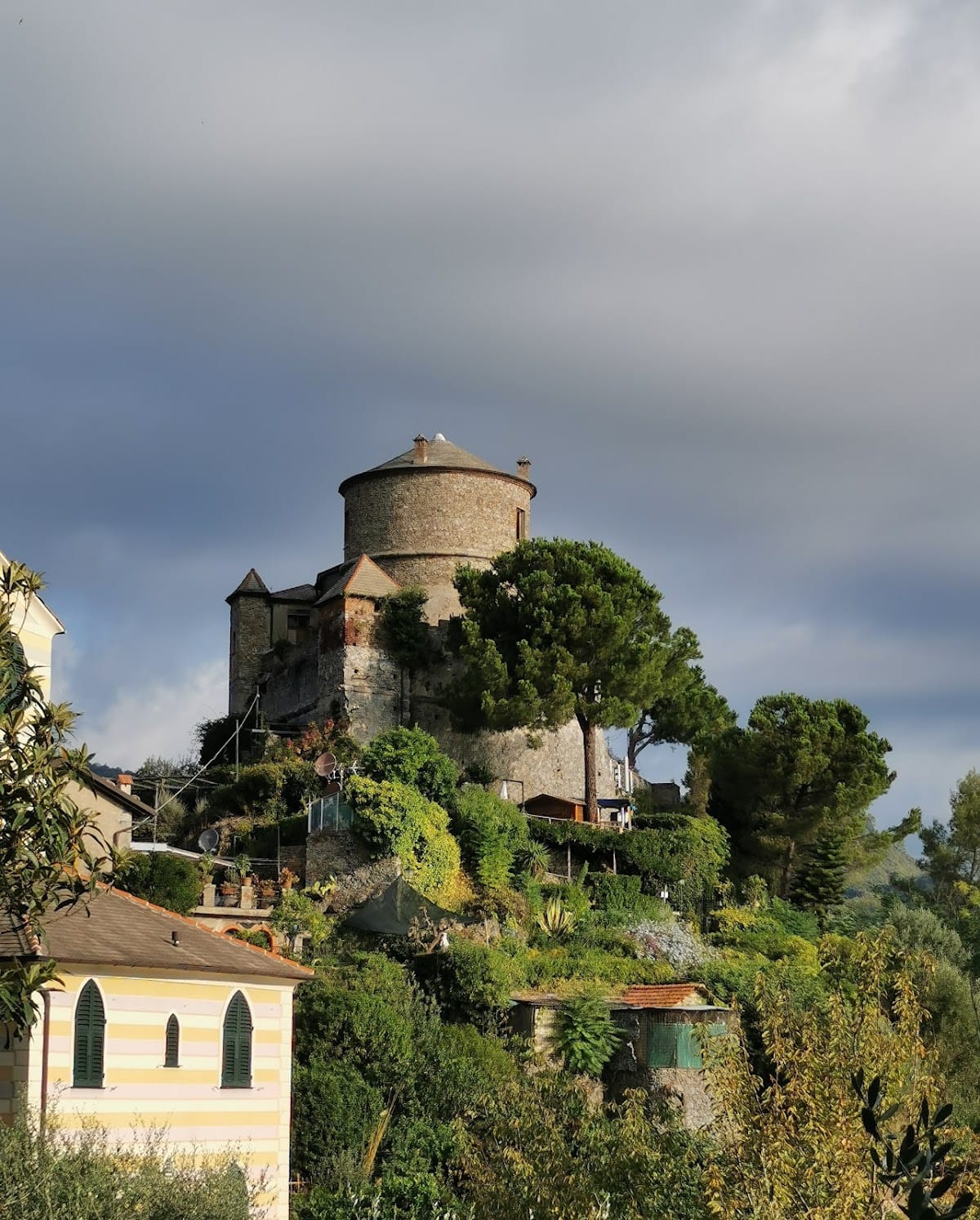
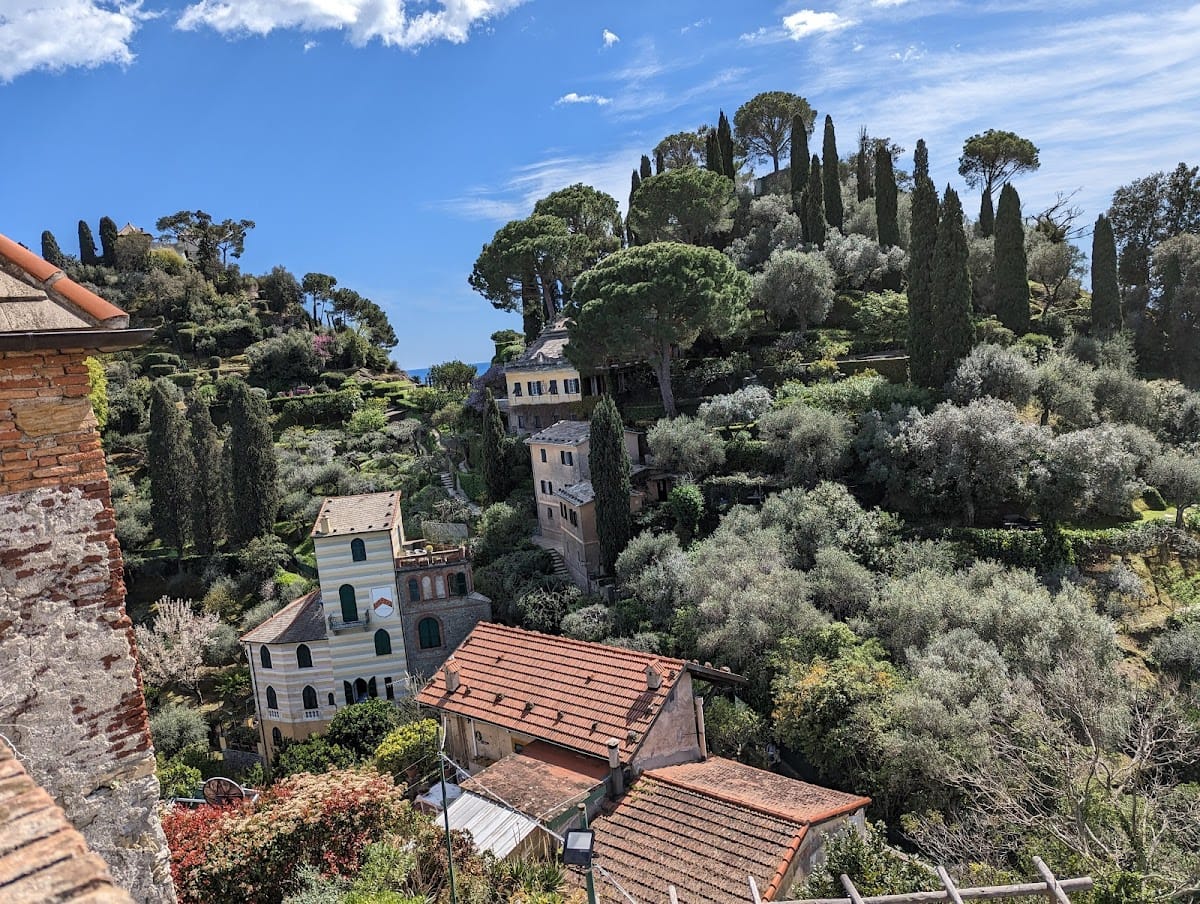
Castello Brown occupies a defensive position above Portofino harbour, with views across the town and the Gulf of Tigullio. The surviving complex brings together medieval fortification, Roman and late Roman defensive traces, and nineteenth-century domestic alterations. Excavations beneath the present building revealed the Roman watchtower and later works associated with the fourth-century castrum and turris.
The sixteenth-century rebuilding extended the fortress toward the harbour through a new defensive platform. Cannon batteries formed part of this military arrangement, alongside spaces for weapons, ammunition, and the garrison. The castle chapel is known through a complete inventory made in 1607, while several other ruined sections were restored by the Babers before the site became a public museum.
Villa conversion and interiors
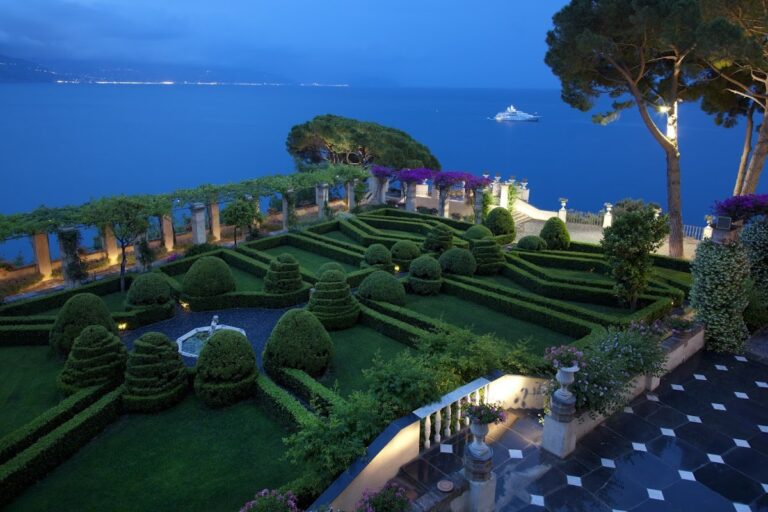
The former battery terrace was converted into a garden during the transformation into a villa. Two maritime pine trees planted there remain visible. The old parade ground became a roof garden, and the towers were raised during the nineteenth-century alterations. These changes reshaped the castle’s domestic character while retaining the general structure of the former fortress.
The villa interiors were furnished with objects salvaged from sailing clippers in a restrained, formal English style. Yeats-Brown’s study displayed paintings by the artist Moenis and a copy of a work by William Hogarth. Together, the altered interiors and surviving defensive fabric reflect the building’s change from a working stronghold into a private residence and then a public museum.