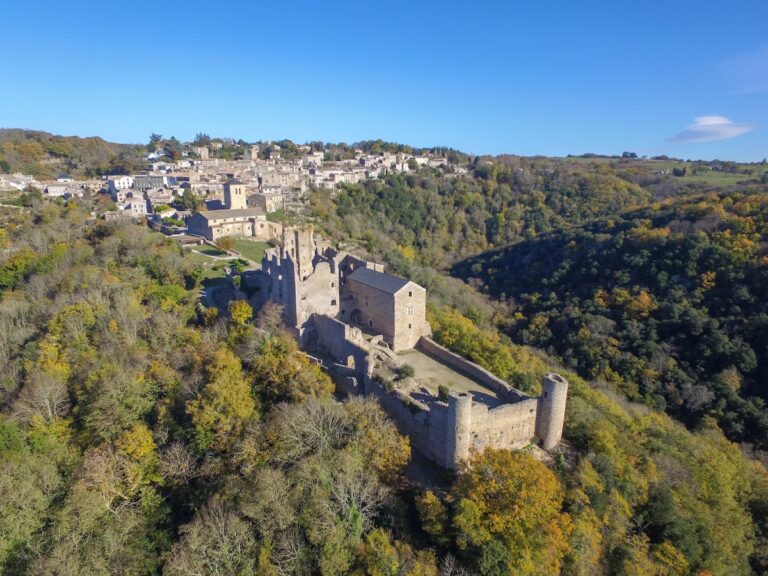
Château de Sauveterre: A Historic Castle in Sauveterre, France




Visitor Information
Google Rating: 4.3
Popularity: Very Low
Country: France
Civilization: Unclassified
Site type: Military
Remains: Castle

History
The Château de Sauveterre is located in the commune of Sauveterre, France. Its origins lie within the medieval period when the land was shaped by feudal and military developments in the region.
In the early 13th century, the original fortified castle at Sauveterre was destroyed during the Albigensian Crusade, a campaign targeting the Cathar heresy in southern France. After this devastation, monks founded a settlement called a “sauveté,” a type of religious enclave offering sanctuary, which later gave the area its name. This phase marked a shift from a purely military stronghold to a community with religious and social dimensions.
The site changed hands several times before 1452, when the Auxilhon family acquired it “as is” from financially ruined owners. This family traced their lineage to a knight who had distinguished himself at the Battle of Bouvines in 1214 and subsequently fought alongside Simon de Montfort, receiving a fief as a reward. Although it is uncertain whether the Auxilhon purchase was made on the exact site of the medieval fortress, their ownership marked the beginning of a new chapter.
The castle endured damage during the prolonged conflict of the Hundred Years’ War. By 1407, the surrounding village had been reduced drastically, with only three households recorded, reflecting the war’s heavy toll on the local population. Additional destruction occurred in the turbulent years of the French Wars of Religion, as well as during the French Revolution, when the owners fled the country and the château was seized and looted by revolutionary forces.
Following the Restoration period after the fall of Napoleon, the château was returned to the Auxilhon family. Between 1818 and 1825, architect Bernard Charles led extensive repairs and alterations, revitalizing the property and adapting parts of it to contemporary needs. This period of restoration ensured the survival of the château as a familial residence into the modern era.
Remains
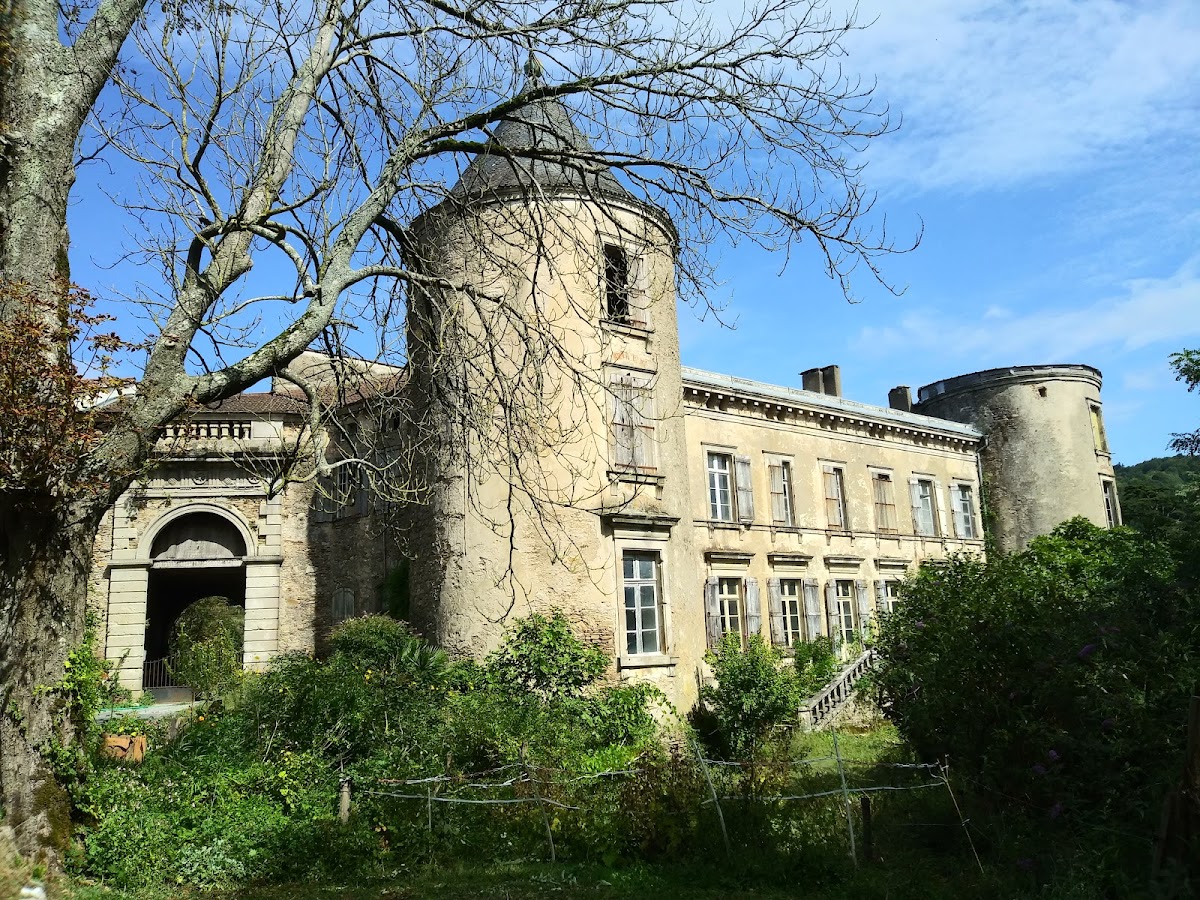
The Château de Sauveterre features a main building stretching about 40 meters, largely dating from the Renaissance period, though it has experienced several modifications over the centuries. Its façade is distinguished by two flanking towers, a design that reflects both aesthetic and defensive considerations from its historical phases.
One notable element within the surrounding park is a small tower that originally formed part of the earlier medieval castle. This structure has since been repurposed into a dovecote, a space designed for hosting pigeons or doves. Its survival provides a tangible link to the site’s medieval past.
Along the roofline of the main building, a crenellated cornice is visible. This architectural feature consists of a notched parapet traditionally used for defense, indicating the château’s origins in fortified construction even as it evolved into a more residential form.
Attached to the château is the former castle chapel, now serving as the parish church known as Sainte-Croix de Sauveterre. This chapel retains direct access to the château itself, highlighting the close relationship between the noble residence and its religious space. Within the chapel are the burial sites of multiple generations of the Auxilhon family, marking it as a place of both faith and familial heritage.
Inside the château, renovations introduced neoclassical staircases and trompe-l’œil (a painting technique that creates optical illusions) decorations, combining Renaissance architecture with later stylistic elements. Together, these features illustrate the site’s layered history and continuous adaptation throughout centuries.