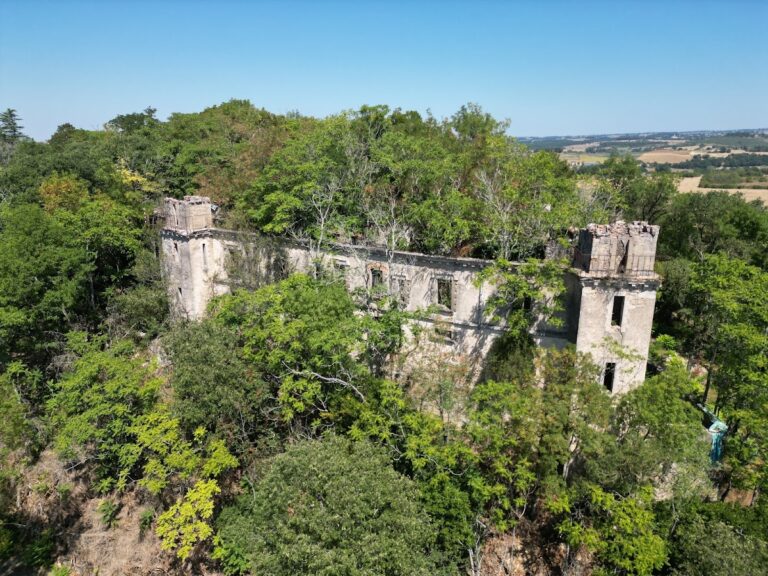
Castle of Miraval: A Medieval Fortress at Lagarrigue, France
Site at a Glance
- Rating
- 5
- Popularity
- Very Low
- Country
- France
- Primary era
- Medieval
- Eras represented
- Medieval, Early Modern
- Civilizations
- French
- Site type
- Domestic
- Remains
- Castle
On this page7 sections
History
Castle of Miraval is a former medieval fortress at Lagarrigue in Tarn, France, whose origins are uncertain but whose construction is dated to around the twelfth century. Later remodeled, the castle may not have been completed until the seventeenth century. Its history reflects the influence of the Miraval family and its close association with the Trencavel viscounts, a dynasty that ruled important territories in medieval southern France.
The Miraval family and the Trencavels
In the twelfth century, the castle belonged to the noble Miraval family, which originated from Miraval-Cabardès and gave the property its name. The family held its lands as vassals of the Trencavels. Bernard Aton IV Trencavel is said to have granted the lands of Miraval at Lagarrigue to Bernard de Miraval as a reward for his support.
Bernard de Miraval, described as lord of Miraval, prepared the testament of Cécile of Provence in 1136. Cécile was the wife of Bernard Aton IV Trencavel and a noblewoman connected to the dynasty’s territorial network. At her request, Bernard de Miraval made several donations and bequests to Notre-Dame de l’Ardorel Abbey at Augmontel, and he may also have helped establish the abbey.
Dispossession and later transformation
In 1174, the Miraval family appears to have lost its possessions in the Castres area, including Miraval Castle, after a conflict between Guillaume de Miraval and his suzerain, Roger II Trencavel. The castle was probably remodeled during the Renaissance, while its possible completion in the seventeenth century indicates that its form developed over a long period.
Gold and silver coins from the reigns of Charles IX and Henry III were found on the property in the mid-nineteenth century. Around 1890, the castle belonged to Fernand Laval, who maintained a hunting pack. It is now privately owned and serves as a private residence.
Remains
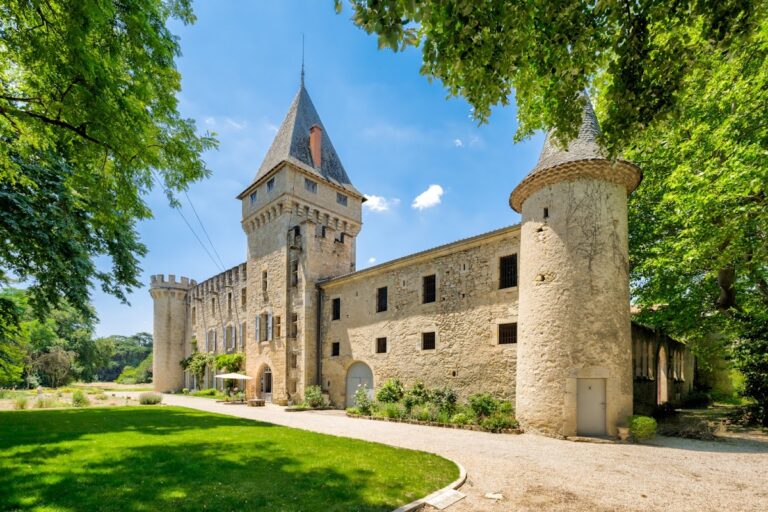
The castle stands on a hill above the Durenque valley and the village of Lagarrigue. It faces the Montagne Noire and lies near the castles of Arifat and Gaïx. Its surviving arrangement combines a residential building with circular towers, retaining features that reflect both its medieval defensive role and its later domestic use.
Residential building and defensive features
Main residential block
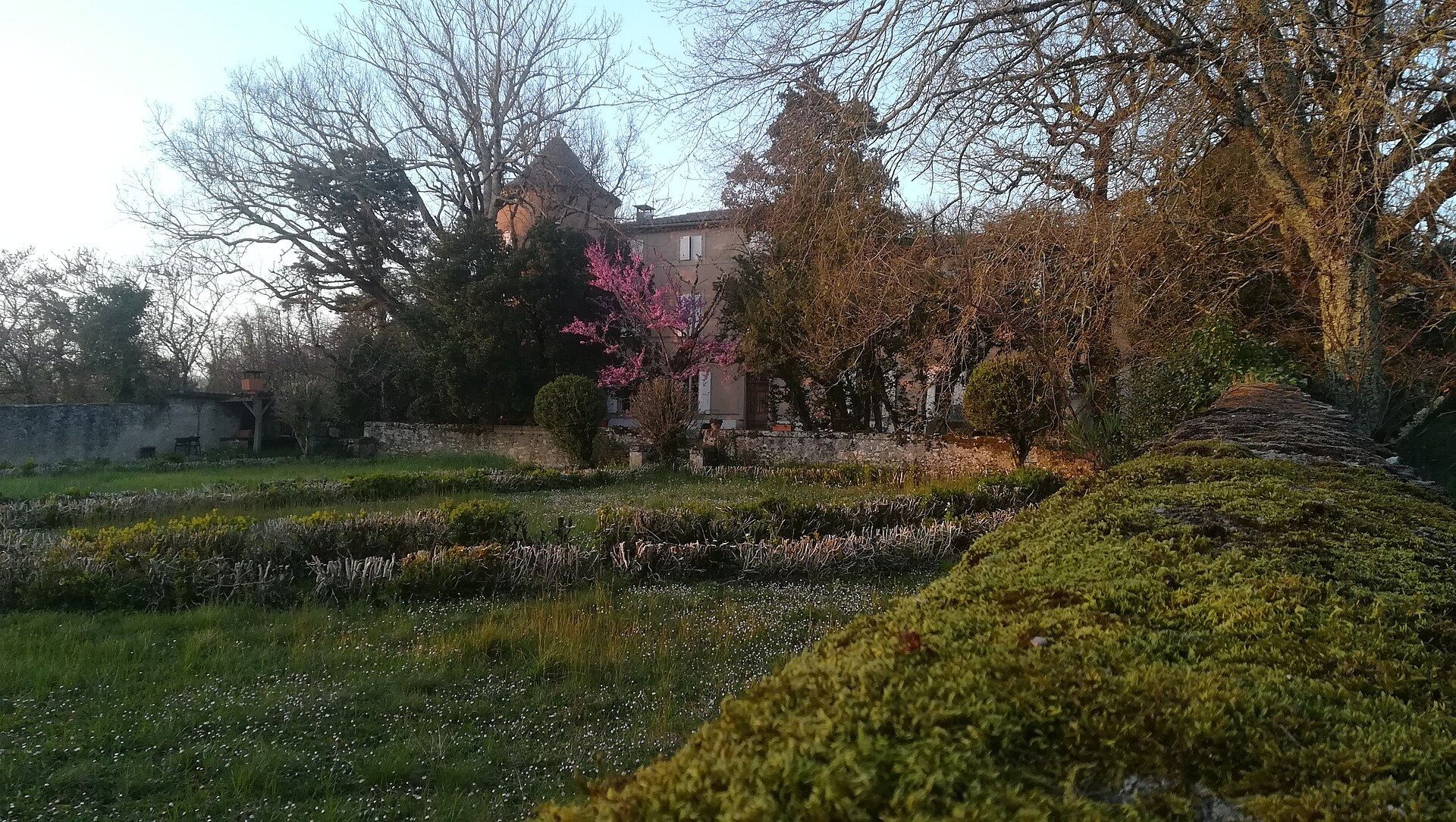
The principal building is a rendered-stone block set on an east-west axis. It rises three storeys and has a tile roof. A garden planted with ornamental boxwood extends in front of the building, contributing to the residential character created by later changes to the fortress.
Circular towers
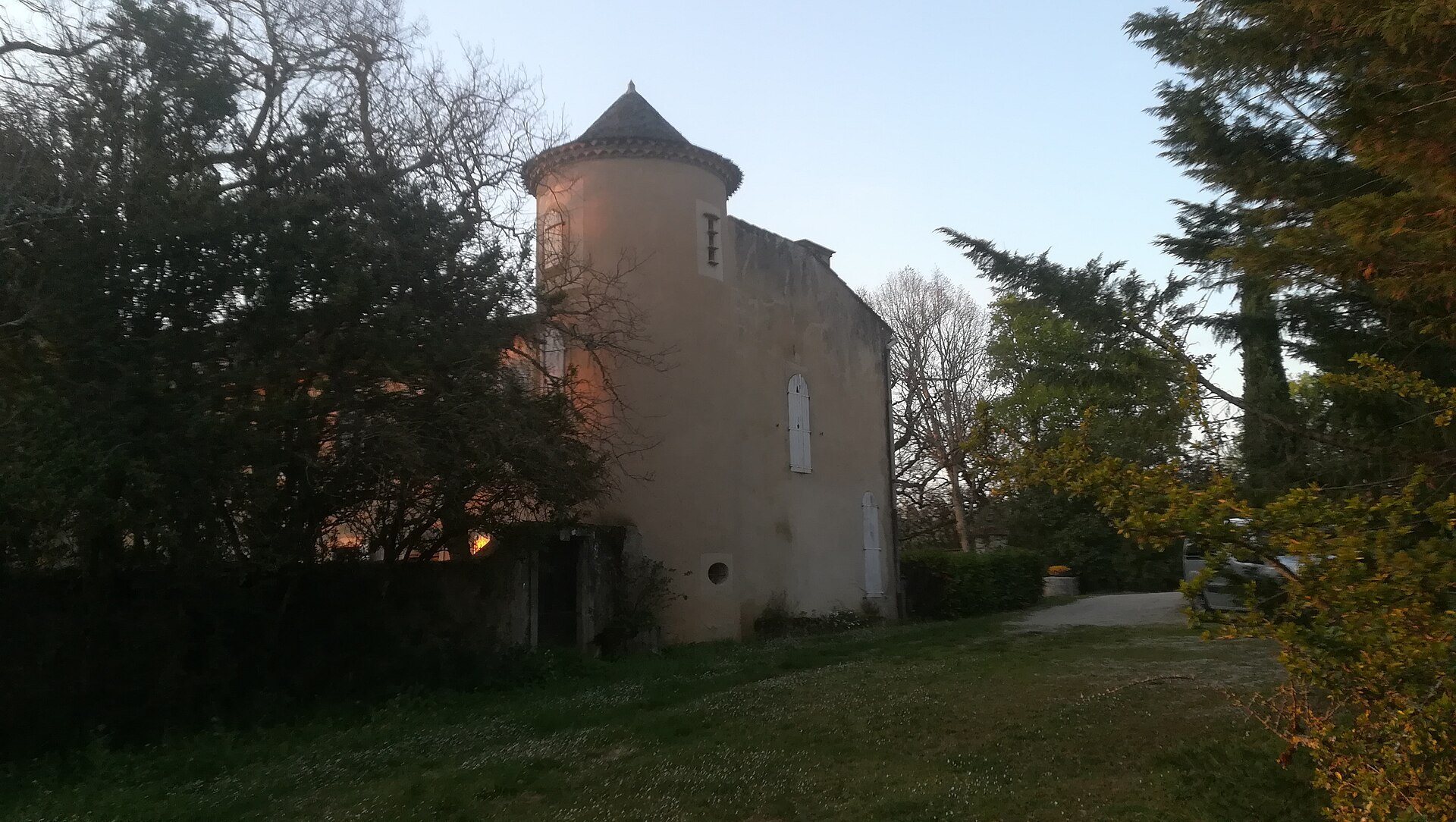
A circular tower stands at each end of the main building. The western tower is more massive than the eastern one, and both are covered by slate roofs. Several loopholes, narrow openings through which weapons could be used, remain in the walls, together with gun ports designed for firearms or artillery. These features preserve visible evidence of the castle’s medieval defensive character.