Château de Pennautier: A Louis XIII-Style Estate in France


Site at a Glance
- Rating
- 4.3
- Popularity
- Low
- Country
- France
- Primary era
- Early Modern
- External website
- Open
- Eras represented
- Early Modern, Modern
- Civilizations
- French
- Site type
- Domestic
- Remains
- Castle
On this page8 sections
History
Château de Pennautier is a French château in Pennautier, France, built in 1620 for Bernard de Reich de Pennautier, treasurer of the Estates of Languedoc. Its Louis XIII style belongs to the period following the French Wars of Religion, and its scale and court connections later earned it the nickname “Versailles of Languedoc.”
Bernard de Reich de Pennautier and Louis XIII
On 14 July 1622, the château received the young Louis XIII, king of France from 1610 to 1643, as he travelled toward Perpignan. Bernard de Reich de Pennautier, then the city’s senior magistrate, delivered the welcoming address. Louis XIII gave the château furnishings from his journey, including furniture covered with wool-and-silk tapestry, a canopied bed, and six armchairs with coverings that could be folded for travel. These furnishings are preserved in the King’s Room, and the collection has been classified as a historic monument.
Pierre Louis Reich de Pennautier and the court connection
Bernard’s son, Pierre Louis Reich de Pennautier, succeeded him as treasurer of the Estates of Languedoc. In 1669, he also became receiver-general of the clergy, a royal financial office responsible for collecting and administering the clergy’s fiscal contributions. His regular stays at Versailles brought court fashions to Pennautier and connected the château with political and economic activity under the French monarchy.
In 1670, Pierre Louis began enlarging the château and commissioned its formal French park. The designs were long attributed to Louis Le Vau, a leading French architect of the seventeenth century, and André Le Nôtre, the landscape designer associated with the formal gardens of Versailles. Pierre Louis supported Molière, the stage name of the playwright and actor Jean-Baptiste Poquelin, who stayed at Pennautier and performed there.
Pierre Louis was also a major financier involved with the Canal du Midi, the Levant Company, a French trading company active in the eastern Mediterranean, and regional royal manufactures. The royal manufacture at Pennautier produced woollen cloth from sheep of the nearby Montagne Noire and employed up to 2,000 workers. Its cloth sample catalogues remain among the château’s documentary holdings. Pierre Louis expanded the estate to approximately 2,000 hectares, and from 1701 Pennautier wines were served at the tables of the king’s officers at Versailles.
The Beynaguet and Lorgeril families
After Pierre Louis died in 1710, the château passed to his nephews of the Beynaguet family. They adopted the name Beynaguet de Pennautier and the courtesy title of marquis of Pennautier. Jacques de Beynaguet de Pennautier, known as the marquis of Pennautier and the Chevalier de Saint-Pardoux, served as an artillery officer. He remained at Versailles during the Revolution and recorded his testimony about events there. His travels in India and South Africa also produced accounts, drawings, and military manuals that became part of the château’s collections.
Between 1835 and 1850, Jacques’s son Rodolphe de Beynaguet de Pennautier initiated another major phase of work. The central courtyard was filled in, the interiors were refurbished with Italian-style mosaic floors, and part of the park was redesigned as an English landscape garden. In 1911, an agreement between Rodolphe’s granddaughters, Paule and Ghislaine de Beynaguet de Pennautier, prevented the château from being sold.
In 1910, Paule de Pennautier, daughter of Amédée de Pennautier, married Christian de Lorgeril. The Lorgeril family subsequently inherited the estate, while the Beynaguet line ended in 1971 with the death of Odette de Beynaguet de Pennautier, also known as Madame Jean Guizard. Beginning in 1920, the Lorgeril family undertook extensive renovation, including the removal of the fire-damaged northeast wing. A complete renovation followed in 2010, and nearly 15 metres of château archives were deposited with the Aude departmental archives.
Château de Pennautier remains privately owned and serves as the headquarters of the Lorgeril estates and vineyards. It was registered as a historic monument on 10 March 1972, while the château and its interior decoration received an additional registration on 2 March 1989. The property is also included in the French Ministry of Culture’s Mérimée architectural-heritage database under reference PA00102852.
Remains
The château and its wings
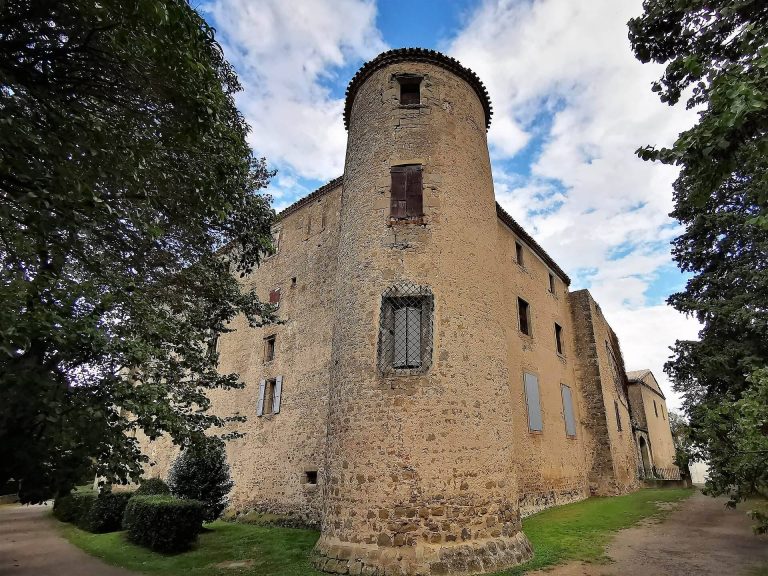
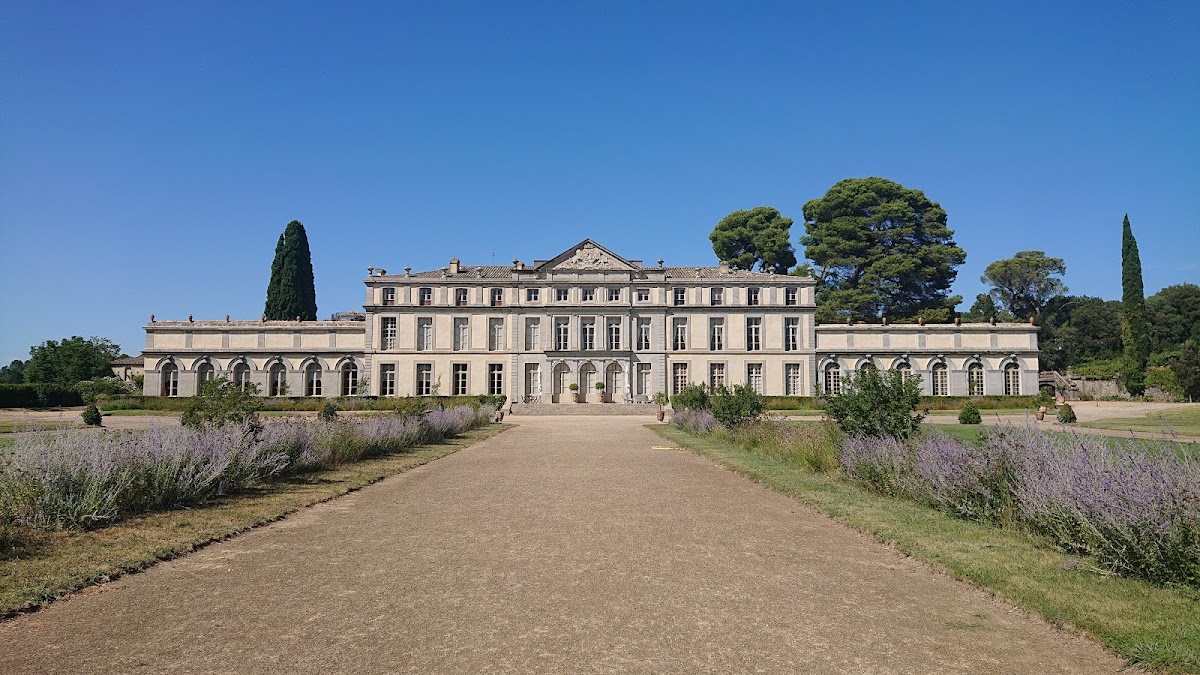
Château de Pennautier is an elegant Louis XIII-style building whose windows open broadly toward both a southern and a northern courtyard, an arrangement described as innovative for its period. Its southern façade extends for 100 metres. The enlargement begun in 1670 added two wings on either side of the façade. The eastern wing contained an orangery, a building used to shelter citrus trees and other tender plants in cold weather, while the western wing contained a ballroom or music salon.
On the park side, the central avant-corps, or projecting section of the façade, is topped by a substantial pediment, the upper part of a classical façade. The pediment bears the arms of the Lorgeril and Beynaguet de Pennautier families. Rodolphe de Beynaguet de Pennautier’s work between 1835 and 1850 filled in the central courtyard and introduced Italian-style mosaic flooring into the renovated interiors. The northeast wing was later removed during the twentieth-century Lorgeril renovation after fire damage.
The park
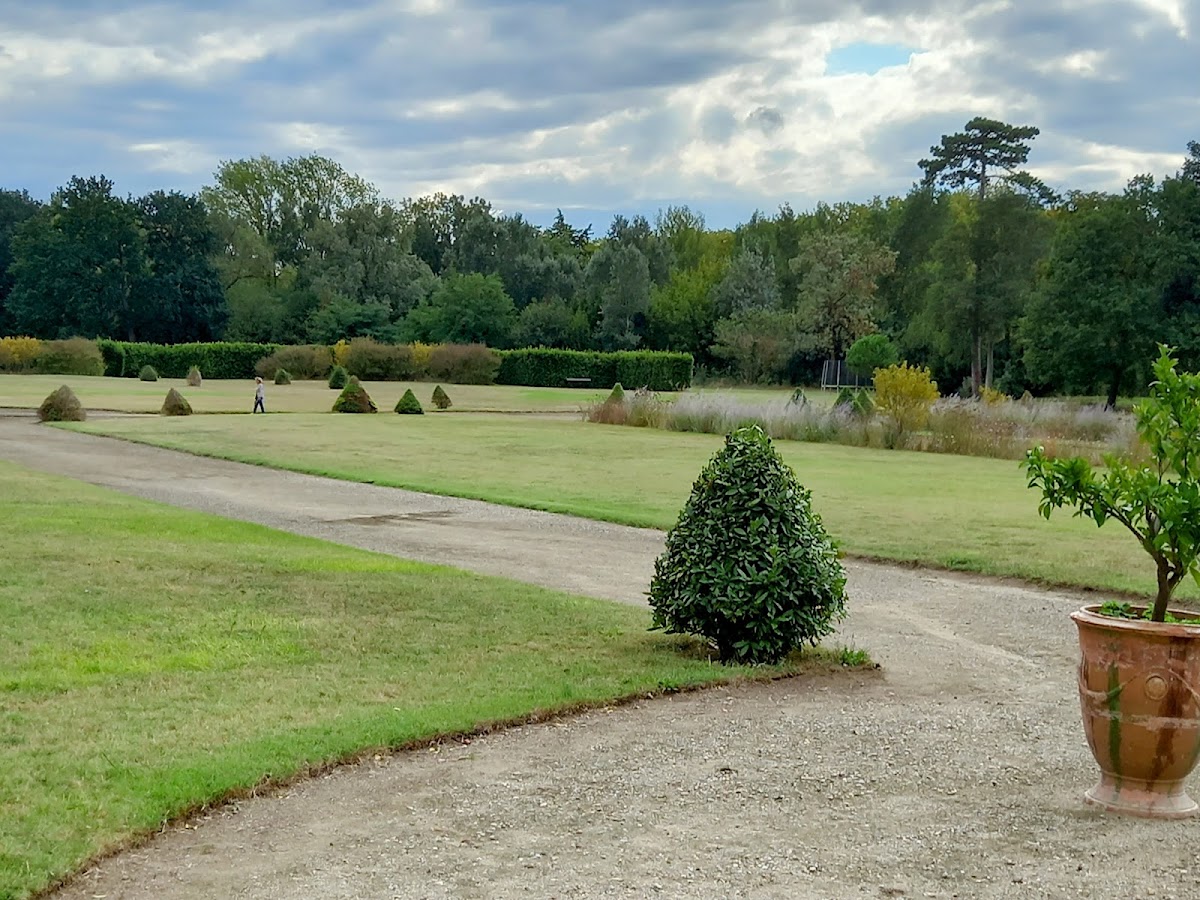
The formal French park covers more than 30 hectares. Its original design belonged to the geometrically ordered tradition of French gardens, with structured paths, parterres, and controlled plantings. After 1835, part of the grounds was reshaped as an English landscape garden, whose design aimed at a more naturalistic arrangement.
The King’s Room and archival collections
The King’s Room contains the travel furnishings associated with Louis XIII. They include a canopied bed, six armchairs with foldable tapestry coverings, and other furniture covered with wool and silk-floss tapestry. The château’s preserved documentary collections also include catalogues of cloth samples from the former Pennautier royal manufacture, linking the surviving interiors and archives to the estate’s seventeenth-century industrial activities.