Castello di Castelleone: A Medieval Defensive Castle in Italy
Site at a Glance
- Rating
- 4.5
- Popularity
- Very Low
- Country
- Italy
- Primary era
- Medieval
- External website
- Open
- Eras represented
- Medieval, Early Modern, Modern
- Civilizations
- Papal States
- Site type
- Military
- Remains
- Castle
On this page12 sections
History
Castello di Castelleone is a historic castle in Italy, in the Castelleone locality of Deruta, near Perugia. With origins in the early medieval period and a principal foundation phase in the twelfth century, it developed as a feudal defensive stronghold whose stone towers and walls gave its settlement the name Castelleone.
Medieval stronghold
Known as Castrum Leonis, the castle acquired its defensive form during the twelfth century. Its early medieval remains include substantial sections of the fortress, including the towers and defensive walls that protected the settlement. During the thirteenth century, forces from Todi besieged the castle several times.
Around 1410, the professional military commander Andrea Fortebraccio, known as Braccio da Montone, repeatedly tried to breach or damage Castelleone by setting it on fire. These attempts were unsuccessful, allowing the fortified complex to retain its defensive role into the later medieval period.
Renaissance and aristocratic transformation
The castle was expanded and reshaped through successive building phases. Renaissance work during the fifteenth and sixteenth centuries introduced the Mastio, or Tower of the Newlyweds, which was connected to the main nucleus of the castle. A later nineteenth-century Neo-Gothic phase added the Belvedere Tower, overlooking the village.
Castelleone also became associated with distinguished visitors. Pope Alexander VI Borgia stayed at the castle toward the end of the fifteenth century. In the early twentieth century, the Italian poet and writer Gabriele D’Annunzio visited it and praised the quality of Castelleone’s olive oil in an ode.
Ownership and conservation
The complex belonged to the Del Buon Tromboni counts from the early nineteenth century until the late 1990s. It was then inherited by Augusto Del Buon Tromboni, the first-born son of Alberto Del Buon Tromboni. After Augusto’s death, ownership passed to his wife and later to the Morsiani counts.
Between 2006 and 2009, the Morsiani owners carried out extensive conservation work. The intervention included architectural and structural consolidation, together with the detailed recovery of the residence and its furnishings from historical, artistic, and documentary perspectives. The castle’s feudal and aristocratic history remains visible in its interiors, furnishings, paintings, and decorative works.
Remains
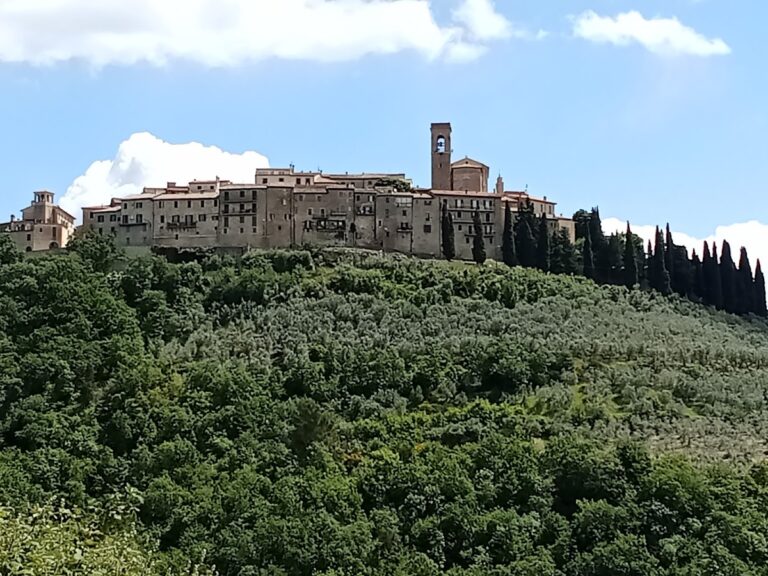
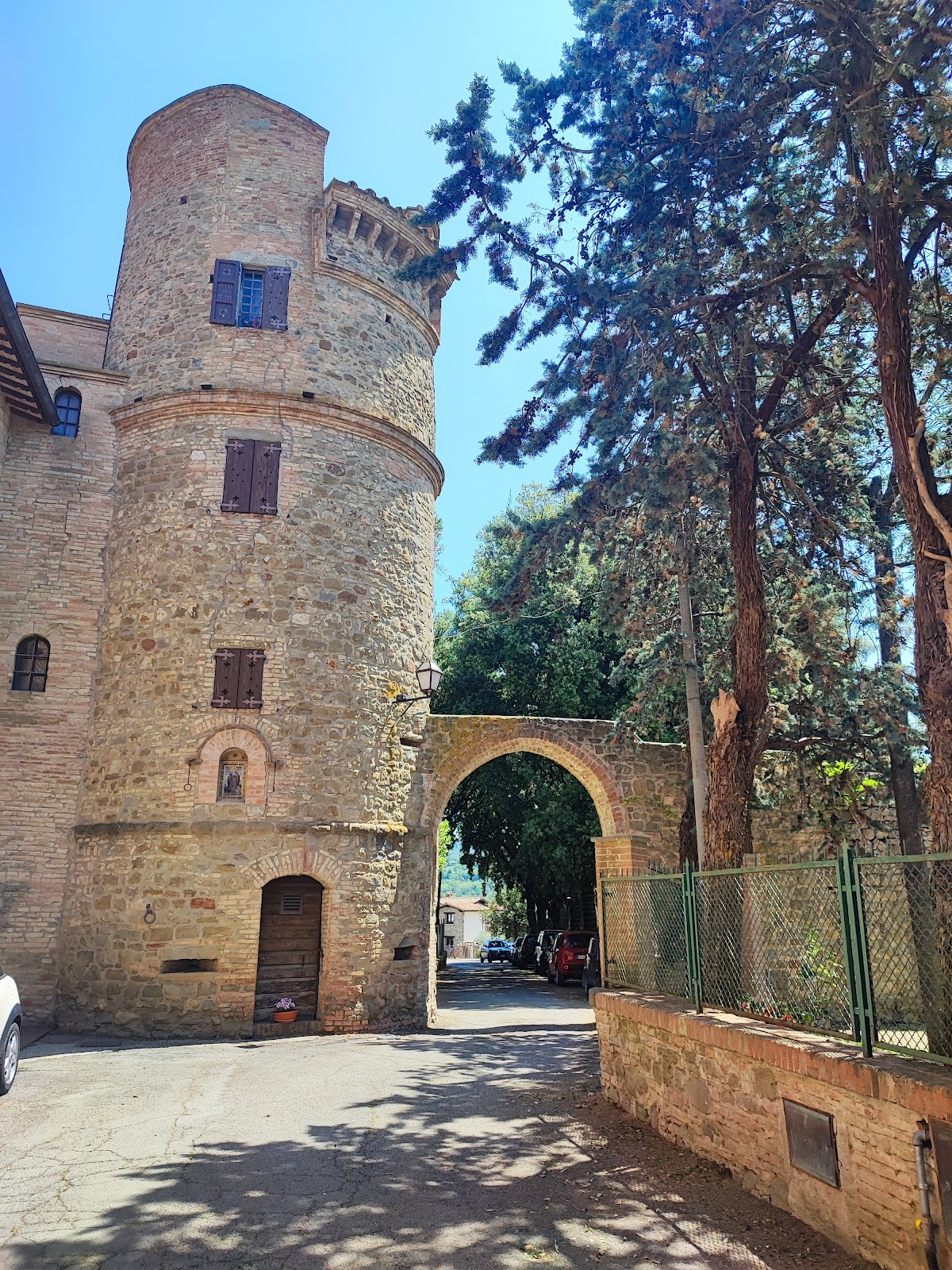
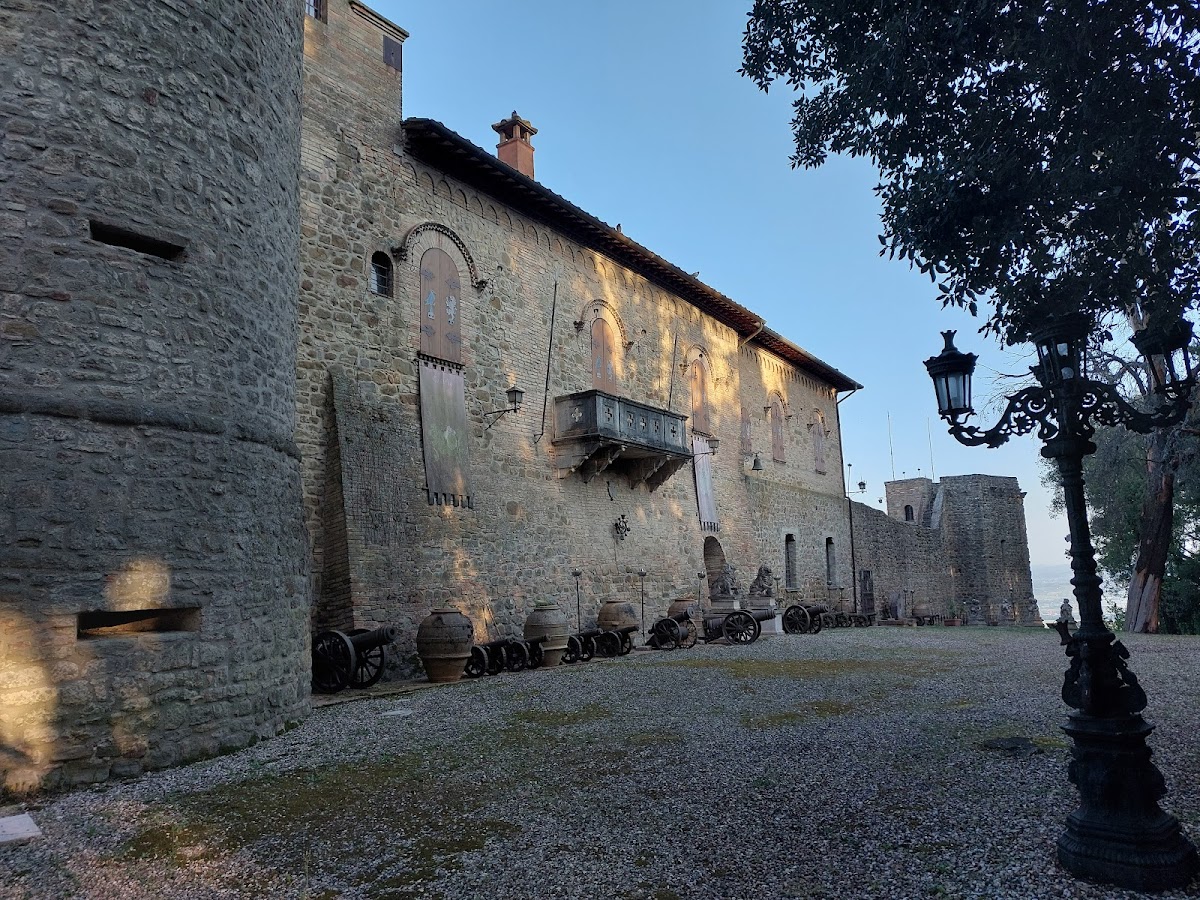
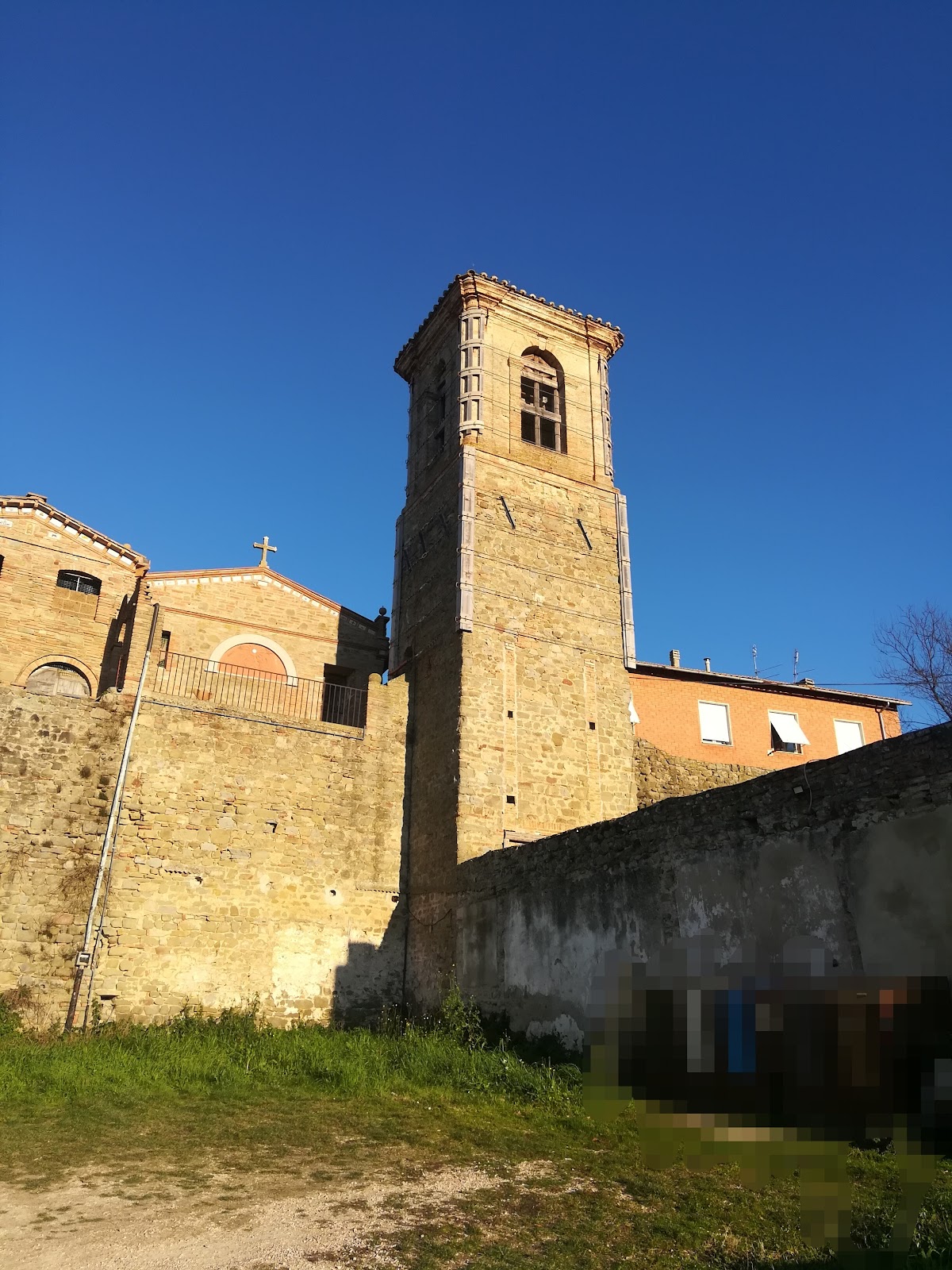
Castello di Castelleone stands at about 450 metres above sea level in the Castelleone locality, approximately 4.5 kilometres from Deruta. Its surviving fabric combines a fortified medieval core with Renaissance additions and a nineteenth-century Neo-Gothic expansion. The oldest area retains the character of a defensive fortress, while the residence and towers preserve painted decoration and historically important furnishings.
Fortifications and medieval tower
Defensive walls and barbican
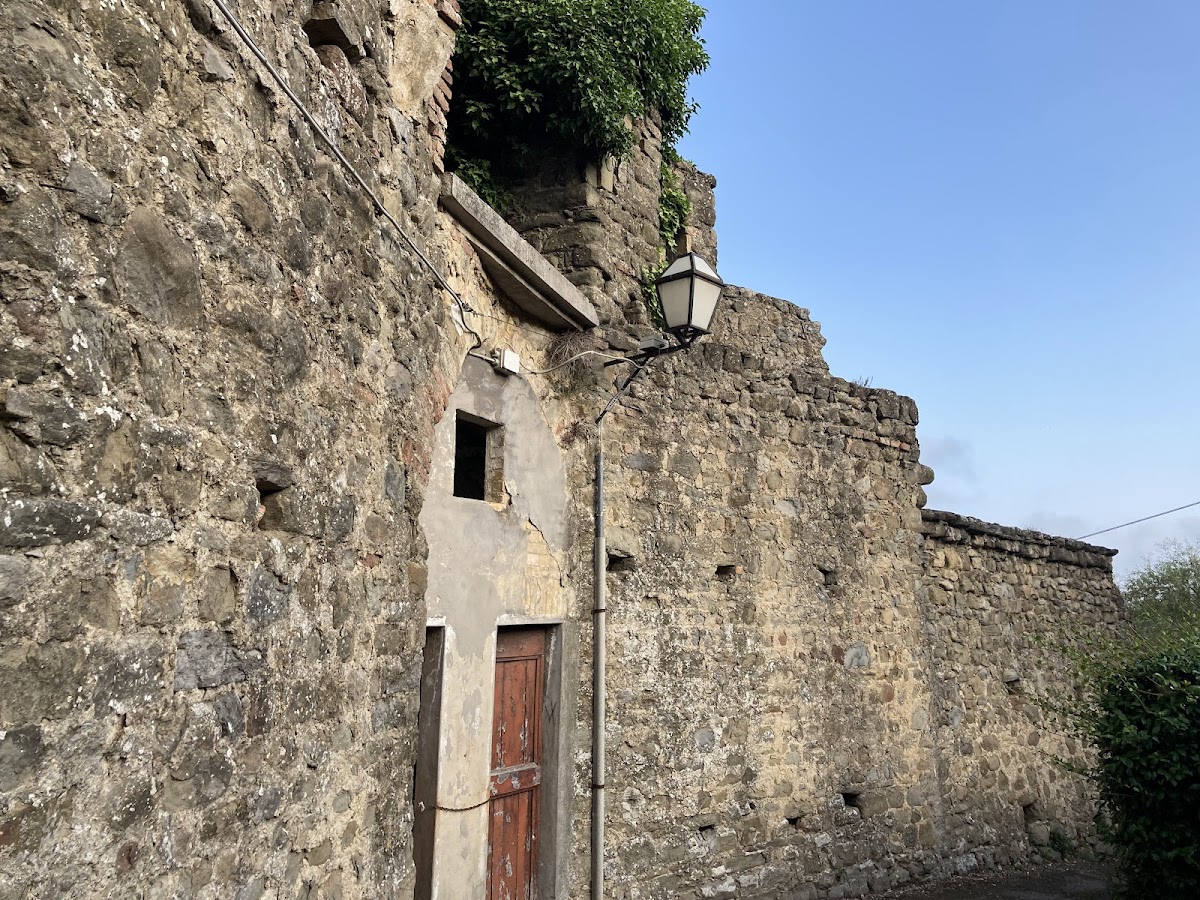
The defensive walls are more than three metres thick and incorporate a barbican, a fortified outer defensive structure. Together, these elements form the principal surviving evidence of the castle’s military construction and help define the early fortress around which the later complex developed.
Lombard Tower
The large Lombard Tower preserves substantial traces of the castle’s twelfth- and thirteenth-century phase. Its surviving form contributes to the appearance of the oldest section as a defensive stronghold and remains one of the principal medieval elements within the complex.
Later towers and interiors
Mastio, or Tower of the Newlyweds
The Mastio, or principal castle tower, belongs to the Renaissance phase of the complex. Also known as the Tower of the Newlyweds, it is connected to the castle’s main nucleus and represents the fifteenth- and sixteenth-century transformation of the fortified residence.
Belvedere Tower
The Belvedere Tower was added during the nineteenth-century Neo-Gothic phase. It overlooks the village of Castelleone and forms part of the later architectural character of the complex.
Painted rooms and furnishings
The noble floor and the towers contain wall frescoes and painted decoration from the Renaissance and Neo-Gothic periods. The restored interiors include antique paintings, works associated with Annibale Carracci, Guercino, Albrecht Dürer, and their schools, as well as antique Murano chandeliers and furnishings of historical and artistic importance.