Château d’Aumelas: A Medieval Fortress in Southern France

Visitor Information
Google Rating: 4.4
Popularity: Low
Google Maps: View on Google Maps
Official Website: assochateauaumelas.wordpress.com
Country: France
Civilization: Unclassified
Remains: Military

History
The Château d’Aumelas is a medieval fortress located in the commune of Aumelas in modern-day France. It was constructed by feudal lords of the region during the Middle Ages, rooted in the civilization of medieval Western Europe.
The site’s earliest documented existence dates back to before 1034 and is first explicitly mentioned in records from 1036, identifying it as a castellum, or fortified place. Prior to its development as a castle, the surrounding lands belonged to the Abbey of Aniane during the 8th and 9th centuries. By the 10th century, control had shifted to the viscounts of Béziers, a sign of the shifting feudal powers in southern France during that time.
In the early 12th century, around 1114, Guilhem V of Montpellier acquired the lordship that included Aumelas. He styled himself as Lord of Montpellier and Aumelas and divided his holdings among his heirs. Upon his death, the castle and its territories passed to his younger son, Guilhem d’Omelas, who married Tiburge of Orange, thereby linking the lordship to the Orange family through marriage alliances. This union reflects common medieval practices of consolidating power and territory through dynastic marriages.
Later in the 12th century, ownership returned to the Lords of Montpellier. A significant political change occurred in 1204 when Marie of Montpellier married Peter II of Aragon, transferring the fiefdom of Aumelas into the Kingdom of Aragon. This marriage extended Aragonese influence into what is now southern France, indicating the castle’s strategic and diplomatic importance.
The 14th century brought further transformation when the French crown purchased the lordships of Montpellier and Aumelas in 1349, marking a shift from regional noble control to royal administration. Despite this, the castle maintained its military relevance well into the 16th century. During this time, the castle and its lands passed into multiple private hands. By approximately 1540, the fortress had already begun to lose its martial function and was partly dismantled, with some stones repurposed for agricultural buildings nearby.
Though partially dismantled again in 1622, records show that the castle still served a defensive role, as a guard was obliged to watch over its tower in 1573. This indicates the continued strategic value of the site even as its original fortifications were reduced.
With the upheavals of the French Revolution, the castle passed into communal ownership, reflecting the broader rejection of feudal structures during this period. Recognition of its historical value came much later, as the remaining structures, including its tower and chapel, were officially listed as historic monuments in 1986 and received further classification in 1989.
Remains
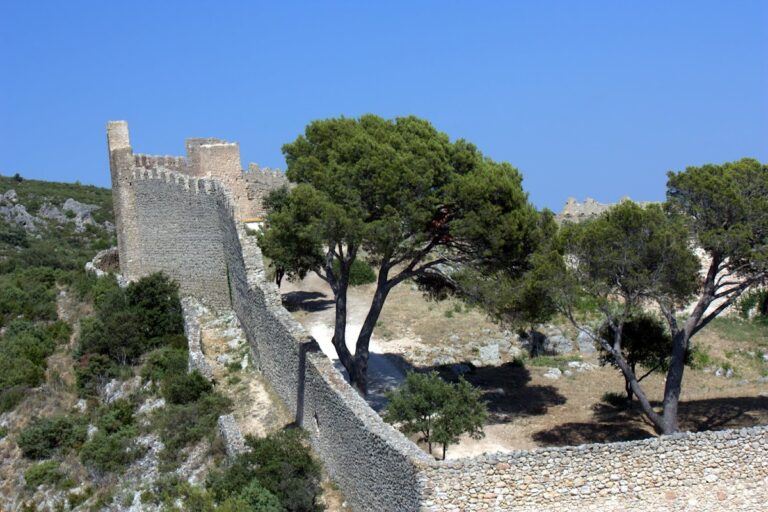
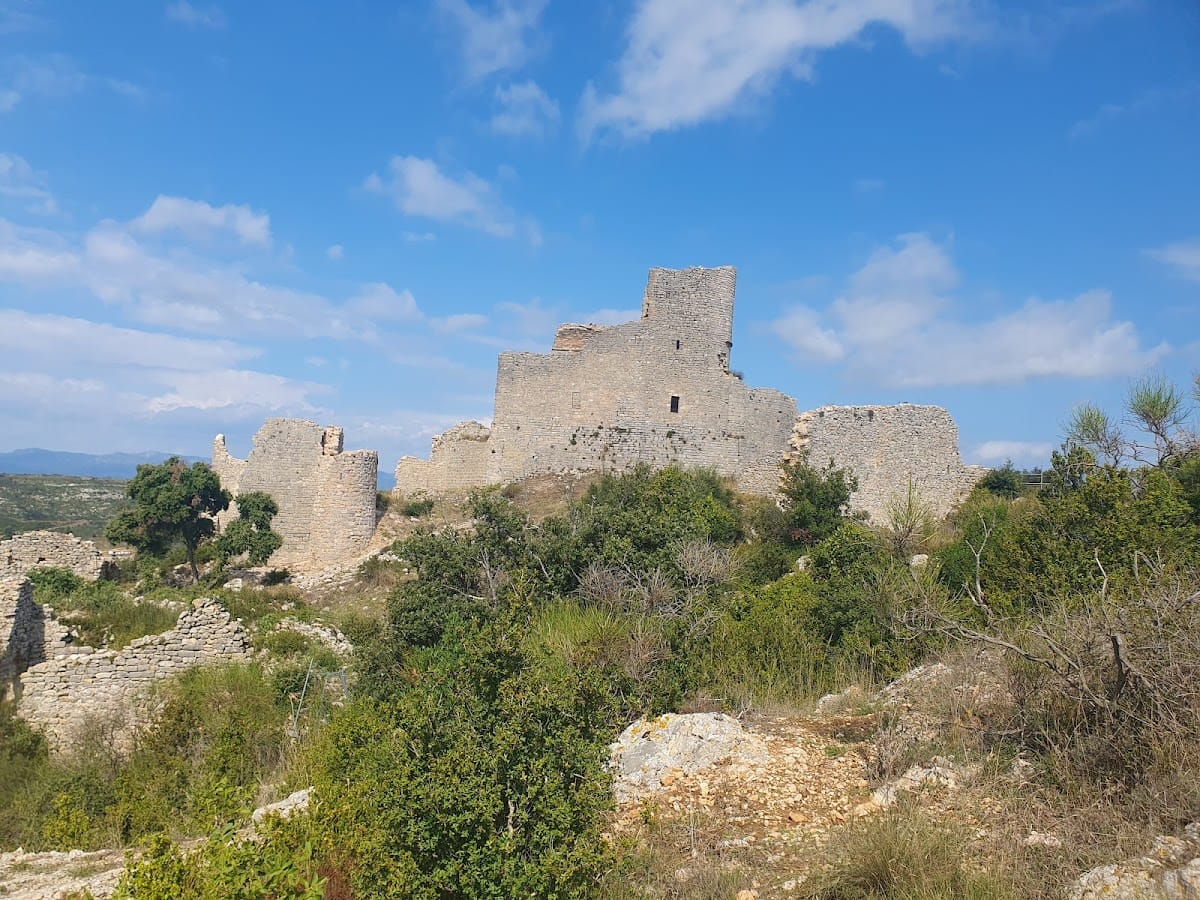
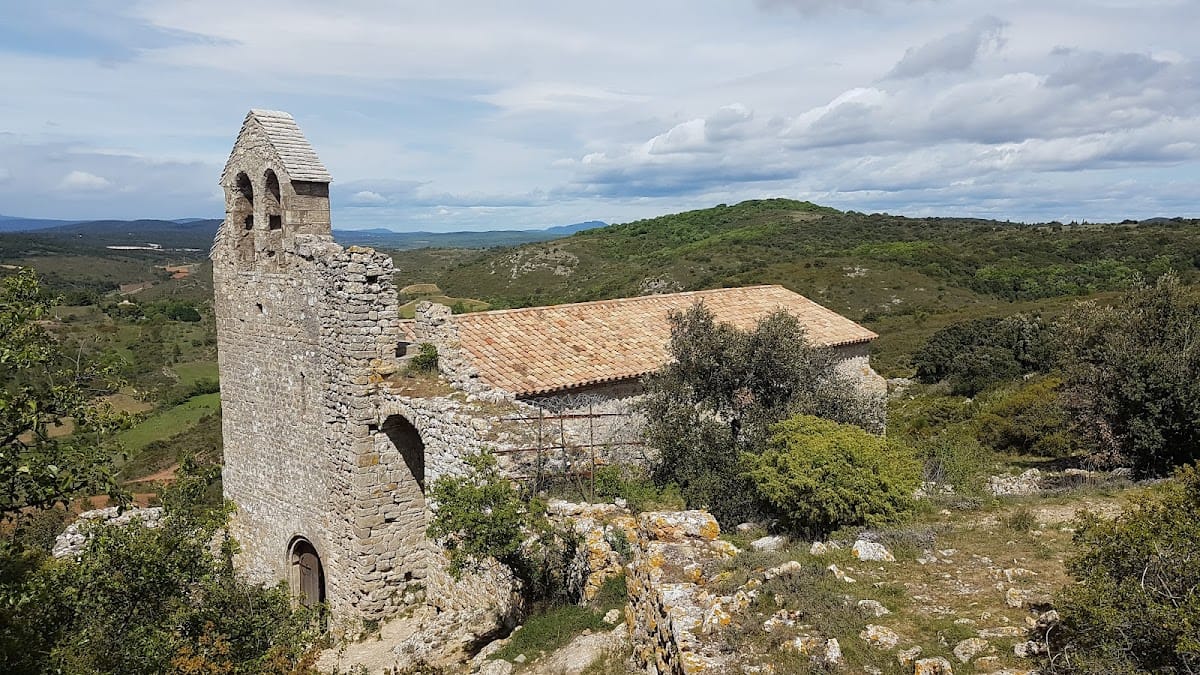
The Château d’Aumelas consists of a fortified complex that includes a central keep—commonly called a donjon—and a chapel dedicated to Saint-Sauveur. These core buildings, comprising the main residential quarters and the chapel, date back to the turn of the 12th century. Their construction represents typical medieval fortification techniques combining both defensive and domestic functions. Stone walls enclose the complex within a double enceinte, which refers to two layers of defensive walls providing an added measure of protection.
Adjacent to the older structures lies the former church of Notre-Dame, constructed between the late 13th and early 14th centuries. This building reflects architectural developments from the later medieval period and stands close to the main castle precincts, highlighting the religious importance within the castle’s community.
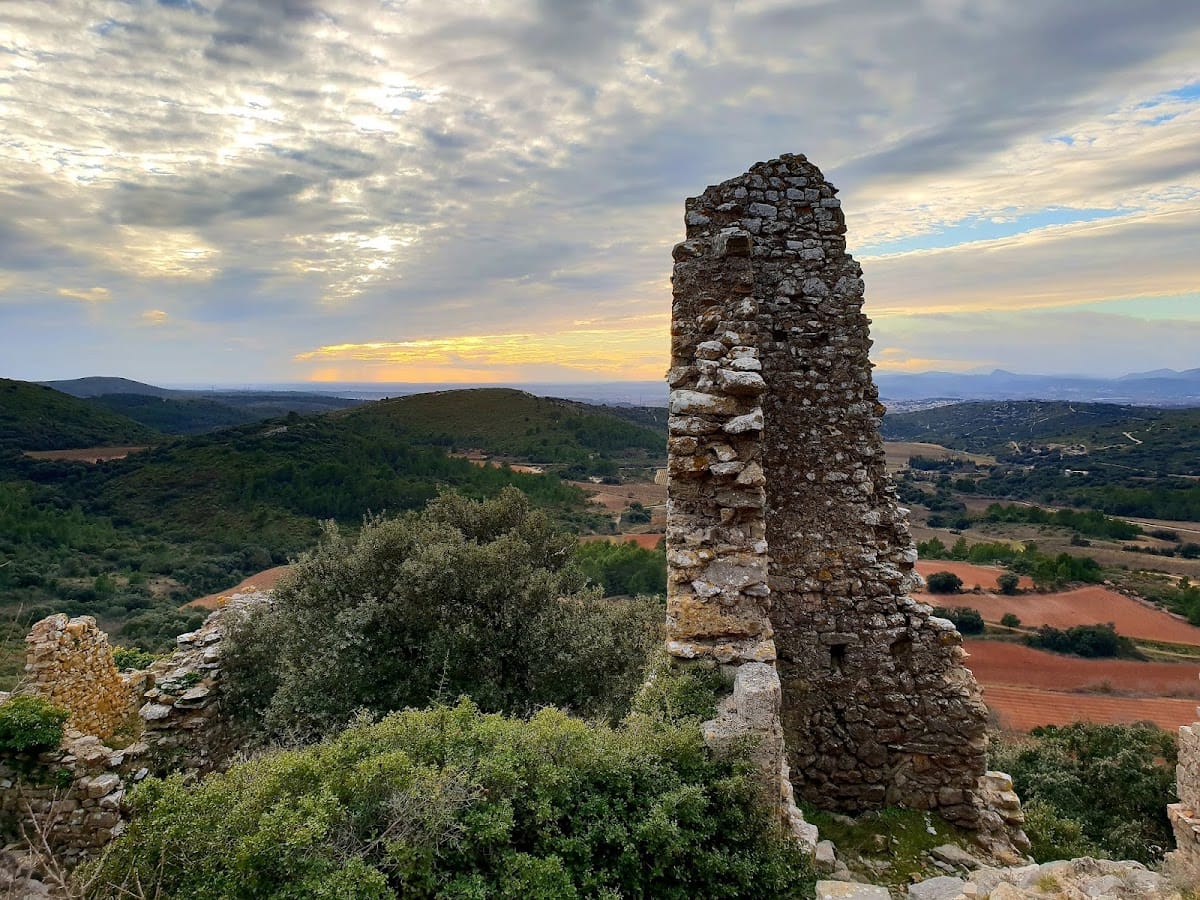
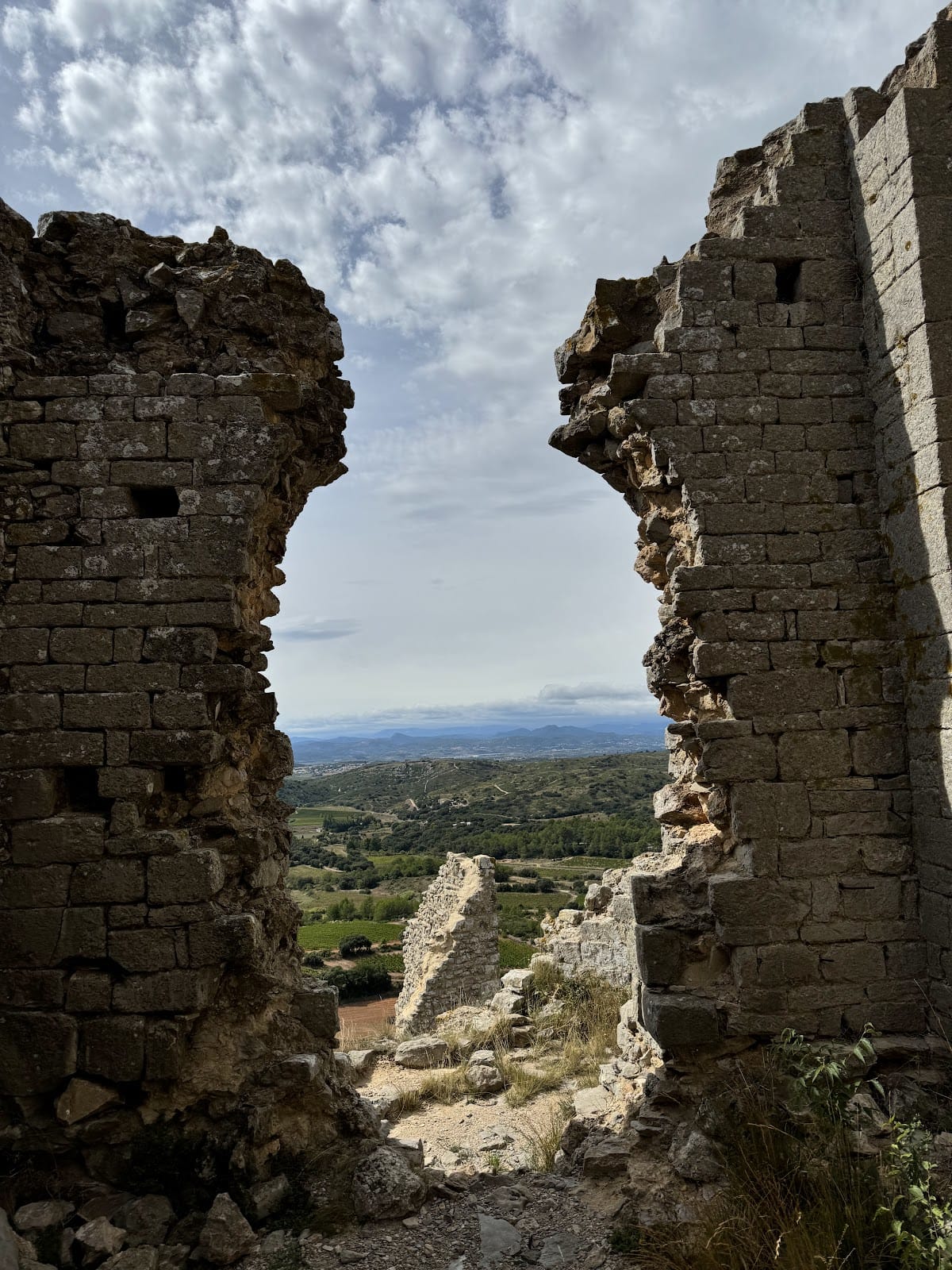
Despite partial demolition over the centuries, including dismantling efforts in the early 1600s, the remaining keep and chapel have survived well enough to display their scale and layout. The ruins, along with fragmented ancillary walls, remain in situ within the extensive castle enclosure, which preserves the boundaries of the medieval site. These ruins are protected under historic monument regulations, with the surrounding grounds also safeguarded in recognition of their archaeological significance.
The site is officially recorded under cadastral references that cover multiple plots, reflecting its sizable footprint. Though specific decorative details or inscriptions are not documented in the available records, the preservation of these core elements provides valuable insight into the castle’s function as both a defensive fortress and a noble residence. The surviving chapel and keep stand as visible links to nearly a millennium of regional history.
Nearby sites