Castle of Melgaço: A Historic Border Fortress in Portugal

Visitor Information
Google Rating: 4.5
Popularity: Medium
Google Maps: View on Google Maps
Official Website: www.cm-melgaco.pt
Country: Portugal
Civilization: Medieval European
Remains: Military

History
The Castle of Melgaço is located in the municipality of Melgaço, Portugal. It was built by the Portuguese kingdom as a fortified stronghold to secure the northern border along the Minho River, which separates Portugal from the neighboring region of Galicia.
Construction of the castle began in 1170 under the direction of King Afonso Henriques, Portugal’s first king, who aimed to strengthen defensive positions along his newly established realm. The settlement at Melgaço first appears in written records in 1183, when it received a royal charter known as a Foral. This charter granted Melgaço privileges that encouraged growth, modeled on those enjoyed by the nearby Galician fief of Ribadavia. The castle itself was likely completed between 1205 and 1212, establishing it as a key defensive post during border conflicts, including a notable dispute in 1212 involving King Afonso II of Portugal and his sisters against the Kingdom of León.
Throughout the 13th century, Melgaço’s fortifications and governance evolved under successive monarchs. King Sancho II and later King Afonso III influenced the castle’s administration. By 1258, Afonso III reclaimed the right to appoint the castle’s military commander, known as the alcaide. During his reign, the construction of the town’s defensive walls took place between 1245 and 1263, with financial support from local religious institutions, the Monasteries of Longos Vales and Fiães. This period anchored Melgaço’s role as both a military and administrative center.
In 1361, Melgaço gained further strategic importance when it was designated as the sole crossing point between Portugal and Galicia. This exclusivity emphasized its role in controlling movement and guarding the border.
The late 14th century brought political turmoil during the 1383–1385 Portuguese succession crisis. Melgaço’s castle initially supported Queen Beatriz and the Kingdom of Castile against the Portuguese claimants. After enduring a siege lasting nearly two months in early 1387, Portuguese forces recaptured the fortress. This event is linked with the local legend of Inês Negra, a heroic figure remembered for her role in the castle’s defense during this time.
By the end of the 15th century, Melgaço was one of just five border towns in Portugal authorized to receive Sephardic Jews who had been expelled from Spain in 1492. This designation highlights the town’s continued importance as a border and administrative center.
Around 1509, the castle and its defenses were illustrated by Duarte de Armas, a royal squire and surveyor, showing a fortification with three towers and two gates. Centuries later, in the 1600s during the Portuguese Restoration War that sought independence from Spanish rule, Melgaço’s defenses were updated with new bastioned lines to better resist artillery attacks.
In the 20th century, the castle was officially recognized as a National Monument in 1910, with the surrounding town walls granted similar status in 1926. Restoration work began in the 1960s, focused on preserving the castle’s original features. Recent archaeological efforts have transformed the castle’s keep into a museum space, showcasing discoveries made during excavations.
Remains
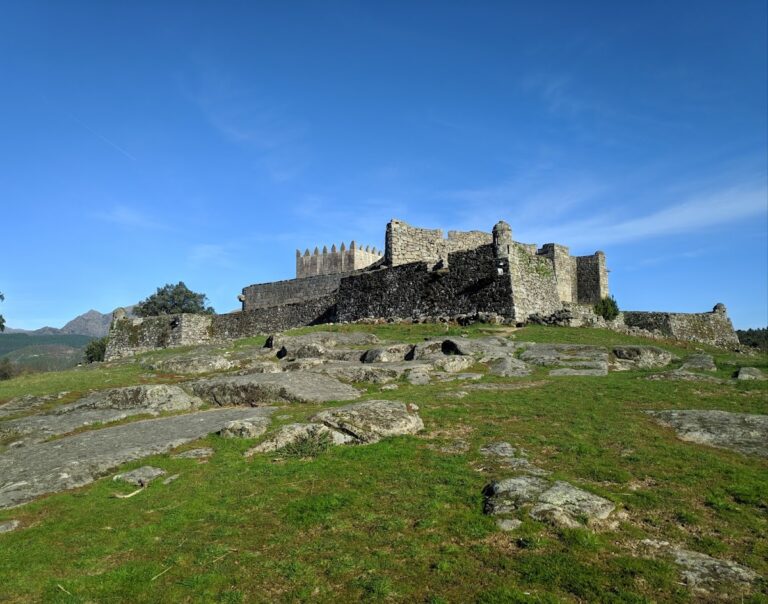
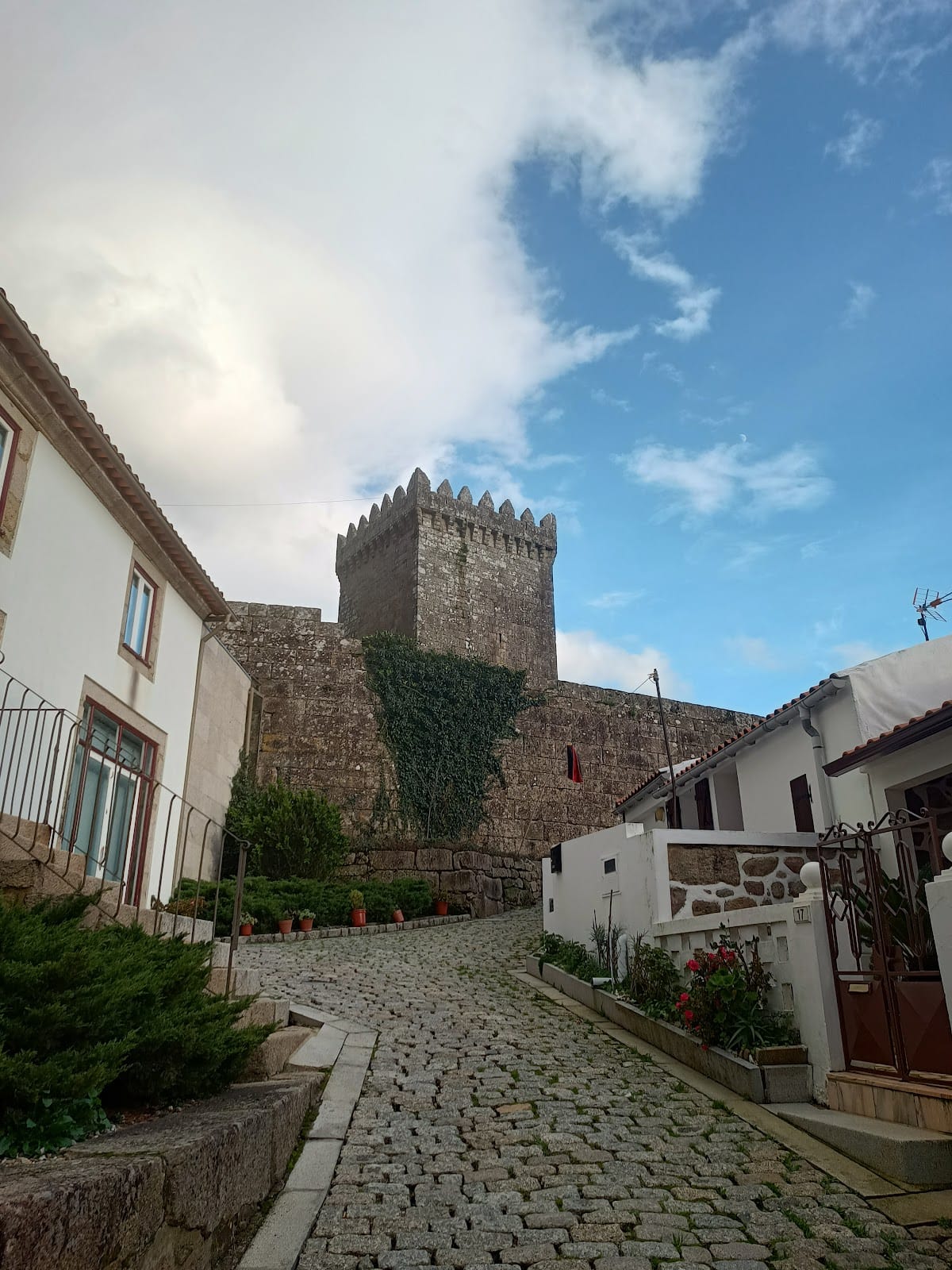
The Castle of Melgaço has a distinctive circular layout, a rare design among Portuguese castles. It is divided into three separate enclosed areas surrounded by defensive walls built largely of stone. The walls are topped with prismatic battlements—protective parapets with angular shapes designed for defense—and are reinforced by three towers. The most prominent tower, which points toward the town center, is unique in having a pentagonal shape.
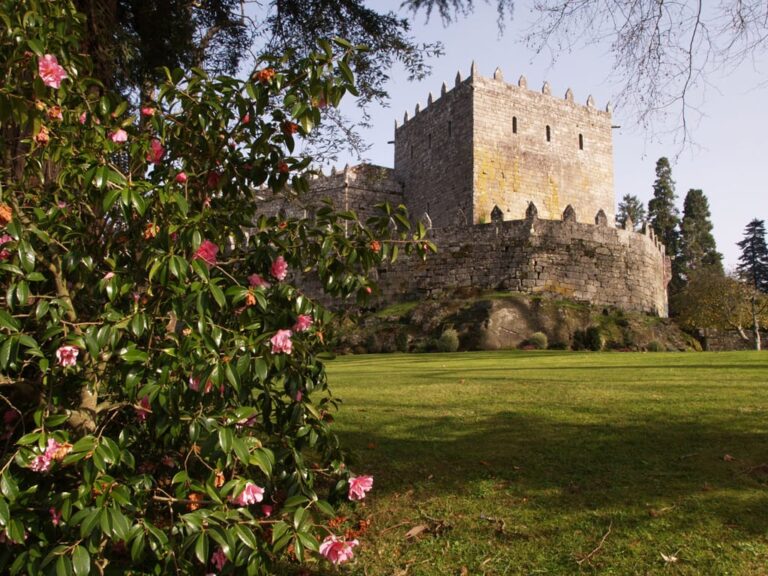
At the heart of the castle stands the keep, a large, square tower isolated in the central courtyard. This stronghold is notably preserved, with both it and the surrounding walls having undergone full reconstruction. Its design reflects Romanesque influences, mainly seen in the solid, centralized square form typical of the era. Inside, the keep consists of three floors, each lit by slender vertical slits that once served as narrow windows. The top floor is surrounded by a battlemented balcony, now a vantage point within the archaeological museum housed inside the tower.
The castle features two main gates. The principal entrance, located on the west side, leads directly to the parade ground—a space that includes a cistern for water storage and likely housed the alcaidaria, the residence of the castle’s commander. The secondary gate, often referred to as the “gate of betrayal,” is situated on the north side and may have served as a secret or emergency exit.
Remains of a barbican—a fortified outwork placed in front of the main gate for added protection—can still be seen. Additionally, parts of the flanking towers belonging to one of the town’s wall gates survive, indicating the extent of the medieval defensive structures.
Archaeological excavations have uncovered important segments of the original Gothic town walls, enabling a clear understanding and partial reconstruction of their original layout. These findings have helped preserve the historical fabric of Melgaço, offering insight into the defensive strategies employed over centuries to protect this border fortress.
Nearby sites