Castle of Varese Ligure: A Medieval Fieschi Fortress in Italy

Site at a Glance
- Rating
- 4.6
- Popularity
- Low
- Country
- Italy
- Primary era
- Medieval
- Eras represented
- Medieval, Early Modern
- Civilizations
- Genoese
- Site type
- Military
- Remains
- Castle
On this page9 sections
History
Fieschi Foundation and the Borgo Rotondo
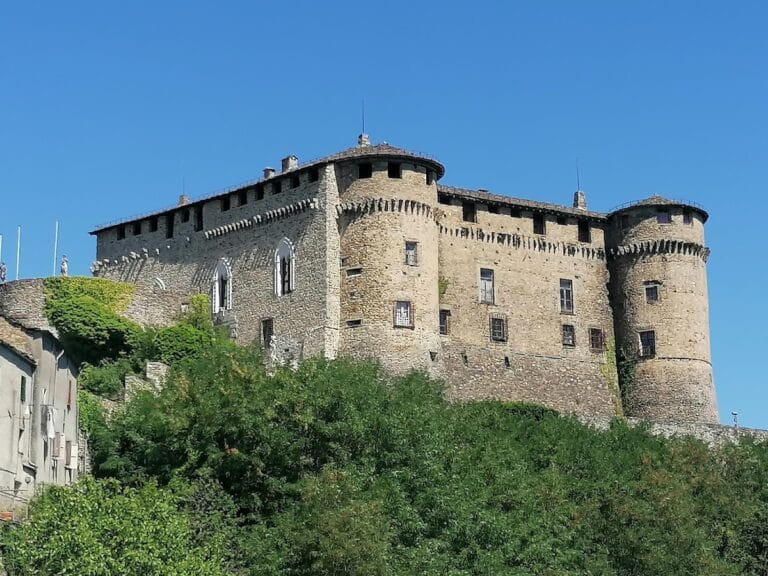
The Castle of Varese Ligure is a medieval military and defensive building in Italy, erected by the counts Fieschi as part of the fortified urban development called the Borgo Rotondo. This elliptical settlement surrounded the central square of Varese Ligure, and the castle formed its northern closure. The foundation belonged to a wider effort to control an important communications and commercial route between the Levantine coast and the Ligurian-Emilian Apennines, while also securing the upper Vara Valley during periods of warfare.
The borough’s closely arranged stone houses, ground-level porticoes, and narrow connecting lanes created a defensive curtain around the settlement. At its northern end, the Fieschi built a palace that served as their residence in Varese Ligure. The castle therefore combined a residential role with the military protection of the fortified town and the route passing through the valley.
Fifteenth-Century Conflict and Landi Rule
Varese endured two attempted sieges during the fifteenth century before falling to the military expedition of Niccolò Piccinino, a professional commander serving Filippo Maria Visconti, Duke of Milan, in opposition to the Fieschi. The castle’s military form developed further during this period. Its high offensive tower is associated with 1431 and was built in 1435, when the stronghold was equipped for contemporary warfare.
The lower cylindrical tower belongs to the later dominion of the Landi, a feudal ruling family whose authority included the castle. It was constructed between 1472 and 1478–1479, adding a different defensive form to the complex.
Genoese Administration and Later Changes
Fieschi feudal ownership ended definitively in 1547, following Gianluigi Fieschi’s failed conspiracy against Andrea Doria, the Genoese admiral and statesman. The Republic of Genoa, a maritime republic governing Genoa and territories in Liguria, then took control of Varese Ligure and the former Fieschi possessions.
After Varese became a podesteria, an administrative jurisdiction governed by a locally appointed civic magistrate, the former Fieschi residence was altered for new official purposes. It became the seat of the podestà and the local prisons. Large windows were inserted into the Landi tower, and the keep may also have been lowered. The castle’s strategic military function ended during the nineteenth century.
Following further uses over the succeeding centuries, the castle was restored in the 1960s by the Ligurian Superintendency for Monuments, the public heritage authority responsible for protecting and restoring historic monuments. The municipality now owns the building, which is used for exhibitions, conferences, and public events. It is designated Italian national heritage.
Remains
Fortified Settlement and Northern Closure
The surviving complex is integrated with the Borgo Rotondo, whose elliptical plan organized uniform stone houses around the central square. Porticoes at ground level provided space for work activities, while narrow lanes linked the perimeter houses with the principal central road. Together, these built elements formed a continuous defensive enclosure, with the castle closing the settlement on its northern side. The first palace at this end served as the Fieschi residence and remains part of the castle’s architectural history.
Towers
Piccinino Tower
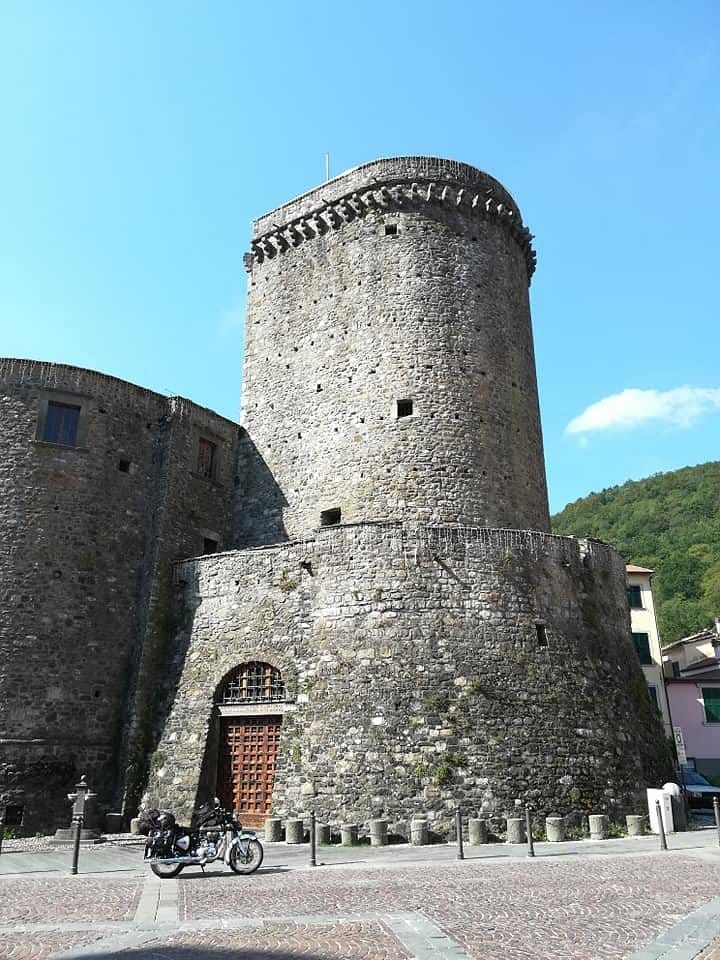
The high offensive tower, known as the Piccinino Tower, dates to the fifteenth-century military phase of the castle. Its inception is recorded in 1431, and its construction took place in 1435. Originally, a drawbridge provided access. The tower was regarded as an advanced structure for the military armament of its period, and craftsmen from Lunigiana, the historical region around the Magra Valley in present-day northwestern Tuscany and eastern Liguria, took part in its construction. Some of these craftsmen had also worked on the tower of Piagnaro Castle in Pontremoli.
Landi Tower
The second tower is lower and cylindrical, rising from a battered base, a sloping masonry foundation that inclines outward to strengthen the lower part of a defensive tower. Built between 1472 and 1478–1479 under Landi rule, it was later altered with the insertion of large windows. The keep may also have been lowered during these changes. The castle is currently in good condition.