Castell de Marmellar: A Medieval Castle in Catalonia


Visitor Information
Google Rating: 4.3
Popularity: Very Low
Google Maps: View on Google Maps
Country: Spain
Civilization: Unclassified
Remains: Military

History
The Castell de Marmellar is located in the municipality of Marmellar in present-day Spain. It was originally constructed by medieval Catalan nobility during the early Middle Ages.
Documentation first mentions the castle in 1023, when it appeared in a land sale involving the Counts of Barcelona and a noble named Guillem Amat de Castellvell. This record places the castle as a notable landmark in defining territorial boundaries. Further medieval records confirm its presence in 1041, indicating the site’s early importance in local administration and defense.
During the 12th century, ownership transferred to the Banyeres family. In 1157, Ponç de Banyeres died due to injuries sustained in battle, leaving his daughter Guisla as the heir. Guisla was married to Guillem de Santmartí, linking the castle’s holdings to another noble lineage. By the 14th century, the castle was under the possession of various noble families, including the Anglesola family documented in 1358, Albert de Claramunt around 1365–1370, and Bertran de Gallifa by 1376.
In the 14th century, King Pere el Cerimonós granted the castle to Bernat de Fortià, who was the brother of Queen Sibil·la de Fortià. Following the king’s death, control reverted back to the crown. Under King Joan I’s reign (1387–1395), the castle’s lands were known to host royal hunts, reflecting its use as royal territory with leisure functions in addition to defense.
Subsequently, the castle passed to the Boixadors and later the Savallà families. From the 15th century onward, the fortification declined in strategic relevance due to shifts in regional trade routes and frontier expansions. Its lands were confiscated for over fifty years following the War of Spanish Succession because the Count of Savallà supported the Austrian faction, a political stance that led to the loss of his estates.
In 1738, the castle was purchased by Jaume Guàrdia i Morera, a merchant engaged in the wool cloth trade. He was father to Melcior de Guàrdia i Matas, who would later become lord of Almacelles. Over time, the castle moved from a fortified noble residence to a symbol of local aristocratic landholdings.
Today, Castell de Marmellar is officially recognized as a cultural heritage site of national interest in Catalonia, preserving its legacy within the region’s medieval history.
Remains
The Castell de Marmellar sits prominently atop a steep hill overlooking the Marmellar valley, with natural defenses provided by cliffs to its north and west, and a stream curving around the site’s position. This location allowed control over the adjacent lateral valley through a combination of natural terrain and manmade fortifications.
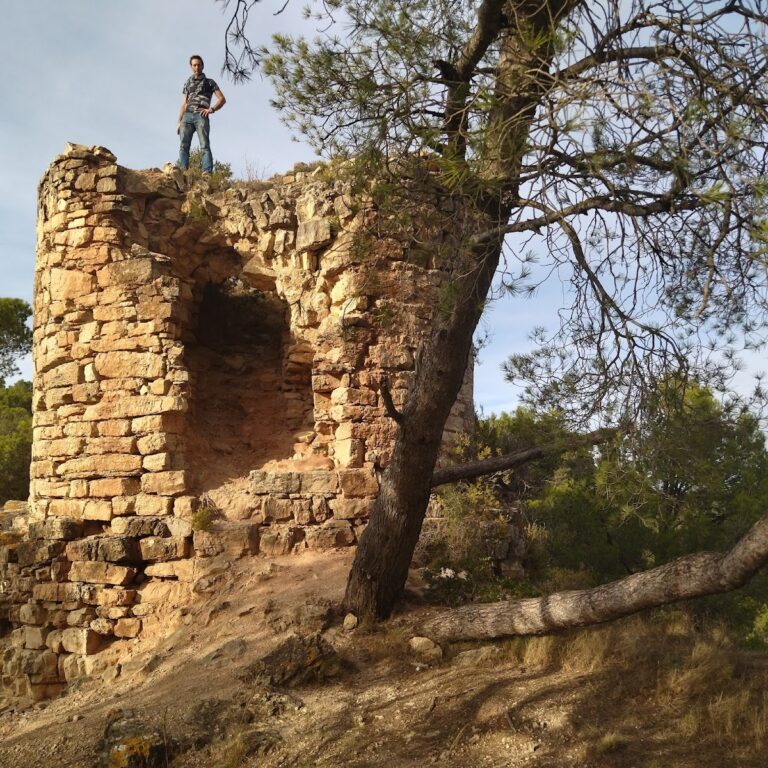
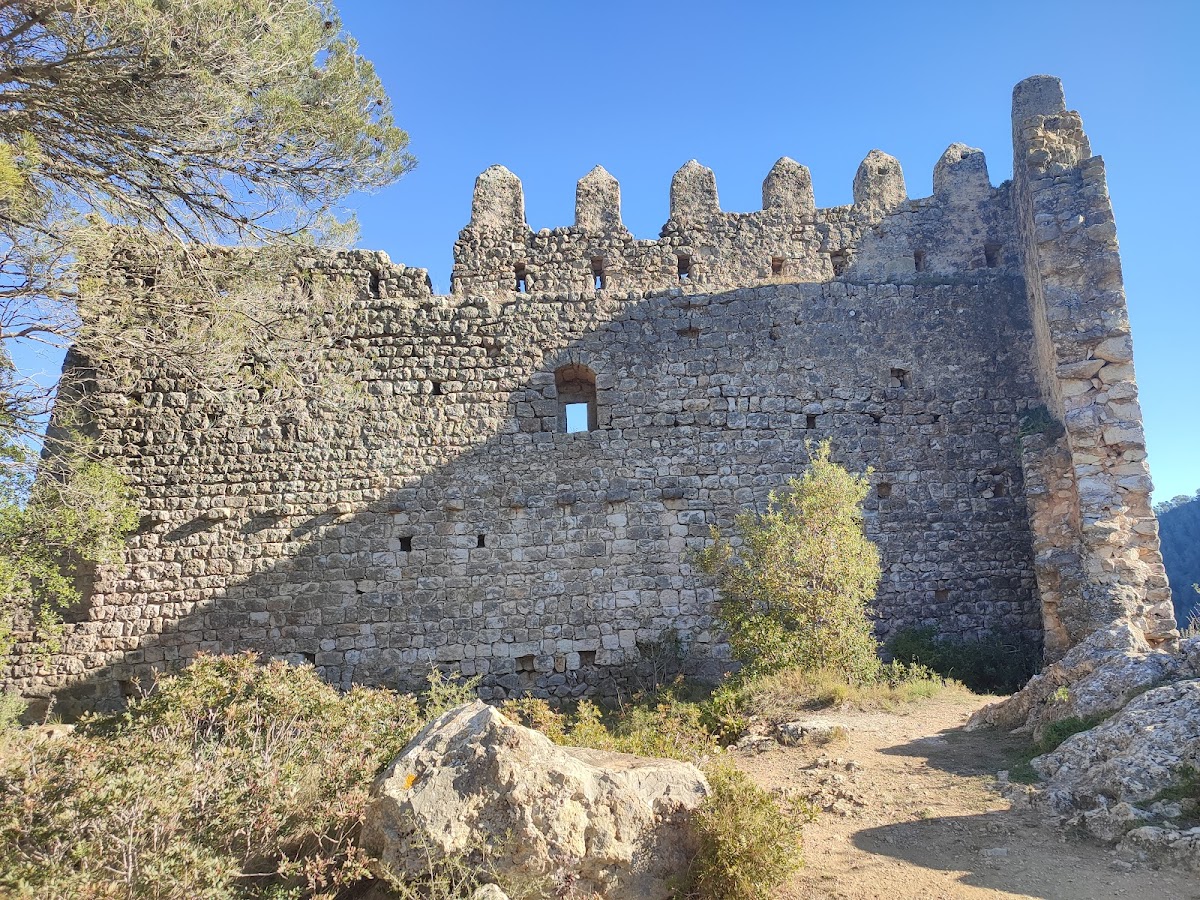
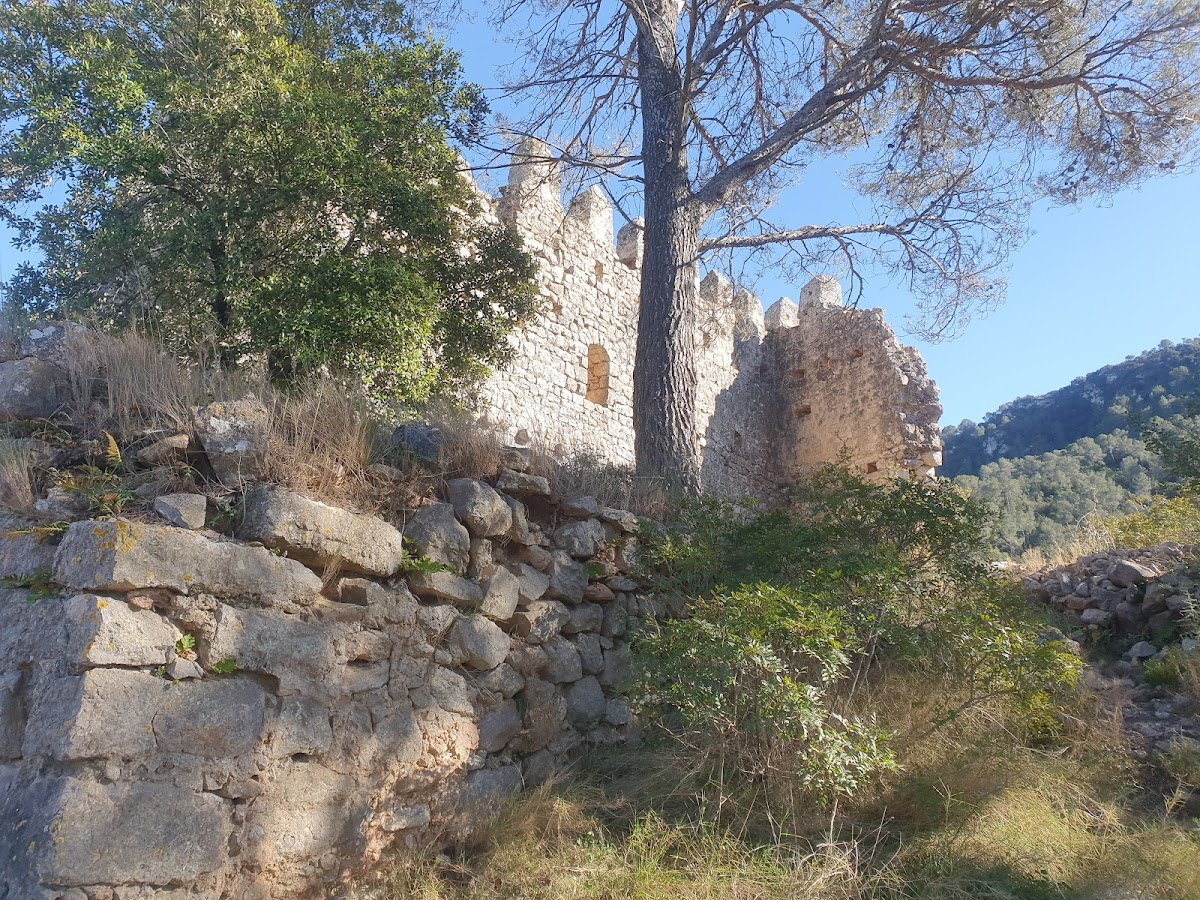
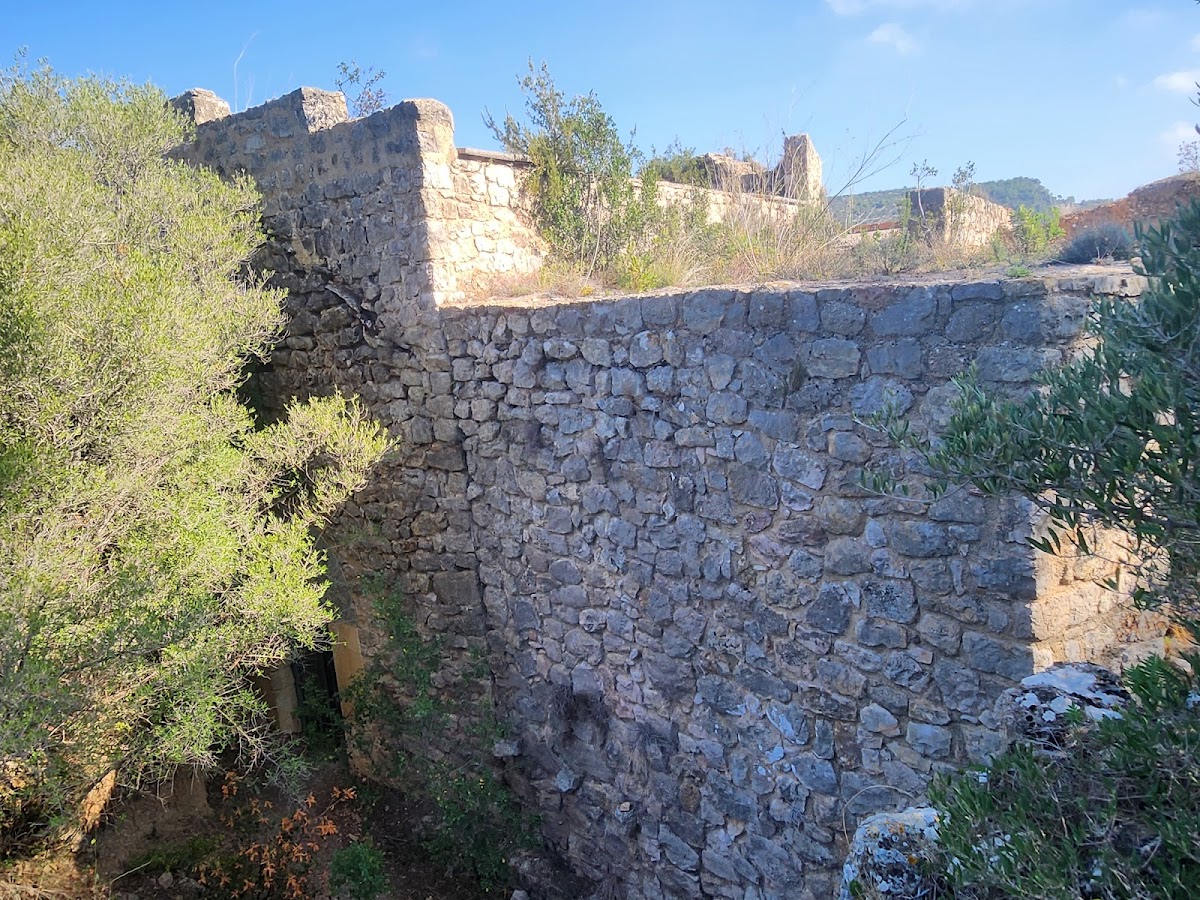
The surviving remains reveal a rectangular fortress layout featuring eight battlements along its perimeter. The curtain walls survive in fragments, constructed from irregularly shaped ashlar stones, which are medium-sized blocks roughly dressed to fit together. Many arrow slits remain visible within these walls, indicating the castle’s defensive role. Though the structure today is in a ruined state, the overall organization and architectural elements remain understandable.
Within the enclosure are the ruins of the noble residence and the church of Sant Miquel, which is partially restored. The church occupies the highest point of the site and has a trapezoidal plan approximately 18 meters long and nearly 7 meters wide. It consists of a single nave oriented north-south, internally divided by three slender transverse walls. The eastern wall is the best preserved, reaching about 7.5 meters in height on the interior side, revealing evidence of three different floor levels. The openings include windows framed externally by three stones acting as supports—two upright stones and a lintel above—and internally finished with lowered arches. This design creates small arrow slits integrated into the walls, enhancing defense.
Eleven corbels, which are stone supports projecting from the wall, run aligned at the main and upper floor heights along the walls. The castle’s masonry uses medium-sized stones that are somewhat dressed, providing a sturdy but rough appearance.
Later defensive additions consist of two outer walls on the eastern side built after the main castle structure. The first, thinner wall measuring about half a meter thick, stands roughly 5.5 meters north of the main eastern castle wall. Extending northwest from the first wall’s corner, a second wall links to another section starting at the church’s apse. This outer wall features a gate approximately two meters wide, combining to enhance the site’s protection on that side.
The church of Sant Miquel, located within the fortress, was donated in 1148 by Bishop Guillem de Torroja of Barcelona to the nearby church of Sant Ruf d’Avinyó. This donation aimed to establish a convent for Augustinian canonesses, although this plan did not come to fruition. The church served as the parish center until 1377, after which religious activities shifted to the nearby chapel of Pla de Manlleu. By 1600, Sant Miquel functioned as a subsidiary church to the parish of Sant Jaume dels Domenys.
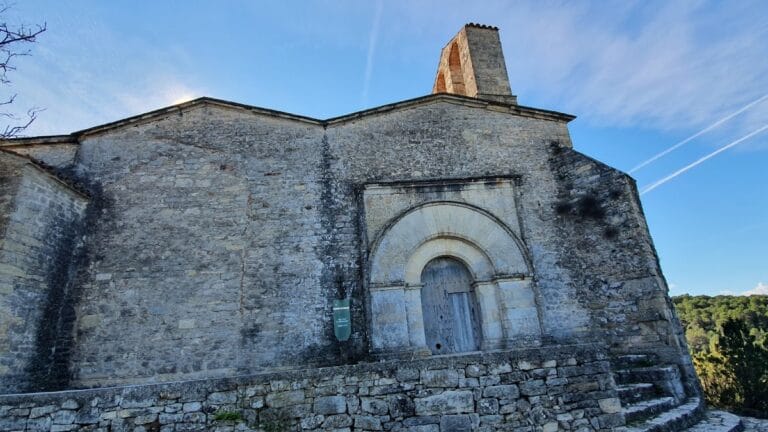
Architecturally, Sant Miquel exemplifies 11th-century Romanesque style heavily influenced by Lombard motifs. It has a single nave covered by a semicircular barrel vault constructed from lime concrete, where the wooden formwork marks used during pouring are still visible. A transverse arch reinforces the vault, while the east end concludes with a semicircular apse separated from the nave by a wide presbytery arch. Added later on the church’s south side is a rectangular chapel with its own barrel vault.
The western façade contains a heavily altered doorway below a cruciform window, while the apse’s exterior is decorated with a series of blind arcades arranged as friezes beneath the eaves. These arcades consist of groups of three pilasters built from rough stone, a decorative style characteristic of Lombard Romanesque architecture. Three double-splayed windows with red-painted joints occupy the apse wall.
Inside the church, traces of original wall paintings survive on the arches of the window openings. These small red fragments are all that remain in situ. More significant painted panels removed for preservation now reside in the Museu Nacional d’Art de Catalunya. Dating from the 11th century, these artworks likely depict scenes related to Christian salvation themes, featuring the Ascension of Christ surrounded by seraphim and figures symbolizing the Passion of Christ, closely matching the period of the church’s construction and decoration.
Overall, the architectural elements and decoration of Castell de Marmellar present a well-preserved example of a medieval fortification integrated with ecclesiastical structures, illustrating the castle’s multifaceted role in defense, residence, and religious practice over the centuries.
Nearby sites