Castle-convent of Penyafort: A Medieval Fortress and Dominican Convent in Spain

Site at a Glance
- Rating
- 4.3
- Popularity
- Low
- Country
- Spain
- Primary era
- Medieval
- External website
- Open
- Eras represented
- Medieval, Early Modern, Modern
- Civilizations
- Crown of Aragon, Spanish
- Site type
- Religious
- Remains
- Monastery
On this page8 sections
History
The Castle-convent of Penyafort is a medieval fortified complex in Spain, south of Santa Margarida i els Monjos near the Foix River. Traditionally identified as the birthplace of Saint Raymond of Penyafort, the site developed from a frontier castle into a Dominican convent, church, and manor house. It also forms an access point to Foix Natural Park.
Frontier fortress and the lords of Penyafort
The fortified site may have been established in the eleventh century, when it consisted of a tower and a quadrangular building. It belonged to the network of frontier castles built in the Penedès after the campaigns of Al-Mansur, the tenth-century ruler and military leader of Córdoba. Alongside the castles of Moja and Canyelles, it helped protect Christian colonists settling territories taken from Muslim rulers and served as an advance position against attacks on Olèrdola Castle. Olèrdola controlled a frontier area of approximately 250 square kilometres.
At first, a castellan, the official who administered and defended a castle for its lord, managed the property on behalf of the lord of Olèrdola. The site later became independent. By the twelfth century, the Tower of Penyafort was controlled by the lords of Penyafort, whose lineage remained there until the middle of the fourteenth century. Bernat de Penyafort was lord in 1337. In 1356, Arnau de Montoliu, the last descendant of the lineage, sold the house to Pere de Crebeyno. By 1405, the complex was partly ruined.
From private estate to Dominican foundation
A new phase began after the Diputació del General of Catalonia confiscated the properties of Pere and Pau Riu in 1586. Martí Joan d’Espuny d’Argençola bought the property at public auction in 1601 and thereafter took the title of lord of Penyafort and Pacs. In 1602, he received permission to build a chapel dedicated to Raymond of Penyafort, who had been canonized that year. Saint Raymond was a Dominican canon lawyer who earned a doctorate in jurisprudence at Bologna and advised James I of Aragon, the thirteenth-century king whose reign expanded the Crown of Aragon’s territories and shaped Christian campaigns in the Iberian Peninsula.
In 1603, Martí Joan d’Espuny d’Argençola donated the tower and adjoining buildings to the Dominicans, a Catholic order founded for preaching and theological study. The Dominican convent was built and expanded through several phases during the seventeenth and eighteenth centuries, with further work resuming in the nineteenth century after the confiscation of ecclesiastical property.
Confiscation, private ownership, and twentieth-century changes
French forces looted the convent during the Peninsular War, the conflict fought in Spain and Portugal against Napoleonic French forces from 1808 to 1814. The Mendizabal Disentailment, a nineteenth-century Spanish policy that confiscated and sold substantial ecclesiastical properties, transferred the convent into state ownership in 1836. It was subsequently sold at auction. Miquel Puig bought it from the state in 1851, and his son Josep Puig i Llagostera later inherited it. After Josep’s death in 1879, his wife, Rosa Amat, lived in the convent.
During the Spanish Civil War, the church was looted and converted into a prison, while the owners and tenant farmers continued living in the residential manor. In 1959, James R. Halloway and his partners restored the rooms to establish a hotel. Dimitri Nicholas owned the property in 1966, and Martín Fainberg and Oliver Johnson acquired it in 1971 for wine-related businesses. Santa Margarida i els Monjos Town Council acquired the convent in 2002.
The site’s history also survives through its former library holdings. The University of Barcelona’s CRAI Library of Rare Books preserves more than 200 editions that originated in the Convent of Saint Raymond of Penyafort after the nineteenth-century confiscation of convent property. The library has also recorded and described an example of the convent’s former ownership marks. The complex was declared a Cultural Asset of National Interest and a Spanish monument of cultural interest in 1988.
Remains
Medieval fortified manor
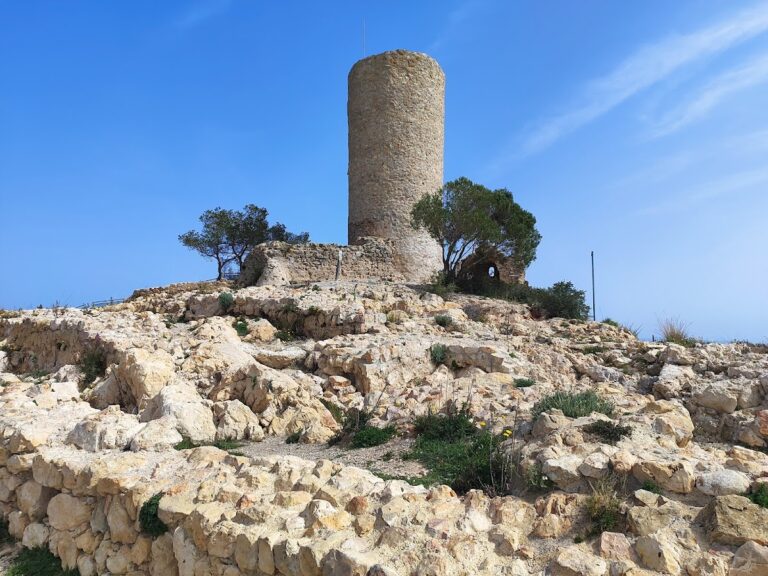
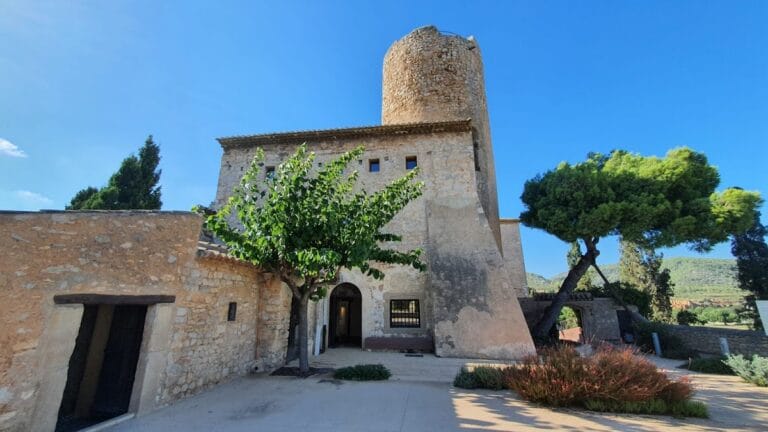
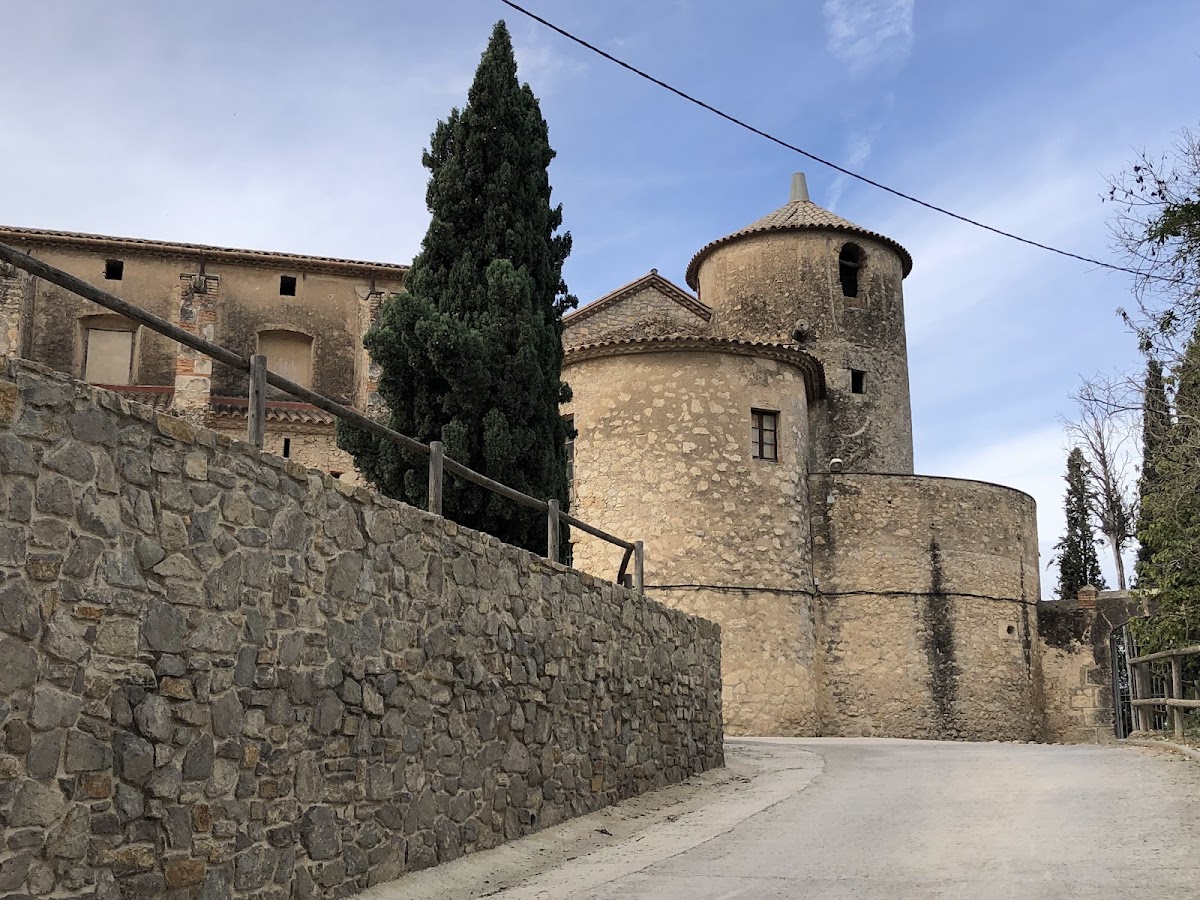
The surviving ensemble combines the former fortified manor with the later religious buildings. Its oldest element is a cylindrical medieval tower, accompanied by surviving sections of wall and adjoining structures. The tower is documented in the twelfth century and may have been erected in the eleventh century as part of the Penedès frontier system. The surrounding buildings have been altered repeatedly, reflecting the site’s transformation from a defensive residence into a religious and residential complex.
Dominican convent
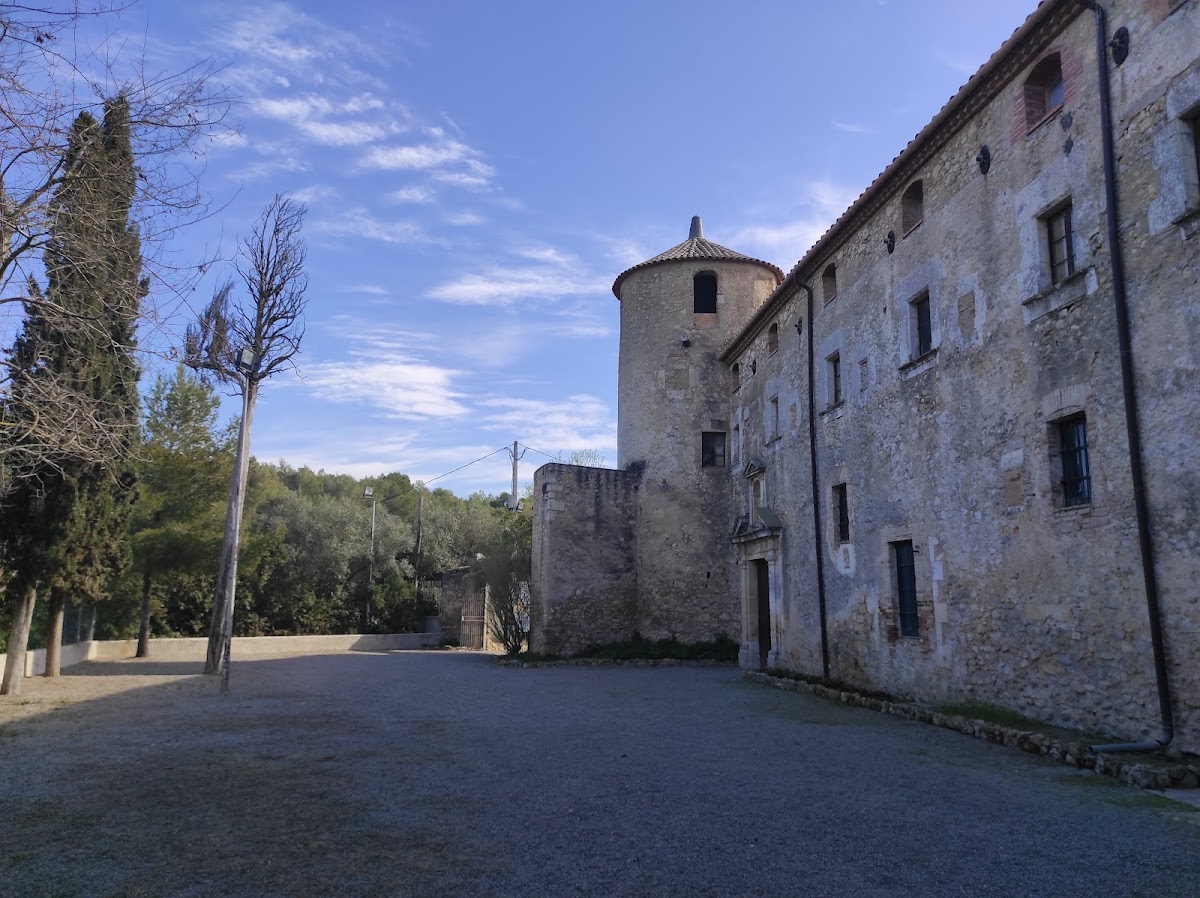
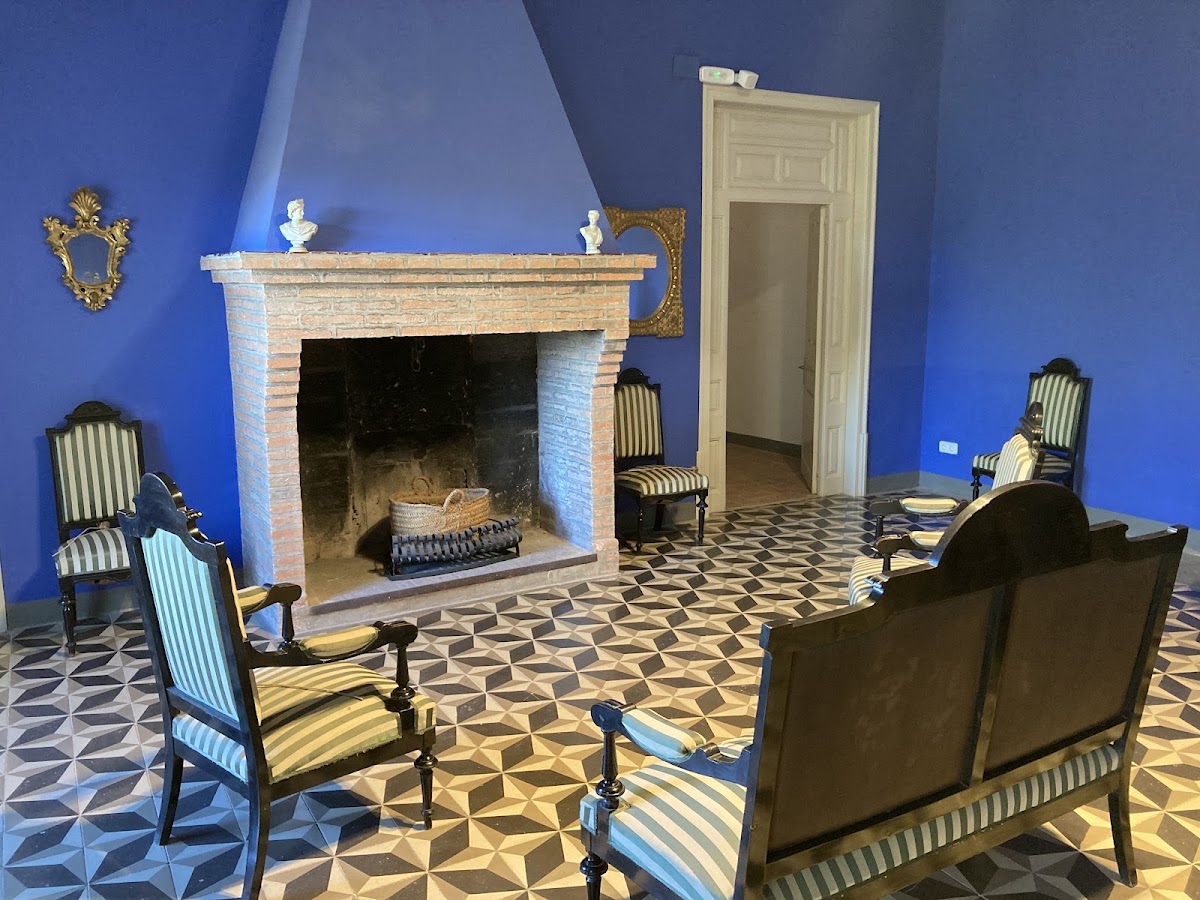
The Dominican convent occupies part of the complex and dates principally from the seventeenth and eighteenth centuries. Construction and extensions took place in successive phases, continuing again during the nineteenth century after the convent’s ecclesiastical properties were confiscated. A nineteenth-century manor house forms another part of the architectural ensemble, preserving the site’s later residential character alongside the medieval tower and convent buildings.
Church
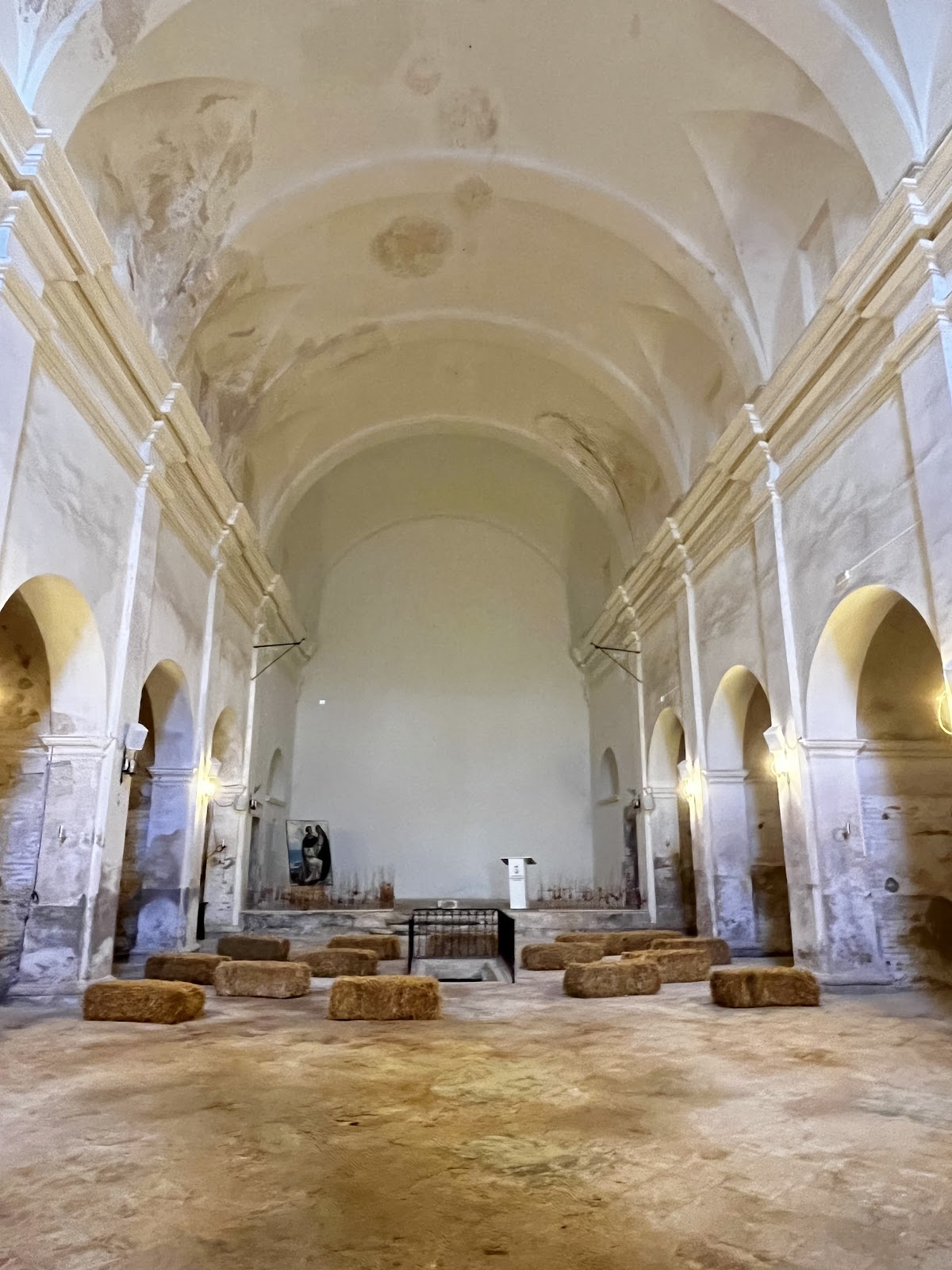
The church has a single nave covered by a barrel vault, a continuous curved ceiling, with lunettes, smaller curved sections intersecting the main vault. Transverse arches cross the nave and reinforce the vaulted structure. Six lateral chapels open on each side. The entrance portal is neoclassical and has a broken pediment interrupted by a niche, adding a later architectural layer to the church associated with the Dominican foundation.