Castell de Ciutadilla: A Historic Castle in Catalonia, Spain


Visitor Information
Google Rating: 4.3
Popularity: Low
Google Maps: View on Google Maps
Official Website: www.ciutadilla.cat
Country: Spain
Civilization: Unclassified
Remains: Military

History
The Castell de Ciutadilla stands near the village of Ciutadilla in Spain, originally constructed during the 11th century by medieval Christian builders. Its history reflects a continuous evolution from a fortified stronghold to a Renaissance noble residence, connected to local feudal families and historical conflicts over several centuries.
The earliest surviving written record relating to the castle dates back to 1061, when Bernat d’Oluja was granted ownership of both Guimerà and Ciutadilla castles. Although a document from the 15th century was mistakenly linked to the year 1029, the castle was already active as a lordly seat by the mid-11th century. Throughout the 12th to 14th centuries, the fortress was caught in regional disputes, particularly concerning access to water, involving neighboring castles such as Nalec. The Guimerà family established itself as the long-standing rulers of Ciutadilla, maintaining control well into the late 1600s.
During the mid-15th century, political tensions erupted in Catalonia. In 1462, amid the War of the Generalitat against King Joan II of Aragon, Guerau de Guimerà was declared an enemy of the province, resulting in the seizure of his estates. Despite this setback, members of the Guimerà family took part in the siege of Girona during the same year, illustrating their ongoing involvement in regional conflicts.
The 16th century brought significant transformation under the direction of Gispert de Guimerà, who redesigned the military fortress into a Renaissance-style palace. He constructed the castle’s main tower, which rose to become a dominant feature in both the fortress and the surrounding village. This period marked the castle’s shift toward a more residential and representational character while retaining defensive elements.
In the 17th century, Ramón de Guimerà, lord of Ciutadilla, played a diplomatic role during the Catalan Revolt. In 1640, he acted as a plenipotentiary, or fully authorized representative, of the Diputació General de Catalunya, negotiating with France for military support against Castile. This reflects the continuing strategic importance of the Ciutadilla lordship within Catalonia’s political landscape.
The Guimerà lineage eventually united with the Meca family through marriage, heirs to the barony of Castellar del Vallès. In 1702, the title of Marquisate of Ciutadilla was established. Ownership subsequently passed through several noble families, including the Cortés d’Andrada, Sentmenat, and in modern times the Sagnier family. The castle remained occupied and maintained until the 19th century; it was abandoned in 1908, after which the structure suffered gradual decline and partial demolition. Early efforts to restore and preserve the site began in the early 21st century to stabilize the remains and prevent further deterioration.
Remains
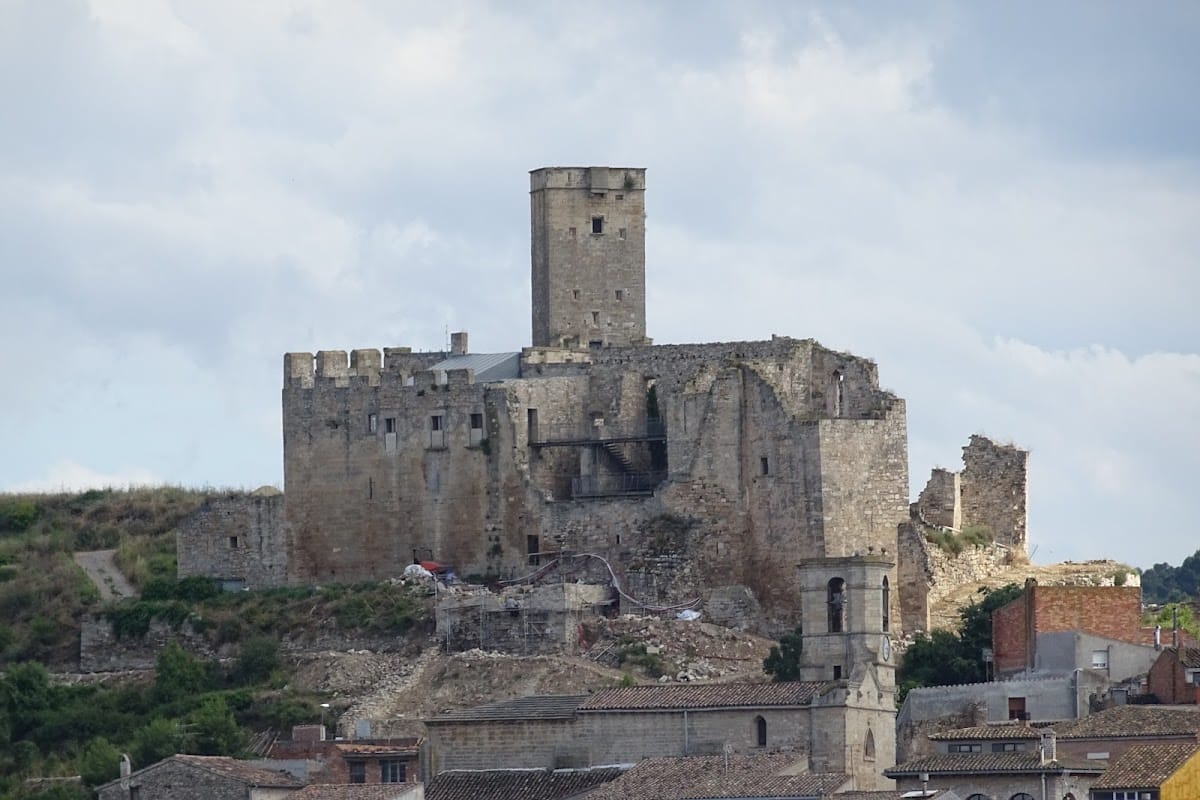
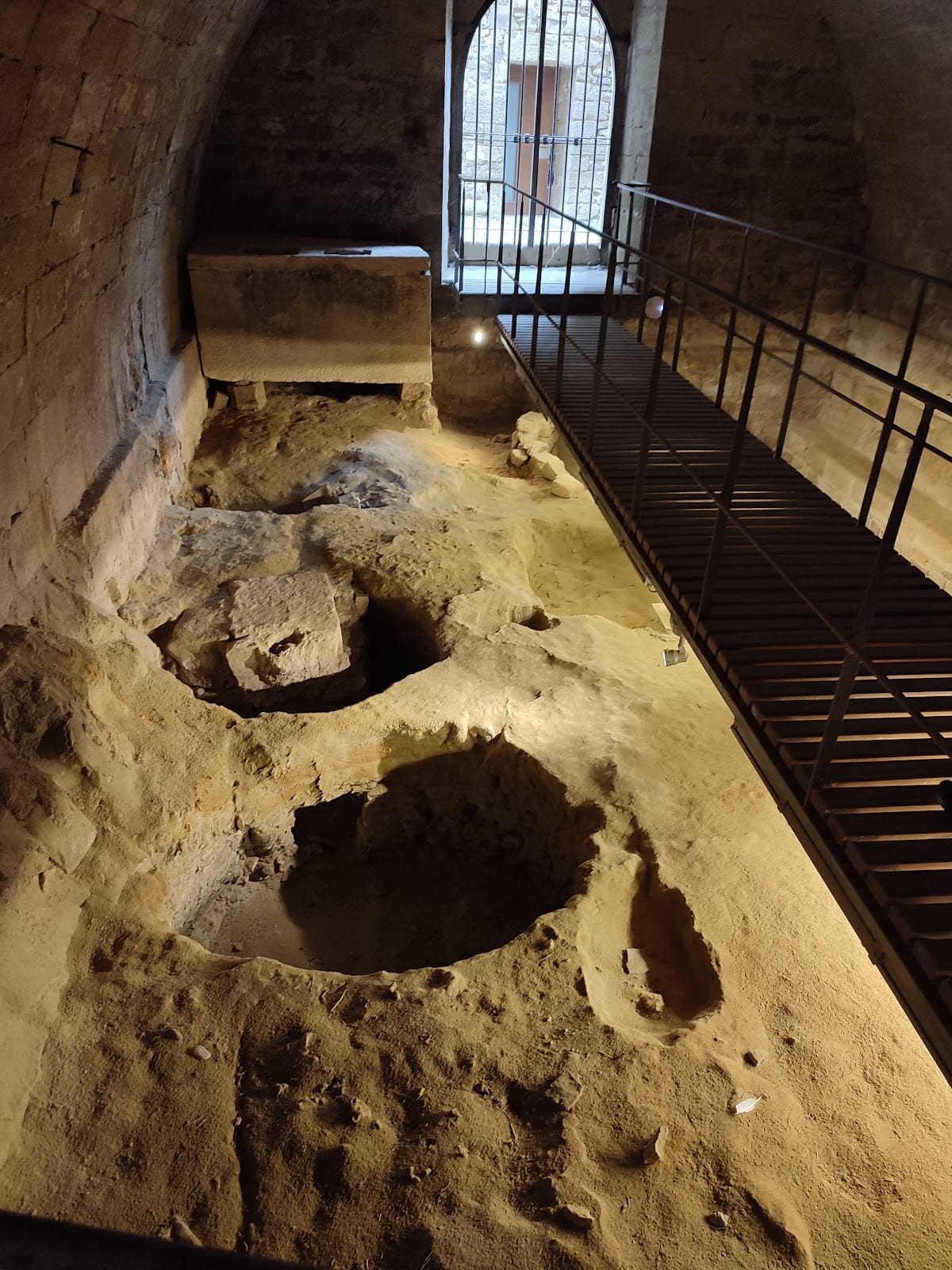
Castell de Ciutadilla occupies a strategic hilltop overlooking the village, with its layout adapted to the terrain and defensive needs of its time. The fortress retains an overall quadrangular plan, where the original medieval fortress construction remains visible alongside Renaissance-era modifications from the 16th century. The complex is enclosed by two concentric walls: an outer defensive barrier built in a rough manner set before a surrounding moat, and a finer inner wall crafted from carefully cut stone blocks. This inner wall features embrasures—openings for archers or firearms—at its base and wide lintelled openings with stone dripstones above, which were used to channel rainwater away; these openings are no longer open today.
The inner wall’s upper edge is topped by battlements, the protective walkway crenellations that date from the Renaissance remodeling and rest upon medieval foundations below. These battlements preserved the castle’s defensive function even as its residence qualities increased.
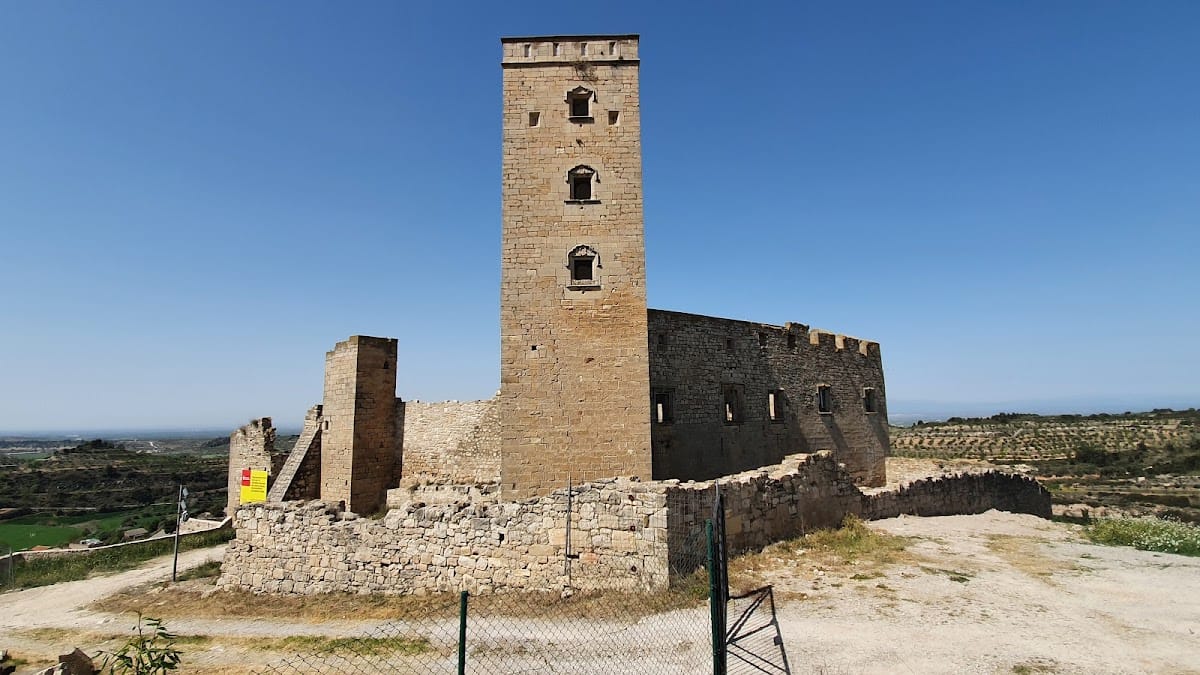
A key surviving element is the main tower, or keep, a massive seven-story quadrangular structure with a machicolation—an overhanging parapet with openings through which defenders could drop objects on assailants below. The upper floors contain windows that display Renaissance stylistic details, constructed upon older subterranean foundations, making this tower the castle’s most prominent and enduring symbol.
Inside the quadrangle formed by the curtain walls, buildings are arranged around a trapezoidal courtyard. On the right side of the courtyard stood the lord’s private quarters, which included a large hall supported by impressive lowered arches, designed to hold a roof that is no longer present. Adjacent to this hall was a chapel featuring ribbed vaults, a style of arched ceiling typical in Gothic architecture that involves intersecting ribs for structural support and decoration.
The left wing of the castle served practical functions, housing storage areas and rooms designed for military use, consistent with the building’s combined residential and defensive roles. Access to the main floor was provided by a grand staircase located on the north side of the courtyard, formerly noted in early 20th-century photographs. This staircase was elaborately constructed, featuring Tuscan columns (simple classical columns) supporting balustrades and a gallery of semicircular arches. The doorway it led to was framed by pilasters—flat, rectangular columns projecting slightly from the wall—and a pediment, a classic triangular architectural element, exemplary of Renaissance design. Unfortunately, this ornate residential section was lost in recent decades.
The 16th-century renovations were notable for integrating classical Renaissance decoration with remaining Gothic features, reflecting a broader regional trend. Medieval castles in Catalonia were often adapted into comfortable palatial homes without completely removing their military character. This blending of styles and functions illustrates the castle’s transition through time.
Following its abandonment in the early 20th century, parts of the structure were dismantled or collapsed due to weathering and vandalism. However, beginning in the early 2000s, conservation efforts commenced to halt further degradation of the ruins, aiming to preserve the surviving architectural and historic features.
Nearby sites