Tàrrega Castle: A Medieval Frontier Fortress in Spain


Site at a Glance
- Rating
- 4.2
- Popularity
- Very Low
- Country
- Spain
- Primary era
- Medieval
- External website
- Open
- Eras represented
- Medieval, Early Modern, Modern
- Civilizations
- Unclassified
- Site type
- Military
- Remains
- Castle
On this page9 sections
History
Tàrrega Castle is a medieval fortress in Tàrrega, Spain, possibly originating under Muslim rule and later forming an advanced frontier position in the eleventh century. The town grew around it at a strategic crossroads linking routes from Barcelona, Tarragona, and Balaguer. Its architecture is described as vernacular, shaped by local building traditions and materials rather than a formal academic style.
Frontier conquest and comital rule
While Muslim forces still controlled the Noguera and Segrià regions, the castle occupied an important position on the frontier. Count Ramon Berenguer I of Barcelona conquered it and, in 1056, granted the fortress to his wife, Almodis. She received it as a nuptial gift and as an allodial holding, meaning land held freely rather than as a feudal tenure owed to another lord. The grant placed Tàrrega under exclusive comital jurisdiction.
In 1058, the counts commissioned Ricard Altemir to reconstruct and defend the fortress and administer its castellany. A castellany was a feudal office and jurisdiction, with its associated rights, managed by a castellan for a higher lord. In 1069, this authority passed to Miró Ricolf of Pinós, who was to share it with Pere Udalard and maintain a force of twenty men. Tàrrega was then an advanced position on the frontier of the County of Osona.
Feudal divisions
Ramon Berenguer II inherited the castle in 1076. Two years later, he granted the town, castle, and territory of Tàrrega, together with their rights and appurtenances, in perpetuity to the brothers Arnau and Guillem Guadall and their successors.
From the twelfth century onward, authority at the castle became divided among several castellans. The Pinós family held the principal position during the twelfth and thirteenth centuries, with the Peramola family beneath them. The Santafé and Torroja families also appear in the feudal hierarchy. In 1217, Agnès de Torroja married Ramon Folc IV of Cardona, bringing him into Tàrrega’s hierarchy at a third level.
The castellany was later sold to Arnau Sort, who arranged for his share to pass to Guerau d’Aguiló, lord of Talavera, in 1262. The Granyena family held the castellany until the middle of the thirteenth century, while Guillem Rufaca and his descendants retained theirs until the early fourteenth century. Other co-holders included the Oluja, Anguera, Montserrat, and Clariana lineages. Several families treated their shares as sources of income rather than living at Tàrrega, and the castellans often abused their authority when collecting dues from the population.
Despite this fragmentation, the castle remained under the monarch’s superior lordship. In 1242, King James I, a medieval ruler of the Crown of Aragon, granted the statutes and customs governing Tàrrega’s town, castle, and territory.
Military changes
Under Peter III, the walls and moats of the castle and town were restored in the middle of the fourteenth century. The fortress and settlement later experienced the successive military conflicts that affected the Principality of Catalonia, the historical territory governed through Catalan institutions within the wider Crown of Aragon.
The castle ceased to serve as a defensive stronghold during the seventeenth century. Its military role returned temporarily in the nineteenth century during the Carlist Wars, civil conflicts in Spain arising from rival claims to the Spanish throne. Walls from the eighteenth and nineteenth centuries are associated with these conflicts and with the castle’s later uses.
Archaeology and protection
The municipality of Tàrrega purchased the ruins in 1984. Excavations carried out afterward revealed several phases in the site’s development, including a broad building phase after the fifteenth century and the construction of the substantial southern enclosure wall after the cistern had ceased to function. Tàrrega Castle is protected as a Cultural Asset of National Interest, a Catalan designation for nationally significant cultural heritage, and is listed as a historic monument in the Catalan and Spanish heritage registers. The Spanish cultural-interest designation dates from 1988.
Remains
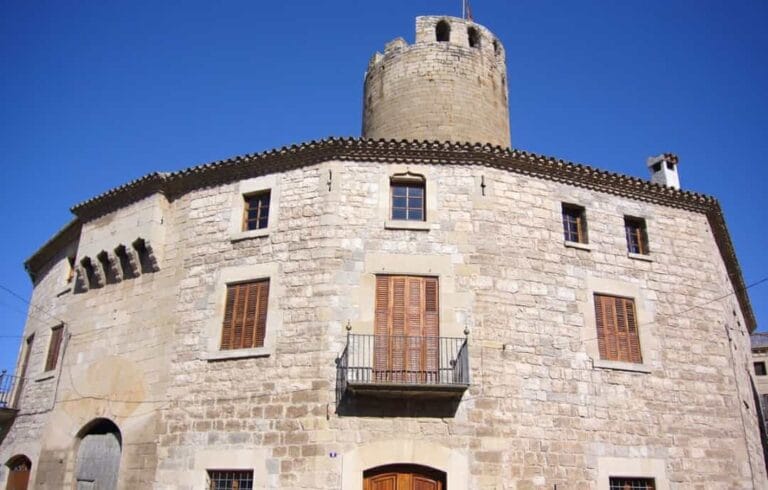
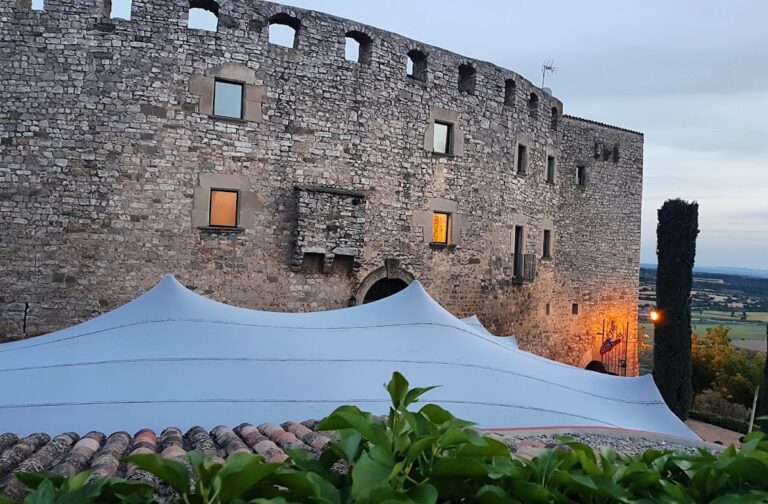
The castle occupies a small hill in the southwestern part of Tàrrega, at approximately 391 metres above sea level. Its surviving fabric reflects repeated rebuilding and changes of use. The ruins are generally poorly conserved, following extensive historical transformations and looting after abandonment. The interior retains a large arms courtyard surrounded by associated buildings and rooms.
Early rooms
The oldest surviving elements are rooms in the southeastern sector. They date from the eleventh or twelfth century and represent the earliest known physical phase of the castle.
Water cistern
A cistern with a water-capture well occupies much of the lower platform. Probably dating from around the thirteenth century, it measures approximately 4.5 metres deep, 8 metres wide, and 12 metres long. Archaeological evidence places its abandonment between the fourteenth and fifteenth centuries, after which the southern enclosure wall was built.
Southern enclosure
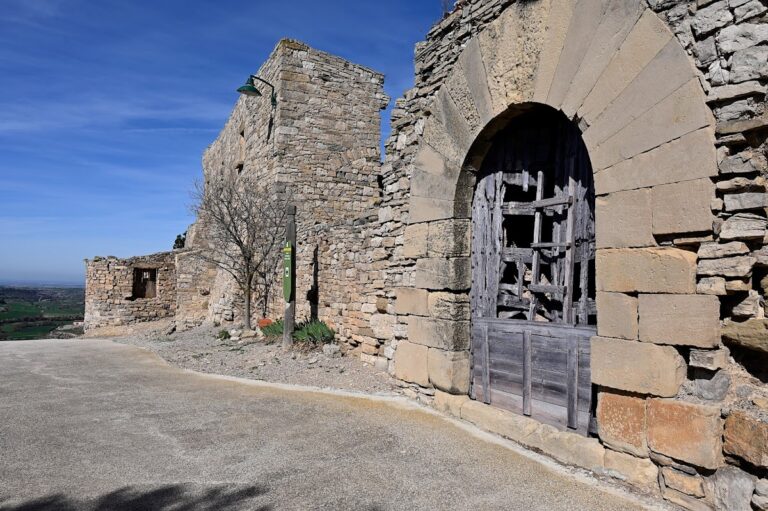
The most substantial surviving structure is the southern enclosure wall, assigned to the fifteenth century. It is approximately 3.5 metres thick and consists of carefully squared blocks bonded with mortar. The upper loophole course of this wall, together with the remaining enclosure walls, dates from the nineteenth century and reflects the castle’s temporary military reuse during the Carlist Wars.
Nearby sites