Thoor Ballylee: A Medieval Tower House and Yeats’s Literary Retreat in Ireland


Site at a Glance
- Rating
- 4.6
- Popularity
- Low
- Country
- Ireland
- Primary era
- Medieval
- External website
- Open
- Eras represented
- Medieval, Early Modern, Modern
- Civilizations
- Norman
- Site type
- Military
- Remains
- Castle
On this page7 sections
History
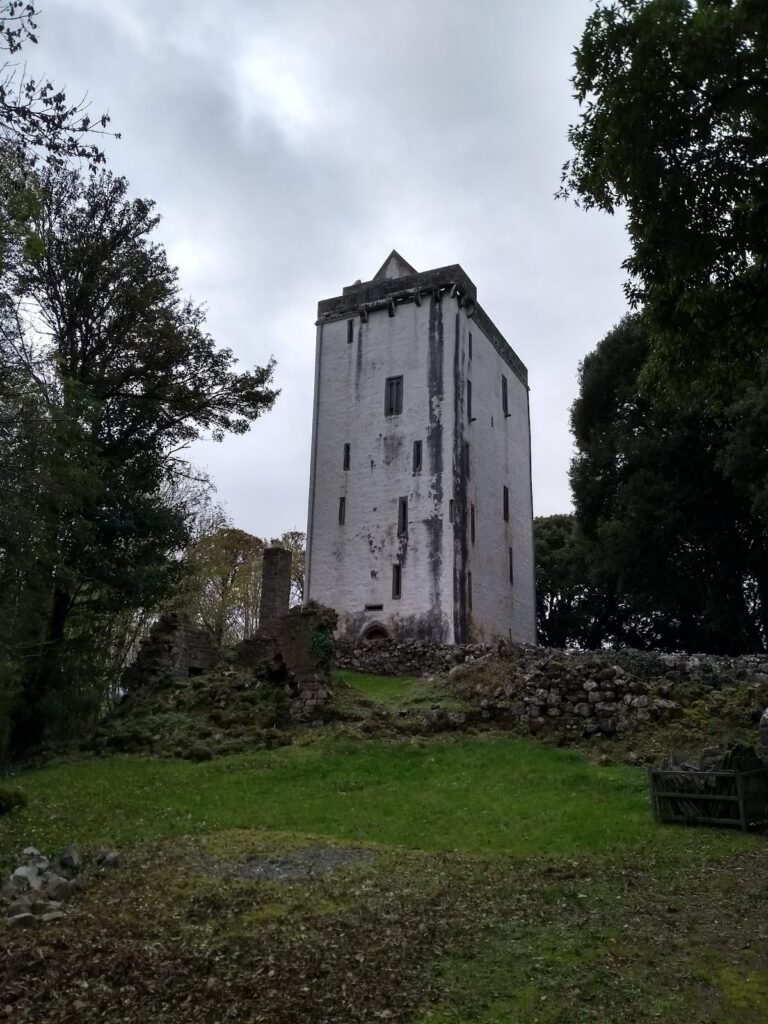
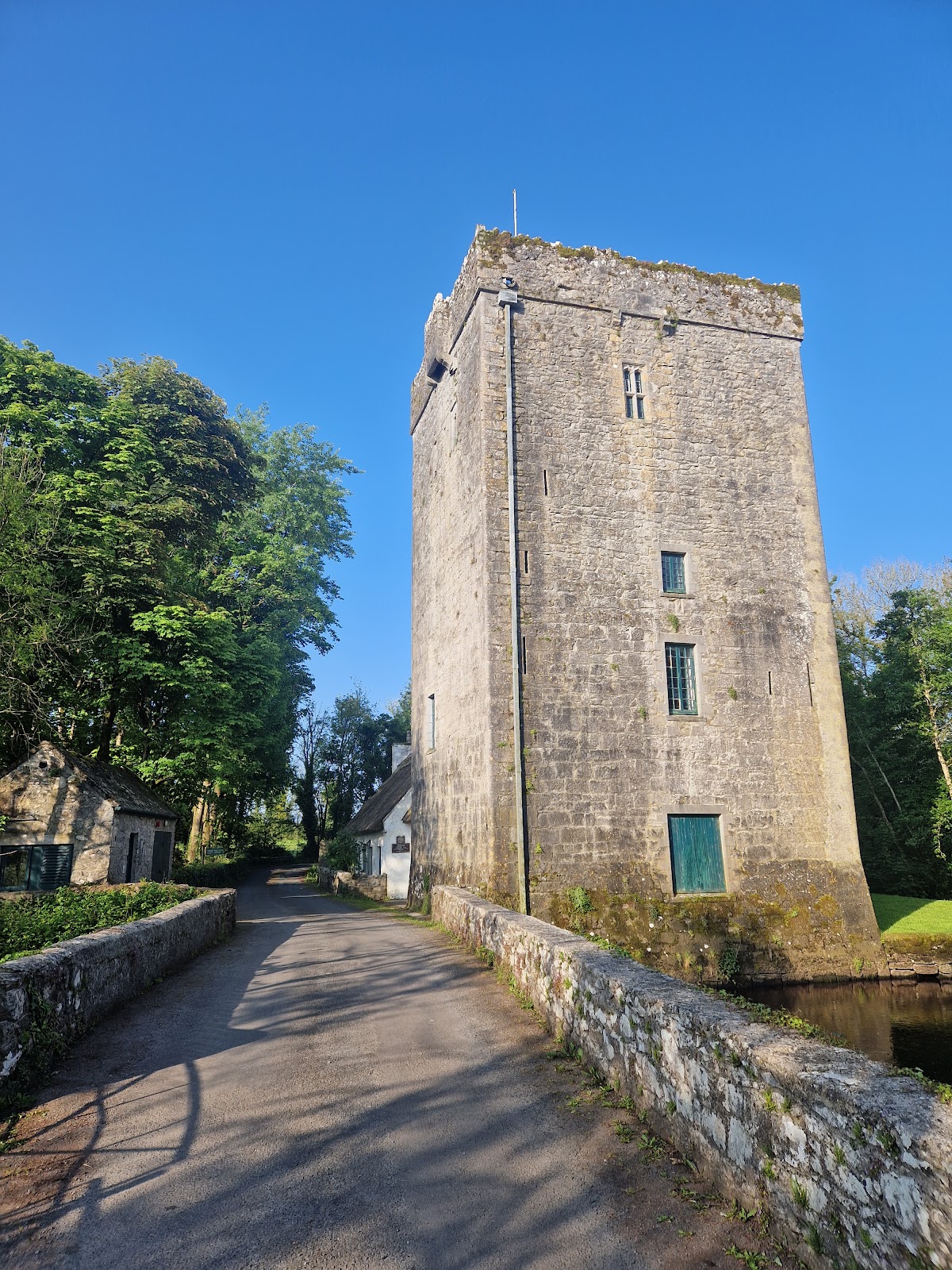
Thoor Ballylee is a fortified Anglo-Norman tower house in Ireland, near Gort in County Galway, built by the de Burgo, or Burke, family during the fifteenth or sixteenth century. It originally belonged to the extensive estates of the Earls of Clanricarde, a powerful branch of the Anglo-Norman-Irish Burke dynasty that controlled Connacht and the eastern part of the Barony of Kiltartan.
The Burke estate and later ownership
The tower formed part of a wider landed estate during the medieval and early modern periods. A four-arched bridge nearby was built around 1825, and the Carrig family was living in the tower by 1837. During Griffith’s Valuation in 1857, a nineteenth-century survey used to assess Irish property for local taxation, Patrick Carrick leased the castle, land, and a herd’s house at Ballylee from William Henry Gregory. The property was valued at £5.
By the early twentieth century, the Gregory family still owned the tower, which had become part of the nearby Coole Estate associated with Lady Augusta Gregory. An Irish dramatist, folklorist, and cultural patron, Lady Gregory played a major role in the Irish Literary Revival, a movement that promoted Irish literature, folklore, cultural identity, and renewed interest in the Irish language. Coole House hosted leading figures of that movement, while nearby Coole Park was one of the places where it began.
Yeats at Ballylee
William Butler Yeats purchased Thoor Ballylee in 1916 or 1917 for £35, drawn to the tower and its rural setting. Yeats, an Irish poet who received the Nobel Prize in Literature in 1923, worked with the architect William A. Scott to restore the building over the following two years. Yeats and his family lived there from 1921 to 1929, and it served as their summer home and country retreat for twelve years.
Yeats replaced the English word “Castle” with Thoor, derived from the Irish word for “tower,” creating the name used today. The building became closely connected with his writing and inspired poems such as The Tower and Coole Park and Ballylee. The family left in 1929, after which the tower was abandoned and fell into disuse and ruin.
Restoration and public interpretation
Mary Hanley, founder of the Kiltartan Society, renewed interest in the district’s literary history from 1961. Beginning in 1964, she led the restoration of Thoor Ballylee with assistance from Bord Fáilte, Ireland’s national tourism authority at the time, and the Yeats family. The property was then owned by the Office of Public Works, the state body responsible for public works and historic properties.
The Irish poet and writer Padraic Colum opened the restored tower on 20 June 1965, close to the centenary of Yeats’s birth. It was presented as Yeats’s Tower and operated as a museum containing first editions of his works and original furniture associated with the Yeats family. The adjoining miller’s cottage became a tea room and shop, and a later building was constructed behind it. In 2014, the local Yeats Thoor Ballylee Society leased the tower from Fáilte Ireland to develop it as a cultural and educational centre in preparation for the 2015 celebrations of Yeats’s 150th anniversary.
The tower’s position beside the Streamstown River has also shaped its modern history. Flooding occurred in 1995 and during the winter of 2009 to 2010, when extensive damage was caused. Restoration work led by Fáilte Ireland began in February 2012. Storm Desmond brought further flood damage to the tower and adjoining cottage in December 2015.
Remains
The tower and internal structure
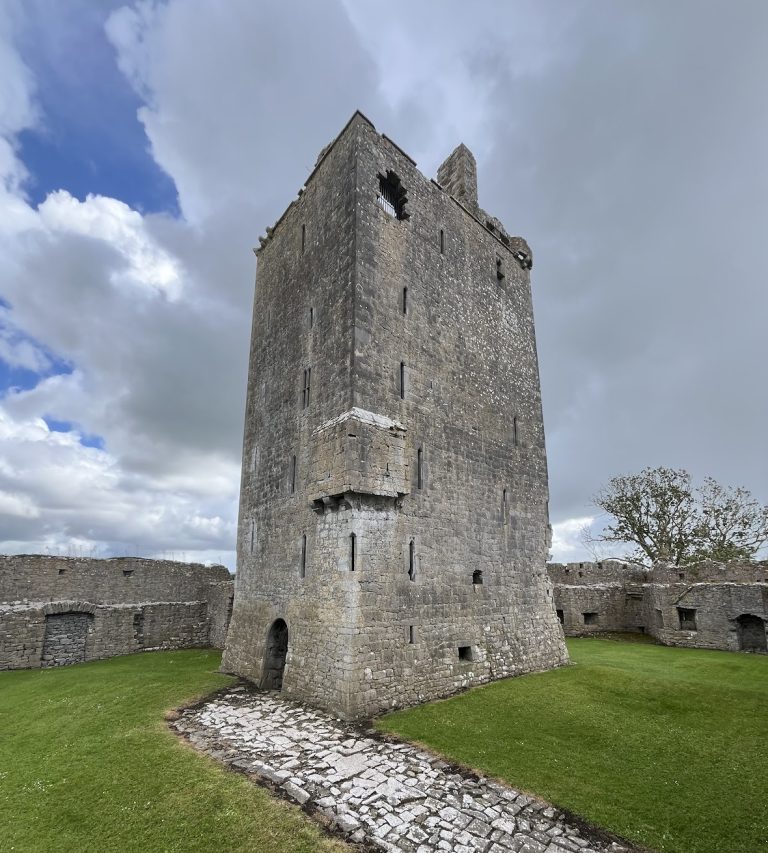
Thoor Ballylee stands beside the Streamstown River, a tributary of the Cloone River. The four-storey building is made of stone rubble and has one room on each floor. Its vertically organized form reflects the character of a tower house, a fortified residence designed for both habitation and defense through thick masonry and limited openings.
A spiral stone staircase rises within the massive outer wall, which is approximately 2.1 metres thick, and connects all four floors before leading to the surrounding external wall. Each level has a window overlooking the Streamstown River. The original windows remain in the upper part of the tower, while larger openings were installed on the lower floors during Yeats’s restoration.
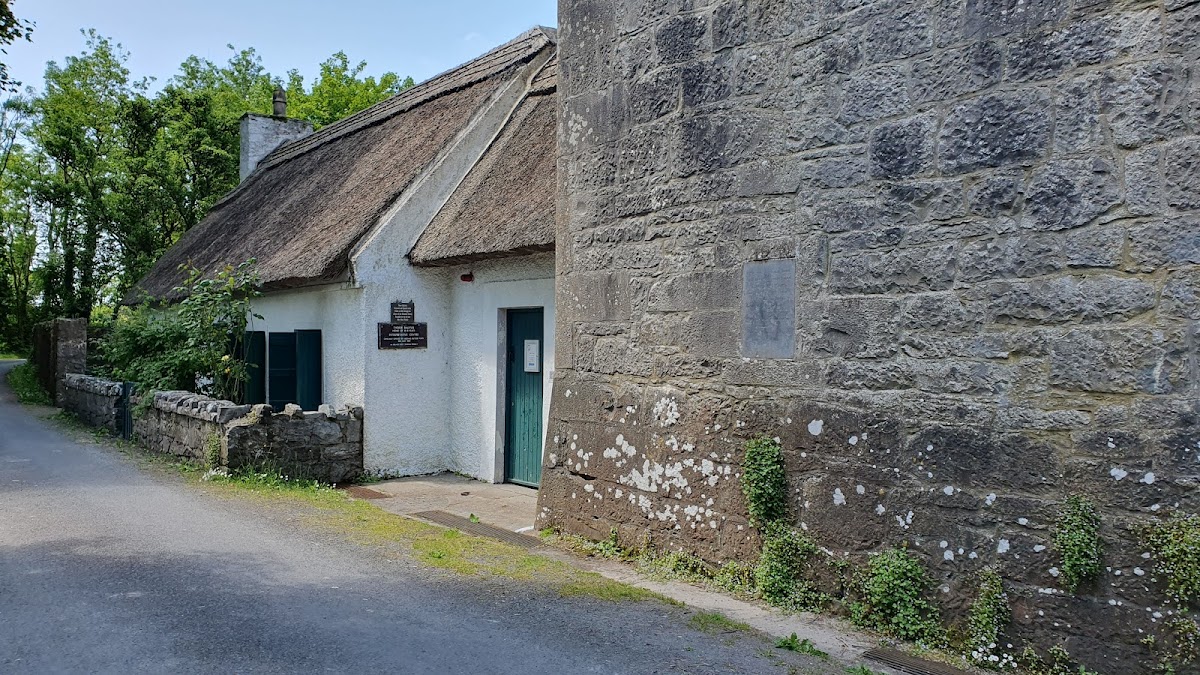
The staircase held particular meaning for Yeats. In The Blood and the Moon, he described it as an “ancestral stair” and associated it with Goldsmith, the Dean, Berkeley, and Burke. A stone memorial tablet on the outer wall commemorates his restoration of the tower for his wife, George Hyde-Lees. Its inscription refers to old mill boards, sea-green slates, and ironwork from the Gort forge, while expressing the hope that the words would endure when the tower once again became a ruin.
The cottage and associated buildings
A small thatched cottage is attached to the tower. Yeats described its ground-floor room as having a broad window facing the river and a round-arched doorway opening into a thatched hall. The adjoining miller’s cottage and the later building behind it form part of the associated museum and cultural complex. The tower and cottage have both sustained flood damage, including damage to their fabric from Storm Desmond in 2015.
Nearby sites