Castell d’Esparreguera: A Medieval Fortified Residence in Seva, Spain

Visitor Information
Google Rating: 3.9
Popularity: Very Low
Google Maps: View on Google Maps
Official Website: www.seva.cat
Country: Spain
Civilization: Unclassified
Remains: Military

History
The Castell d’Esparreguera is a fortified site located in the municipality of Seva, Spain. It was originally constructed by medieval Catalan builders during the Middle Ages and served as a defensive residence within the feudal system.
The earliest records identify the castle as a fortified house, or “casa forta,” dating back to the 12th century. Its first clear documentary mention occurs in 1201 when Ramon d’Esparreguera pledged loyalty to Guillem I de Cardona. This event highlights the castle’s role within the feudal hierarchy, associating it with the viscounty of Osona-Cardona, a significant noble authority in the region. Originally, the site belonged to the Esparreguera family, who held control over the estate. Over time, ownership passed to the Vilanova family. The Vilanovas acted as subordinate castellans under the jurisdiction of the castle of Centelles, indicating a shift in the local power structure and alliances during this period.
The broader area around the castle carries an even longer documented history. The place-name Seva first appears in written records in 904. However, the castle itself is not directly mentioned until the late 11th and early 12th centuries. Nearby fortifications, such as the Castell del Brull, are cited earlier, in 1070, which places the Castell d’Esparreguera within a broader medieval landscape of defensive settlements and noble estates within Osona.
Despite its medieval prominence, the Castell d’Esparreguera has faced significant deterioration in modern times. A notable collapse occurred in 1984 following heavy rains, reflecting ongoing preservation difficulties. Today, the site is officially recognized as a protected cultural heritage monument under both Catalan and Spanish law, emphasizing its value and the need for safeguarding its remnants.
Remains
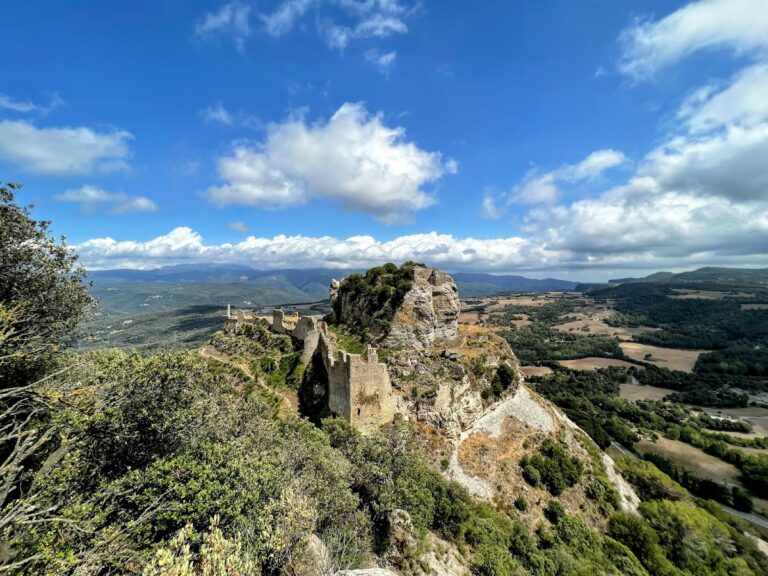
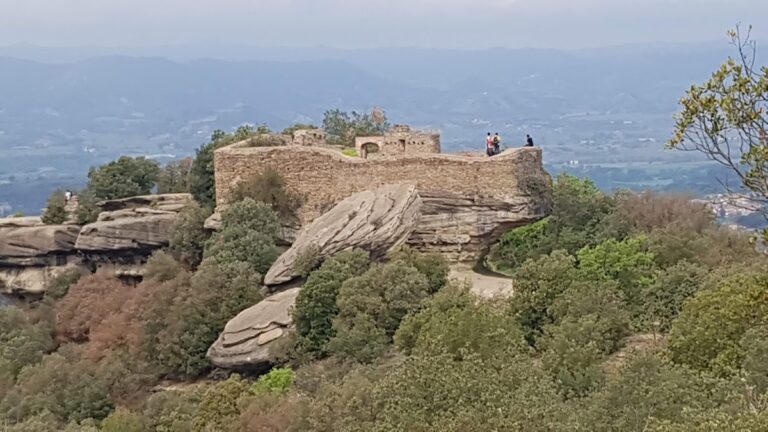
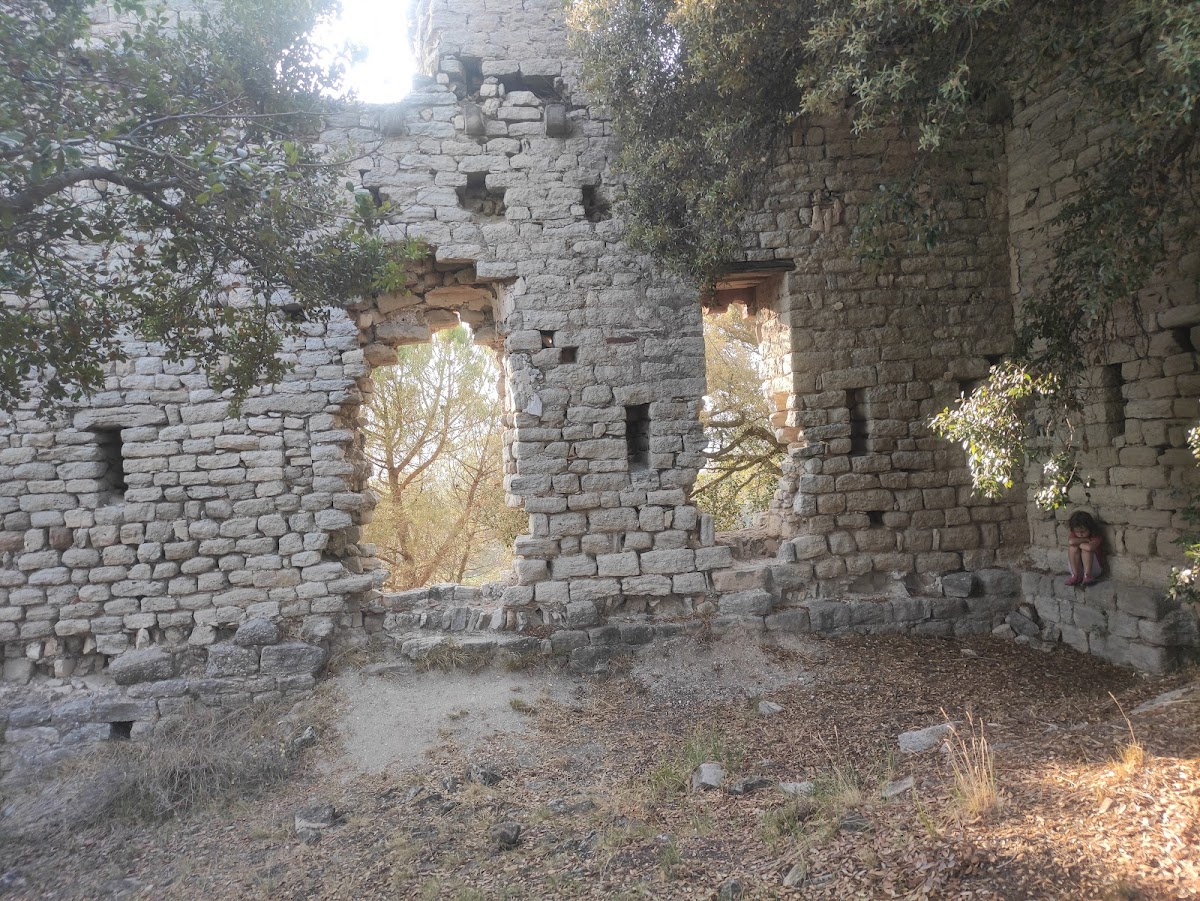
The Castell d’Esparreguera features the remains of a nearly square fortified residence measuring about 15 by 14 meters. The structure was built with roughly cut stone blocks known as ashlar, neatly stacked in horizontal rows to form robust walls nearly one meter thick. These defensive walls stood on the east, south, and west sides, while the north side relied on a steep natural rock escarpment to provide protection.
Present-day remnants include perimeter walls of varying height, with some sections surviving up to the original roof level. Along these walls, the interior faces of the western and eastern sides reveal stone corbels—protruding supports that once held wooden beams and floorboards. Doorways and window openings have been identified, with examples such as an oak lintel crowning one window on the western wall. These architectural details reflect traditional medieval building techniques intended to support multiple floors within the fortified house.
Defensive features are prominent around the lower level, where numerous arrow slits, narrow vertical openings designed for archers, are closely spaced along the façade. Some of these openings can only be seen from inside the ruin, marking their specific use for defense while protecting the garrison.
Surrounding the main building, traces of an outer defensive wall conform to the shape of the hilltop, adding a second layer of protection for the castle. On the east and north sides, the foundational bases and some wall footings remain visible, although large parts of the walls have collapsed on the east, south, and west faces.
The castle’s interior plan has not yet been fully uncovered, as the ruinous state leaves only the peripheral walls clearly defined. Ongoing research, including proposed archaeological investigations, could provide further clarity on the internal layout and more precise dating. Stylistic analysis currently suggests that the castle’s construction belongs to the latter half of the 11th century, situating it within the early medieval fortification traditions of the region.
Nearby sites