Bignor Roman Villa: A Romano-British Villa in West Sussex, England


Visitor Information
Google Rating: 4.6
Popularity: Low
Google Maps: View on Google Maps
Official Website: www.bignorromanvilla.co.uk
Country: United Kingdom
Civilization: Roman
Remains: Domestic

History
Bignor Roman Villa is situated near Bignor in Pulborough, West Sussex, England, on a south-facing greensand ridge close to the Roman road known as Stane Street. The site was established during the Romano-British period, with initial occupation dating back to the late 1st century AD. The earliest structural evidence consists of a timber farm building constructed around 190 AD, indicating the site’s agricultural origins under Roman influence.
By the mid-3rd century AD, the villa underwent significant development with the erection of a stone building comprising four rooms. This phase included the installation of a hypocaust, an underfloor heating system, and an east-facing portico aligned toward Stane Street. Between approximately 240 and 290 AD, the villa was expanded to add further rooms, reflecting increased wealth or status of its occupants.
At the beginning of the 4th century, the villa complex was enlarged substantially with the addition of north and south wings, transforming it into a large courtyard arrangement of about sixty-five rooms. Outlying farm buildings were also established, supporting the villa’s agricultural function. Further enhancements to the north wing occurred between circa 300 and 350 AD, during which the majority of the villa’s renowned mosaics were created. Unlike nearby Fishbourne Roman Palace, Bignor Roman Villa did not suffer abrupt destruction but appears to have experienced a gradual decline in prominence.
The villa was rediscovered in 1811 by George Tupper, a local farmer. Subsequent excavations were led by John Hawkins and antiquary Samuel Lysons, with public access commencing in 1814. Excavations halted in 1819 following Lysons’ death. Minor archaeological work was conducted in 1925 by S. E. Winbolt, and more extensive re-excavations took place between 1956 and 1962 under Sheppard Frere. Further investigations were carried out by Thomas Tupper and colleagues during the 1970s and 1980s. The site remains under the stewardship of the Tupper family and the Bignor Roman Villa Charitable Trust, with ongoing conservation efforts.
Remains
The villa is a large Roman courtyard complex consisting of approximately sixty-five rooms arranged around a central open space. It is constructed primarily of stone and situated on a ridge overlooking Stane Street, about nine miles northeast of the Roman town Noviomagus Reginorum (modern Chichester). The layout reflects a typical Romano-British villa design with residential and agricultural functions.
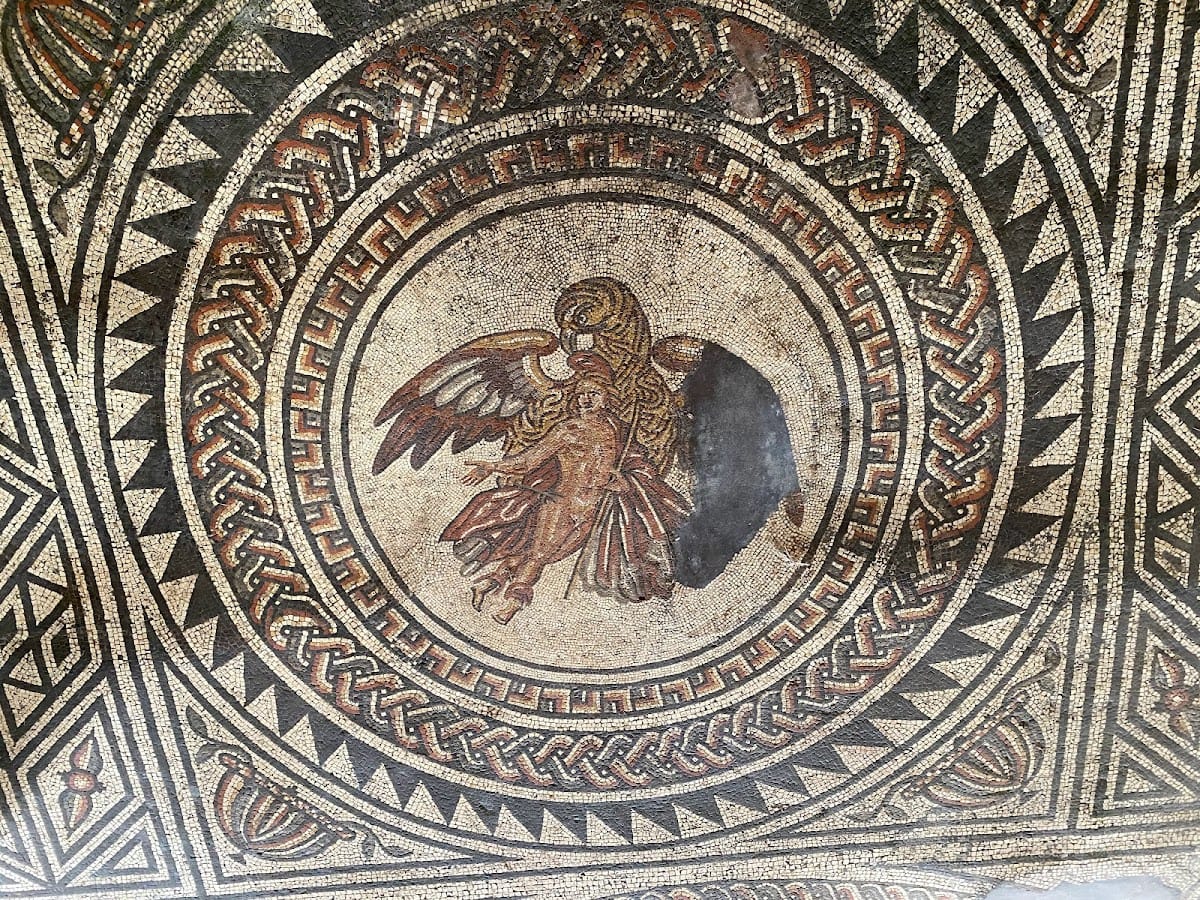
The earliest stone phase, dating to the mid-3rd century AD, includes a four-room building equipped with a hypocaust heating system and an east-facing portico. Later expansions added north and south wings, with the north wing containing the majority of the villa’s elaborate mosaics. These mosaics are exceptionally well-preserved and artistically detailed, particularly in the summer and winter dining rooms. The winter dining room was underfloor heated, demonstrating advanced Roman engineering.
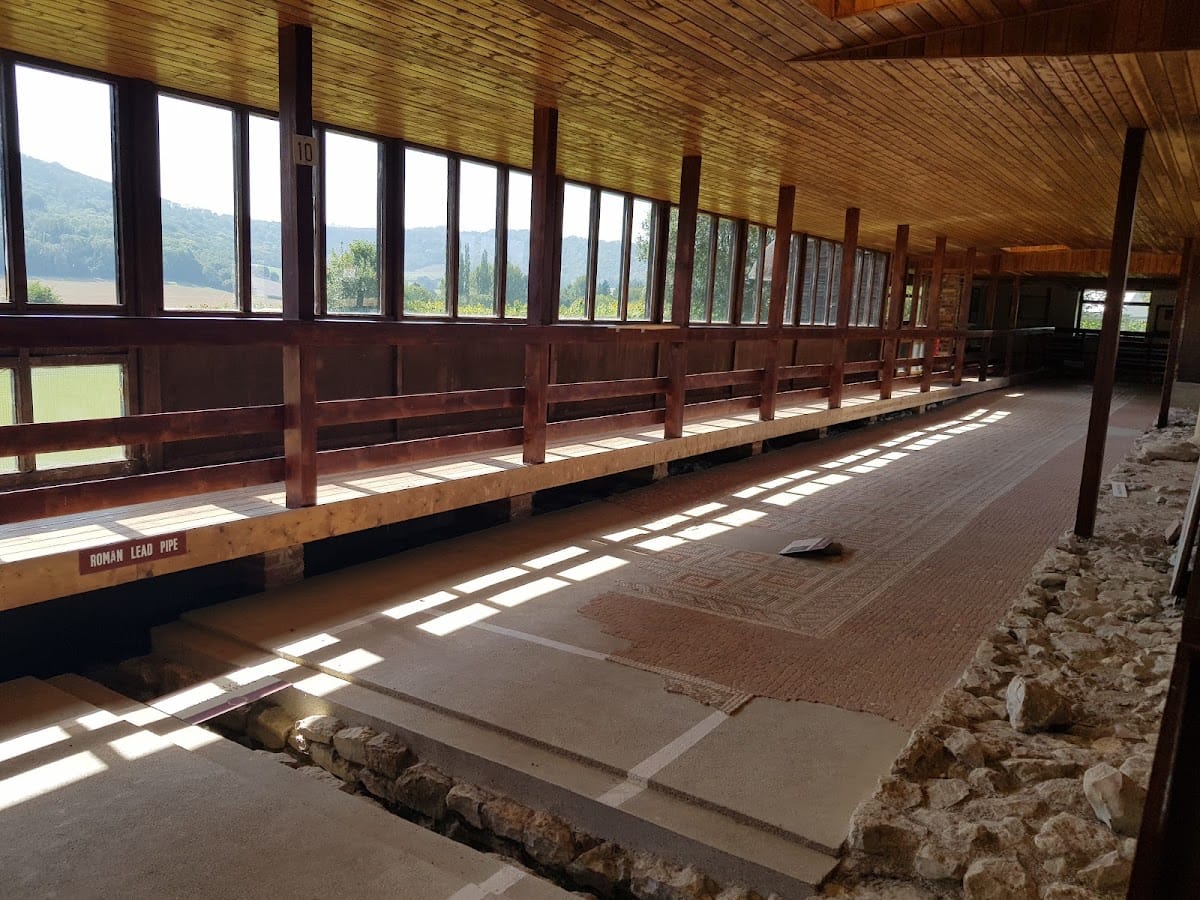
A bathhouse is located to the southeast of the main residential wings, serving the villa’s inhabitants. The north wing features a corridor approximately 79 feet (24 meters) long, decorated with a Greek-key mosaic pattern. This corridor mosaic is noted as the longest of its kind discovered in Britain.
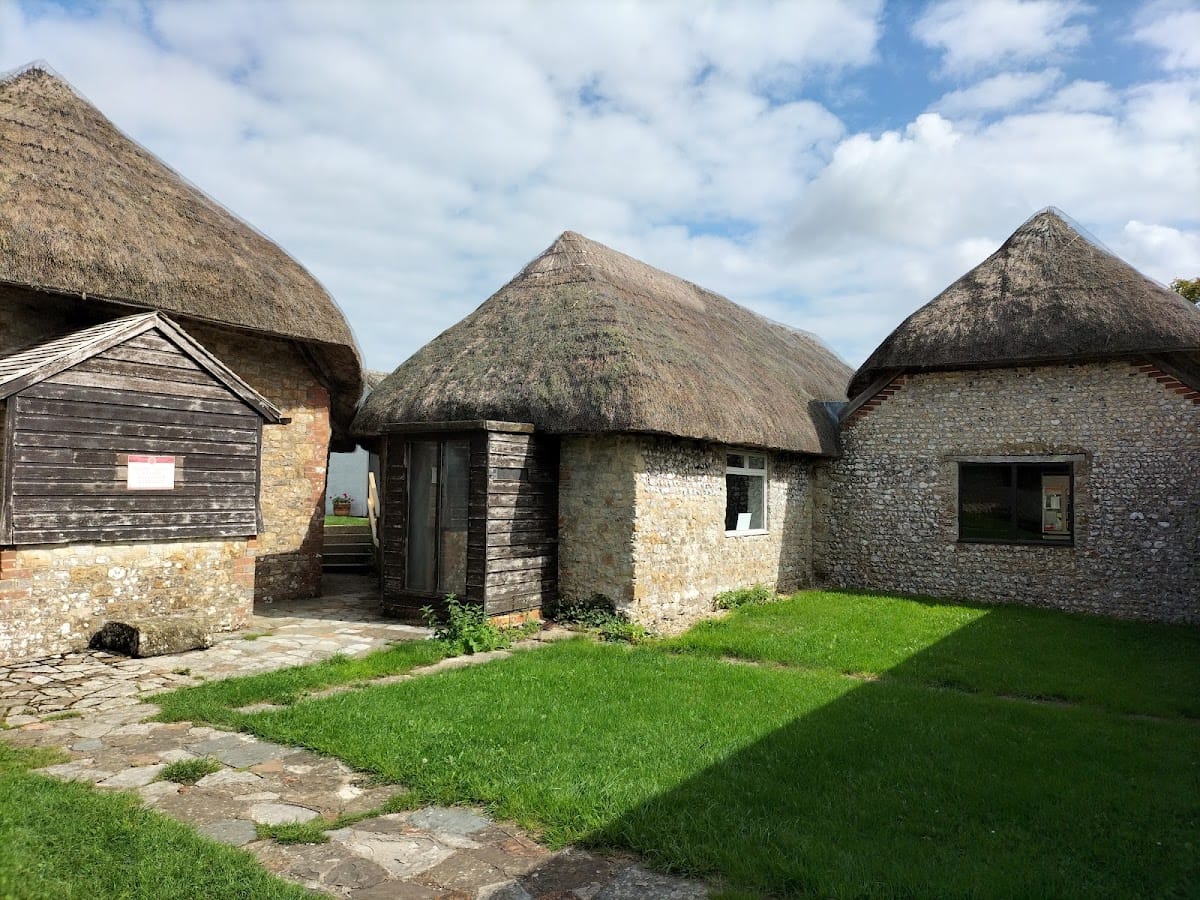
Early protective measures for the mosaics included the construction of flint and thatch brick buildings over them in 1812. Among the finds from the site are personal items such as a ring and brooch uncovered during 19th-century excavations, which indicate the wealth and social status of the villa’s occupants. The remains today include both in situ mosaics and restored architectural elements, preserving the villa’s historical fabric.
Nearby sites