Arundel Castle: A Medieval Fortress and Ducal Residence in England


Site at a Glance
- Rating
- 4.7
- Popularity
- High
- Country
- United Kingdom
- Primary era
- Medieval
- External website
- Open
- Eras represented
- Medieval, Early Modern, Modern
- Civilizations
- English, Norman
- Site type
- Military
- Remains
- Castle
On this page19 sections
History
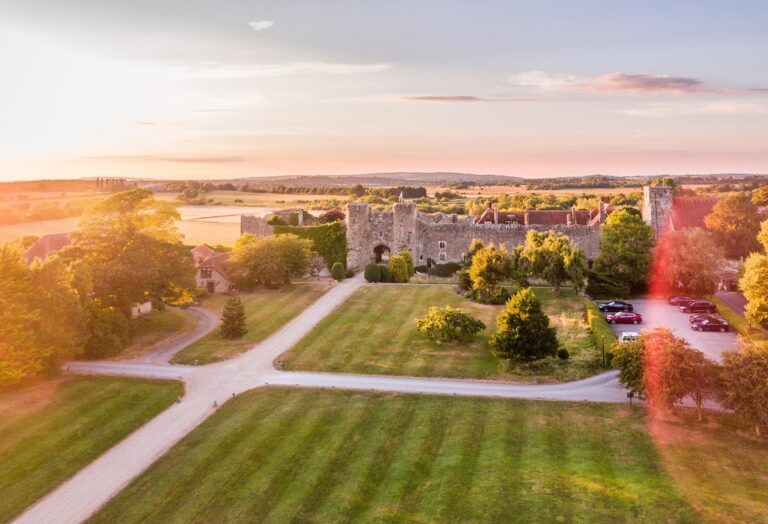
Arundel Castle is a medieval castle in Arundel, United Kingdom, built by the Normans shortly after the Norman Conquest, the takeover of England by William, Duke of Normandy, between 1066 and 1071. Construction began in 1067 as part of a defensive system intended to control the Sussex coast and the route between England and Normandy. The castle occupied an elevated position above the River Arun, which was navigable to the sea when the fortress was founded.
Norman foundation and the d’Aubigny earls
Roger de Montgomery, a cousin of William the Conqueror, received Arundel and extensive estates after guarding Normandy while William campaigned in England. He became associated with the earldom of Arundel, although the first generally accepted creation of the title is attributed to William d’Aubigny in 1138 and was confirmed in 1155.
After Roger de Montgomery’s death, the castle and its lands returned to the Crown. Henry I later bequeathed them to his second wife, Adeliza of Louvain. She married William d’Aubigny in 1138, and William carried out major improvements to the castle. He became Earl of Arundel in 1143 and built a substantial stone enclosure around the principal fortress, strengthening the earlier earth-and-timber defenses.
Arundel became involved in the Anarchy, the civil war between King Stephen and Empress Matilda over the English succession. In 1139, Matilda stayed at the castle after Stephen invited her there while she was asserting her claim to the throne. Stephen eventually captured her but allowed her to travel to the West Country. William d’Aubigny was apparently forgiven and later received the earldom.
William died in 1176, after which the castle again reverted to the Crown. Henry II extensively reorganized it, particularly to provide residential accommodation. Richard I later granted Arundel to William d’Aubigny’s heir. When the last male d’Aubigny heir, Hugh d’Aubigny, died young in 1243, the castle and earldom passed through his sister’s marriage to John FitzAlan.
The FitzAlan inheritance
The FitzAlan family held Arundel until 1580, apart from several temporary confiscations. In 1272, the five-year-old Richard FitzAlan inherited the castle after his father, John FitzAlan, died. Edward I later granted Richard the right to hold two annual fairs and collect taxes. These revenues provided funds for repairing the neglected fortress.
Richard repaired the entrance to the keep and built a tower over the well. His son, Edmund FitzAlan, was executed for taking part in a rebellion against Edward II. The castle was confiscated and granted to Edmund of Woodstock, Earl of Kent. After Edmund’s execution, his wife and children were confined at Arundel. The castle and title eventually returned to the FitzAlan family.
Richard FitzAlan, the tenth Earl of Arundel, fought beside Edward III and Edward, the Black Prince, at the Battle of Crécy. He also commissioned FitzAlan Chapel, which was completed after his death. His daughter Alice married Thomas Holland, Earl of Kent, while Holland’s mother, Joan, had spent part of her childhood confined at Arundel Castle.
The eleventh Earl, Richard FitzAlan, was executed by Richard II, who confiscated his estates and granted them to John Holland, Duke of Exeter. After Holland was executed by Henry IV, the castle and estates returned to the FitzAlans. Thomas FitzAlan, the next earl, married a daughter of John I of Portugal and held the wedding at FitzAlan Chapel.
Confiscation and the Howard succession
The direct male line of the FitzAlans ended with the death of Henry FitzAlan, the nineteenth Earl of Arundel. His daughter Mary married Thomas Howard, fourth Duke of Norfolk, who inherited the castle and estates. Thomas Howard was executed after plotting to marry Mary, Queen of Scots, and the Crown again confiscated Arundel. The property was later returned to the Howard family.
Arundel remained an hereditary residence of the Earls of Arundel and, for more than four centuries, of the Dukes of Norfolk. Its succession was interrupted only by temporary royal confiscations and transfers to other nobles. The castle therefore continued to connect the earldom with the residence and estates associated with it.
Civil War damage and eighteenth-century restoration
During the English Civil War, the seventeenth-century conflict between supporters of the monarchy and Parliament, Arundel was held for the royalist cause. Parliamentary forces besieged the castle from December 1643. They drained an adjoining lake to cut off the garrison’s water supply, and the arrival of artillery made continued resistance impossible. The royalists surrendered on 6 January 1644.
In 1653, Parliament ordered the castle to be dismantled so that it could not be used again as a military stronghold. Parts of the residential buildings were demolished, and the castle was subsequently neglected. Another tradition attributes much of the damage to severe weather.
Thomas Howard, Duke of Norfolk, restored the southern side for occasional residence in 1708. From 1787, Charles Howard, the eleventh Duke of Norfolk, undertook extensive repairs and remodeling. His work aimed to make Arundel a residence and a place for entertaining guests. A tower, or folly, was also built on a hill above Swanbourne Lake by Francis Hiorne as a demonstration of the architect and builder’s abilities to the duke. Shortly before his death in 1815, the duke held a large celebration there for the six-hundredth anniversary of Magna Carta, the 1215 charter that limited royal authority and later became an important symbol in the history of constitutional government.
Victorian rebuilding and modern stewardship
Queen Victoria and Prince Albert stayed at Arundel Castle for three days in 1846. Henry Howard, the thirteenth Duke of Norfolk, remodeled parts of the castle for the visit after earlier interiors had been criticized as dark, cold, and unwelcoming. Their arrival on 1 December was marked by a reception involving the town’s mayor, Edward Howard-Gibbon, and other local dignitaries.
After the royal visit, Henry Fitzalan-Howard, the fourteenth Duke of Norfolk, began another major reconstruction campaign. The work continued until 1900 and was completed under his son, Henry Fitzalan-Howard, the fifteenth Duke. The keep was remodeled, while later work also changed the courtyards and replaced windows to improve the interiors. Much of the complex consequently reflects successive medieval, eighteenth-century, Victorian, and early twentieth-century phases rather than one uniform design. The later rebuilding gave substantial parts of the castle a Gothic Revival character, drawing on medieval forms and historically inspired details.
The sixteenth Duke of Norfolk considered transferring Arundel to the National Trust. After his death in 1975, the seventeenth Duke abandoned the plan and established an independent trust to manage and restore the estate. The castle remains the principal seat of the Dukes of Norfolk. The eighteenth duke also holds the office of Earl Marshal of England, a senior hereditary state position associated with major ceremonial arrangements and heraldic administration. Arundel Castle is a Grade I listed building, the highest category of statutory protection for buildings of exceptional architectural or historic interest in England. During the Second World War, its precinct was occupied by British and Allied forces.
Remains
Fortifications and medieval enclosure
Motte-and-bailey fortress
The earliest castle was a motte-and-bailey fortress, a raised earth mound carrying a fortified enclosure beside one or more enclosed courtyards. At Arundel, the mound, palisade, ditch, and two large baileys formed an earth-and-timber stronghold. The baileys provided substantial refuge for a large force. Parts of the fortress were rebuilt in stone within a few years of the initial construction.
Stone outer enclosure
William d’Aubigny constructed a substantial stone outer enclosure around the principal castle. This work strengthened the defenses and established a durable boundary around the earlier fortress. Later medieval building repeatedly adapted the enclosure to changing aristocratic residential and military requirements.
Keep entrance and well tower
Richard FitzAlan, the eighth Earl of Arundel, reconstructed the entrance to the keep and built a tower over the well. These works formed part of the medieval repair and defensive improvements made during the FitzAlan period. The keep was later reconstructed during nineteenth-century rebuilding, although the older structure was retained because of its age and architectural character.
Residential ranges and courtyards
Matilda’s apartments
Apartments were built specifically for Empress Matilda’s stay in 1139. These rooms are stated to survive within the castle, preserving a physical connection with the period when Arundel became involved in the Anarchy.
Southern residential range
Henry II created major residential accommodation in the southern bailey. The FitzAlan family later rebuilt the southern residential range, replacing its accommodation on the motte. They also strengthened the defenses with a barbican tower and the Beaumont works. The southern side was restored for occasional residence in 1708 and subsequently altered during the eighteenth- and nineteenth-century campaigns.
Library and royal rooms
The library retains the appearance created during Charles Howard’s late-eighteenth-century remodeling, despite later alterations elsewhere in the castle. For Queen Victoria and Prince Albert’s visit in 1846, new royal accommodation was built and decorated with a portrait of the queen and lavish Victorian furniture. The rooms later used by Victoria became part of the family’s residential area. Furniture made for her, including her bed, and a guest book bearing the signatures of Victoria and Albert are displayed at the castle.
Chapel, gardens, and landscape features
FitzAlan Chapel
Richard FitzAlan, the tenth Earl of Arundel, commissioned FitzAlan Chapel. It was completed after his death and later became associated with the wedding of Thomas FitzAlan and a daughter of John I of Portugal. The chapel is traditionally regarded as the burial place of the couple.
Swanbourne Lake folly
Francis Hiorne built a tower, or folly, on a hill above Swanbourne Lake to demonstrate his abilities to the Duke of Norfolk. The structure was connected with the large celebration held shortly before the duke’s death in 1815 to mark six centuries since the signing of Magna Carta.
Gardens and water garden
The castle’s extensive gardens underwent substantial improvement by early 2020 under head gardener and landscape designer Martin Duncan, who had worked there since 2009. The work included creating a wild water garden around a pond. These gardens form part of the grounds shaped by the castle’s later residential and landscape history.