Château de la Rochebeaucourt: A Historic Castle Complex in France
Site at a Glance
- Rating
- 3.9
- Popularity
- Low
- Country
- France
- Primary era
- Modern
- Eras represented
- Early Modern, Modern
- Civilizations
- French
- Site type
- Domestic
- Remains
- Castle
On this page16 sections
History
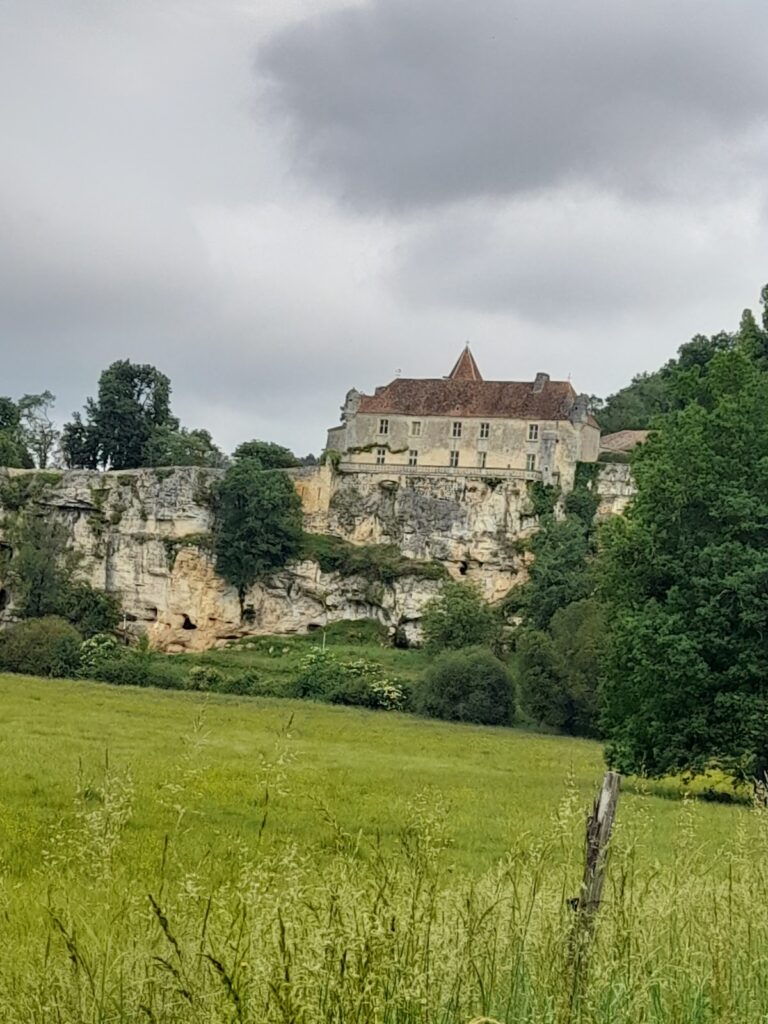
Château de la Rochebeaucourt is a historic castle complex in Combiers, France, on a rocky promontory above the Nizonne at its confluence with the Manore. Four successive constructions occupied the site, which lies across the communes of Combiers and Édon on the boundary with Dordogne, opposite La Rochebeaucourt-et-Argentine. The later castles stood beside a former feudal road linking Angoulême and Périgueux.
Medieval stronghold and the Hundred Years’ War
In the ninth century, the Villebois family held a large square tower overlooking the road. Its position gave the family control of an important route through the area. In the thirteenth century, the La Rochebeaucourt family built a second castle on the other side of the road, creating a larger defensive complex.
The stronghold was drawn into the Hundred Years’ War, the prolonged conflict between the English and French crowns from the fourteenth to the fifteenth century. Ytier de Villebois refused to open the castle to the English in 1345. Two squires reportedly surrendered it to them in 1349, but Ytier recovered the stronghold during the Angoulême revolt in 1372 and drove out the English garrison.
Renaissance transformation
The castle was altered in the fifteenth century by the insertion of mullioned windows, which divided openings into sections with vertical stone members. During the sixteenth century, François de La Rochebeaucourt ordered the large square tower to be demolished. Terraces were established and an orangerie, a building for sheltering citrus trees and other sensitive plants, was constructed. Charles IX, king of France from 1560 to 1574, stayed at the château in 1565.
Revolutionary and nineteenth-century changes
The orangerie had deteriorated by 1790, when its ceiling was described as broken and fallen in several places. In May and June 1792, furnishings from the château were sold at the request of a guardian acting for a minor. The estate manager’s detailed description from the same period records a substantial residence with two flanking towers, a first-floor chapel, a fine staircase, and numerous heated rooms.
Pauline de Tourzel, daughter of the duchess of Tourzel, married Alexandre Galard de Béarn, then owner of the château, in 1797. She lived there until her death in 1839. Her husband commemorated her with a neoclassical triumphal arch in the park, dedicated to her memory and virtue.
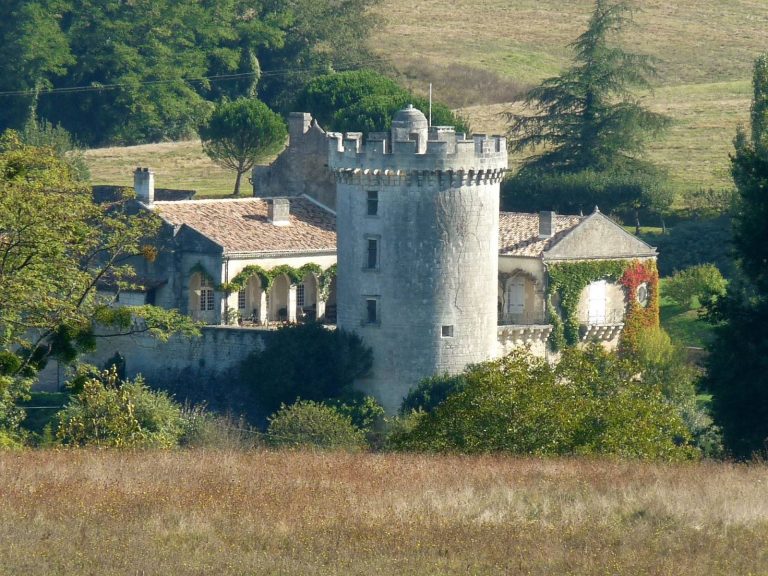
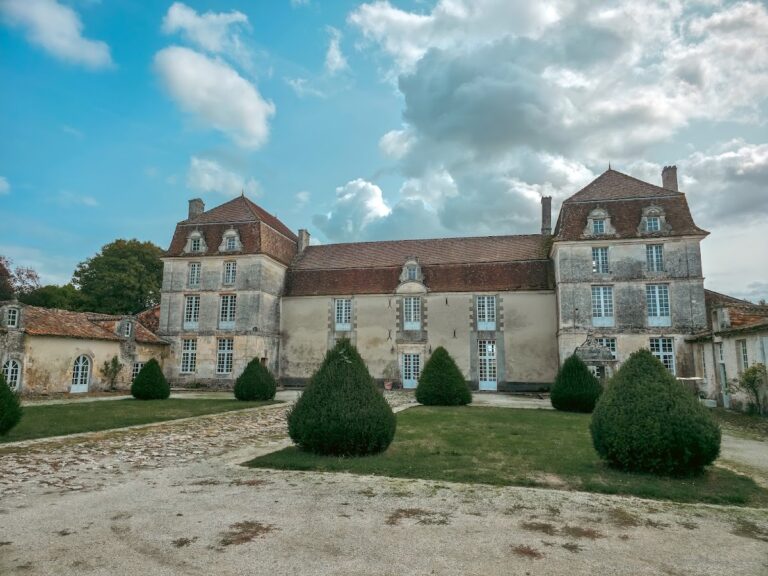
In 1850, the surviving residence was flanked by round towers with crenellations and machicolations, projecting openings through which defenders could drop objects or liquids onto attackers. The towers were topped by small conical pepper-pot roofs. Between 1853 and 1859, Louis-Hector de Galard de Brassac de Béarn, a diplomat and senator of the Empire, had this château demolished and commissioned a replacement from the Parisian architect Pierre-Charles Dusillion and the Angoulême contractor Nicolas. He later brought a lawsuit against Nicolas over defective workmanship. The Galard de Béarn family retained ownership until 1892.
Second Empire château and wartime destruction
The replacement building was erected in the Renaissance Revival style during the Second Empire, the French imperial regime of Napoleon III from 1852 to 1870. German forces requisitioned it during the Second World War, and it accidentally burned on 5 February 1941. The fire reduced the château to ruins, leaving its monumental substructures and the orangerie as the principal surviving elements.
Château de la Rochebeaucourt was listed as a historic monument in France in 1990, a heritage-protection status placing it within the country’s historic-monument system. In 2021, the château’s new owner gave the park to the commune of Combiers for adaptation and public opening. The park had reportedly not been open to the public since the seventeenth century.
Remains
The surviving remains occupy a rocky promontory on the right bank of the Nizonne, overlooking its meeting with the Manore. The Nizonne forms the departmental boundary between Charente and Dordogne, while La Rochebeaucourt stands on the opposite bank. The principal architectural remains are monumental substructures set against the rock, together with a covered passage, decorated rooms, the orangerie, and an extensive park shaped by canals, cliffs, paths, and former fish-farming basins.
Castle substructures and access
Monumental substructures
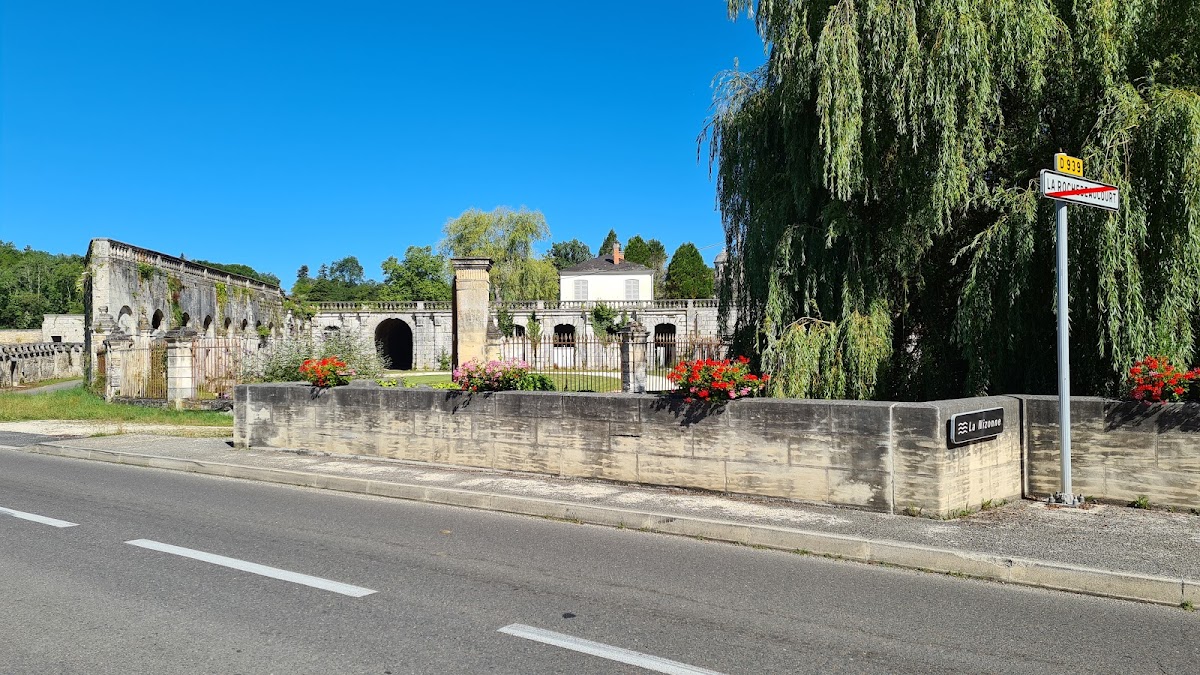
The main surviving substructure follows an L-shaped plan. Its arcades have been closed, forming the monumental base of the later château against the rocky promontory. These remains belong to the physical framework that survived the destruction of the nineteenth-century replacement.
Covered carriage passage
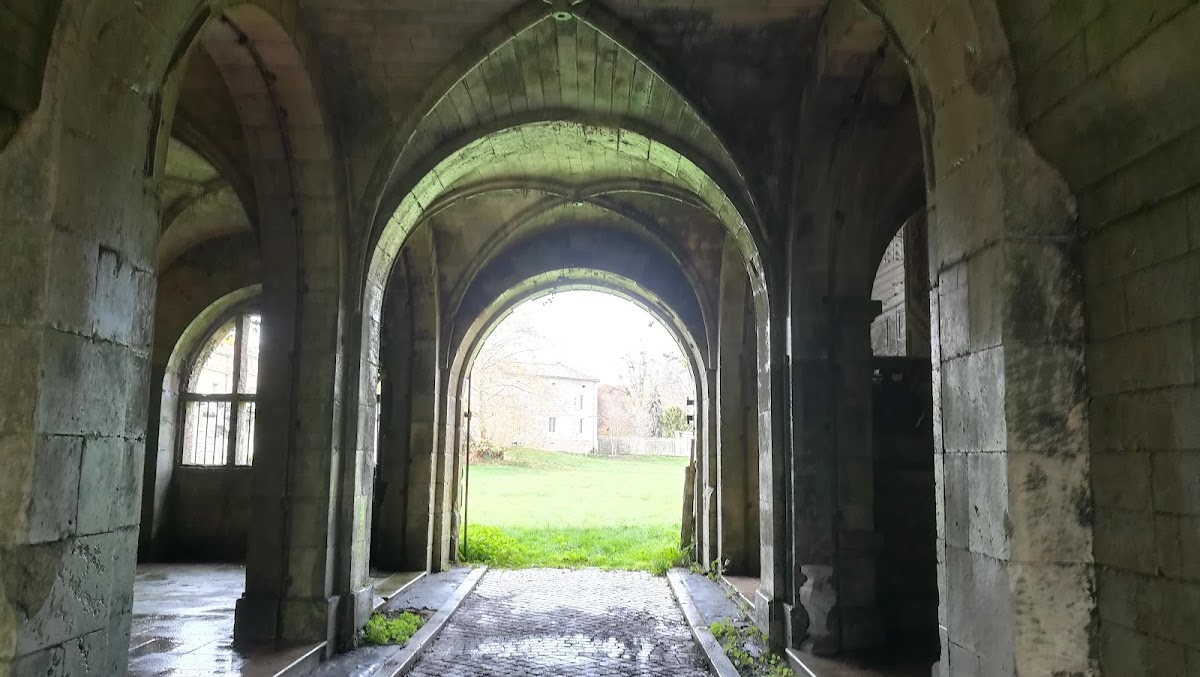
A covered carriage passage runs beneath the terrace, allowing movement downhill under shelter. It leads to the staircase that provided access to the château. Renaissance Revival decoration remains on the passage walls, linking this surviving circulation space to the nineteenth-century building campaign.
Sculpted rooms
A passage leads from the surviving circulation areas to rooms decorated with sculptures dating from the late sixteenth century. These sculptures preserve a connection with the Renaissance phase of the site, when François de La Rochebeaucourt reshaped the castle’s grounds and buildings.
Orangerie and water features
Orangerie
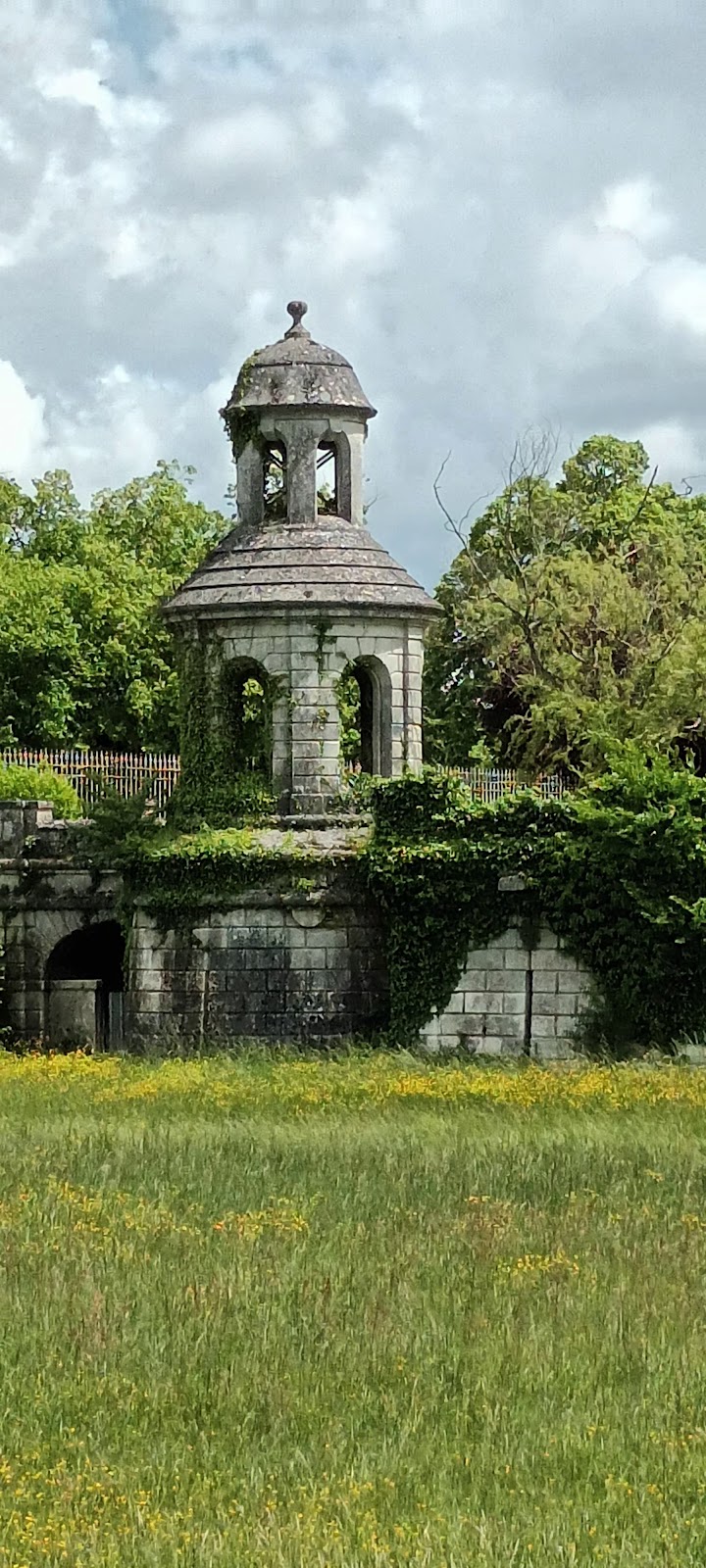
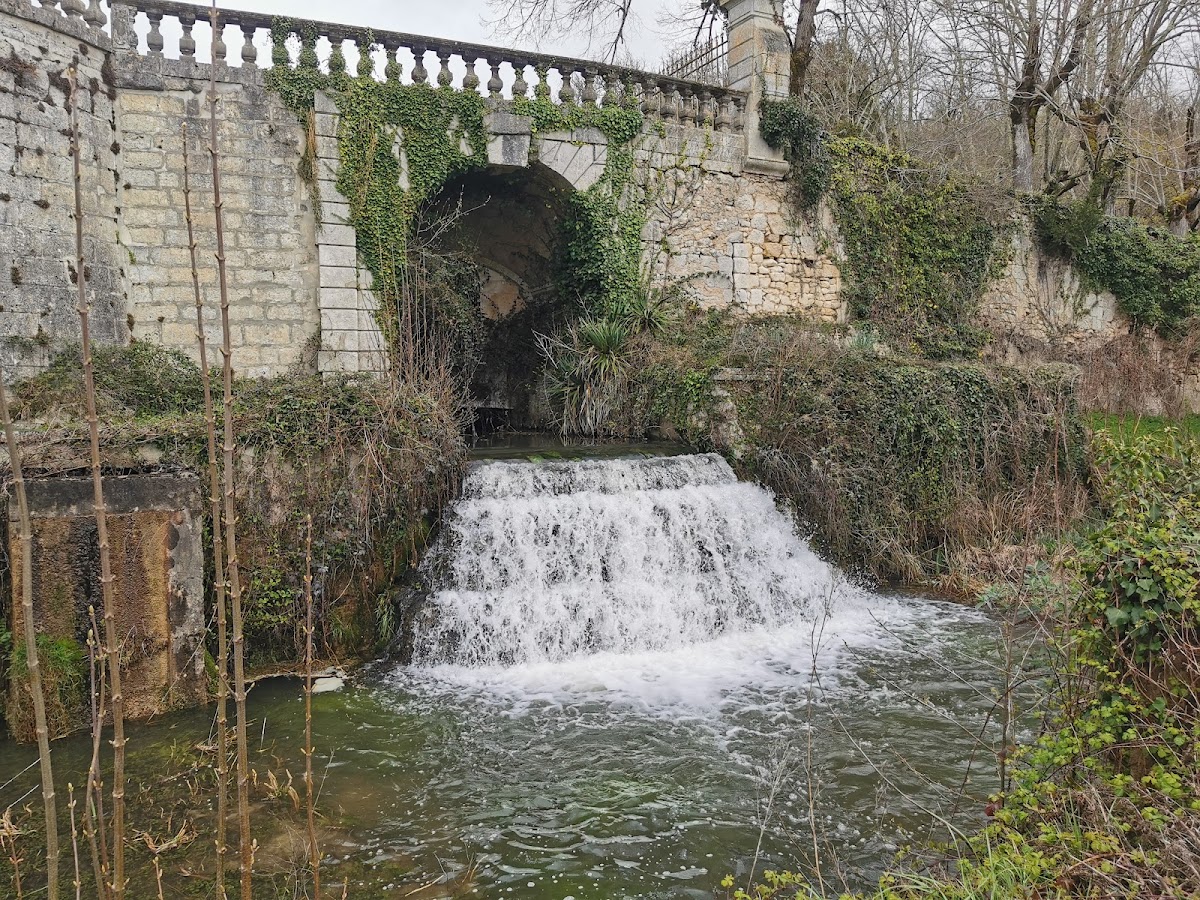
The surviving orangerie dates from the sixteenth-century transformation associated with François de La Rochebeaucourt. Its surrounding features include former fountains, channels fitted with overflow spouts, and a basin. Together, the building and waterworks form a distinct group within the surviving grounds.
Park and landscape features
Canal, cliff, and paths
The English-style park covers nine hectares and dates from the Restoration period, when the Bourbon monarchy was restored after Napoleon’s fall, especially between 1814 and 1830. A large canal borders one side of the park. It supplied pumps and an electrical generator. A cliff containing caves borders the other side, and winding walking paths cross this part of the grounds.
Fish-farming basins
Former fish-farming basins lie between the Nizonne and the canal. Trout could still be caught there during the 1960s, showing the continued association of these waterworks with the productive landscape of the estate.
Allée Verte and Arch of Virtue
The park’s Allée Verte was planted in 1826 with plane trees alternating with Italian poplars. A neoclassical triumphal arch, built in 1840 and known as the Arch of Virtue, commemorates Marie Élisabeth Pauline du Bouchet de Sourches de Tourzel, who died in 1839. Inscriptions celebrating her cover the structure.
Landscape-garden plans drawn in May 1861 by Rousseau of Bordeaux appear not to have been executed. They nevertheless belong to the documented history of the park’s design and its nineteenth-century development.