Wedderburn Castle: An 18th-Century Scottish Estate Near Duns
Visitor Information
Google Rating: 4.8
Popularity: Very Low
Official Website: www.wedderburncastle.com
Country: United Kingdom
Civilization: Unclassified
Site type: Military
Remains: Castle

History
Wedderburn Castle is situated near the town of Duns in Scotland, United Kingdom. It was constructed in the 18th century as the family residence of the Home of Wedderburn lineage, a branch of the Home family, who are historically connected to the Earls of Home.
The origins of the estate date back to the early 15th century when the barony of Wedderburn was under the feudal control of the Earls of Douglas. Around 1413, they granted the land as a feu, a form of hereditary lease, to Sir David of Home. Over time, by the mid-16th century, the Homes had secured the superiority of Wedderburn directly from the Scottish Crown, firmly establishing their ownership. Throughout the centuries, various branches of the Home family added the name “Home” to their surnames, reflecting their connection to the estate.
Between 1771 and 1775, the present Wedderburn Castle was built intentionally on the site of an earlier tower house known by the same name, which dated from at least the 17th century. This earlier structure was eventually demolished in the early 19th century, leaving behind merely a heraldic panel as a physical reminder. The new house was designed by the architect brothers Robert and James Adam, noted for their distinctive style, with construction overseen locally by James Nisbet of Kelso. The project was commissioned by Patrick Home of Billie, who had already completed another significant house, Paxton House.
The castle remained in the Home family’s hands for many generations. From 1898 until 1973, it was leased to the Arbuthnot family. Following this period, it was owned by Georgina Home Robertson, and in more recent times, the property has passed to David Home Miller and Catherine Macdonald-Home. During the Second World War, Wedderburn Castle served a different role as a naval hospital, contributing to the wartime effort through medical use.
Recognized for its cultural and historical significance, Wedderburn Castle, along with its grounds and associated buildings, has been designated as a Category A listed site. The surrounding landscape is also included in Scotland’s Inventory of Gardens and Designed Landscapes, highlighting the estate’s valued heritage.
Remains
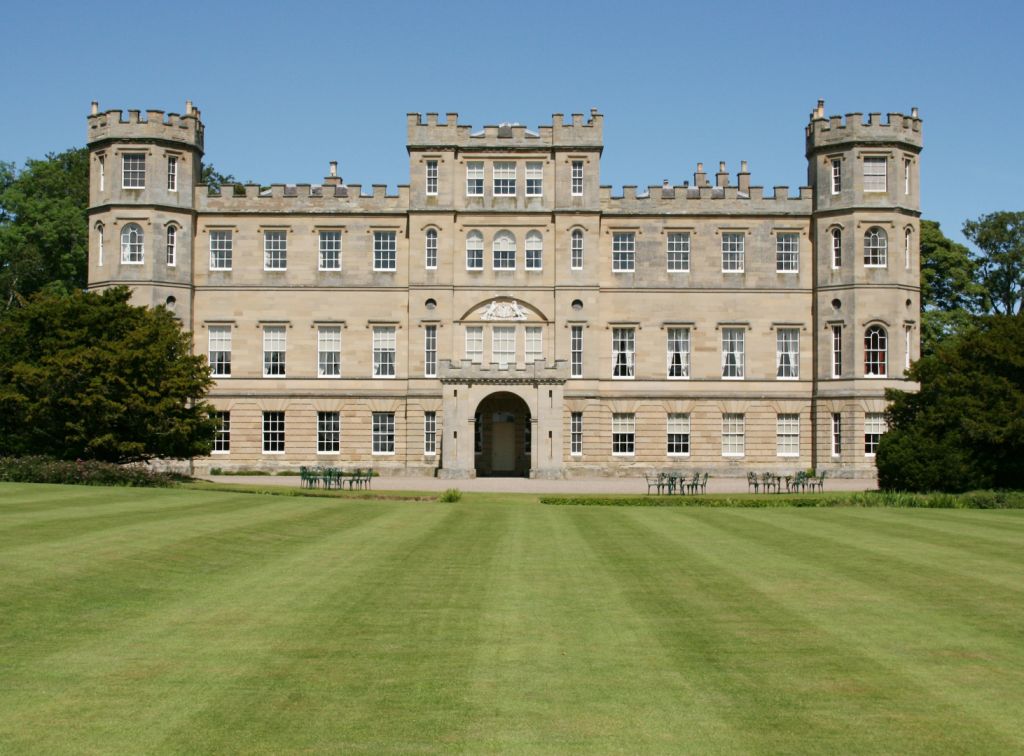
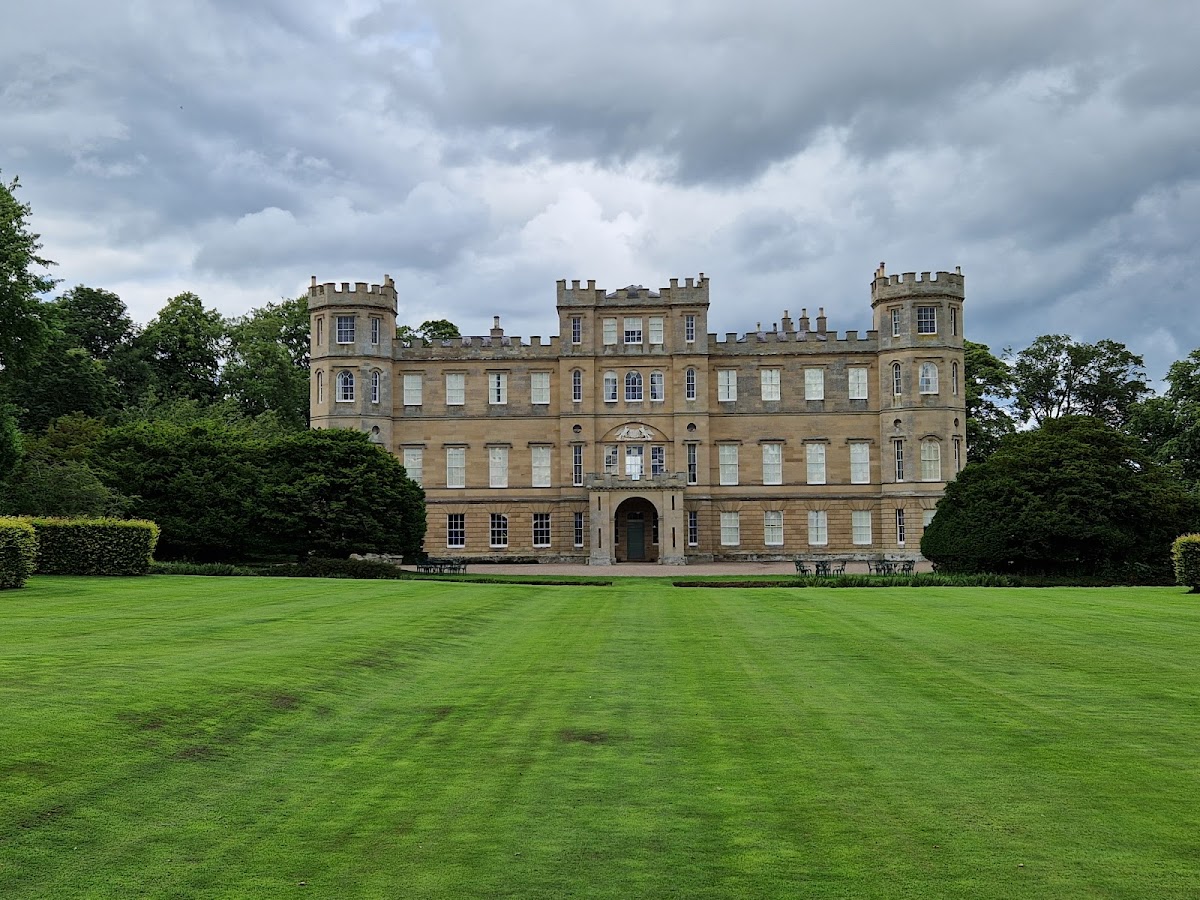
Wedderburn Castle is built around a rectangular courtyard, accessed through an archway at the rear, which occupies the location of the former tower house. The house itself rises three storeys and features battlemented elevations typical of the Adam brothers’ castle style, which often combined classical symmetry with fortified elements. Although the façade appears balanced and orderly, this masks the practical layout inside, where spaces are arranged around the central courtyard.
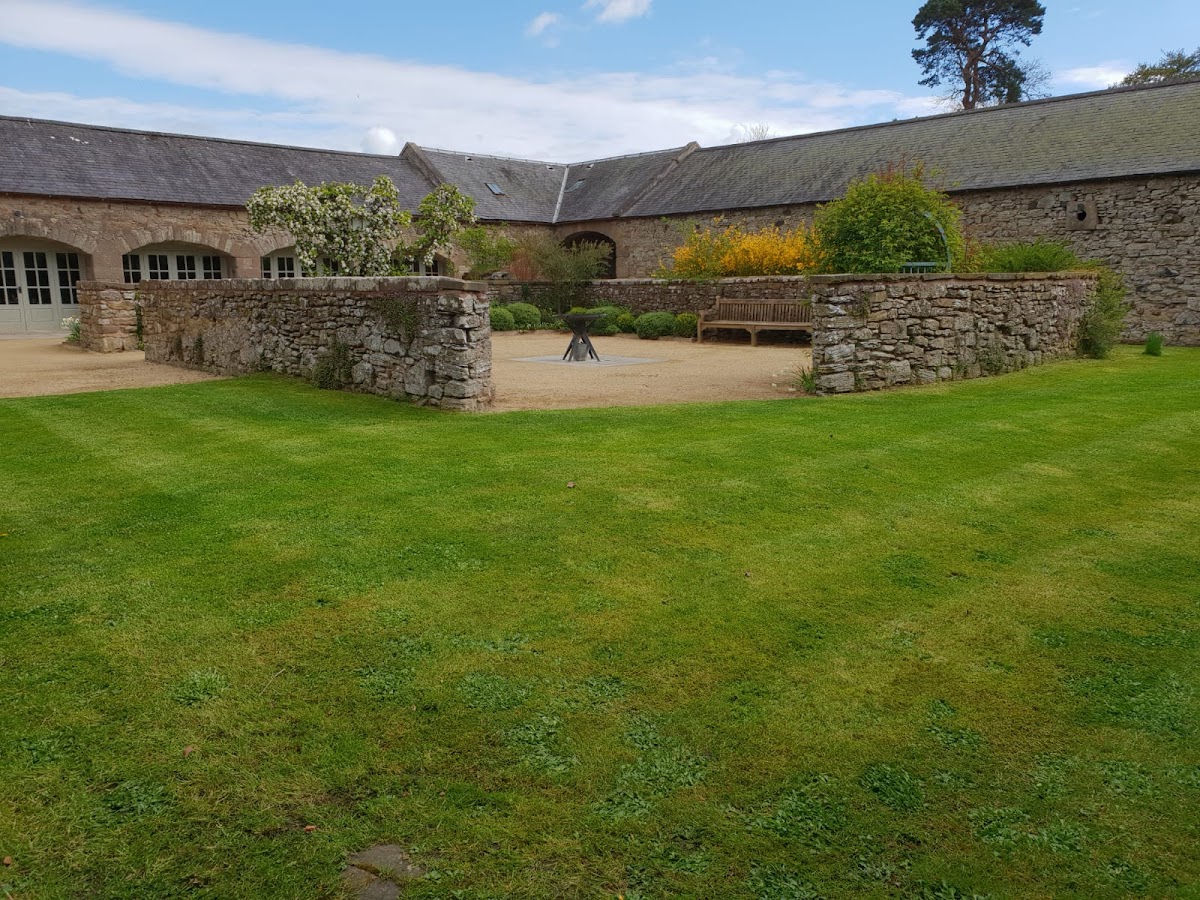
The estate’s approach is marked by the north Lion Gate, dating from 1794 and designed by architect John Plaw. This entrance provides a grand entry point, leading along a drive that extends from the West Gate. The West Gate is notable for its composition of screen walls and gabled lodges, forming a formal boundary to the estate. Near these gates stand the 18th-century stables, arranged around a square courtyard and entered through a pedimented archway typical of the period’s architectural style. These former stables have undergone a change of use in modern times and currently serve as a barn for events.
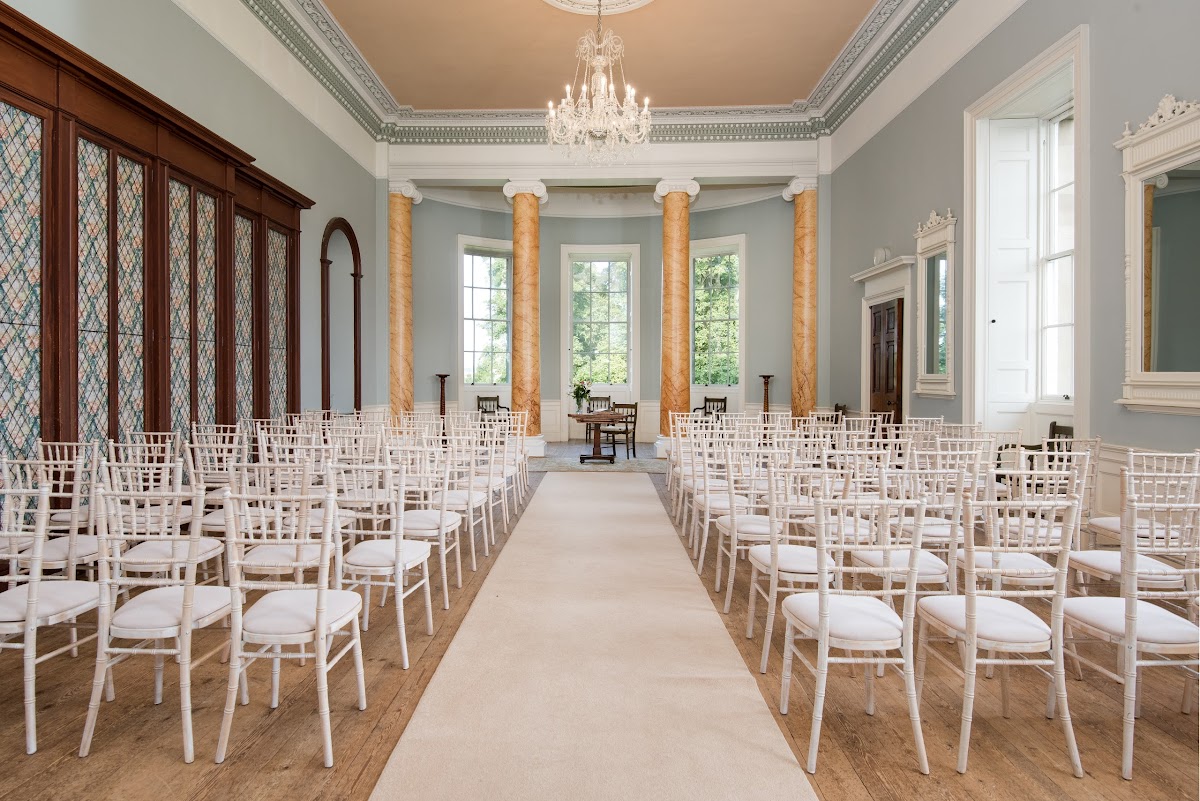
Inside the castle, visitors encounter a large porch crowned with the coat of arms of the Home of Wedderburn family, signaling the building’s lineage. This entrance leads to a double staircase featuring an iron balustrade, which carries visitors upward to a balcony. Beyond this balcony lies a long gallery designed to connect the drawing room and dining room, emphasizing the flow between social spaces in the house. Above the hall opposite the front door is a minstrel gallery, a raised platform traditionally used by musicians. This gallery also connects the main reception rooms, reinforcing the emphasis on entertainment in the castle’s design.
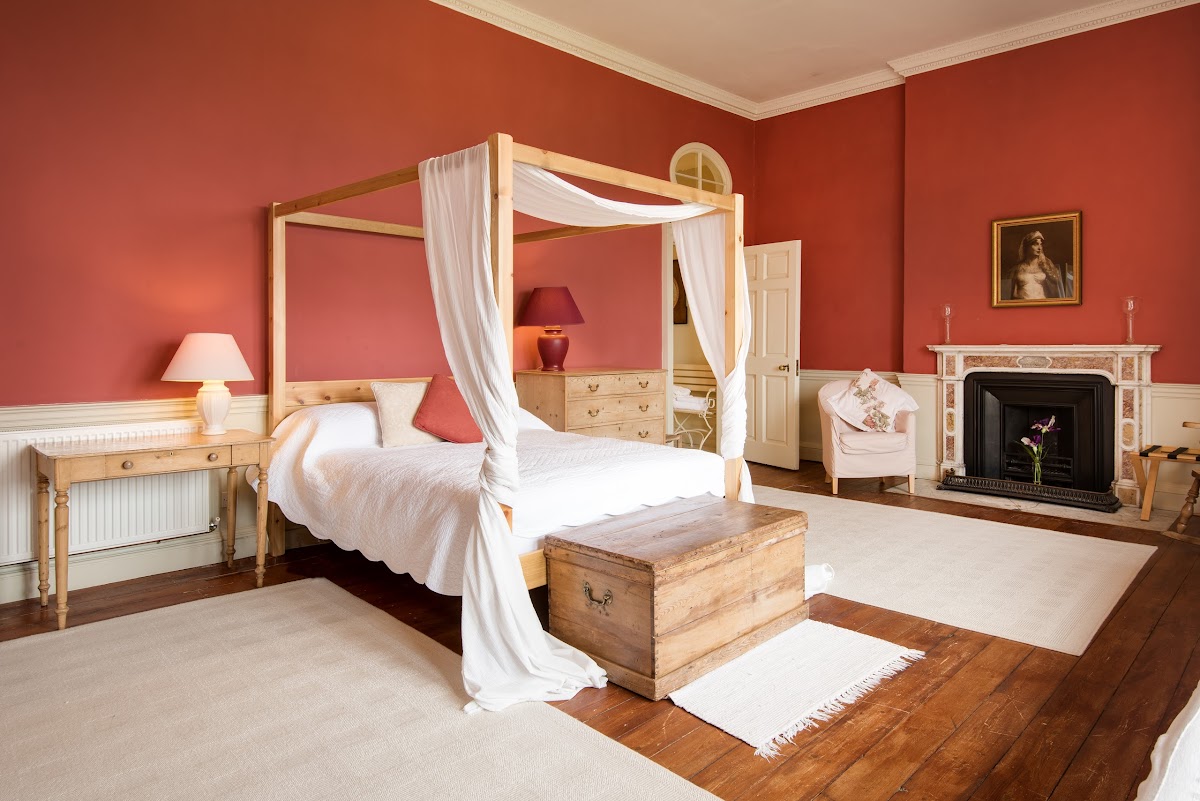
To the right of the staircase, the layout includes the drawing room and a morning room, the latter originally serving as a smoking room. Beyond these lies the ballroom, an important space for social gatherings. On the left side, the dining room occupies its place along with a staircase providing access to the bedrooms above. The ground floor also accommodates the kitchen and additional bedrooms, exhibiting the practical functions needed in a country house of this stature.
Among the castle’s interior decorations, several chimneypieces are distinguished for their craftsmanship. The most notable is found in the drawing room and features white Carrara marble combined with other materials. This mantlepiece was created around 1774 in the style of the Italian artist and designer Piranesi, a detail that underlines the sophisticated artistic taste in the castle’s finishing.
Together, the castle, its gates, boundary walls, and associated outbuildings form an ensemble designated as a Category A listed monument. The grounds have been officially recognized for their designed landscape, which complements the architectural heritage of the buildings, preserving an integrated example of 18th-century country estate planning.