Bonkyll Castle: A Medieval Fortress and Feudal Seat in Scotland
Site at a Glance
- Rating
- 5
- Popularity
- Very Low
- Country
- United Kingdom
- Primary era
- Medieval
- Eras represented
- Medieval
- Civilizations
- Kingdom of Scotland
- Site type
- Military
- Remains
- Castle
On this page5 sections
History
Bonkyll Castle was a medieval stone fortress in the United Kingdom, near Duns in the Scottish Borders, built in the eleventh century and used from the eleventh to the sixteenth century. It stood at the centre of the Honour, or major feudal estate, of Bonkyll and served as the principal seat of that lordship. Built as a castle of enceinte, a fortified complex enclosed by a continuous defensive wall, it was once described as a very powerful fortress.
The de Bonkyll Estate
The castle originally belonged to the de Bonkyll family, whose name came from the estate. Their heraldic arms featured three buckles, a visual pun on the family name. Bonkyll was the caput, or principal administrative centre, of the surrounding barony, a feudal territorial lordship.
The final male heir of the family was Sir Alexander de Bonkyll. His daughter and heiress, Margaret de Bonkyl, married Sir John Stewart, who died in 1298. The castle then entered the Stewart family. It was slighted during the First War of Scottish Independence, the conflict in which Scotland resisted English rule under Edward I, and Margaret reconciled with Edward in 1304. The English king subsequently restored the Bonkyll lands to her.
The Stewart and Angus Inheritance
After Margaret’s death in 1300, her son Sir Alexander Stewart of Bonkyll inherited the estate and title, becoming the first Stewart of Bonkyll. This junior branch of the Stewart family later produced the Stewart of Darnley line, the paternal family of James VI of Scotland, who became James I of England in 1603.
In 1328, Sir Alexander’s son John Stewart married Margaret de Abernethy, heiress to the Lordship of Abernethy. Robert I of Scotland, also known as Robert the Bruce, created John Earl of Angus in 1329. The new earl received extensive territories in Berwickshire, Angus, and Kinross-shire.
John’s son Thomas Stewart, 2nd Earl of Angus, died in 1361 without a male heir. His only child, Margaret Stewart, inherited the Earldom of Angus, the Lordship of Abernethy, and Bonkyll. Her relationship with William Douglas, 1st Earl of Douglas, produced George Douglas, who later became 1st Earl of Angus. After Margaret’s death in 1417, Bonkyll passed to George and remained with the Douglas Earls of Angus and their descendants until the late eighteenth century, when ownership passed to the Earls of Home.
Late Medieval and Sixteenth-Century Use
George Douglas, Master of Angus and lord of the barony of Bonkyll, issued several charters while living at the castle. The property later passed to his widow, Elizabeth Drummond, as part of her jointure, the property assigned to a widow for her support.
Bonkyll subsequently belonged to Margaret Tudor, Countess of Angus, and was held by George Douglas of Pittendreich, who had served as bailie of Bonkyll since 1514. A bailie was an official responsible for administering a feudal jurisdiction. Margaret Tudor’s husband, Archibald Douglas, 6th Earl of Angus, was at Bonkyll on 28 November 1522. In August 1523, the Earl of Surrey proposed that Margaret Tudor could come to Bunkle with her silver plate and jewels while pretending to intercede for people in the Scottish Borders, allowing him to convey her safely to England.
By 1593, the poet and laird Patrick Hume of Polwarth was bailie of Bonkyll on behalf of James VI. He was ordered to use rents from houses in the mains of Bonkyll to pay the wages of the king’s huntsman, John Acheson. The castle was already described as ruined during the sixteenth century. A Berwickshire rhyme connects Bonkyll with the nearby castles of Billie and Blanerne, associating their construction with the time of David I and their later reduction to rubble with the Rough Wooing, the Anglo-Scottish conflict of 1542 to 1551.
The surviving remains are protected as a scheduled monument.
Remains
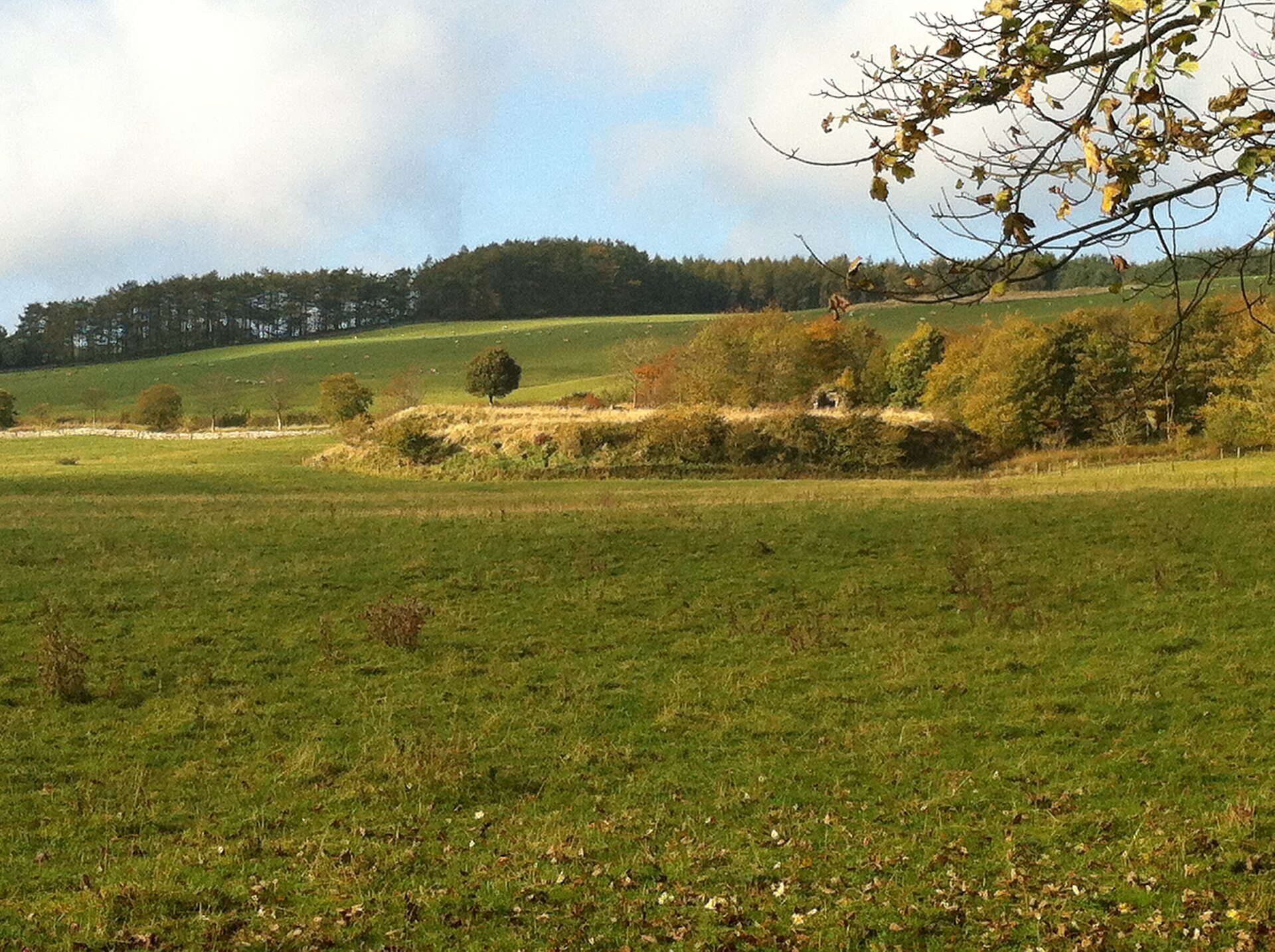
Bonkyll Castle was built of stone on a motte, a raised earthwork that supported or formerly supported a fortified building. Its enceinte enclosed the castle with a continuous defensive wall. The site lies in historic Berwickshire, about four miles north of Duns and four miles south of Grantshouse.
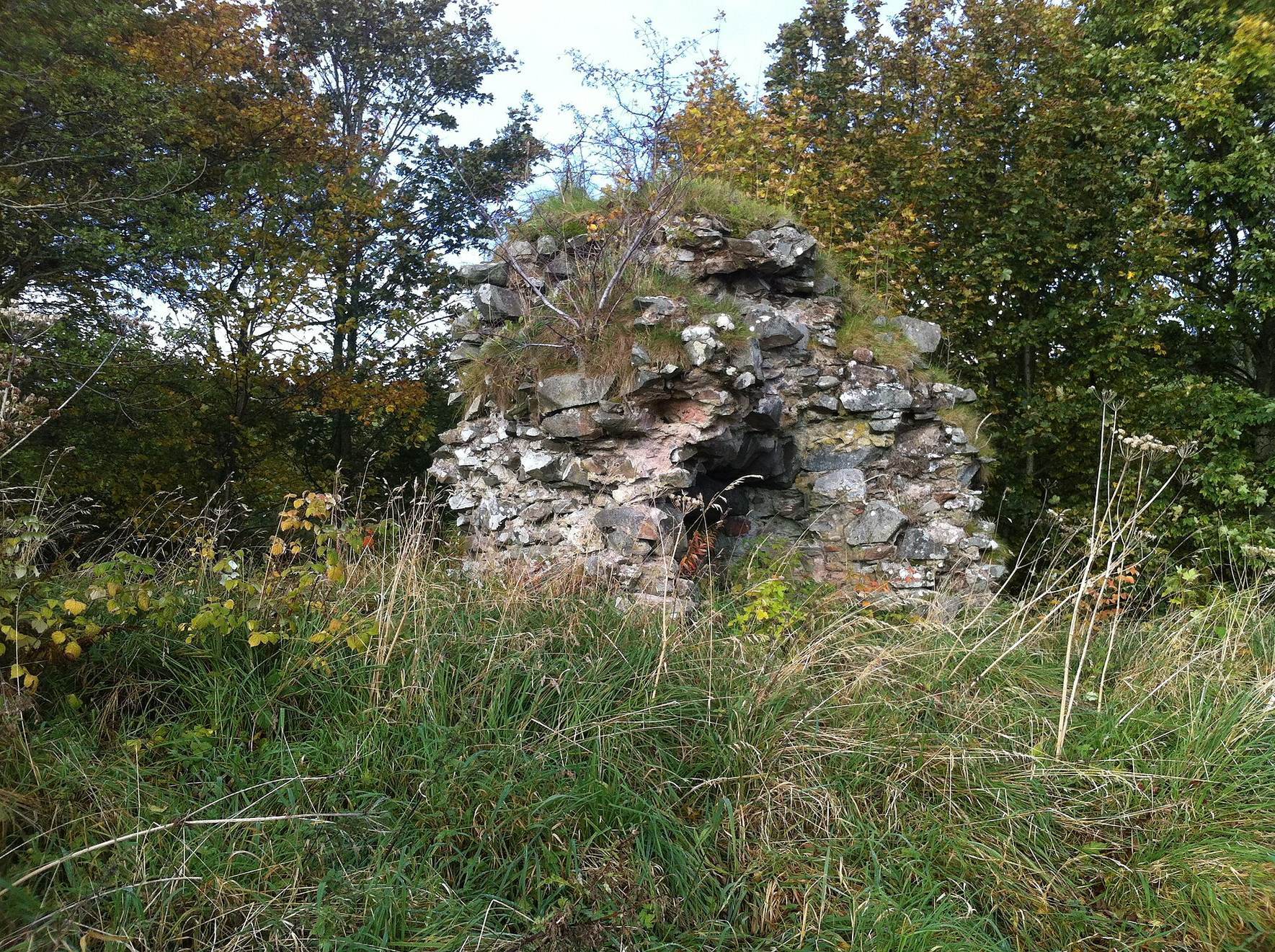
Very little of the fortress survives. The principal physical remains are the motte and a small section of curtain wall, the enclosing defensive wall between towers or other strong points. Both are ruined, and the surviving masonry stands approximately 1 to 3 metres high.