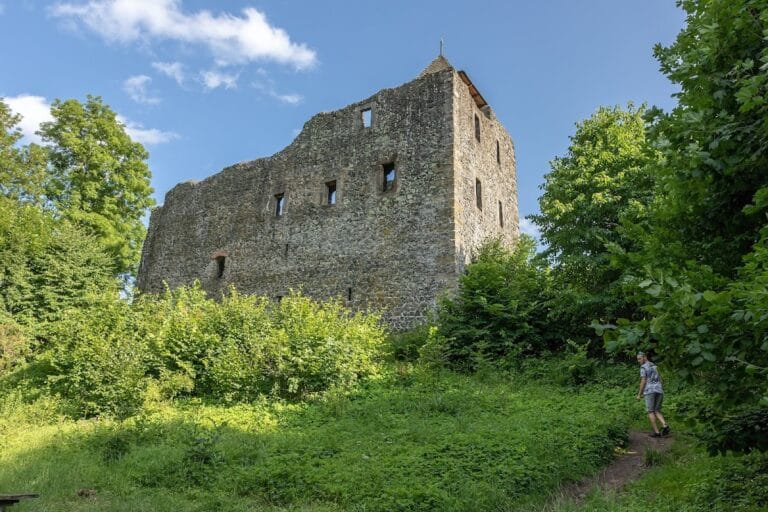
Svojkov Castle: A Medieval Fortress in the Czech Republic

Visitor Information
Google Rating: 4.6
Popularity: Low
Google Maps: View on Google Maps
Country: Czechia
Civilization: Medieval European
Remains: Military

History
Svojkov Castle is located in the municipality of Svojkov in the modern Czech Republic. It was constructed by local medieval nobility, reflecting the fortress-building practices of the Bohemian lands during the Middle Ages.
The castle is first mentioned in written records dating back to 1355, and by 1370 its known owner was Ješek, who was likely affiliated with the Berk family from Dubá. In the early 15th century, ownership passed to Jan of Chlum, noted historically for his role as one of the escorts of the religious reformer Jan Hus to the Council of Constance. Around the year 1437, Ctibor of Kačice acquired Svojkov, and from that time, his family adopted the surname “of Svojkov,” signaling their association with the castle.
During the mid-15th century, specifically between 1444 and 1445, the castle fell into the hands of Mikeš Pancíř of Smojno, a knight notorious for his activities as a robber. His control provoked a military response from the Lusatian towns nearby, whose forces captured and set fire to Svojkov Castle in retaliation. This campaign also led to the destruction of the neighboring Sloup Castle, illustrating the violent conflicts in the region.
After being burned down, the castle remained in ruins and was ultimately abandoned by around 1530. Nearly two centuries later, the lands around the former fortress were purchased by Count Josef Jan Maxmilián Kinský. In 1780, efforts were undertaken to restore parts of the castle ruins, embracing the romantic style popular at that time. Additions included a wooden staircase and a summer pavilion; however, the pavilion no longer survives today. Since that time, the remnants of Svojkov Castle have been recognized for their cultural value and have undergone preservation efforts to maintain their condition.
Remains
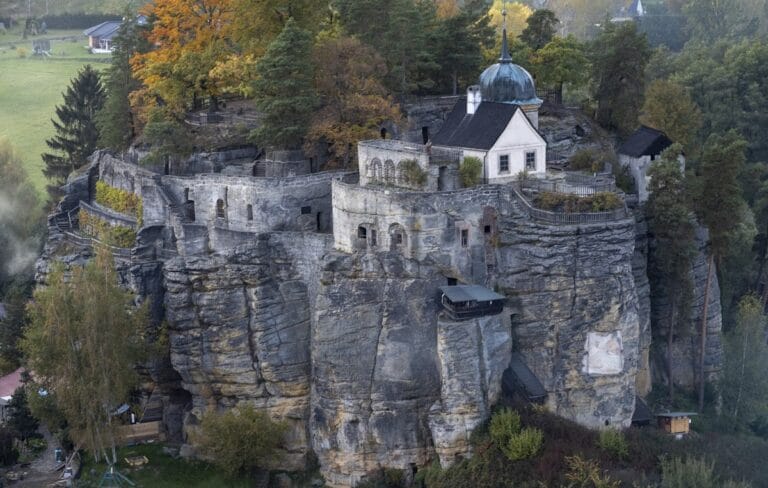
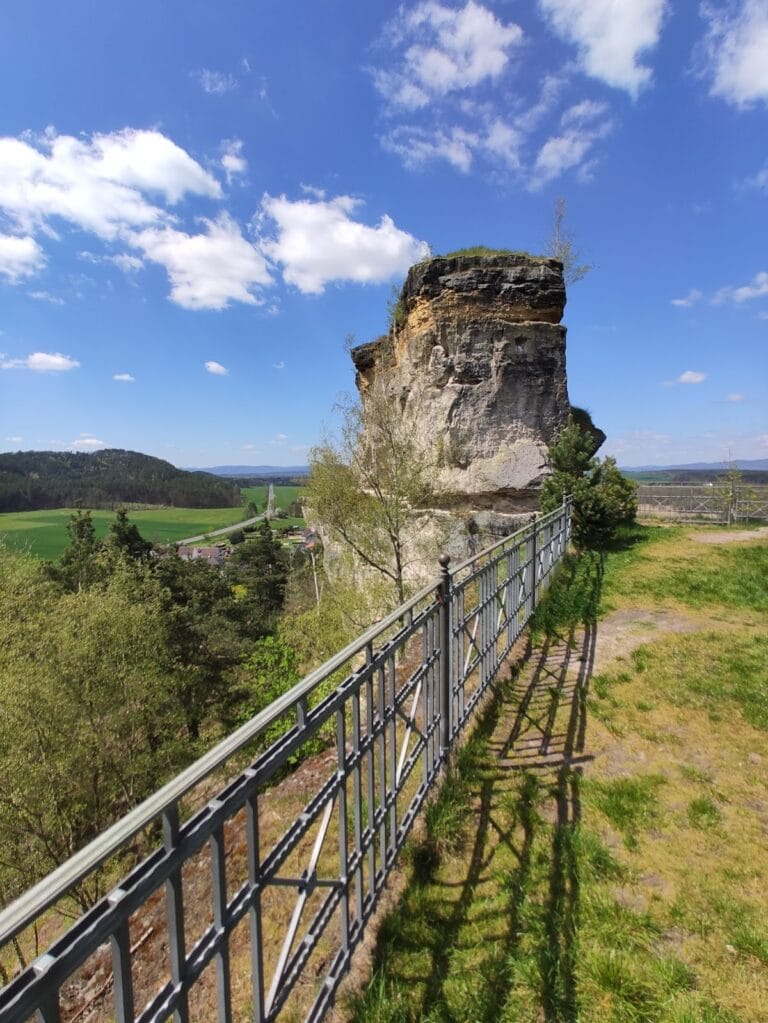
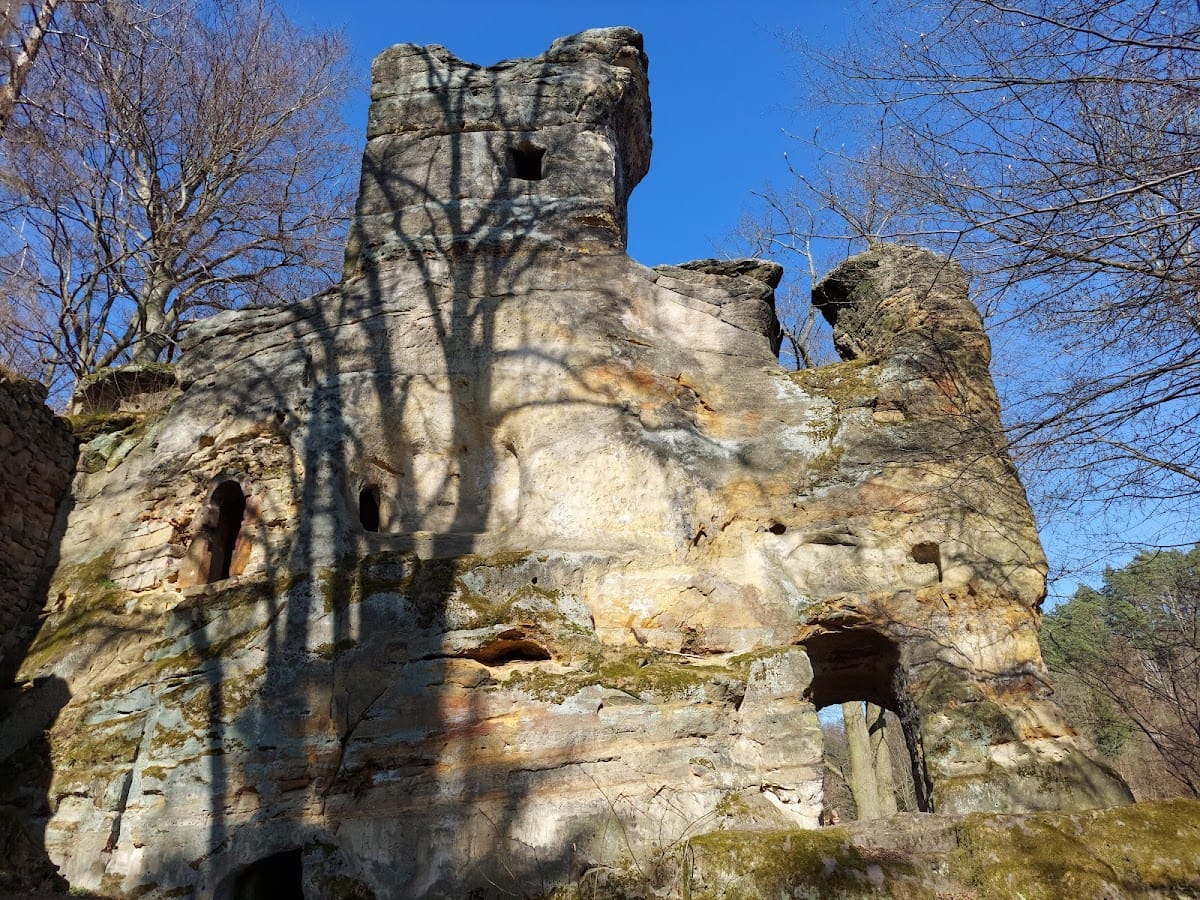
Svojkov Castle was uniquely integrated with its natural sandstone environment, carved directly into a rock pillar rising approximately 13 meters high, itself situated on a wooded hill about 20 meters above its surroundings. The fortification consisted of three distinct levels hewn into this sandstone pillar, demonstrating the builders’ skill in adapting the natural rock to form living and functional spaces.
Atop the rock formation was a palace composed of two wings, constructed with traditional masonry. Remnants of the palace walls still stand, offering a glimpse into the castle’s original layout. Throughout the sandstone pillar, numerous rooms and connecting passageways were carved, and staircases were cut along the rock faces to provide access between levels. In earlier times, wooden galleries linked portions of the structure, adding to its accessibility and living space, but these wooden features have since disappeared.
Part of the castle was designed to serve as storage areas for weapons, clothing, and food, reflecting its role as a defensible noble residence prepared for sieges or extended occupancy. Today, visitors can observe the surviving rock-cut chambers, wall sections, and staircases in situ. While the wooden staircases and galleries no longer exist, the combination of natural rock and built elements reveals the castle’s distinctive architectural character and its adaptation to the rugged terrain.
The site remains protected as a cultural monument, underscoring its importance as a medieval fortress carved into the local geology and as a witness to the region’s turbulent history.
Nearby sites