Rocca San Silvestro: A Medieval Mining Village in Campiglia Marittima, Italy




Visitor Information
Google Rating: 4.6
Popularity: Low
Google Maps: View on Google Maps
Official Website: www.parchivaldicornia.it
Country: Italy
Civilization: Unclassified
Remains: Military

History
Rocca San Silvestro is a medieval fortified village situated in the municipality of Campiglia Marittima, Italy. It was established between the 10th and 11th centuries by the counts della Gherardesca, a noble family seeking to exploit the abundant copper and silver-lead ore deposits found in the area.
Originally, the settlement was known as Rocca a Palmento, a name derived from an oil mill located below its church. This name changed later to Rocca San Silvestro, reflecting the dedication of the village church to Saint Silvestro. The village functioned as a significant mining and metallurgical hub, processing local ores and providing copper and silver to Tuscan mints, including those in Pisa and Lucca.
Throughout its history under Pisan control until the early 15th century, Rocca San Silvestro maintained a certain level of autonomy, governed locally by noble families. Initially, it belonged to the counts della Gherardesca, and later ownership passed to the della Rocca family, who held the castle as a private possession. The della Rocca family rose to prominence in the 12th century and undertook important enhancements to the village’s defenses, urban planning, and industrial facilities.
The castle and village were sold in 1310, but by the mid-15th century, the settlement was deserted. This decline was influenced by several factors, including an earthquake in the early 14th century, the inability to adopt hydraulic power for essential mining tools such as bellows and hammers, and an overall political and economic downturn in the region. Rocca San Silvestro fell out of use and was left abandoned for several centuries.
Archaeological interest in the site began in 1984 when the University of Siena and European research partners started systematic excavations. These investigations uncovered around two-thirds of the medieval village, revealing detailed information about the residents’ daily lives, health issues, and work related to mining. Restoration efforts followed, and in 2008 the site was incorporated into the San Silvestro Archaeomineral Park.
Remains
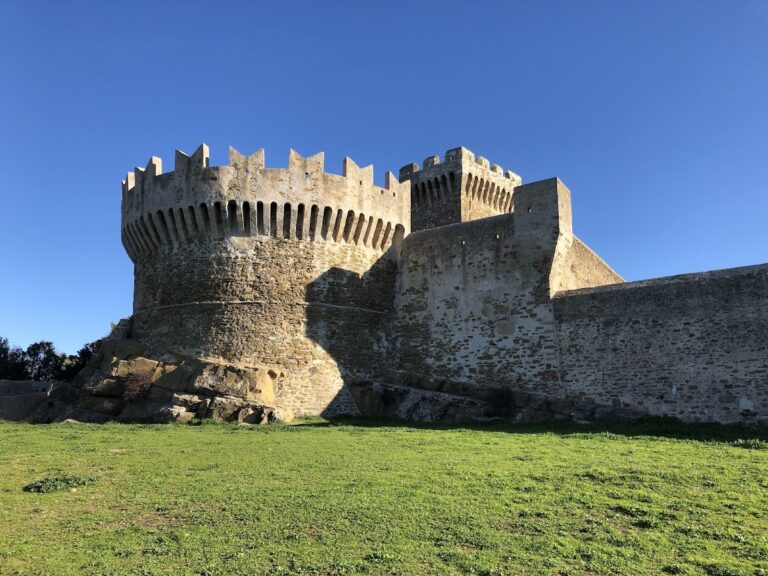
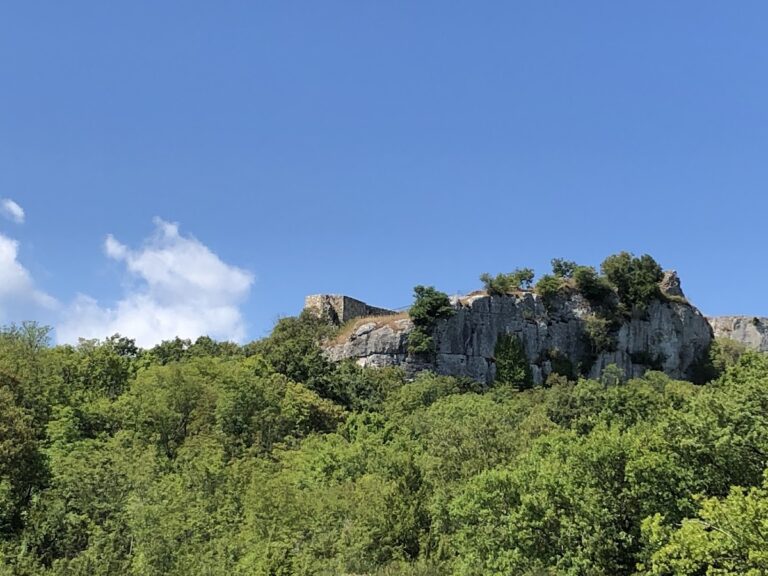
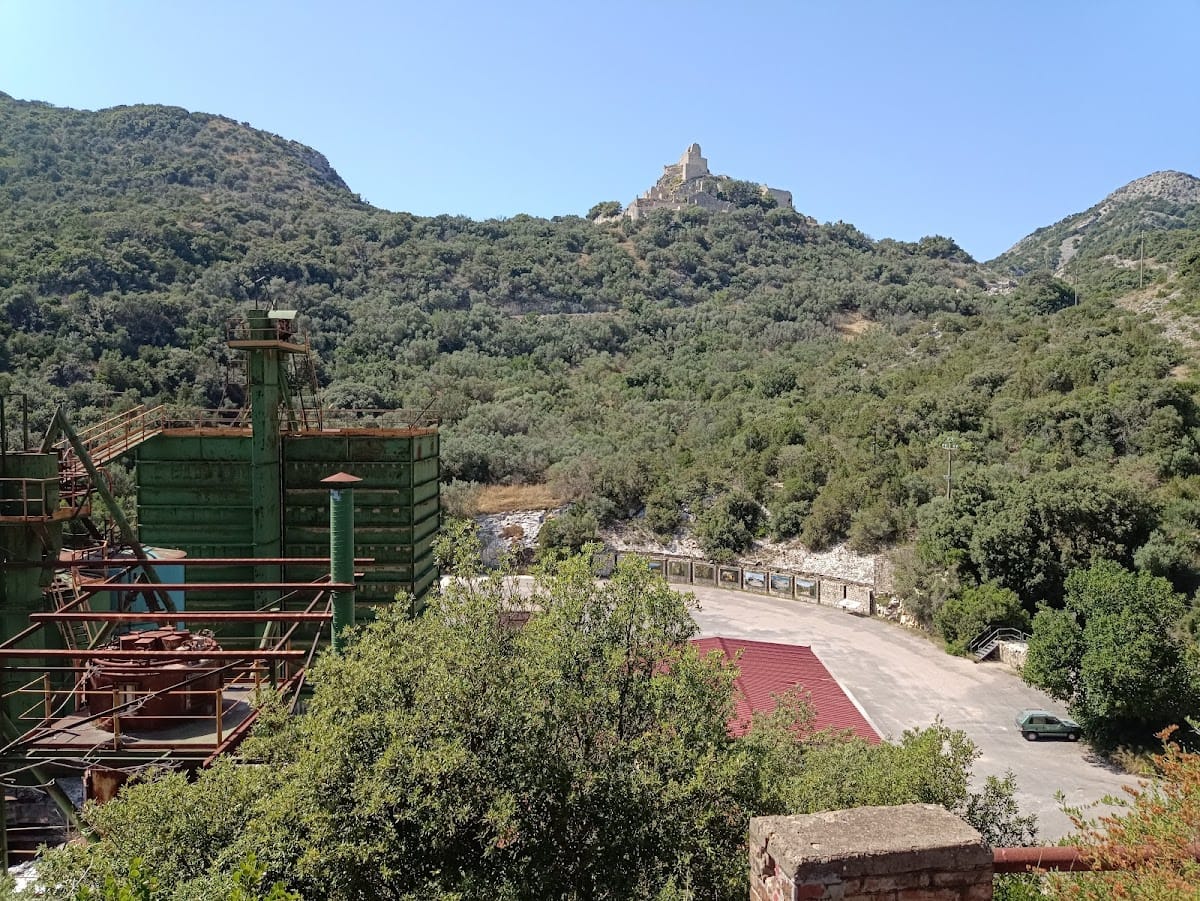
Rocca San Silvestro covers roughly one hectare atop a limestone hill rising 331 meters above sea level. The settlement is enclosed by a ring-shaped defensive wall about 400 meters long, built in several stages using locally quarried limestone blocks arranged with a technique called sack masonry, which consists of layering irregular stones within a mortar matrix. This wall features narrow slanted openings for archers and crenellated battlements along its top, emphasizing its military function.
The village’s layout is concentric, with two primary fortified areas. At the upper level stands the lordly residence, including a small Romanesque stone tower measuring approximately four by five meters. The tower’s entrance is elevated three meters above ground level, likely as a defensive measure. Next to this residence is a cistern used to store water. The lower section of the settlement held the miners’ houses, workshops, a forge, a charcoal kiln, and a limestone quarry. This area was protected by a secondary defensive wall encircling the residential and industrial quarters.
The main access point to Rocca San Silvestro is through a stone staircase leading to a gate with a two-meter-wide arched portal. Key architectural elements such as the gate’s jambs, threshold, and metal fixtures remain preserved. The threshold itself dips downward in the center to permit animals passage while restricting wheeled carts. Close to the entrance, a guard post includes a stone bench carved from the bedrock and features a medieval board game, known as mill, etched into a nearby step.
The 11th-century church of San Silvestro forms another central element. Built in a trapezoidal shape with a single apse, the church was expanded during the 12th and 13th centuries. It retains most of its original height, though the roof, likely consisting of a wooden double-pitched truss, no longer survives. Architectural details include a cross-shaped window on the front façade and two narrow openings near the apse. The church was actively used until 1399. Adjacent to it lies a cemetery where forensic teams have excavated over 600 graves. Most of these burials are simple inhumations without coffins, though three masonry tombs near the church likely belonged to the ruling family. Studies of the skeletons indicate that men averaged 1.65 meters tall and women 1.55 meters, with common ailments such as arthritis and evidence of infections caused by harsh mining conditions.
At its peak in the late 13th century, the settlement had around 42 houses sheltering approximately 200 to 250 people. Typical homes covered about 27 square meters, often spanning two floors topped with limestone slab roofs set at a double pitch. Interiors featured packed earth floors, hearths made from clay or mortar, and built-in niches. Ground levels served as stables or storage areas and had separate entrances from the living quarters upstairs. The village’s streets were narrow, often carved directly into rock, mostly unpaved except for certain paved sections and stone stair ramps where the terrain was steep.
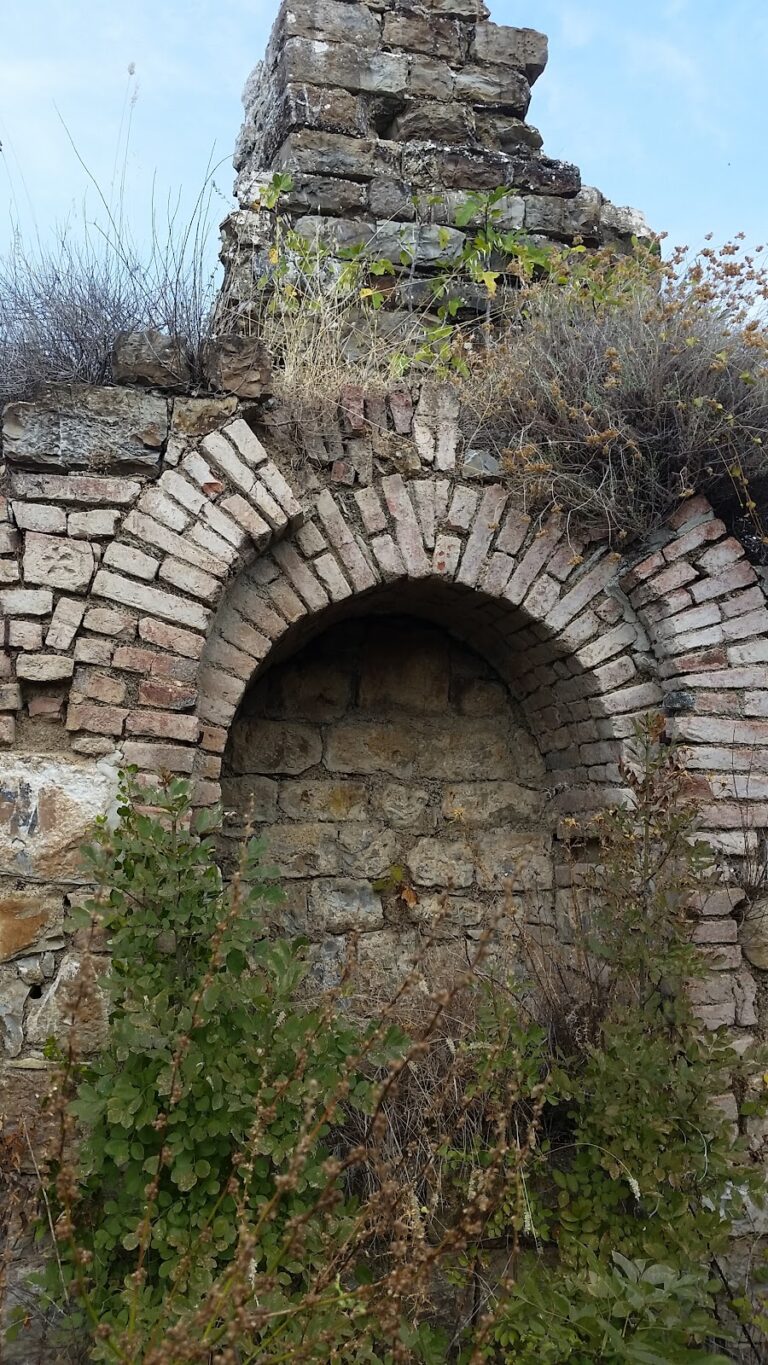
Industrial operations were spread out deliberately. An olive oil press, dated to the medieval period, sat below the residence and church, signaling that oil production—a staple food and lighting resource—was under noble control. Just outside the dwellings, above the guard post, stood a large communal bread oven from the late 1200s. This oven was capable of baking enough bread weekly to sustain several families, but by the late 14th century, it ceased operation and was converted for tool storage.
The metallurgical complex lies on artificial terraces west of the castle beneath the lord’s house. Furnaces made of clay and a volcanic rock called porphyry were used to roast and smelt copper and lead ores and to process iron. Copper came primarily from chalcopyrite deposits; lead was extracted from galena and smelted into ingots, which were shipped elsewhere for refining to silver. Iron, partly sourced from hematite brought from nearby Elba Island and mixed with local limonite, was produced for toolmaking. The final forging occurred in a smithy located at the castle’s base using hand-operated bellows.
The village’s concentric plan reflects careful organization to balance defense, social hierarchy, and health concerns. The separation of the industrial area from residences helped isolate toxic fumes from living spaces. As the population grew, the outer ring wall was expanded in phases. Construction quality varied: expert stonemasons and masons built the more important structures such as walls, tower, and church, while ordinary villagers constructed the remaining buildings under their supervision.
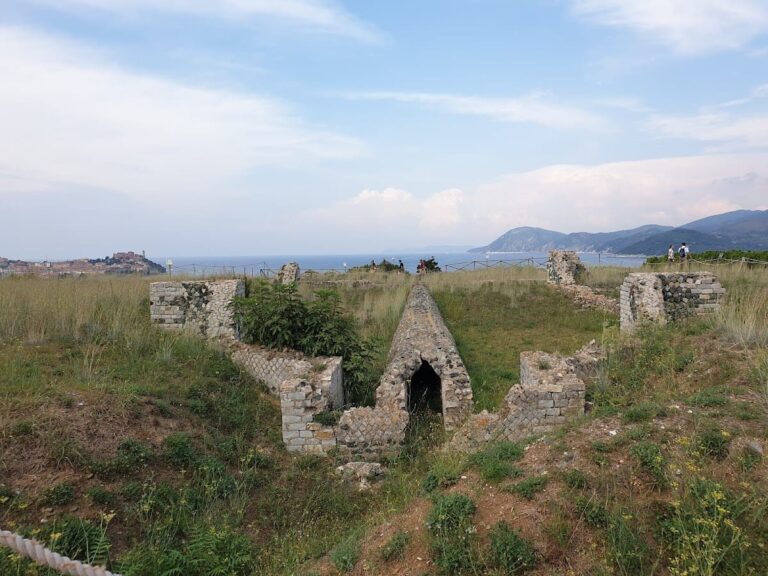
Additional archaeological features include a lime kiln hewn from the rock to the southwest, used until the early 14th century for producing lime—a key material for mortar and plaster—and a nearby bloomery furnace dedicated to iron production. Both are now part of an area devoted to experimental archaeology, where traditional methods are studied and demonstrated.
Nearby sites