Rocca Sillana: A Medieval Fortress in Italy


Site at a Glance
- Rating
- 4.5
- Popularity
- Low
- Country
- Italy
- Primary era
- Medieval
- External website
- Open
- Eras represented
- Medieval, Early Modern
- Civilizations
- Republic of Florence
- Site type
- Military
- Remains
- Castle
On this page6 sections
History
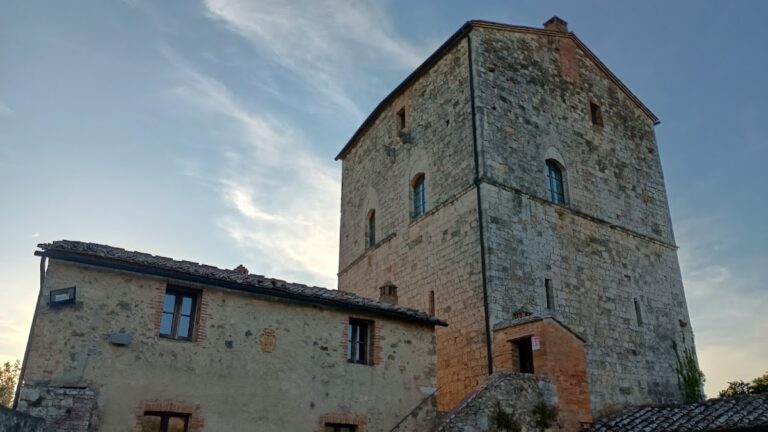
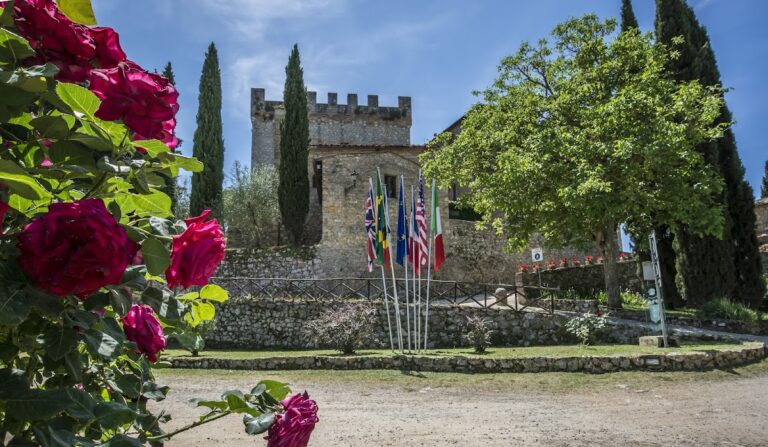
Rocca Sillana is a powerful medieval fortress in Italy, located near Pomarance in Tuscany and generally dated to around the twelfth century. Its elevated position made it an important stronghold overlooking the Val di Cecina and connected valleys. A local legend links its name and origin to Lucius Cornelius Sulla, the Roman general and political leader who fought Gaius Marius during the civil conflicts of the late Roman Republic. This Roman origin remains legendary, while the accepted interpretation places the construction of the fortress in the medieval period.
Medieval control and ecclesiastical connections
The fortress was held first by bishops and later by the commune of Volterra. These two authorities contested control of the surrounding territories for a long period, giving Rocca Sillana a role in the political and territorial struggles of the area.
The fortification was associated with the parish church of San Bartolomeo della Rocca Sillana, according to Emanuele Repetti. At the time of the Volterra synod in 1356, the parish reportedly stood at the centre of a network of nine dependent churches. These included Acquaviva, Monte Castelli, Ripapoggioli, Mestrugnano, Vinazzano, Lucciano, Mont’Albano, Anqua, and Valiano, also known as San Lorenzo. Their later status varied: Acquaviva was transferred to the parish church of Pomarance, Monte Castelli and Anqua became parish churches, four churches were destroyed, Mont’Albano continued to exist, and Valiano became a chapel of Monte Castelli.
Florentine enlargement
Rocca Sillana was enlarged in the fifteenth century after Pomarance passed under Florentine jurisdiction following its seizure from Pisa. The work followed a project by Giuliano da Sangallo, a Florentine architect and military engineer of the Renaissance who designed both buildings and fortifications. This phase gave the medieval stronghold a later form suited to the political order established under Florence.
Abandonment and archaeological work
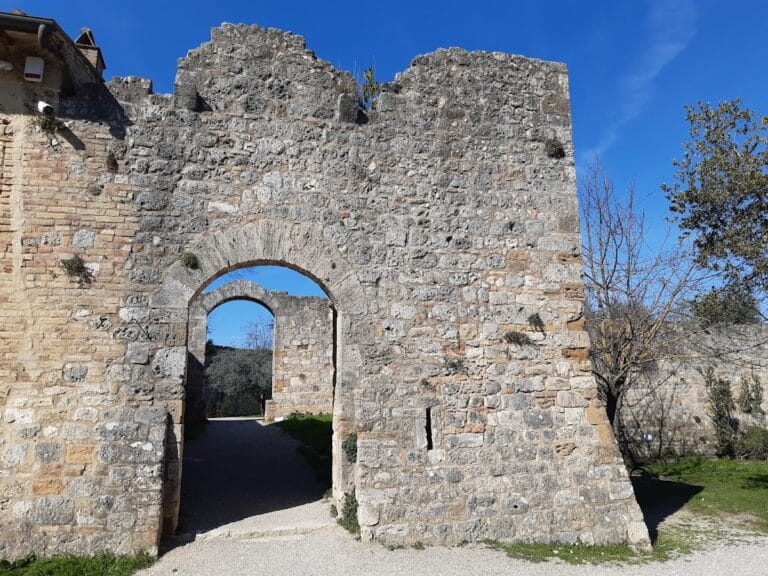
After its period of military and territorial importance, the fortification remained abandoned for centuries. Archaeological excavations began in 1985, followed by restoration work that helped preserve the site and clarify its historical development. Rocca Sillana now holds Italian national-heritage status.
Remains
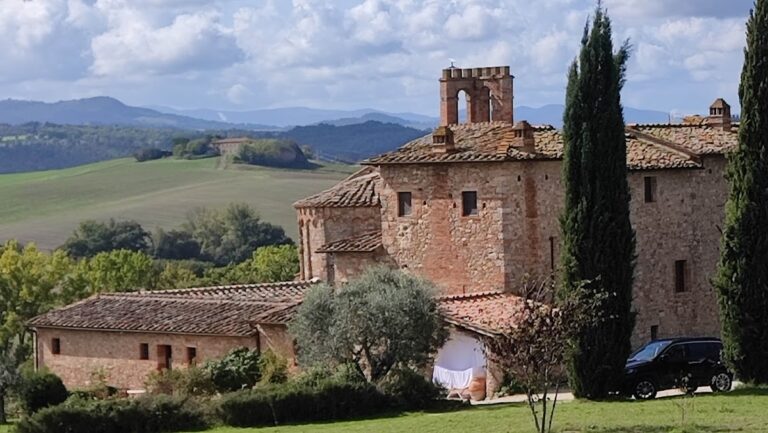
Rocca Sillana occupies the summit of a rocky hill at about 530 metres above sea level. The fortress is visible from a great distance and overlooks the Val di Cecina, a valley in western Tuscany crossed by the Cecina River, together with its connected valleys. From this elevated position, it commanded a wide strategic view across parts of the provinces of Pisa, Siena, and Grosseto. The hilltop setting supported control over an extensive territory and remains central to understanding the fortress’s location and purpose.
Fortress setting and surrounding archaeology
The rocky elevation may have been used before the medieval stronghold, although earlier Roman use remains uncertain. Archaeological material from the surrounding area includes Roman coins from the period of Sulla, numerous Villanovan and Etruscan tombs, a fifth-century BC tholos tomb, meaning a round burial structure usually covered by a domed or beehive-shaped roof, and a Hellenistic tomb dating from the fourth century BC. A Latin funerary inscription was found a few hundred metres from the fortress. These discoveries place Rocca Sillana within a landscape used for burial and habitation before the medieval fortification was built.
A parish church dedicated to Saint Bartholomew was reportedly attached to the fortification. This association is attributed to Repetti and forms part of the historical interpretation of the hilltop complex.
Nearby sites