Radegg Castle: A Medieval Stronghold in Switzerland

Visitor Information
Google Rating: 4.5
Popularity: Very Low
Google Maps: View on Google Maps
Country: Switzerland
Civilization: Unclassified
Remains: Military

History
The ruins of Radegg are situated on a rocky spur above the Wangental valley in the municipality of Wilchingen, Switzerland. Constructed by medieval settlers around the year 1200, this stone castle was associated with the baronial family von Radegg.
The earliest known member linked to the family was Heinrich Scado, mentioned in 1188. By approximately 1225, a knight named Rudolf, referred to as “nobilis dictus Schade de Radegg,” was documented in records, with some connection to Rheinau Abbey, a religious institution nearby. During the 13th century, the von Radegg name gained complexity as a second family bearing this name, the bourgeois Schad von Radegg, settled in the nearby town of Schaffhausen. This development has made it challenging to distinguish individuals directly tied to the castle from those belonging to the urban family.
Throughout the castle’s active period, it likely played a role in defending local interests, including protecting Rheinau Abbey from territorial claims made by the neighboring von Krenkingen family around 1270. Evidence suggests that tensions in the region may have contributed to conflict involving the castle. The castle itself was probably destroyed shortly after 1300, possibly by fire, as indicated by signs of burning on the walls. The baronial von Radegg family line ended around 1333. Chronicler Johann Jakob Rüeger later reported that the von Radeggs were related to other noble lines connected to Burg Randeck, Randenburg, and Schloss Randegg, situating the family within a broader network of medieval aristocracy in the region.
Remains
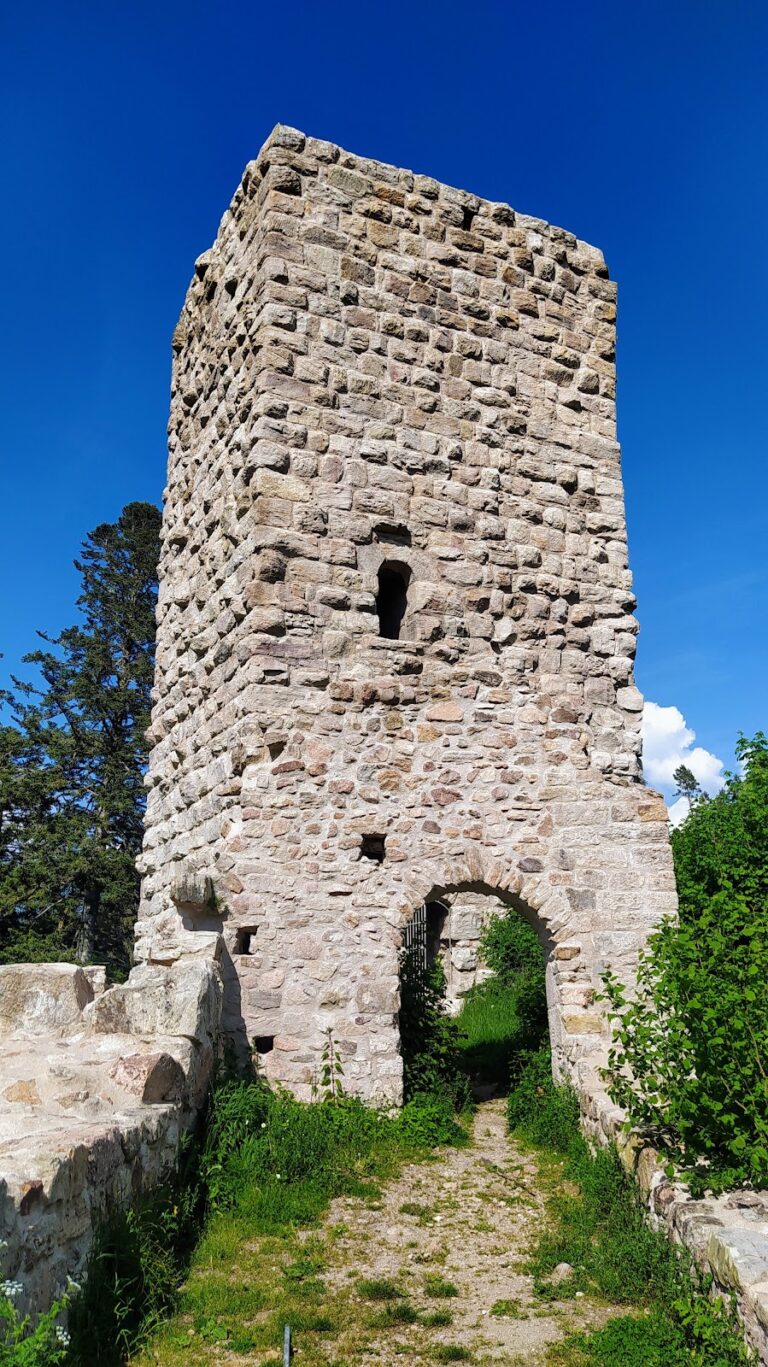
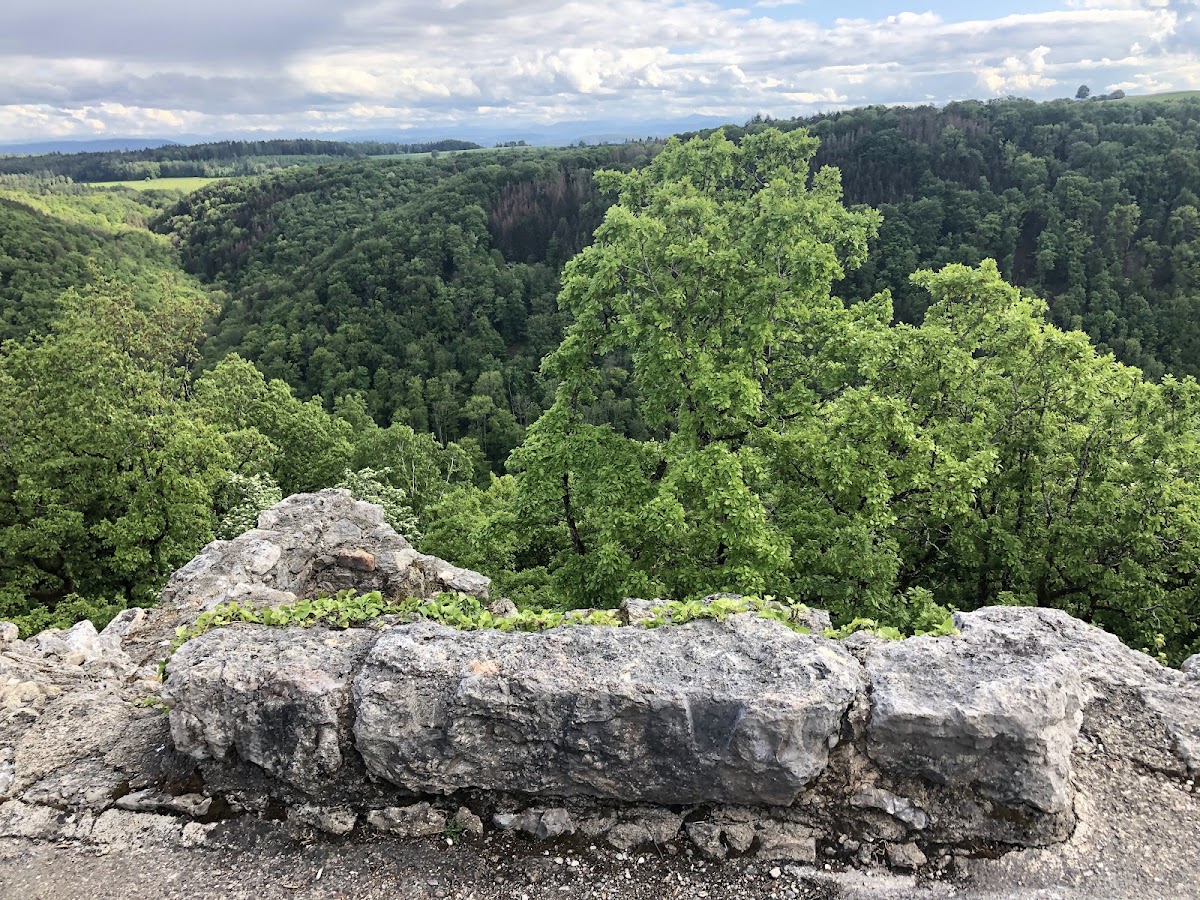
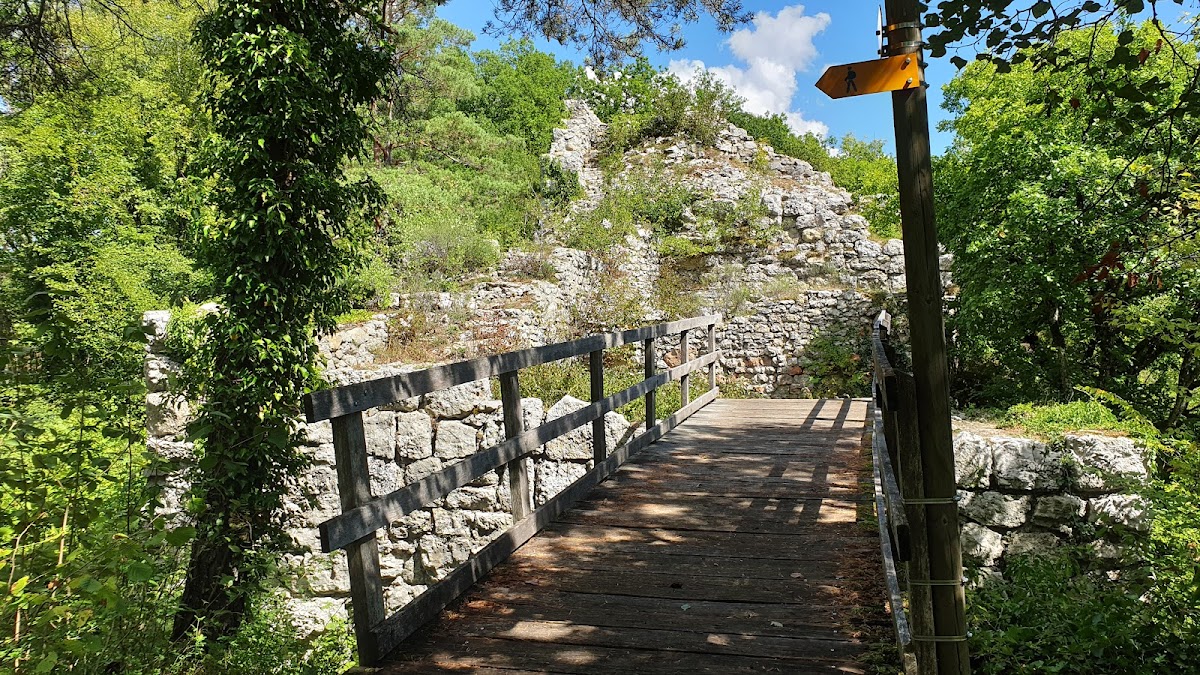
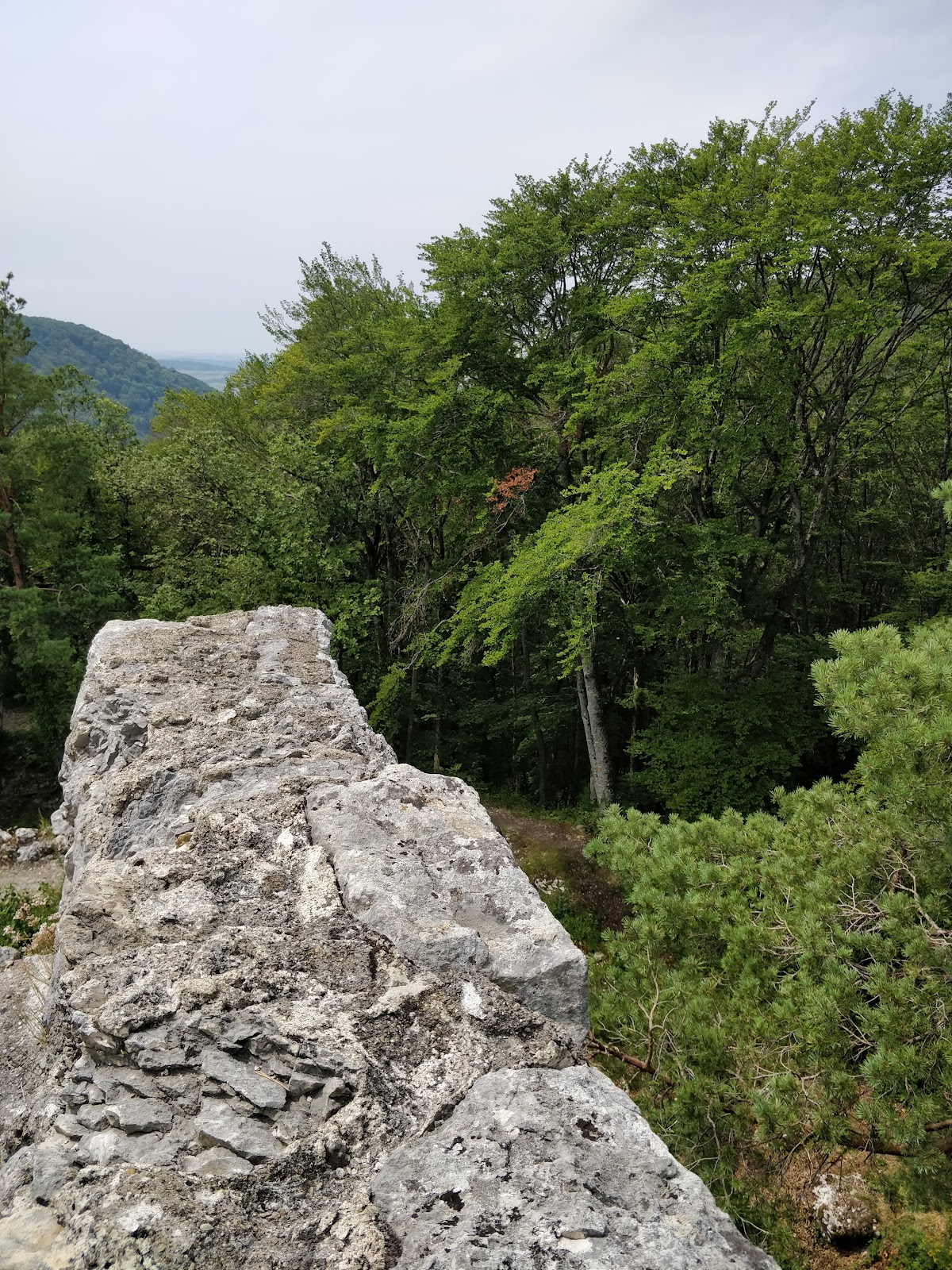
The site of Radegg castle reveals a compact, linear layout extending from east to west along the spur of the Rossberg. The construction dates to around 1200 and consists primarily of substantial stonework using limestone. The main elements include two towers and a central courtyard housing a cistern, which would have provided a water supply for inhabitants. The eastern side features defensive walls up to four meters thick, emphasizing protection from that direction, while the southern wall, facing the steep Wangental valley, measures nearly three meters in thickness.
Prominent among the stonework are large, roughly dressed corner stones, known as bossed stones, which highlight the castle’s robust medieval masonry techniques. The ruins stand at about 560 meters above sea level, strategically located with steep drops on three sides, naturally fortifying the structure. Adjacent to the castle on the northeastern plateau, archaeologists have identified ramparts and moats, though these earthworks have not been dated. Nearby traces indicate that earlier quarrying activities may have supplied the building materials used in construction.
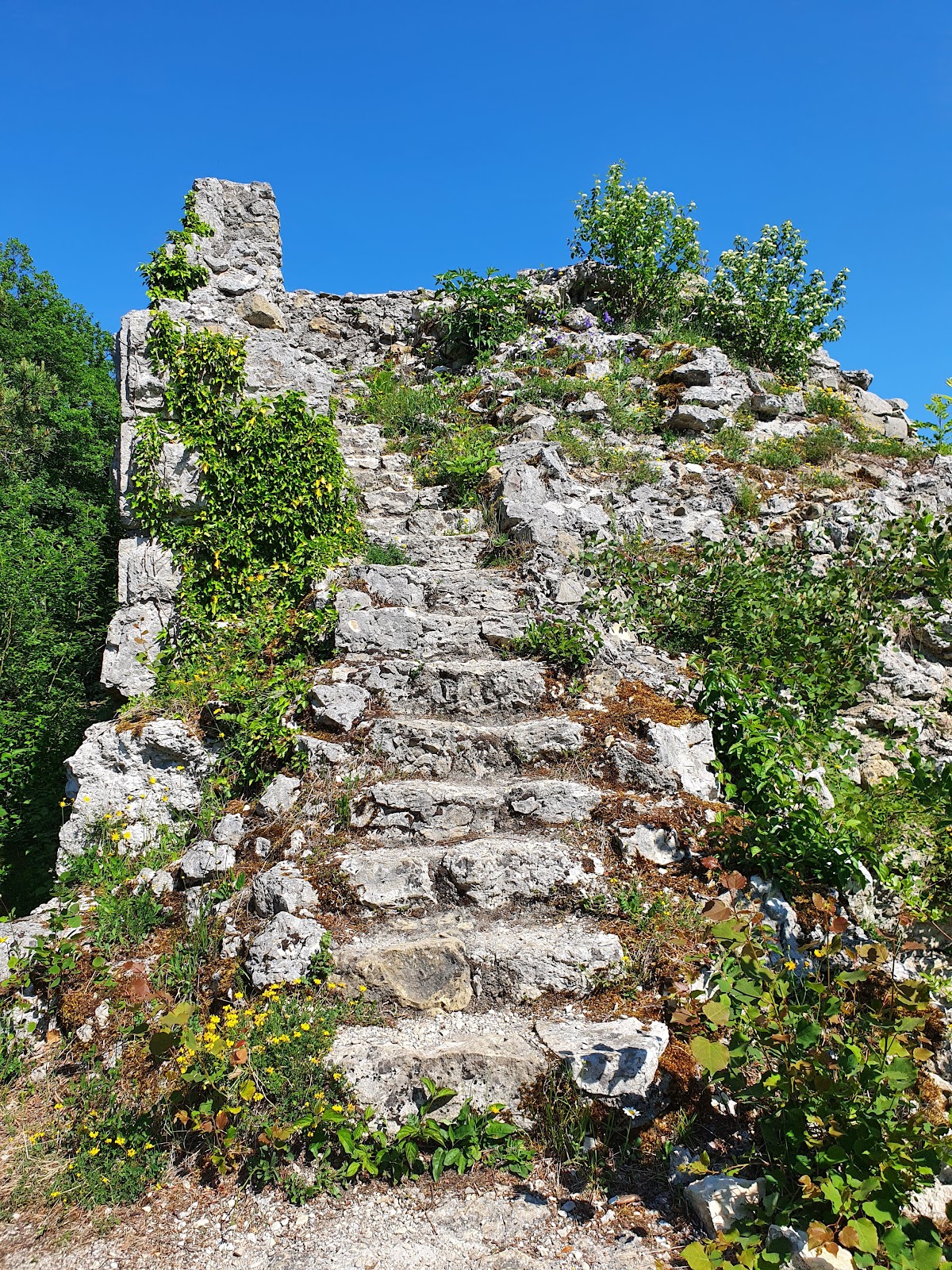
Excavations conducted between 1923 and 1937 uncovered remains including arrowheads and crossbow bolts, providing evidence of the castle’s military use and likely violent end. Some limestone sections within the castle still show reddening from heat exposure, supporting theories that fire contributed to its destruction. The masonry present today remains largely in its original position, though fragmentary, enabling a clear sense of the castle’s form and defensive arrangement as a medieval stronghold.
Nearby sites