Peyrepertuse Castle: A Medieval Fortress in Southern France
Visitor Information
Google Rating: 4.7
Popularity: Medium
Google Maps: View on Google Maps
Official Website: www.peyrepertuse.com
Country: France
Civilization: Unclassified
Remains: Military

History
Peyrepertuse is a medieval fortress situated near the village of Duilhac-sous-Peyrepertuse in southern France. Its earliest known occupation dates back to the 1st century BCE, demonstrating that the site’s strategic location was valued long before the construction of the castle itself. Archaeological evidence indicates continuous human presence during this period, part of the broader Mediterranean civilization of antiquity.
The first recorded mention of a castle at Peyrepertuse appears around the year 1070, during the time it was controlled by the counts of Besalú, a feudal lordship in the region. In 1111, the fortress came under the authority of the County of Barcelona, and subsequently passed to the viscounts of Narbonne. By the late 12th century, specifically from 1180 onwards, Peyrepertuse became an important military stronghold marking the border between the Kingdom of France and the Kingdom of Aragon, reflecting the shifting political boundaries in medieval southern France.
In the early 13th century, during the Albigensian Crusade aimed at suppressing the Cathar religious movement, Peyrepertuse was held by Guillaume de Peyrepertuse, a noble excommunicated in 1224 for his adherence to Cathar beliefs. After the nearby city of Carcassonne fell to the crusaders, Guillaume relinquished the castle, surrendering it to King Louis IX of France in 1239. This transfer marked the beginning of French royal control over the fortress.
Following its acquisition by the French crown, Peyrepertuse underwent extensive strengthening between 1250 and 1251 under royal orders. This phase included the construction of the upper keep, known as donjon Sant Jòrdi, along with renovations to the older keep and the fortress’s church dedicated to Sainte-Marie. The fortress was incorporated into a network of royal border defenses known as the “Five Sons of Carcassonne,” a series of castles tasked with guarding the frontier against the Kingdom of Aragon and later the Spanish crown, a role it maintained until the 17th century.
The strategic importance of Peyrepertuse declined after the signing of the Treaty of the Pyrenees in 1659, which pushed the border southwards, reducing the need for such fortifications. The castle continued to hold a small military presence but was ultimately abandoned during the French Revolution. In 1820, it was sold as national property, leading to gradual deterioration and ruin. Restoration efforts began in the mid-20th century to stabilize and conserve the site’s remains. Peyrepertuse has been officially recognized as a historic monument since 1908 and is being considered for UNESCO World Heritage status alongside other castles in the region.
Remains
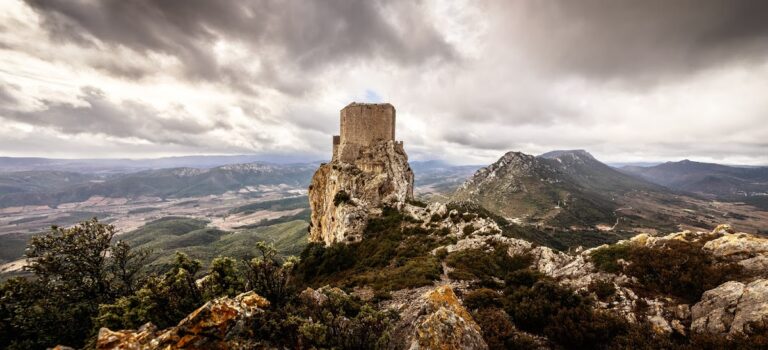
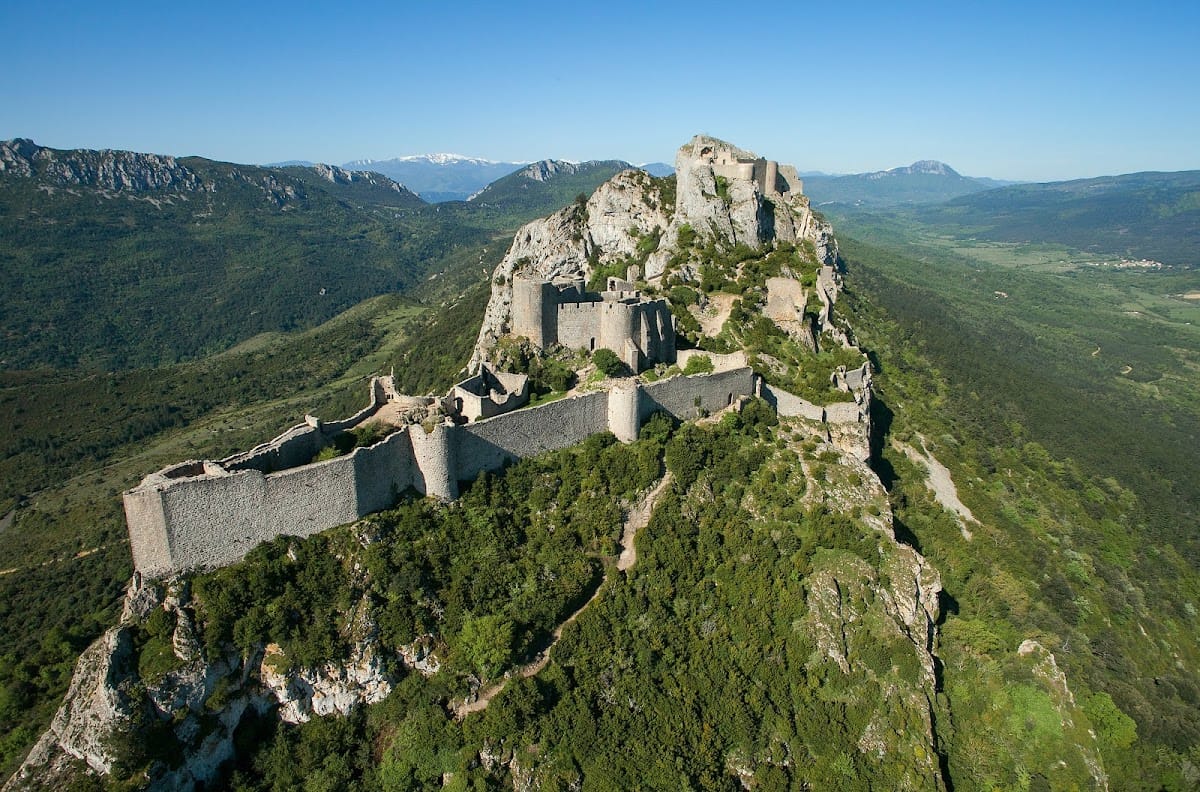
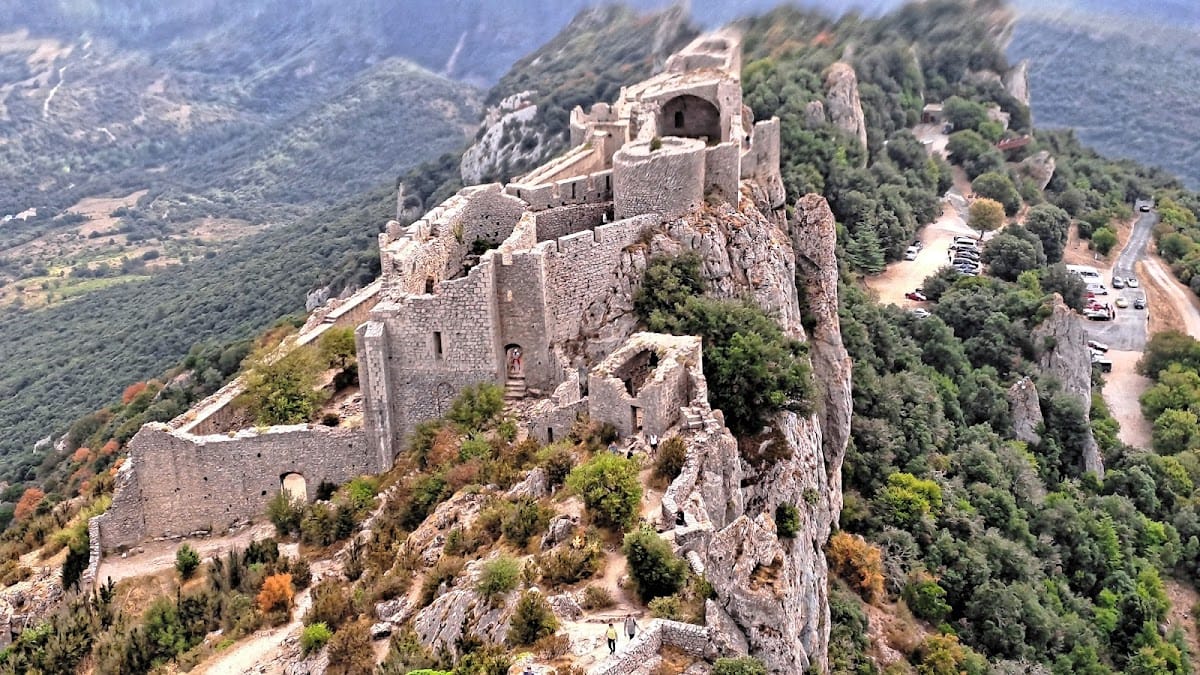
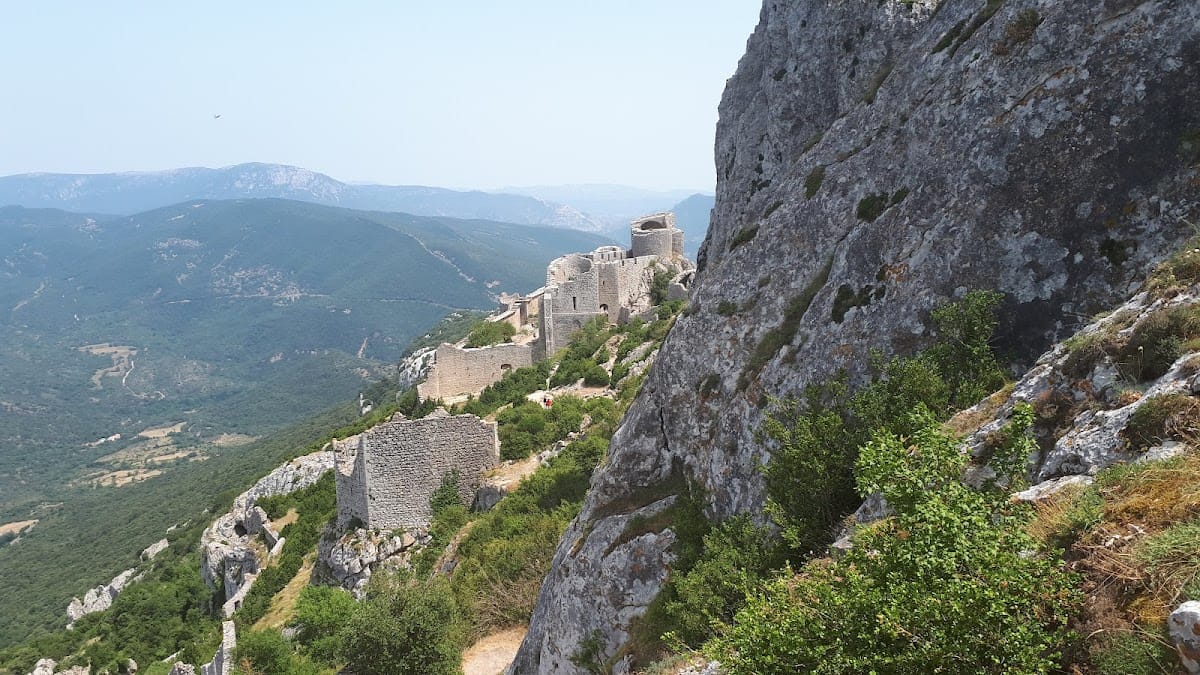
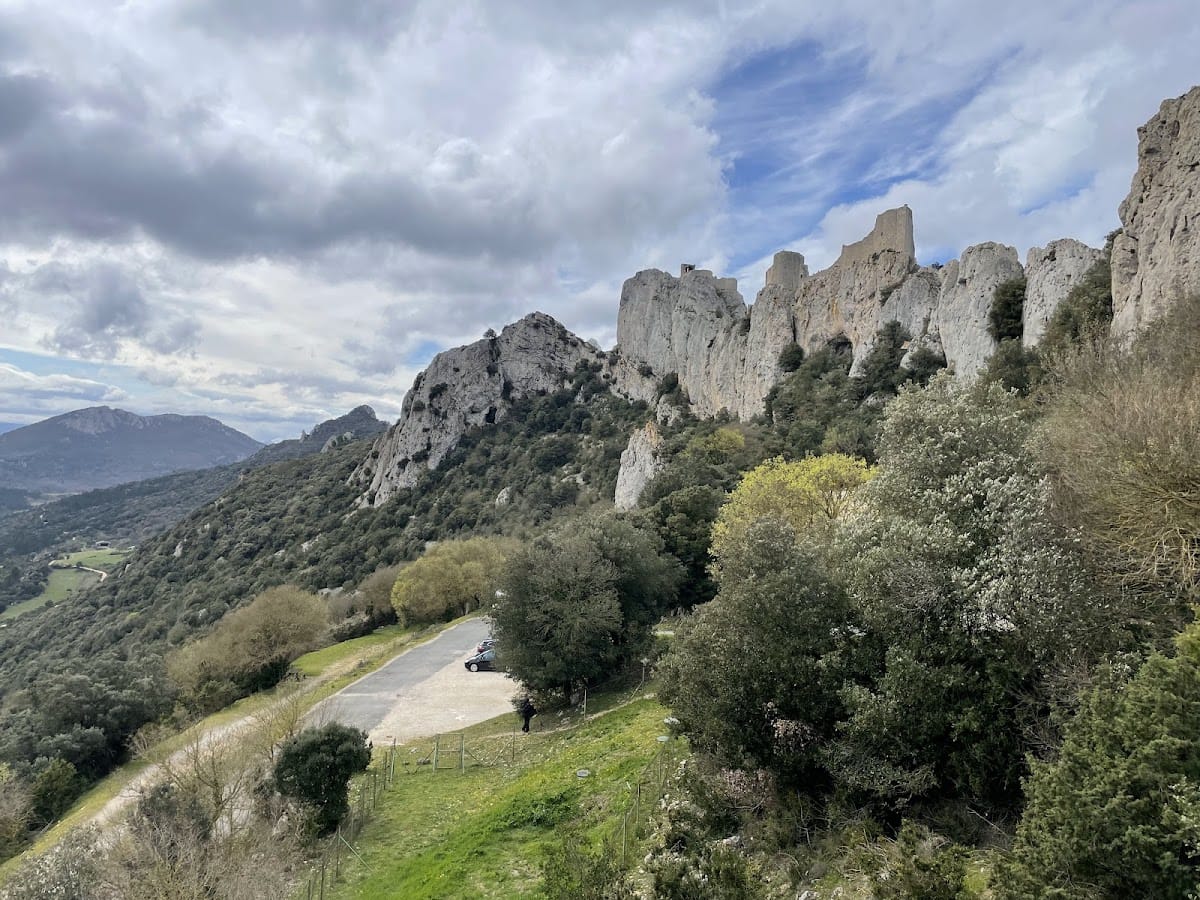
The ruins of Peyrepertuse extend along a limestone ridge approximately 300 meters long and up to 60 meters wide, resting around 800 meters above sea level. The fortress occupies a commanding position atop cliffs rising 30 to 40 meters, naturally secure except for the main access from the north and a secret postern gate reachable by a removable ladder, now closed. The site’s ramparts are solidly anchored on the cliff edges, with the northern walls presenting the primary entry and most imposing fortifications, while the southern side relies on steep terrain for defense.
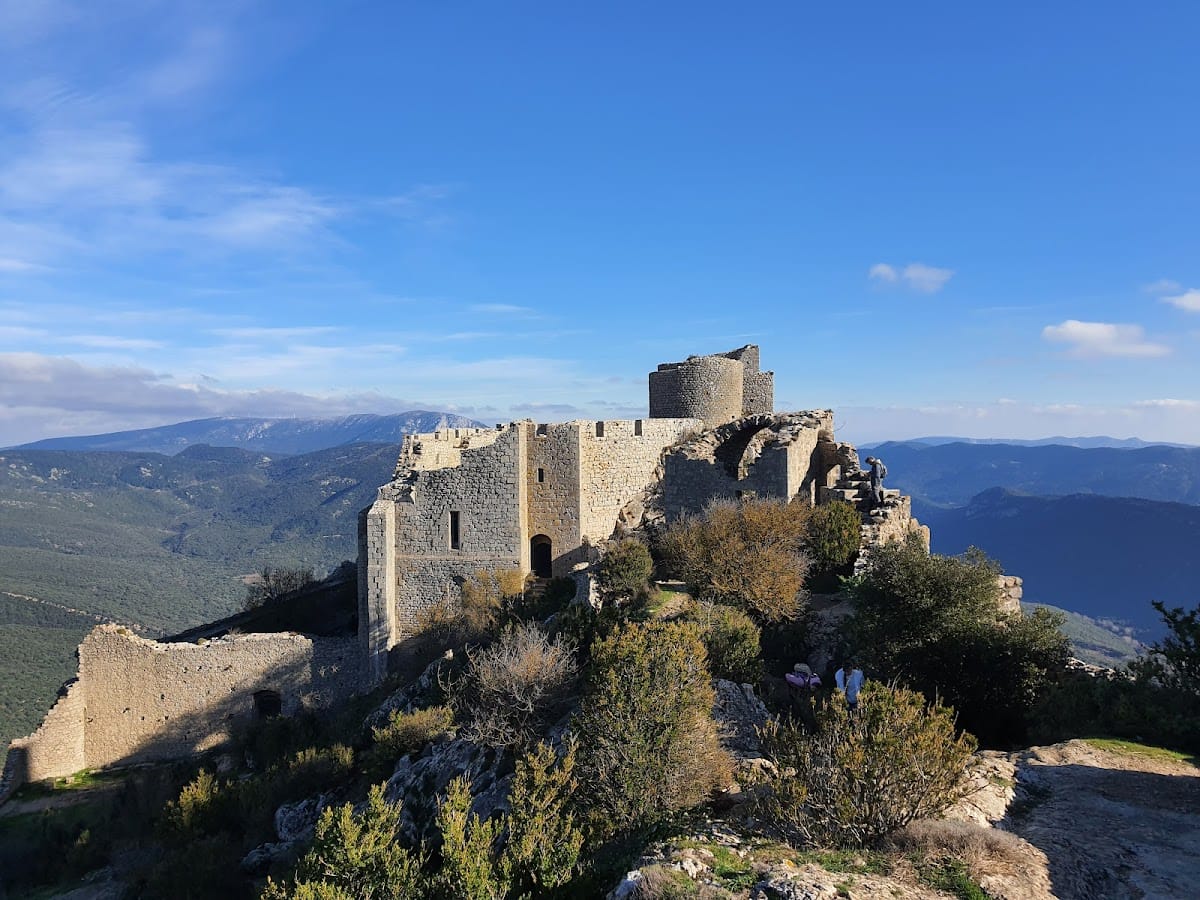
Within the enclosure, the castle is divided into two main courtyards or esplanades. The eastern section features a curtain wall stretching 120 meters, equipped with two semicircular towers and a stone slab walkway resting on projecting corbels, allowing defenders to patrol the ramparts. The western esplanade contains the newer upper fortress built on the rocky summit known as Sant Jòrdi, which was constructed during the mid-13th century reinforcements ordered by King Louis IX.
The lower castle area includes the oldest structures dating from the 12th century, originally built by the Count of Besalú. Among these is the fortified Romanesque church of Sainte-Marie, notable for its vaulted apse and surviving elements of its vaulted ceiling and altar. Adjacent to the church stands the old keep, comprising the church itself and an adjoining residential building with two vaulted chambers one above the other. The castle was supplied with water through four cisterns, holding between 12 and 40 cubic meters, essential for sustaining occupants during sieges.
The upper donjon, known as Sant Jòrdi, was built between 1242 and 1251 and accessed via the steep Saint Louis staircase, carefully carved into the rock face. This keep possesses its own defensive walls and includes a single-nave chapel dedicated to Saint George. Defensive features across the fortress include walls topped with crenellations where square-shaped merlons are pierced by narrow arrow slits, allowing archers to fire while remaining protected. The residence of the castle’s governor featured shovel-shaped arrow slits designed to give wider angles for defenders.
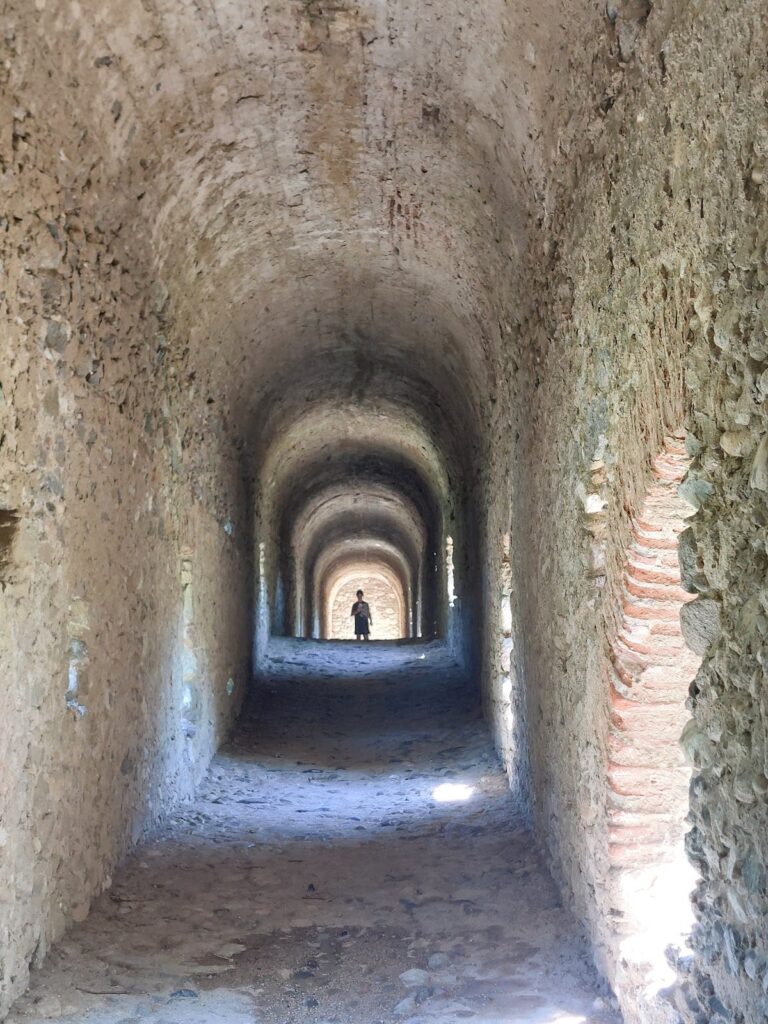
Excavations have uncovered domestic ovens indicating the preparation of food on-site, as well as a vaulted passage about 2.8 meters in length leading to a spring called Font de la Jaqueta, located below the castle. Building materials were sourced locally, primarily limestone from the surroundings, combined with wood, metal fittings, and rope. Timber was transported from nearby forests and lifted into place using a hoisting mechanism likely resembling a “cage à écureuil,” a type of medieval winch or squirrel cage pulley.
The dramatic natural setting of Peyrepertuse includes steep limestone cliffs, some of which house climbing routes that end within the castle’s enclosure, highlighting the fortress’s integration with its rugged environment. The remains today, partially restored and consolidated since the mid-20th century, preserve a vivid impression of a border fortress spanning several centuries of medieval history.
Nearby sites