Château de Padern: A Medieval Fortified Castle in France

Site at a Glance
- Rating
- 4.2
- Popularity
- Low
- Country
- France
- Primary era
- Medieval
- External website
- Open
- Eras represented
- Medieval, Early Modern
- Civilizations
- County of Toulouse, French
- Site type
- Military
- Remains
- Castle
On this page7 sections
History
Château de Padern is a medieval fortified castle in France, built to defend the entrance to the strategic Verdouble gorge. It is often grouped with the Cathar castles, although it played a limited role in the Albigensian Crusade compared with the neighboring fortresses of Termes, Quéribus, and Peyrepertuse. Its exact construction date is unknown, but the castle first appears in records in 1026.
Early Medieval Origins
The settlement and territory of Padern are recorded in 899, when Charles III, known as Charles the Simple, ceded the area to Lagrasse Abbey, a medieval Benedictine monastery in southern France. The territory then belonged to the Counts of Toulouse rather than to the French Crown. By the end of the twelfth century, a secondary fortification, or forcia, was associated with the castle under the control of the abbey.
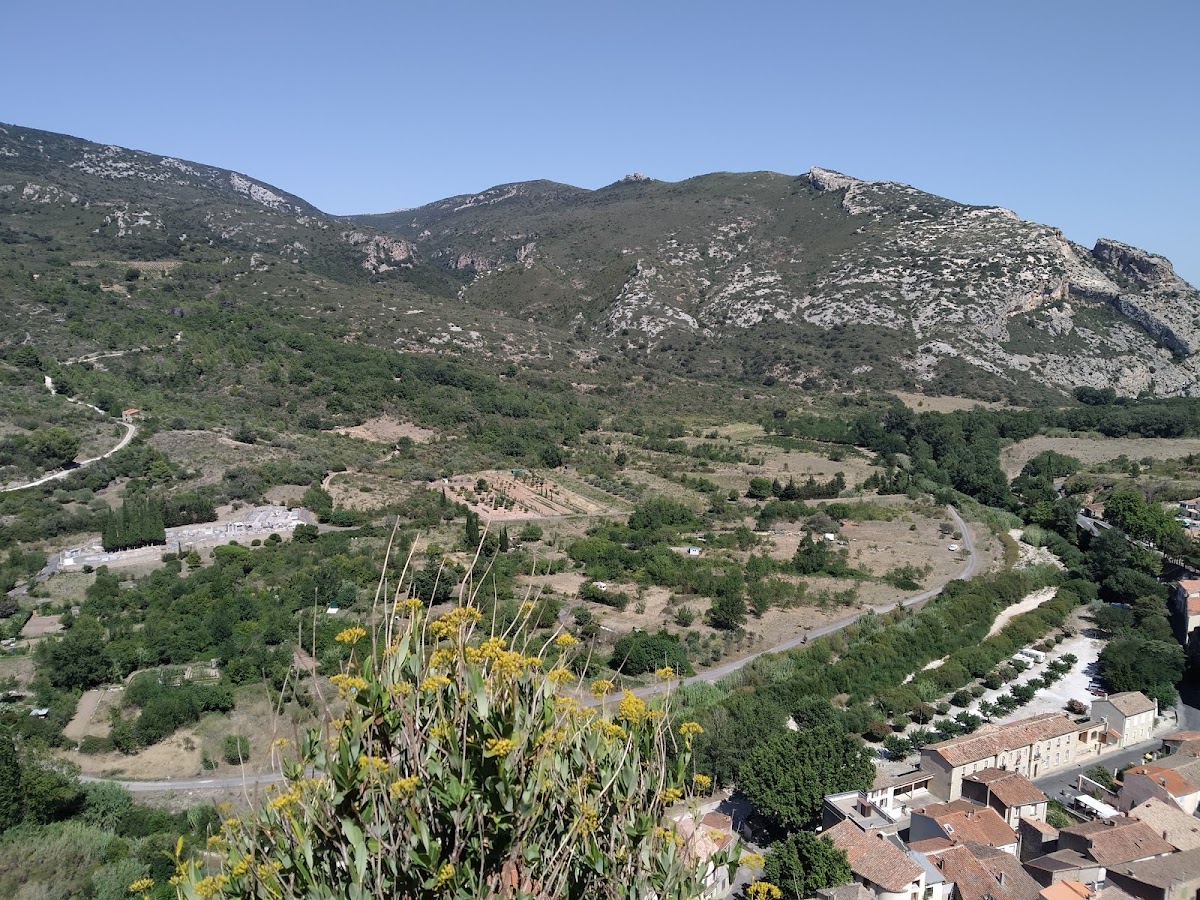
The fortress occupied a defensive position above the Verdouble River and guarded access through the gorge. Along with the surrounding castles associated with the Cathar strongholds, it formed part of a defensive line intended to resist incursions from both the north and the south.
The Albigensian Crusade
The Albigensian Crusade was a thirteenth-century military campaign against Catharism in southern France. Catharism was a Christian dualist movement condemned as heretical by the Catholic Church. During the conflict, Chabert de Barbeira, a companion-in-arms of Olivier de Termes, seized Château de Padern. Chabert protected Cathars and held Quéribus, another fortress in the regional defensive network.
After Quéribus was captured, Chabert negotiated his freedom by agreeing to surrender the citadels to King Louis IX. Lagrasse Abbey later recovered Château de Padern and became its official proprietor in 1283 through a transaction with the royal prosecutor of Philip III, known as Philip the Bold. The abbey retained ownership until 1579.
Later Ownership and Abandonment
At the end of the sixteenth century, following the Wars of Religion, Pierre de Vic acquired the castle. These conflicts were a series of late-sixteenth-century struggles in France between Catholics and Protestants. Originally from Girona in Catalonia, de Vic added to the property while preserving its feudal character.
In 1706, his descendants sold the entire property back to Lagrasse Abbey. The abbey abandoned the castle at the end of the eighteenth century, leaving the fortified complex to survive as a ruin above the village.
Threat of Demolition and Protection
In 1939, the municipal council requested the castle’s demolition. Captain Panchetti judged the proposed operation dangerous and technically delicate because the ruins stood above the village, nearby houses were separated from the foot of the slopes by a path only two metres wide, and the rock was unstable. He recommended that a specialized civilian company undertake the work rather than the military engineering corps, with measures to control rockfalls and falling debris.
The demolition was probably prevented by its cost. A prefectural letter dated 26 July 1944 reported that a ministerial order of 3 February 1944 had placed the castle and its surroundings on an inventory of sites considered of general interest for conservation. That listing was later repealed in favor of the 2017 classification of the Puech de Bugarach and the northern ridge of the Fenouillèdes syncline, a geological fold in the Fenouillèdes region. The protected landscape includes Château de Padern and the Grau de Padern. The castle also lies on the Cathar Trail, a long-distance route linking the Mediterranean with Foix in Ariège.
Remains
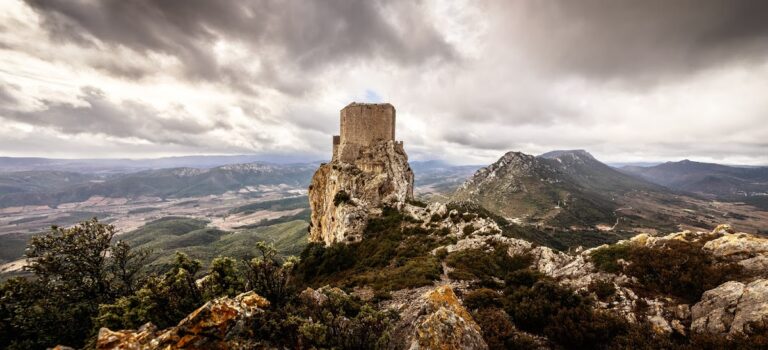
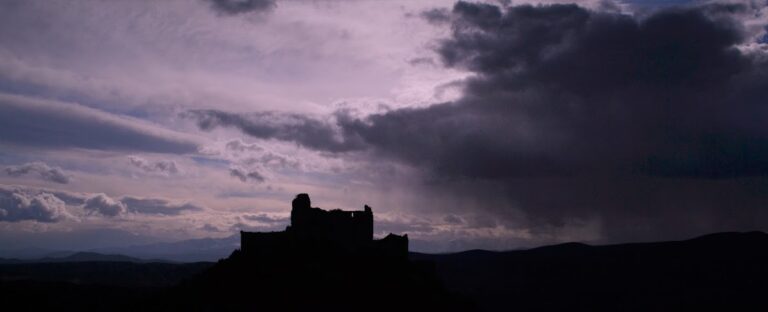
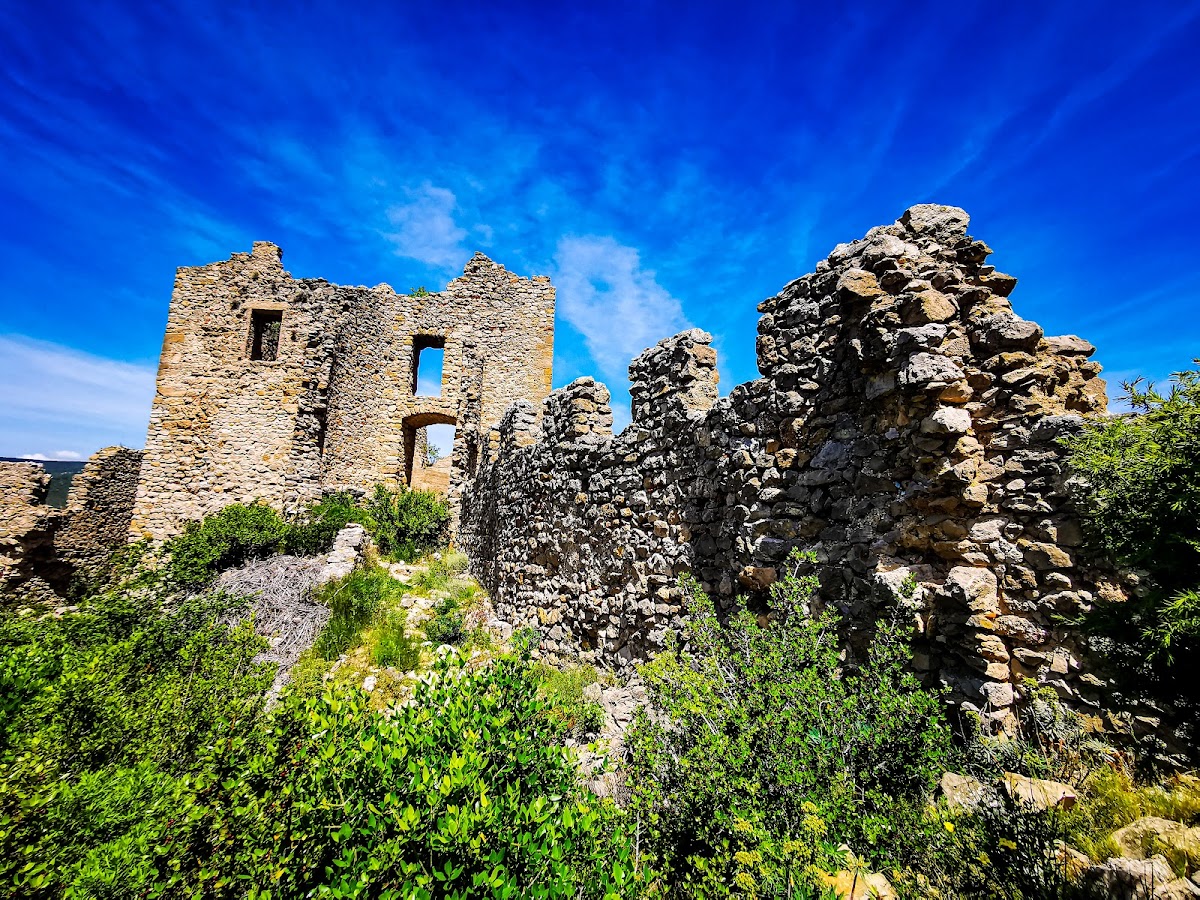
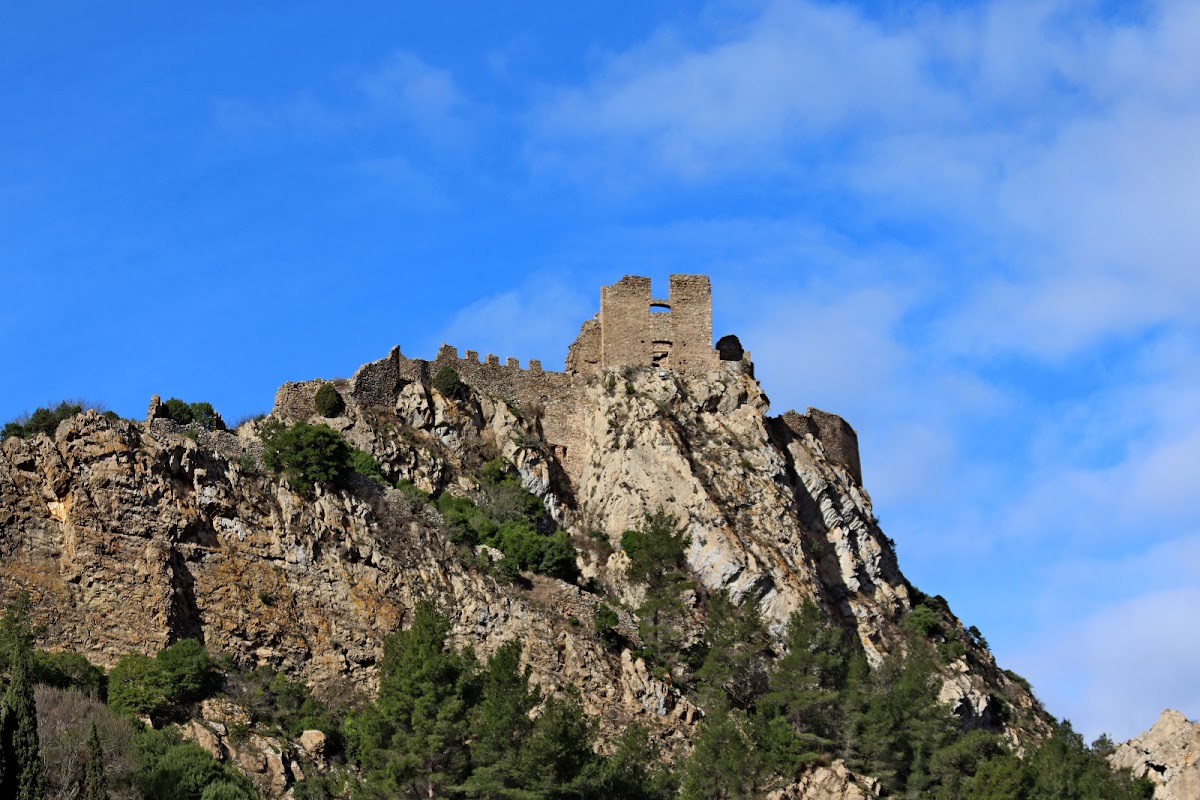
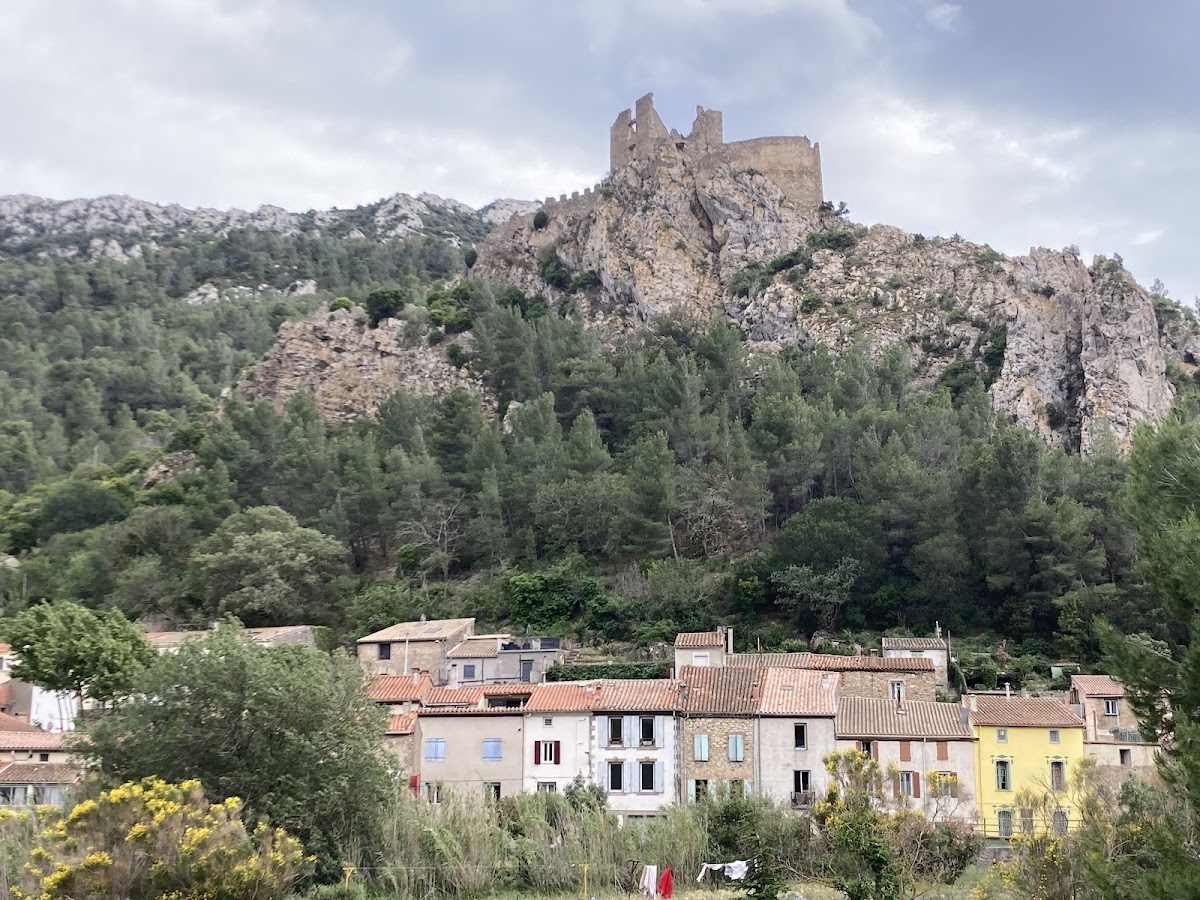
Château de Padern survives as a ruined fortified complex on a limestone rocky peak above the village. The peak dominates the Verdouble River, which flows below Padern, while extremely steep approach paths reinforce the position’s practically impregnable character. The remains are associated with a donjon-type castle and a secondary fortified position, reflecting the layered defensive organization of the site.
Fortified Complex
The surviving structures include the principal castle, centered on a donjon, the main fortified tower that served as the strongest defensive and residential element of a medieval castle, together with the secondary fortification known as a forcia. Later additions preserved the complex’s feudal appearance. The ruins and their immediate surroundings form part of the landscape classified in 2017 as the Puech de Bugarach and the northern ridge of the Fenouillèdes syncline.