Jardíns de Cap Roig: A Historic Garden and Castle Complex in Calella de Palafrugell, Spain


Visitor Information
Google Rating: 4.5
Popularity: Low
Google Maps: View on Google Maps
Country: Spain
Civilization: Unclassified
Remains: Military

History
The Jardíns de Cap Roig are located in Calella de Palafrugell, Spain. This site originated in the early 20th century through the vision of a Russian émigré and his English wife, marking its development under private ownership rather than ancient civilization construction.
The estate’s creation began in 1927 when Colonel Nikolai Woevodski, an architect without formal credentials from Saint Petersburg, together with Dorothy Webster, an expert in antiques, acquired land at Cap Roig to build their residence. Initial construction focused on workers’ housing and the southern wing of the main building, including a grand entrance, which were largely completed by 1931. Alongside the architecture, the couple established an extensive botanical garden with about one thousand different plant species, carefully arranged to complement the natural landscape.
Over time, the property shifted from a private home to a project intended to attract visitors, with the Woevodskis designing additional residences in the surrounding area, primarily catering to British clientele. Facing challenges in preserving the estate for their heirs, they secured an agreement in 1969 with the Caixa d’Estalvis de Girona, a local savings bank. This arrangement enabled the completion of ongoing works on the castle by 1975, shortly before Nikolai Woevodski passed away. When Dorothy died in 1980, the ownership of the estate transferred to the bank. In subsequent years, the site became managed by the Fundació La Caixa, which adapted the property for cultural uses, including exhibitions and music events. A development plan approved in 2019 proposed adding three new buildings, drawing some criticism.
Remains
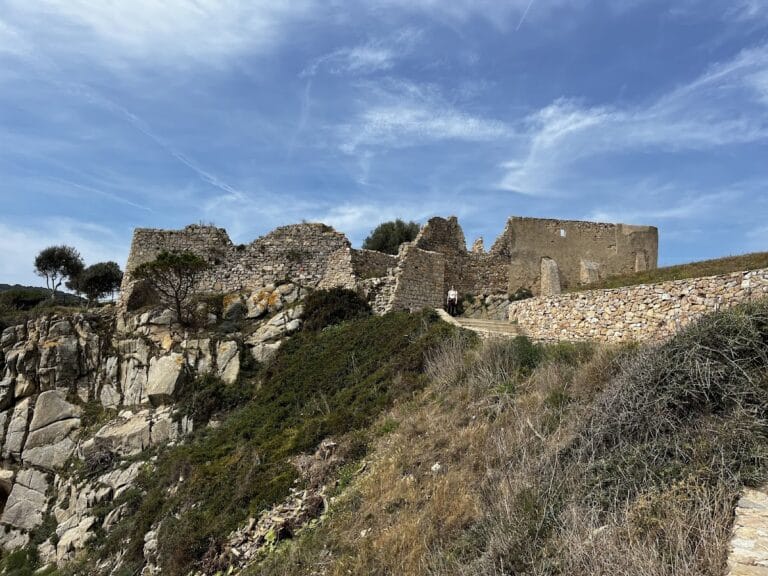
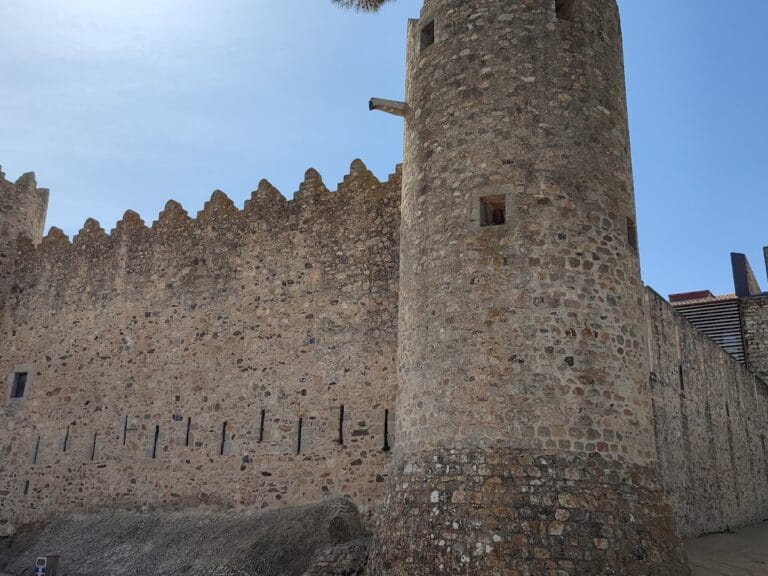
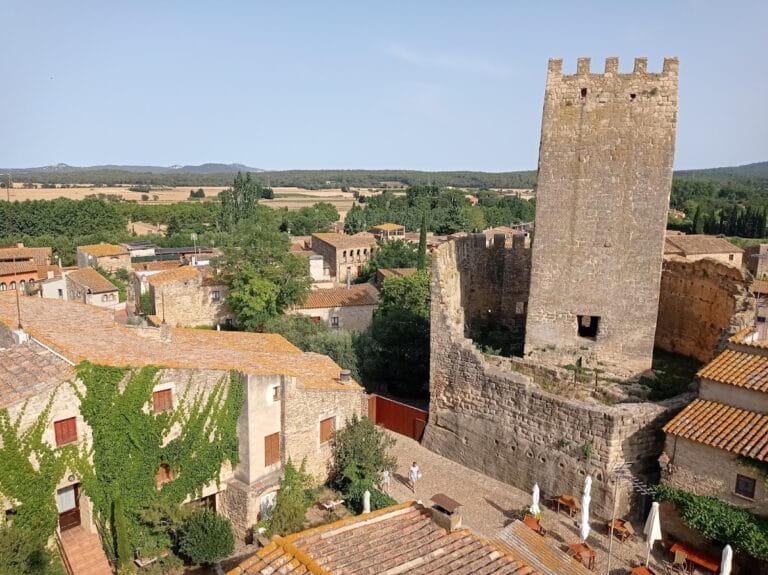
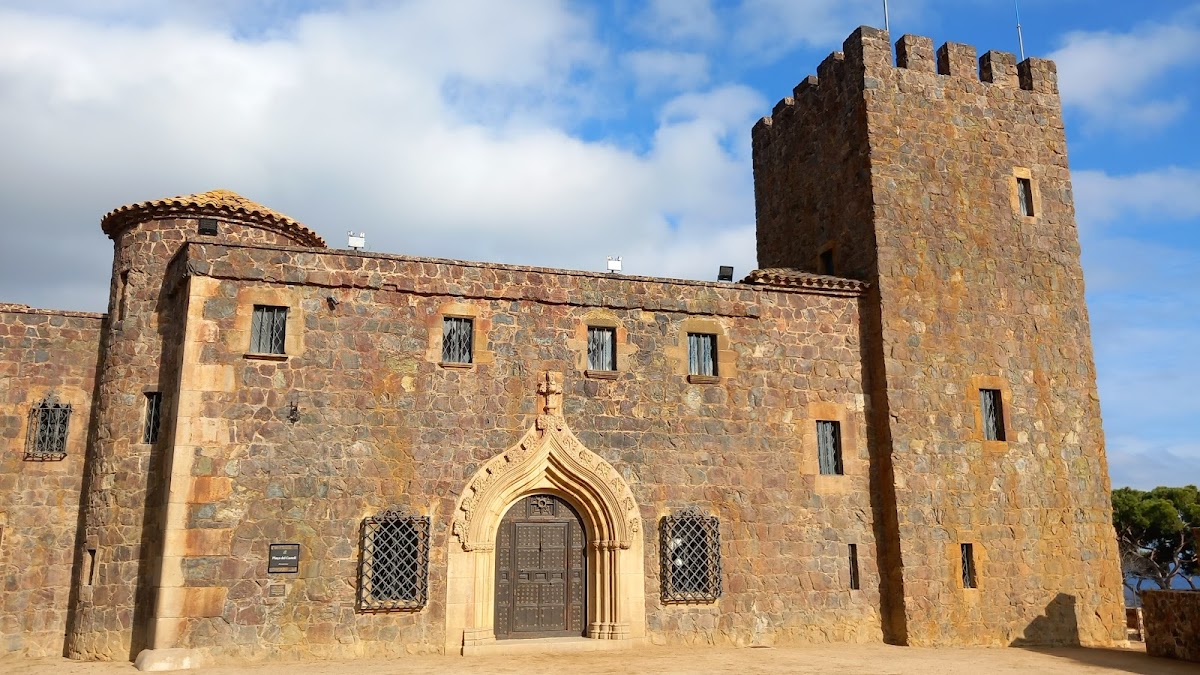
The Jardíns de Cap Roig form a castle complex that marries various medieval architectural styles into a cohesive ensemble. The construction employed the reuse of ancient materials to create a unified space reflecting the aesthetic of several traditional building types such as castles, cloisters (covered walkways typically surrounding a courtyard), towers, and churches. This approach imparted an eclectic and picturesque appearance to the estate, with notable Gothic and medieval details like crenellated towers—towers topped with battlements common in medieval fortifications. Most of the castle’s visible structures date from the early 1930s.
Central to the site is the monumental southern wing, anchored by an impressive entrance which leads toward a set of stairs descending to a small cove called Cala d’en Massoni. There, visitors can find a pier known locally as “el Banyador de la russa,” a name that ties into the estate’s Russian heritage. Near the seafront, above the shore of Cap Roig, lies the family tomb. This burial site is marked prominently by a stone Orthodox cross, symbolizing the Woevodski family’s Russian roots. Adjacent to the main grave are smaller headstones dedicated to the family dog and cat, reflecting personal touches within the estate’s grounds.
Encircling the castle, the botanical garden encompasses around one thousand species of plants arranged thoughtfully across the landscape, integrating the cultivated flora with the natural environment. The garden stands as a key feature of the estate, blending both horticultural interest and aesthetic design to complement the architectural elements of the site.
Nearby sites