Czchów Castle: A Medieval Fortress in Poland
Visitor Information
Google Rating: 4.7
Popularity: Medium
Official Website: www.czchow.pl
Country: Poland
Civilization: Medieval European
Site type: Military
Remains: Castle

History
Czchów Castle is located in the town of Czchów in modern-day Poland. It was built in the latter half of the 13th century by the Polish medieval state as a fortress to oversee and secure the nearby trade routes along the Dunajec River.
The initial construction consisted of a stone tower, known as a stołp, which was surrounded by wooden defensive structures. Over the 14th and 15th centuries, these wooden fortifications were gradually replaced with solid stone walls, enhancing the castle’s defensive capabilities. The first written record mentioning the existence of the castle appears in 1356, reflecting its growing importance. During this period, the castle functioned as an administrative center, housing the residence of the local royal official, the starost, and hosting a land court that managed regional affairs.
By the second half of the 16th century, Czchów Castle was under the jurisdiction of Sądecki County within the Kraków Voivodeship, a key administrative division of the Polish kingdom. The castle also played a role in controlling customs for goods brought overland from the Kingdom of Hungary, reflecting its position on a vital trade artery through the Dunajec River canyon.
In the 17th century, the castle fell into decline following destruction—specific details of military events are not provided—and was abandoned, leading to its gradual ruin. Later in the 18th century, parts of the remaining structure, particularly the surviving tower, were adapted for use as a prison. This penal function lasted until after the First Partition of Poland in 1772, when the castle ceased to be utilized in this capacity. Since then, the castle has remained in a ruined state, although its importance has been recorded in artistic works from the 19th century, including lithographs and drawings by Maciej Bogusz Stęczyński and Adam Gorczyński.
Remains
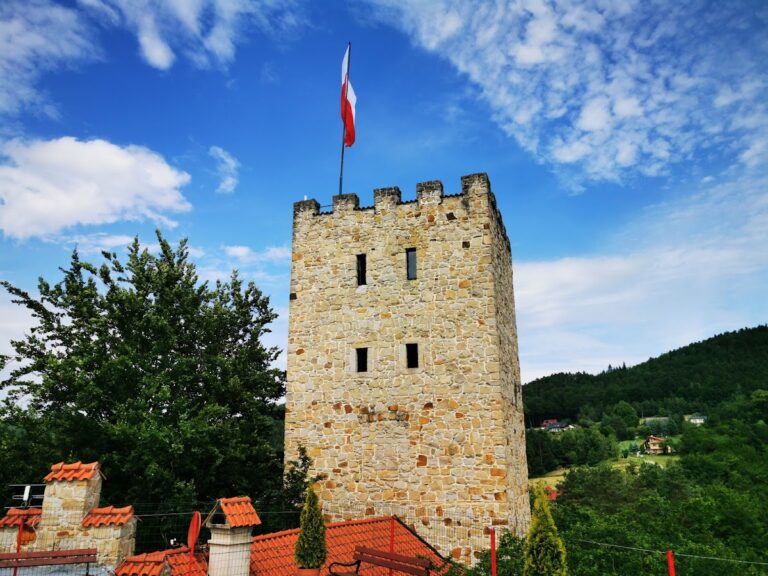
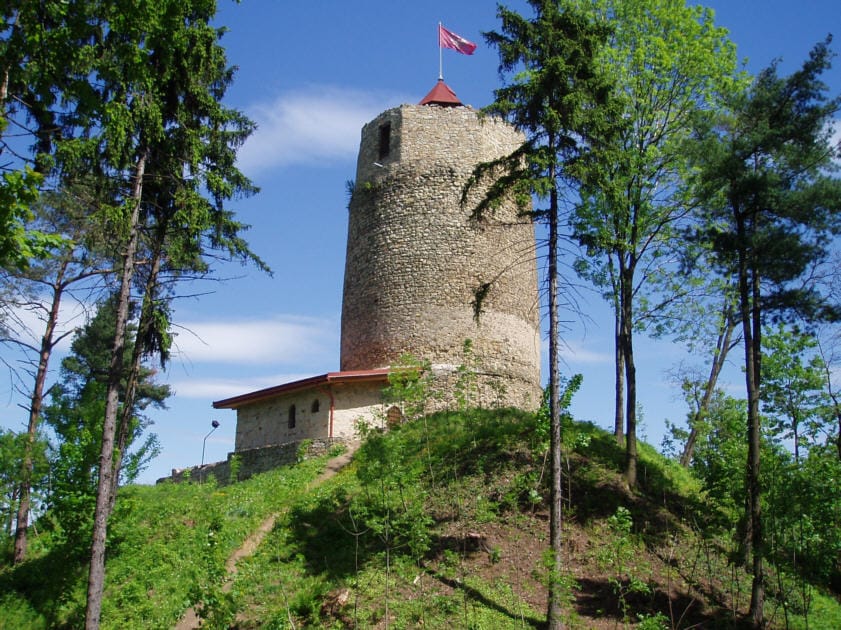
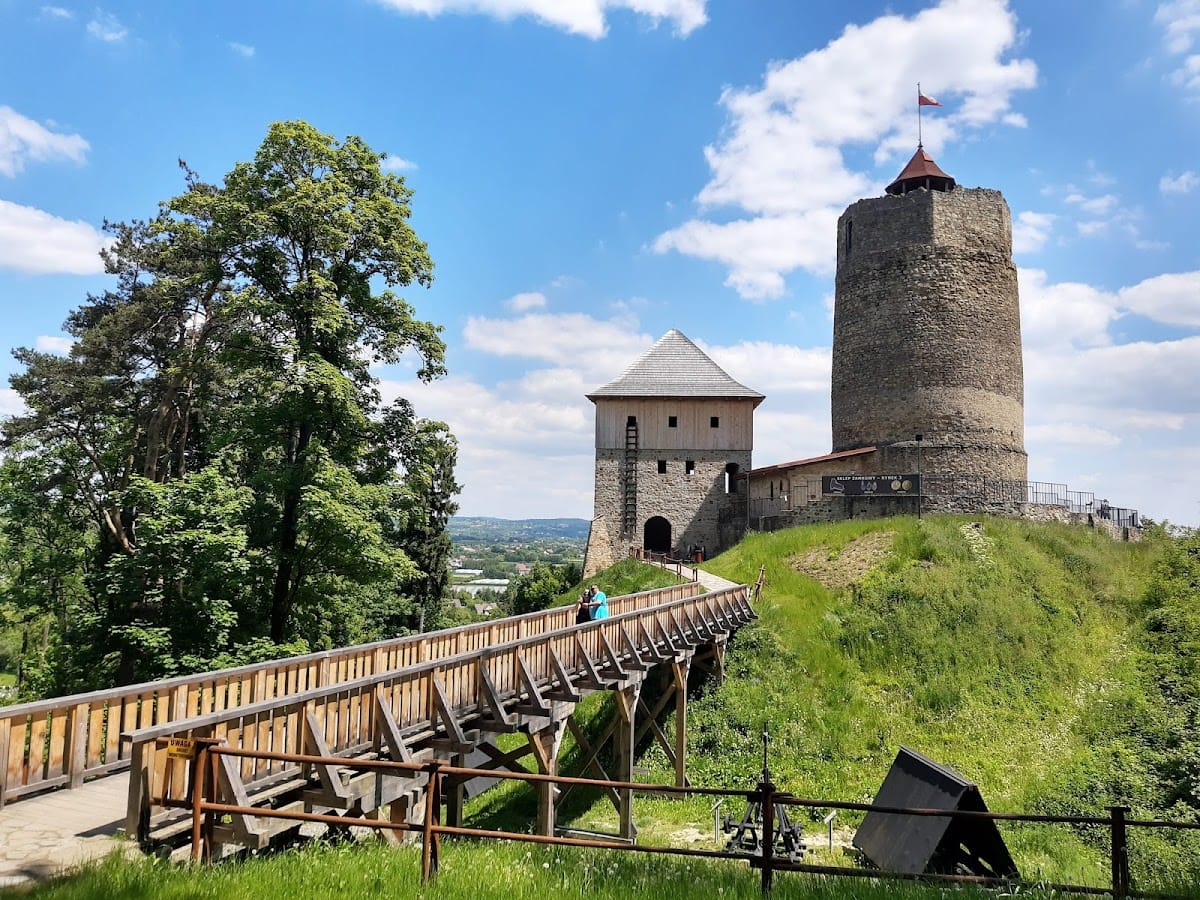
The site of Czchów Castle is dominated by the freestanding remains of a cylindrical tower, which stands about 20 meters tall and measures roughly 12.5 meters in diameter. Crafted mainly from sandstone, this tower dates back to the original 13th-century construction phase and served as a core defensive and residential structure. While the tower has lost its uppermost floor, the outline of its upper section once featured an octagonal shape, which remains visible today. The main entrance to the tower is located several meters above ground level, an indication of its defensive design. Originally, it was reached by wooden stairs, which no longer exist, but the entry point itself is still clearly identifiable.
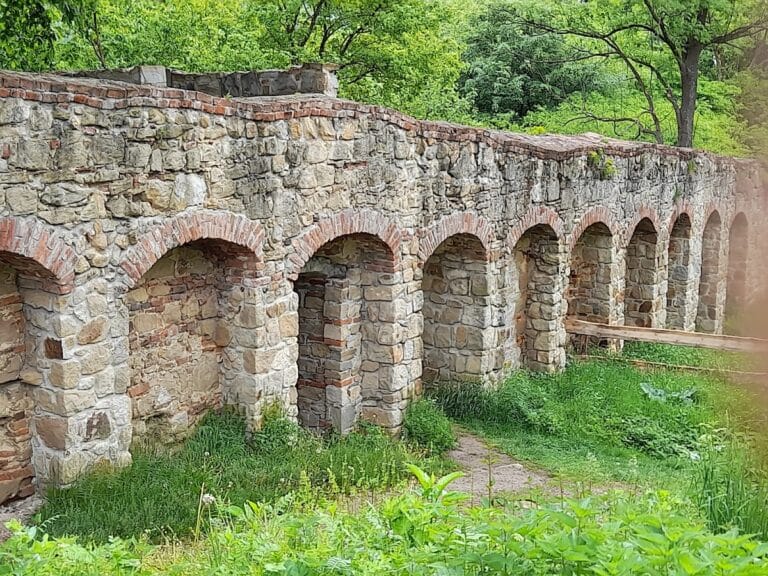
Surrounding the tower were stone walls forming the castle’s perimeter, built during the 14th and 15th centuries to replace earlier wooden barriers. These walls are between 1.2 and 2 meters thick, emphasizing their role in defense. On the eastern side of the complex, a gate tower provided controlled access into the castle grounds. Archaeological excavations have revealed the foundations of these defensive walls and other associated structures, confirming the layout of the enclosed area.
Neighboring the northeastern curtain wall, the remains of a residential building have been unearthed. This structure served as the starost’s house, the residence of the royal official overseeing the castle and its lands. Attached to this building on the southern side was a rectangular hall, whose function likely involved administrative and judicial activities given the castle’s role in hosting a land court.
Beyond the architectural remains, archaeological digs have brought to light various artifacts, including ceramics and metal objects dating from the 14th century, as well as tools like axes. These finds provide insight into the daily activities and material culture associated with the castle’s medieval occupants. The surviving tower was later adapted as a prison in the later 18th century, marking a reuse of the original defensive feature before it fell out of use following geopolitical changes in the region.
Today, the castle stands as a ruin with its main tower prominently visible. The combined remains of stone fortifications, the gate tower foundation, and residential buildings offer a tangible glimpse into the site’s medieval function and later transformations. The castle’s enduring presence speaks to its historical role in securing trade routes and administering local governance over several centuries.
Nearby sites