Żupny Castle: The Historic Administrative Center of Wieliczka’s Saltworks



Site at a Glance
- Rating
- 4.5
- Popularity
- Low
- Country
- Poland
- Primary era
- Medieval
- External website
- Open
- Eras represented
- Medieval, Modern
- Civilizations
- Kingdom of Poland
- Site type
- Military
- Remains
- Castle
On this page13 sections
History
Żupny Castle is a medieval saltworks complex in Wieliczka, Poland, established to protect and administer the Wieliczka salt mines, among the oldest salt mines in the world. The mines are first mentioned in 1248, while fortifications appeared by the middle of the thirteenth century and stone defensive structures followed near the end of that century. The beginnings of the castle and the Kraków Saltworks, the state-controlled salt-mining and processing enterprise that included the Wieliczka and Bochnia mines, are traditionally associated with Henry IV Probus, a thirteenth-century duke of Silesia and high duke of Poland.
Foundation and royal administration
The saltworks were managed by a żupnik, a royal official responsible for the enterprise and its revenues. The associated buildings were repeatedly expanded and rebuilt, with work continuing until the eighteenth century. The castle’s role was both administrative and defensive, linking the operation of the mines with the protection of the valuable salt trade.
Its major medieval development took place during the reign of Casimir III the Great, king of Poland from 1333 to 1370. He granted Wieliczka German town law, a medieval municipal legal framework based on German legal models, and extensively fortified and rebuilt the castle. In 1368, he issued a decree regulating the extraction and sale of salt, further defining royal control over the industry.
The saltworks and the Polish treasury
From the fourteenth through the sixteenth century, revenue from the salt trade supplied as much as one-third of the state treasury’s income. These funds helped finance Wawel Castle and university buildings in Kraków. At the height of production, the Wieliczka mines employed about 2,000 miners and produced more than 30,000 tonnes of salt, making the castle the administrative center of an enterprise with a broad economic reach.
Damage, restoration, and museum use
Over approximately 650 years, the castle endured fires, wars, sieges, and other disasters. Bombardment in 1945 caused its most severe modern damage and also affected the mines. The mines were nationalized in 1918, and the salt trade became a state monopoly in 1932. Salt extraction at Wieliczka continued to hold importance for the local economy from 1968 to 1988.
Municipal restoration was completed in 1992, after which the castle became the seat of the Wieliczka Saltworks Museum, now called the Museum of the Kraków Saltworks Wieliczka. Żupny Castle entered Poland’s register of historic monuments in March 1988. On 23 June 2013, it became part of the UNESCO World Heritage property covering the Wieliczka and Bochnia Royal Salt Mines, through an extension of the listing for the salt mines. Its saltworks identity continues through its museum functions and the annual Salt Festival in the castle courtyard.
Remains
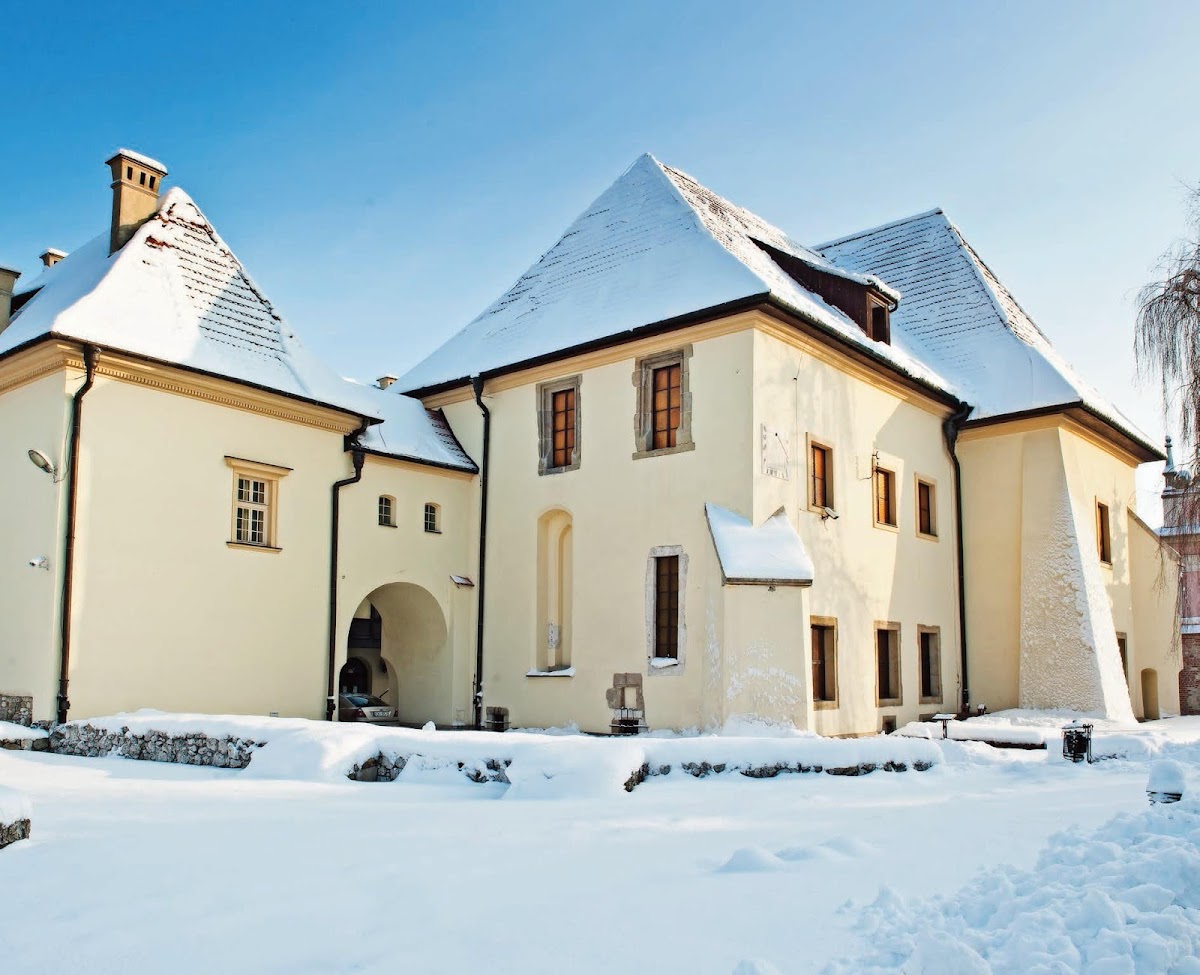
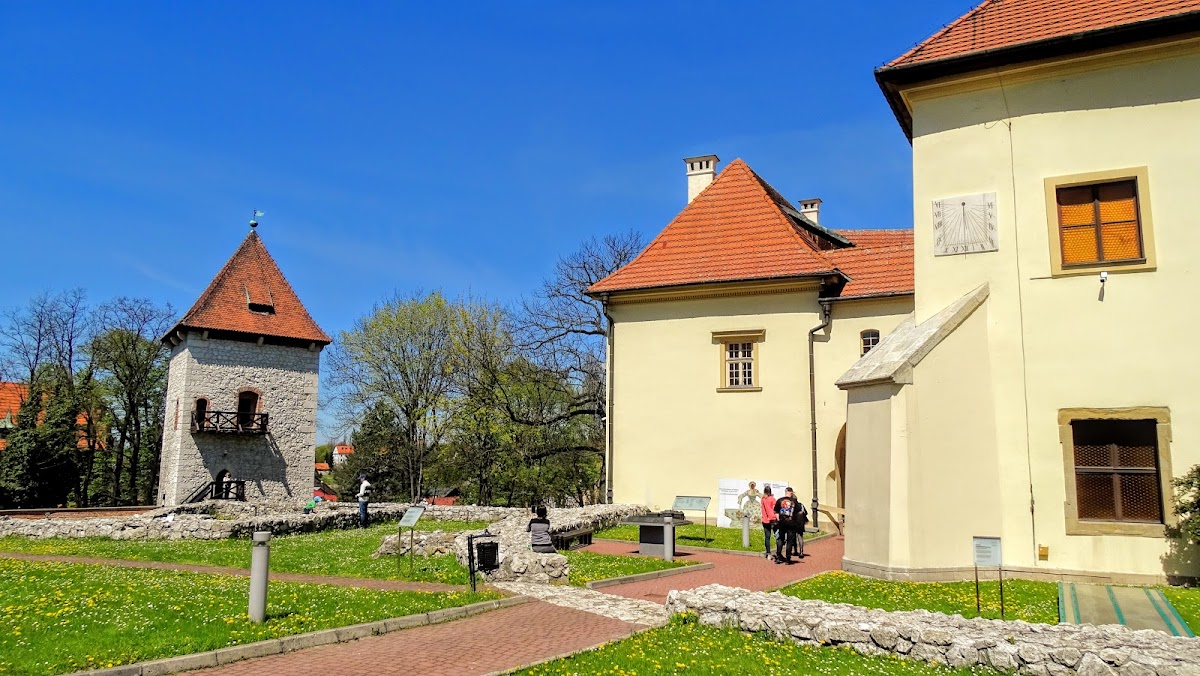
The complex is built of stone and consists of the Central Castle, the North Castle, the South Castle, remains of a fifteenth-century saltworks kitchen, a fourteenth-century defensive tower, and fragments of thirteenth-century defensive walls. Together, these elements preserve the changing administrative, residential, industrial, and defensive functions of the saltworks.
The principal castle buildings
Central Castle
The Central Castle, known as the House Amid the Saltworks, dates from the thirteenth and fourteenth centuries and is the oldest building in the complex. Once the most representative part of the castle, it contained the Court Chamber, where sub-chamberlain courts met. This room is now called the Gothic Hall. The building also included the Royal Chamber, which accommodated kings staying at the saltworks from the fourteenth century until 1620, together with rooms used for selling salt and storing valuable objects connected with the saltworks.
Its authentic cellars contain an archaeological exhibition. The building also provides space for a historical exhibition, temporary exhibitions, and a permanent collection of salt cellars.
North Castle
The North Castle, or Saltworks House, dates from the fourteenth and fifteenth centuries. Its upper floor formerly contained apartments for officials and the Chapel of Saint Stanislaus, a bishop of Kraków and patron saint of Poland. The chapel is known from the sixteenth century until the second half of the seventeenth century. On the ground floor were the Groch saltworks prison, a grease workshop that issued animal fat for mine lighting, a store for mining tools, and rooms for silver and ecclesiastical equipment used in the chapel.
Until 1780, the Central and North Castles were joined by a wooden hall that functioned as both a passage and a representative space. Portraits of 24 saltworks administrators decorated its walls. A wooden connecting gallery or porch was added along the North Castle in the middle of the nineteenth century. The building now houses the Museum of the Kraków Saltworks Wieliczka, scientific workshops, the saltworks archive, and a library containing a large collection of mining publications.
South Castle
The South Castle dates from the middle of the nineteenth century. Its former uses included offices, accommodation for guards and watchmen, a carriage house, and a store for fire-fighting equipment. It now contains temporary-exhibition and educational spaces, workshops, and a restaurant.
Defensive and service structures
Defensive walls and tower
Fragments of the thirteenth-century defensive walls and the fourteenth-century tower identify the original castle area. The walls, erected during Casimir III’s reign, were constructed from Beskid sandstone in an oval plan. They incorporated 19 towers and two gates, the Kraków Gate to the north and the Kłosowska Gate to the south.
The defensive tower measured 16 by 10 metres. It contained a prison for people convicted of serious offenses and accommodation for the chaplain, combining military protection with functions required by the castle administration.
Saltworks kitchen
Fragments of the fifteenth-century saltworks kitchen also survive. The kitchen supplied free meals to administrative employees, miners, and salt traders who came to purchase salt. It continued this role until the 1580s, providing physical evidence of the services connected with the operation of the saltworks.
Salt-cellar collection
The museum holds more than 1,000 salt cellars, a collection assembled since 1973 and described as the largest in Poland. The objects came from leading porcelain manufacturers and goldsmiths’ workshops and represent styles from the Gothic period through Art Deco. Their materials include gold, silver, porcelain, and mother-of-pearl.
The collection’s oldest salt cellar is made of agate and dates to around 1500. Other notable objects include an entirely gold salt cellar associated with Ernest II of Saxe-Coburg and Gotha, a nineteenth-century German duke and elder brother of Prince Albert, and a porcelain spice service made around 1760 by the Höchst manufactory. A grotesque-decorated salt cellar from Urbino dates to 1570.