Château de Bidache: A Historic Castle in Southwestern France


Visitor Information
Google Rating: 4.3
Popularity: Low
Official Website: www.en-pays-basque.fr
Country: France
Civilization: Unclassified
Site type: Military
Remains: Castle

History
The Château de Bidache is situated in the commune of Bidache in southwestern France. Its origins trace back to the medieval period when it was established by the Gramont family, a noble line initially holding the title of viscounts of Dax before merging with the Guiche family. The castle first appears in historical records in 1329 as their ducal seat.
During the early 16th century, Château de Bidache played a significant role in regional conflicts. In 1523, it resisted an assault by Imperial forces under Charles V but suffered extensive damage when set ablaze, resulting in much of the fortress being destroyed. Following this event, the Gramont family undertook a swift rebuilding effort that integrated Renaissance design elements alongside the castle’s medieval defensive structures.
Throughout the 17th century, the castle experienced considerable renovation influenced by the architectural style associated with Louis XIII. The work, overseen by architect Louis de Mihet who also contributed to Bayonne’s fortifications, included enhancements to the building’s form and the creation of terraced gardens. This period marked a transformation from purely defensive functions toward a more refined noble residence.
The château hosted several prominent historical figures, reflecting its political and social importance. In 1565, Catherine de Médicis and her son King Charles IX visited the castle. Later, Henri III of Navarre, who would become King Henri IV of France, stayed there in 1587. The castle also played a diplomatic role during the peace negotiations of 1659 when Cardinal Mazarin was present as part of the Treaty of the Pyrenees talks.
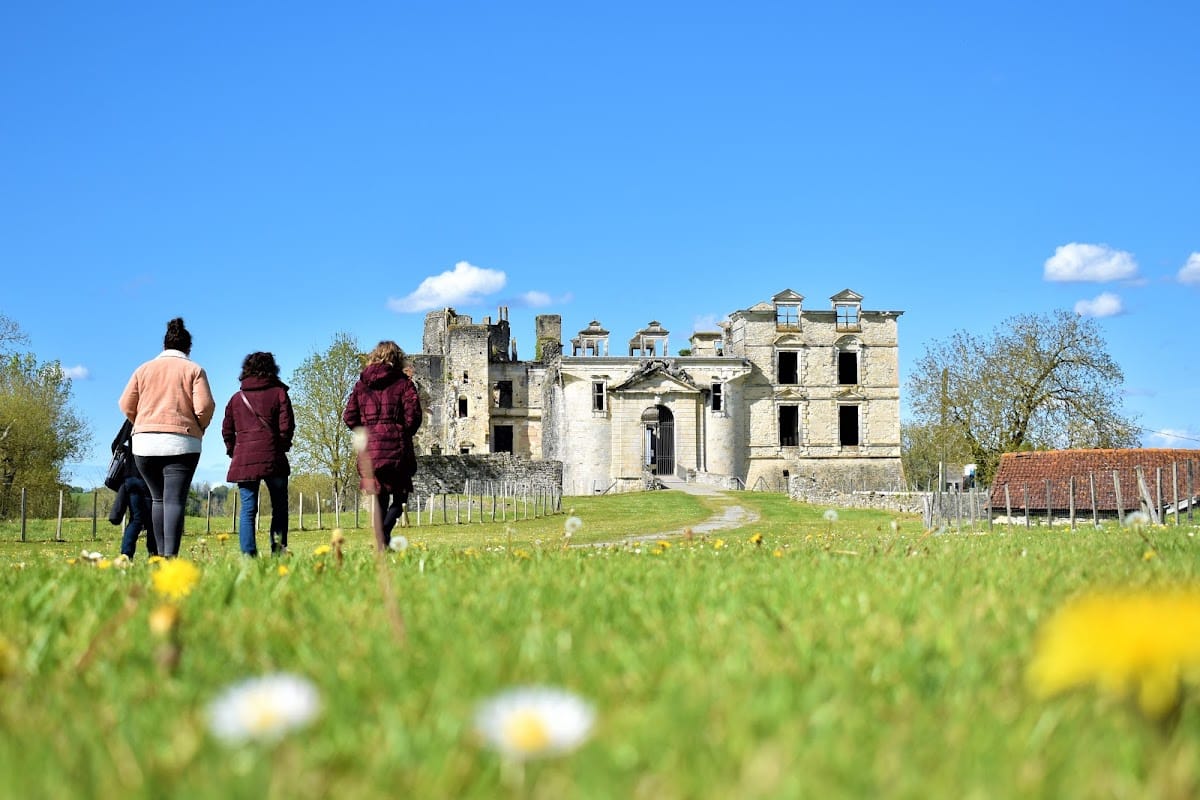
The French Revolution brought a turning point for the château in 1793 when it was seized by the nation. It was briefly repurposed as a military hospital before a destructive fire in February 1796 left only its stone walls intact. Despite this devastation, the Gramont family retained ownership of the site through subsequent centuries.
Recognition of the château’s historical value began in the twentieth century. It was officially classified as a historic monument in 1942, with expanded protections added in 2012. Since 2003, local authorities have been responsible for the ruins’ upkeep, carrying out stabilization efforts. More recently, starting in 2022, the site has become the location of an annual festival reenacting its long history from antiquity through the modern era.
Remains
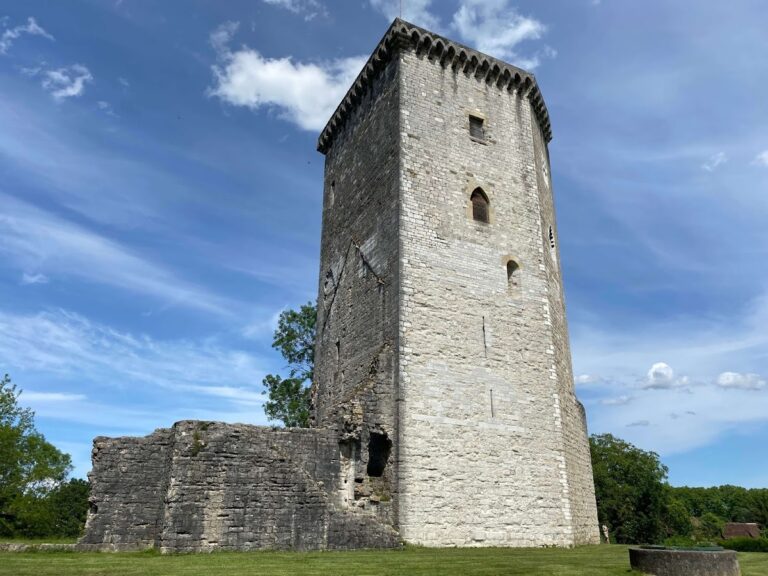
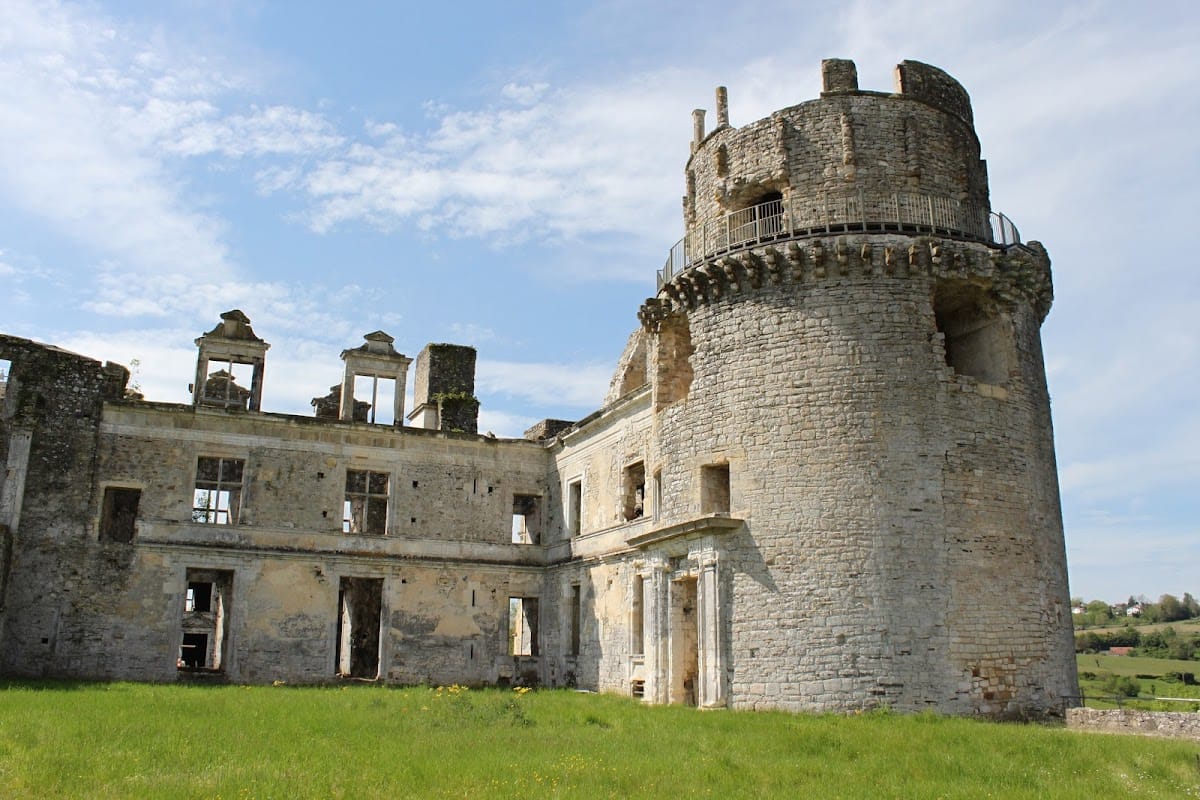
The ruins of Château de Bidache reveal a castle originally designed for both defense and residence, arranged around two courtyards and featuring various buildings from different historical periods. The core medieval fortress included multiple constructions, but today only three substantial round towers remain. These towers, positioned at the northwest and southern sides of the site, stand as surviving remnants of the fortress destroyed during the 1523 conflict with Imperial troops. Their robust masonry and circular form are characteristic of medieval military architecture.
Following the castle’s near destruction, reconstruction incorporated Renaissance influences. A main building with an L-shaped plan was erected, enclosing the courtyards and accommodating a grand staircase leading to a large hall on the first floor. This great hall served as a council chamber, reflecting the château’s political function. Renaissance additions also included a stair turret and extended fortifications toward the southwest, alongside modifications to the southern façade, demonstrating adaptive architectural developments blending defense and habitation.
The 17th-century alterations brought significant changes to the château’s layout and aesthetic, introducing elements from the Louis XIII style. Under the direction of architect Louis de Mihet, formal gardens and terraced landscapes were crafted on three levels supported by stone staircases. These terraces connected the castle grounds in a carefully designed manner, highlighting an increased attention to ornamental and recreational outdoor spaces.
At the entrance, a monumental gate featuring a triangular pediment was built in the early 18th century. This replaced an earlier porch that had been framed by three classical columns topped with capitals. Such architectural refinement marked a progression toward grander expressions of status and welcoming.
Additional features of the château included a library of approximately one thousand volumes, housed on two levels within a round tower that had been converted into a chapel. This dual-use space illustrates the integration of religious and intellectual pursuits within the noble residence.
The castle’s courtyard was once enclosed by a left-side wing, the walls of which were removed in the early 1800s. Despite these changes, several structural elements remain preserved and protected. The vaulted stables, along with the facades and roofs of the terminal pavilions flanking the courtyard, survive as noteworthy components of the site’s historical fabric.
The defensive constructions, ancillary buildings, parks, and gardens surrounding the château have been recognized for their heritage value. Various consolidation projects have taken place in the 21st century to maintain the integrity of these features, preserving the site’s layered architectural history for future study and appreciation.
Nearby sites