Castle of Viacamp: A Medieval Fortress in Spain

Visitor Information
Google Rating: 4.6
Popularity: Low
Google Maps: View on Google Maps
Official Website: www.montsecdelestall.info
Country: Spain
Civilization: Unclassified
Remains: Military

History
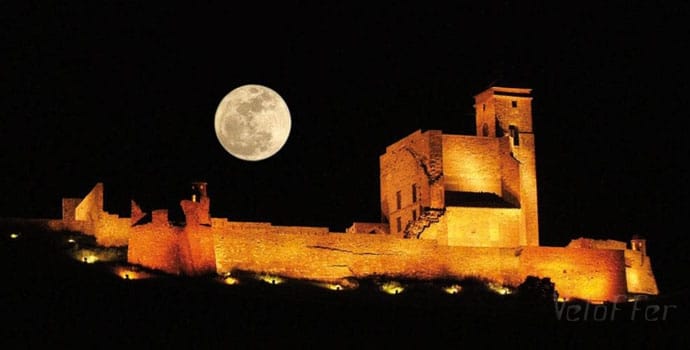
The castle of Viacamp is a medieval fortress located in the municipality of Viacamp, within the modern country of Spain. It was established in the 11th century by builders of the medieval period, reflecting the strategic and military needs of the time.
During the Middle Ages, the castle served primarily a defensive purpose, positioned to oversee and communicate with nearby fortifications in neighboring settlements such as Fals, Alsamora, Benabarre, and Luzás. This network of watchtowers and forts suggests that Viacamp was part of a broader regional system designed to protect the valley of the Noguera-Ribagorzana river. The castle’s elevated location facilitated surveillance and early warning against possible threats or invasions.
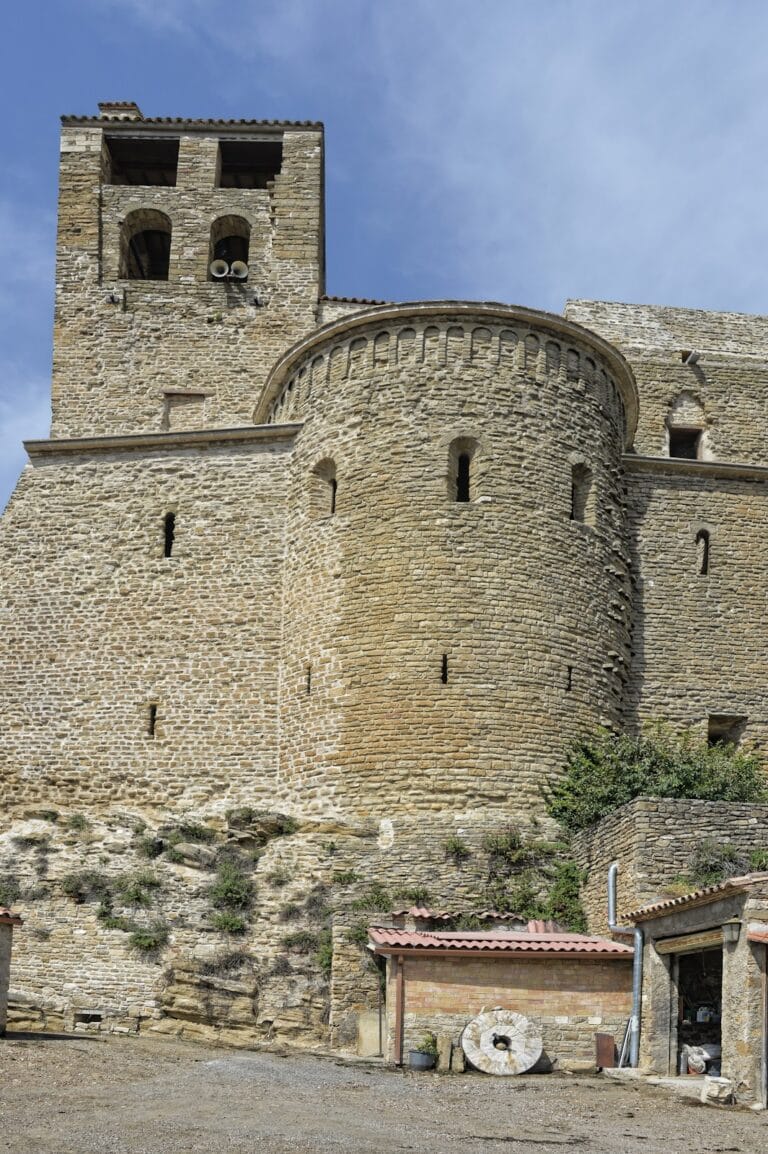
Alongside its military function, the site held religious significance, as demonstrated by the presence of a Romanesque chapel. Originally dedicated to Saint Michael the Archangel, a figure often associated with protection and military victory, the chapel’s dedication was later changed to Saint Stephen. The religious building indicates that the castle was not only a place of defense but also had an ecclesiastical role within the medieval community.
In the early 21st century, specifically in 2005 and 2006, restoration efforts were undertaken to preserve and study the castle. These works helped clarify the original layout and features of the fortress, contributing to a better understanding of its historical importance and development over time.
Remains
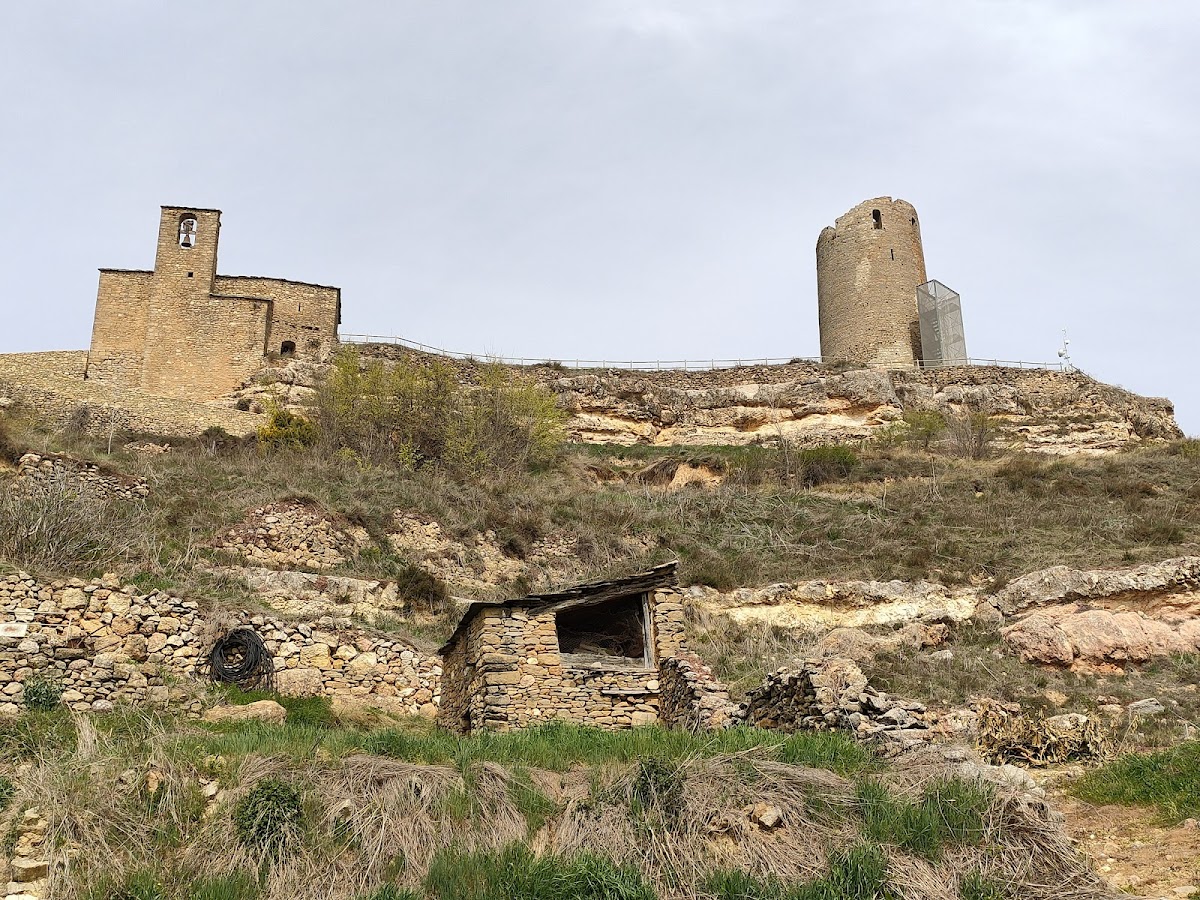
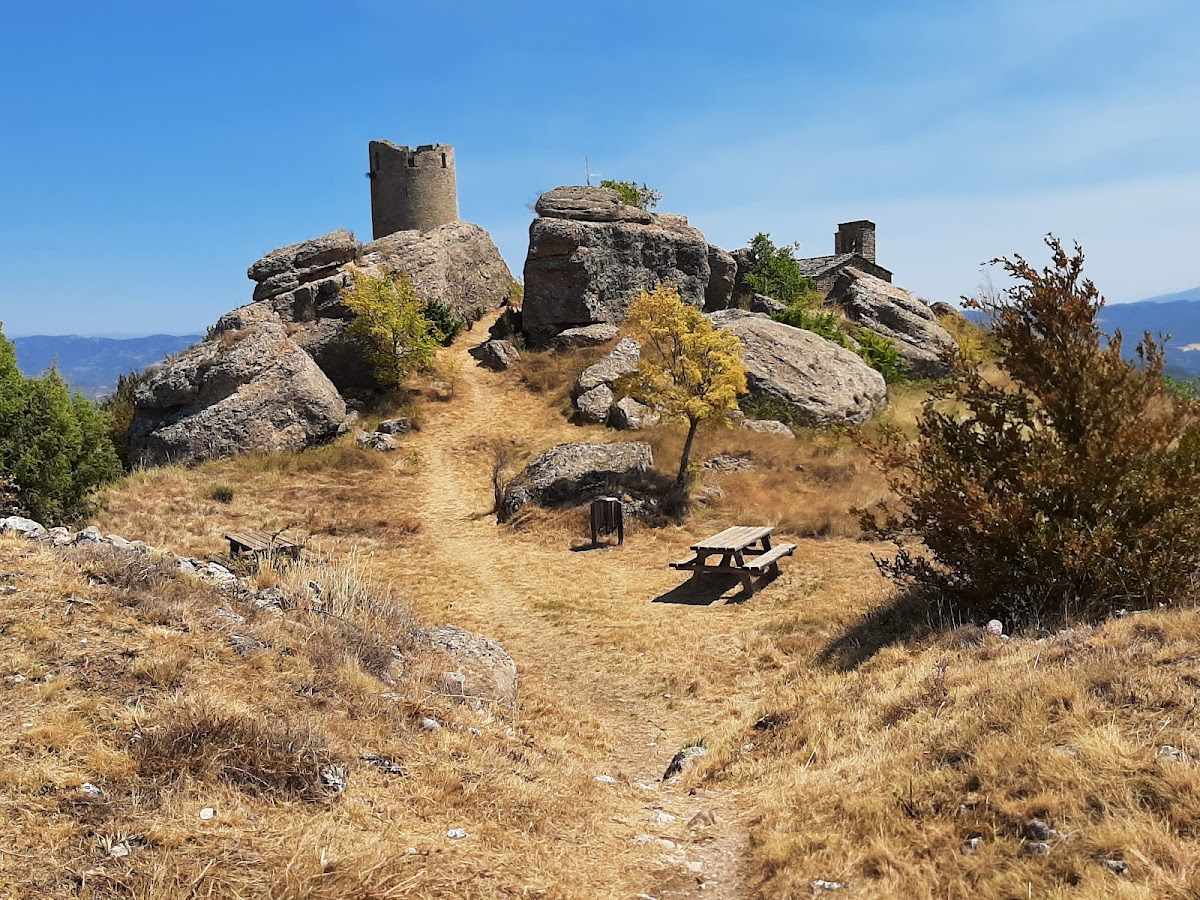
The castle of Viacamp stands on a plateau between 860 and 942 meters above sea level, in an area marked by gentle hills and sparse habitation. The fortification complex contains the remains of a defensive wall, a tall cylindrical tower, and a small Romanesque chapel within the enclosed space.
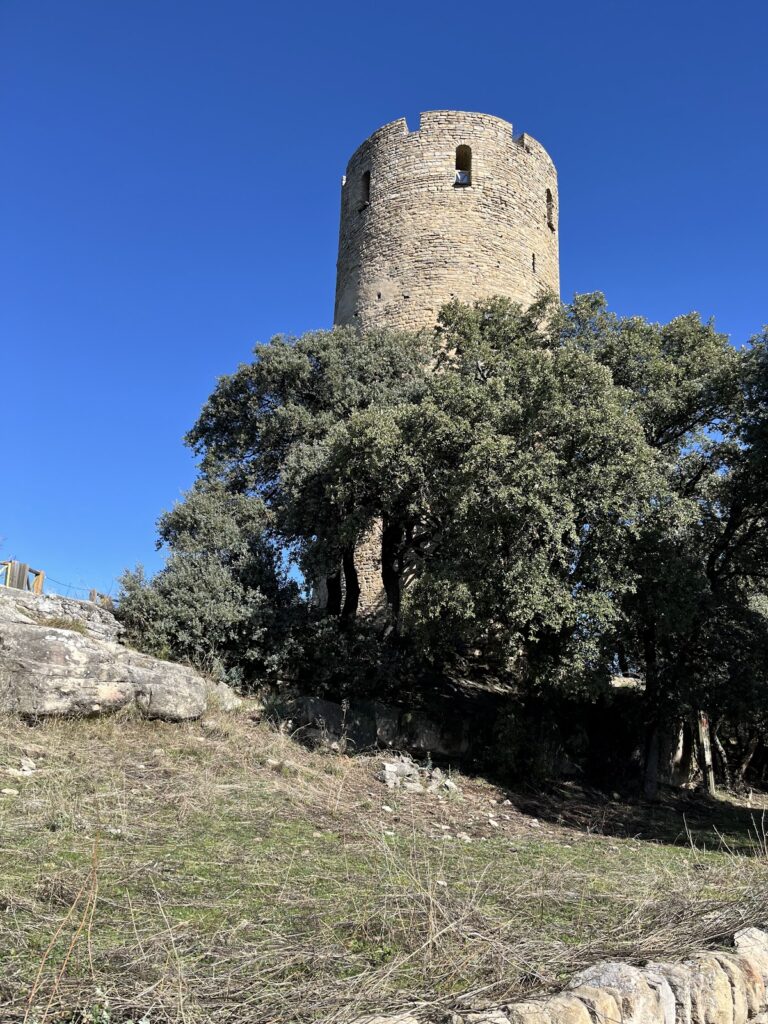
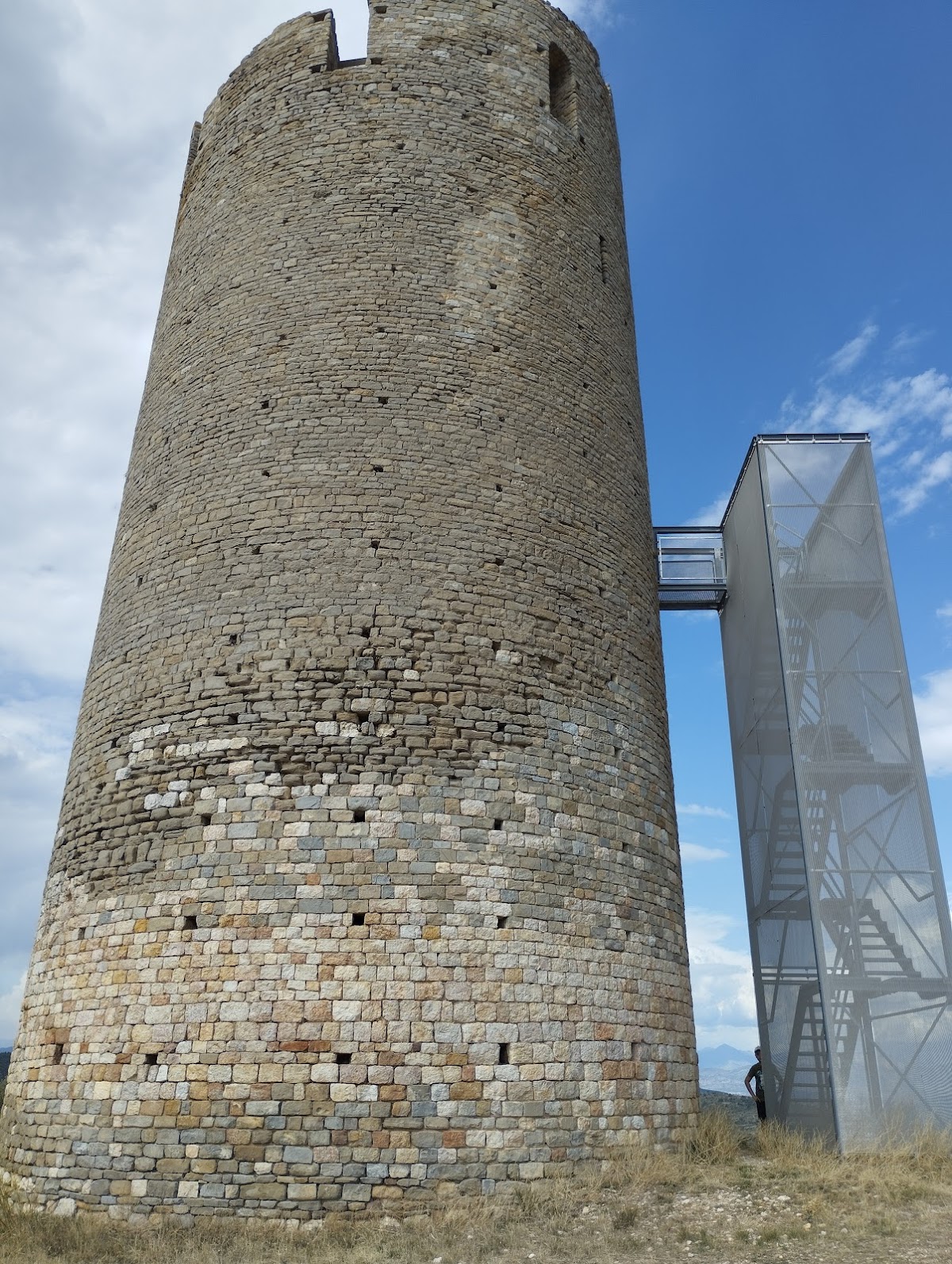
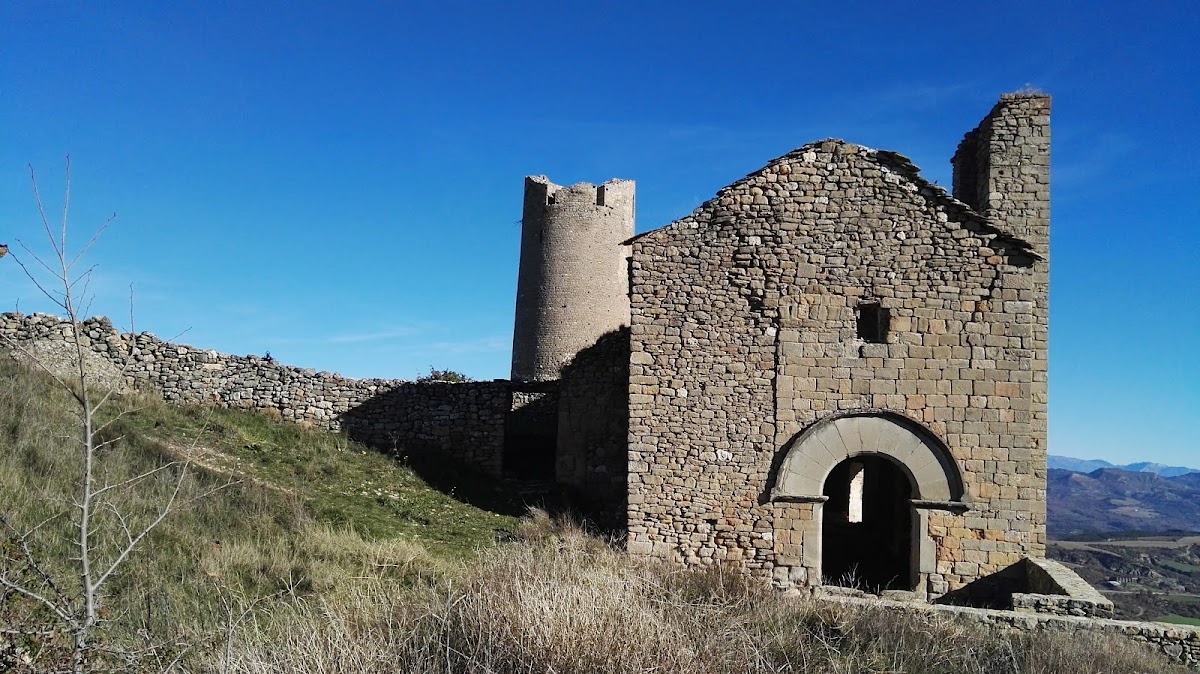
The most prominent feature, the slender cylindrical tower, reaches approximately 20 meters in height and measures about 11 meters in diameter. Its walls are notably thick, nearly three meters wide, constructed through a method that involved simultaneous building from both inside and outside using double scaffolding. This robust technique ensured the tower’s stability. Originally, the tower’s ground floor was closed off from the outside and used for storage, with access located higher up, reached via a semicircular arch facing southeast. The tower once had five floors; only four remain today due to some loss at the top. Historical research suggests the missing upper section may have included small defensive openings resembling battlements or been capped with a conical roof.
The Romanesque chapel, known as San Esteban de Viacamp, lies within the castle’s walls. This small church exemplifies the Romanesque architectural style common to fortresses in the high-Aragonese region during the medieval period. Its design and location indicate a continuous religious presence, further supported by an adjacent cemetery that continues to be used, connecting past and present spiritual practices.
Surrounding the plateau, the outer defensive enclosure is built from rubble stone with areas of finer masonry. Though only low fragments survive, these walls would have formed a barrier protecting the complex. Evidence of small towers or wall bases around this perimeter suggests additional defensive structures once stood here, contributing to the overall security of the site.
Together, these elements paint a picture of a medieval stronghold that combined military defense with religious functions, carefully adapted to the rugged terrain of the valley. The restoration work in the early 2000s has preserved these remains and enhanced knowledge about the construction and use of the castle throughout its history.
Nearby sites